
Text by Alice-Claudia Gherman | Photos: Breguet Archive
Abraham-Louis Breguet, the man who started it all
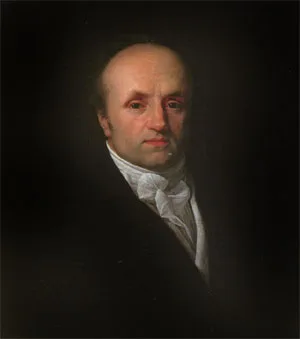
The history of the Breguet brand began in the Swiss city of Neuchâtel, located on the northern shore of the lake bearing the same name. It was here, in 1747, that Abraham-Louis Breguet was born. As a teenager, he left his hometown to complete his apprenticeship in watchmaking in Versailles and Paris. In 1775, he opened his own workshop on the Quai de l'Horloge, on the Île de la Cité in Paris. The Abbé Marie introduced him to the French court, whose members soon became some of his most loyal clients. The dark days of the French Revolution forced Breguet to return to his native Switzerland in 1793, though only for a brief period. In 1795, he returned to Paris, where he found a renewed clientele that included members of Napoleon’s army and influential figures of the era.
A name synonymous with innovation – Breguet
The early years of this brilliant watchmaker were marked by inventions that continue to influence the watchmaking industry to this day. Abraham-Louis Breguet’s name is inseparably linked to the Tourbillon, developed in 1801 as a practical solution to counteract the effects of gravity on timekeeping precision. In 1780, Breguet also created the world’s first self-winding watch, known as the Perpétuelle, followed by the first wristwatch ever made in 1810: the famous Breguet no. 2639, designed for Caroline Bonaparte, Queen of Naples and Sicily. Among his many innovations was the “parachute” system, invented in 1790, considered the ancestor of modern anti-shock devices and designed to make watches significantly less fragile. In 1795, he introduced the Breguet overcoil hairspring, still widely used in contemporary watchmaking. Four years later, in 1799, he created the Breguet “Montre à Tact”, also known as the “watch for the blind”, which allowed the wearer to tell the time by touch alone. These extraordinary pieces were true jewels, adorned with enamel, pearls, and diamonds.
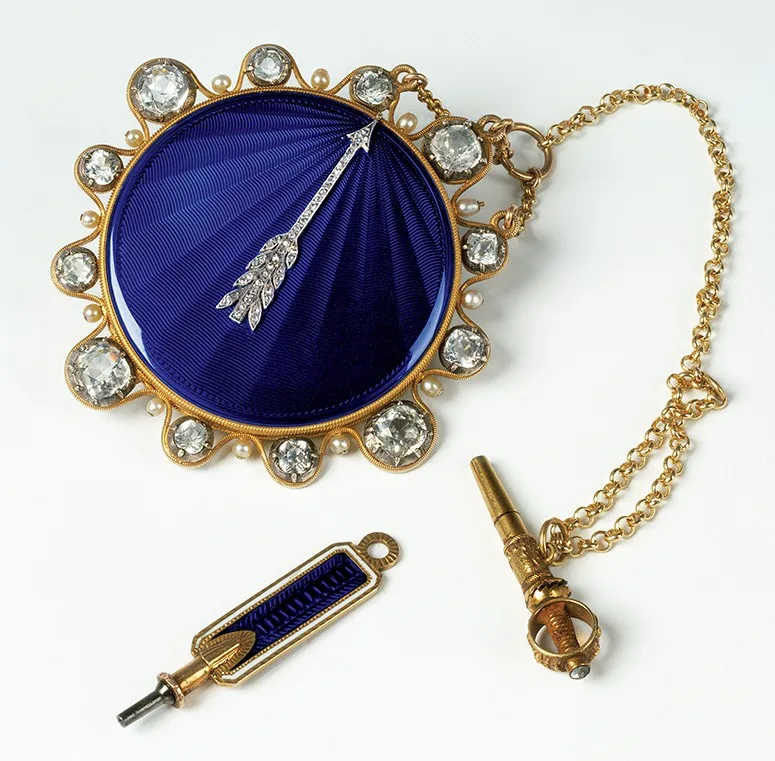
„Montre à Tact” Breguet
Breguet, a journey through time and history
Queen Marie Antoinette of France was one of Abraham-Louis Breguet’s most devoted patrons, supporting his watchmaking workshop on the Quai de l’Horloge in the heart of Paris. She owned several of the master watchmaker’s creations and enthusiastically recommended his work throughout the kingdom and among the distinguished guests of the French court. The French Revolution and the tragic execution of Marie Antoinette deprived the queen of seeing completed one of Breguet’s most remarkable creations: the legendary Breguet no. 160 “Marie Antoinette”. Considered one of the most precious watches ever created, it remains the ultimate masterpiece of the master watchmaker. Commissioned by the Swedish Count Axel von Fersen, believed to have been the queen’s lover, the watch was designed as an exceptionally refined and sophisticated piece, incorporating every horological innovation available at the time.
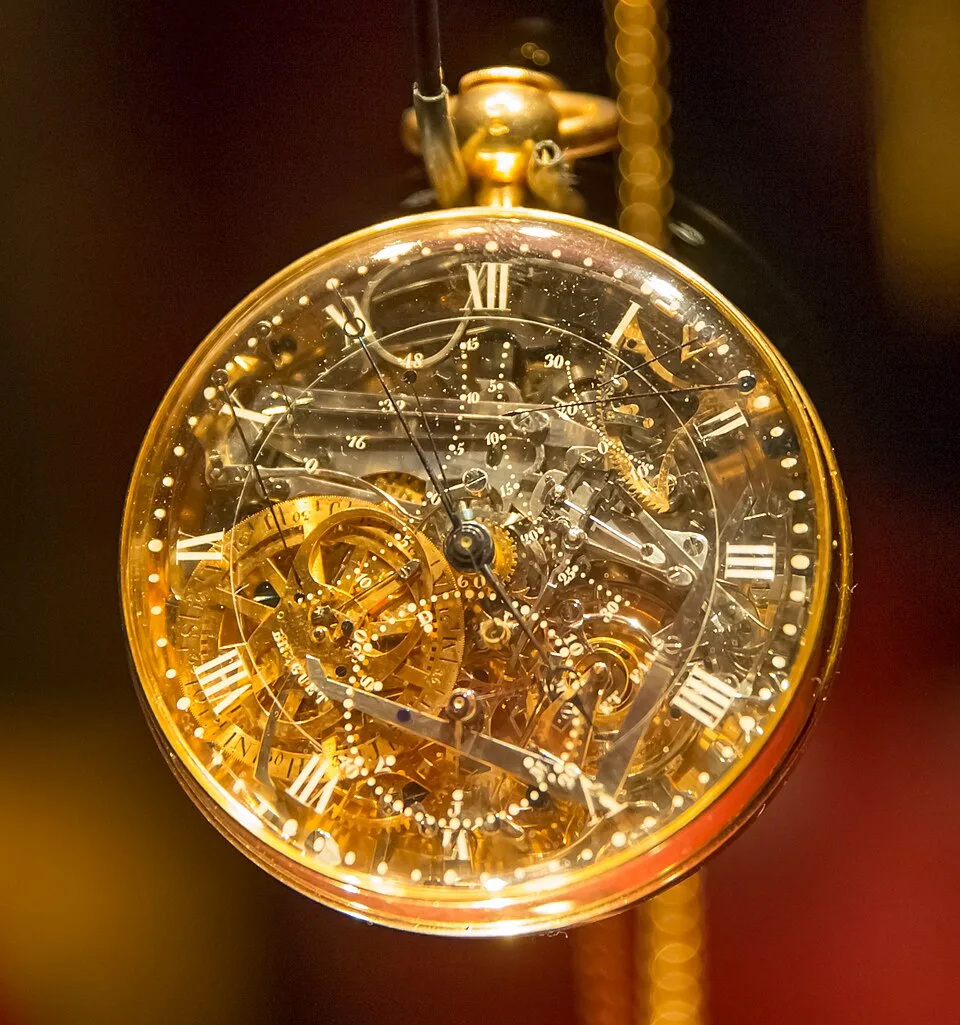
Breguet No. 160 "Marie Antoinette", one of the most precious watches ever made
Throughout history, many other renowned figures commissioned or received Breguet watches. In April 1798, Napoleon Bonaparte purchased three representative Breguet creations, including the repeater watch no. 34, the watch no. 178, and the Perpétuelle no. 216. Between 1808 and 1814, Caroline Murat, Napoleon’s youngest sister, became A.-L. Breguet’s most important client, acquiring no fewer than 34 watches and clocks. The fame of Breguet also reached Constantinople, where Ottoman Sultan Selim III purchased two Breguet timepieces. Tsar Alexander I of Russia was equally captivated by the master watchmaker’s creations, ordering several pieces for himself while encouraging the expansion of Breguet’s reputation throughout Russia.
The Breguet Legacy – A Journey Through France, Great Britain and Switzerland
In September 1823, the renowned watchmaker A.-L. Breguet passed away. The business was taken over by his only son and partner, Antoine-Louis Breguet, who continued his father’s work until retiring in 1833. The company was then entrusted to his son, Louis-Clément Breguet, a passionate advocate of electricity who brought new dynamism to the Maison, recognizing that the watch industry was beginning to address a broader audience. This marked the beginning of large-scale production. However, Louis-Clément Breguet’s fascination with electricity gradually distanced him from traditional watchmaking. Soon, the direct heirs of the prestigious Breguet name shifted their attention toward other fields such as electricity, scientific instruments, and aviation.
In 1870, Louis-Clément Breguet sold the Paris-based watchmaking business to his workshop manager, Edward Brown of Clerkenwell. The Brown family owned the company for an entire century, from 1870 to 1970, fully aware of the historical importance of Breguet and the legacy it embodied. With remarkable dedication, Brown and his descendants preserved the spirit and traditions of the Maison despite numerous economic crises, challenges, and two world wars. After 1970, ownership of Breguet changed hands several times.
In 1987, Breguet was acquired by Investcorp, which later established Groupe Horloger Breguet (GHB) in 1991. The year 1999 marked a new era for the House of Breguet, when it became part of the Swatch Group. Under the vision of Nicolas G. Hayek, and thanks to major human and financial investments, Breguet regained its former prestige and brilliance. Following his passing in 2010, his nephew Marc A. Hayek assumed leadership of this jewel of the watchmaking world. In 2025, the House of Breguet celebrated its 250th anniversary with a remarkable series of launches unveiled successively in Paris, Shanghai, New York, Geneva, London, Seoul, Tokyo, and Dubai.
Breguet – Ultra-refined luxury watches and masterpieces of horological technology
Crafted in red, rose, or white gold, as well as platinum, adorned with diamonds, sapphires, and other precious stones, Breguet watches continue to reign at the pinnacle of luxury watchmaking. Whether minimalist or highly complicated, each creation is both a jewel designed to measure time and a masterpiece of technical precision.
Classique Collection – legible, precise, refined watches
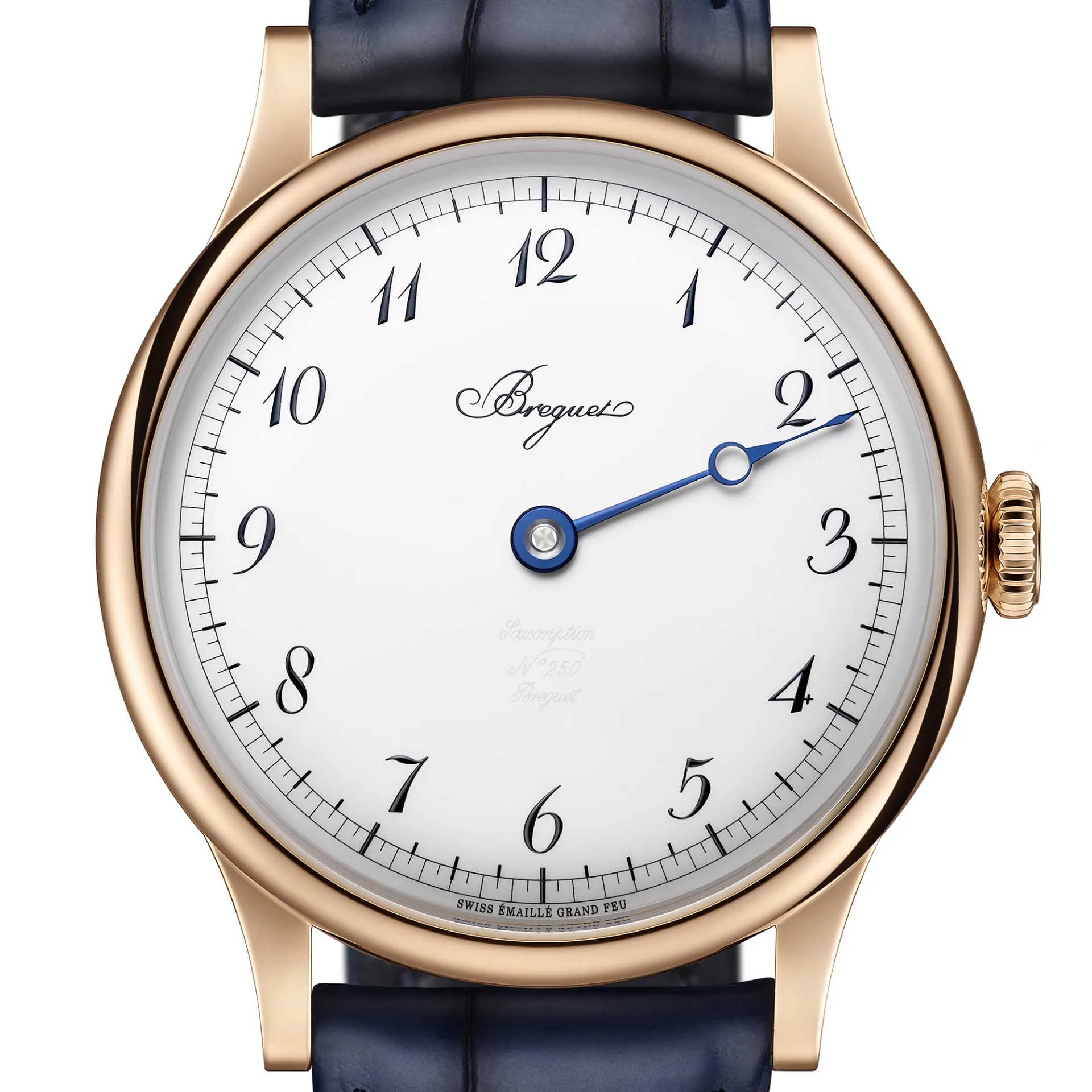
The modern interpretation of the Classique collection was launched in 1980, alongside the revival of the Breguet brand and under the direction of master watchmakers such as Daniel Roth. Whether in ultra-thin versions or models featuring numerous complications, the eleven watches in this collection faithfully reflect the technical rigor, artistry, and traditional values of the House of Breguet. Five of these models were produced in limited editions, making them highly coveted by collectors of fine horology. Every watch within the Classique collection represents a contemporary reinterpretation of A.-L. Breguet’s original creations. The collection is distinguished by iconic visual and technical signatures of the Maison: hand-guilloché dials, fluted case bands, Breguet numerals, and the famous open-tipped “apple” hands, also known as Breguet hands. The latest addition to the collection, the Classique Souscription 2025, was created to celebrate Breguet’s 250th anniversary in Paris. This single-hand wristwatch features a case crafted from Breguet’s newly developed gold alloy, inspired by the founder’s historic subscription pocket watches.
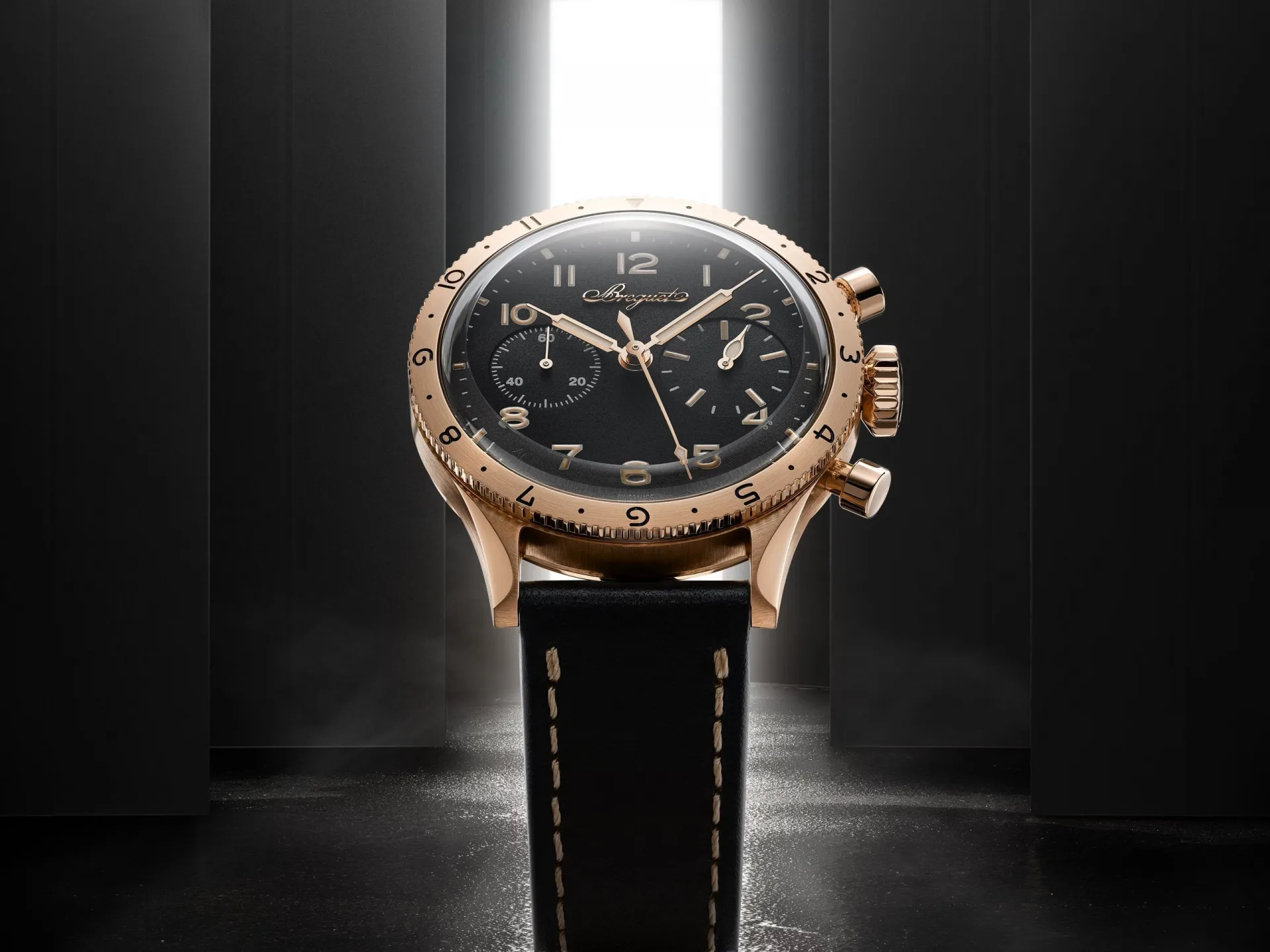
Type XX – The Watch of the French Air Force
Originally developed in the 1950s for the French Air Force, the first Type XX accompanied an important chapter in aviation history. Today, it remains part of the Breguet collections and is available in both civilian and military-inspired versions.The Type XX Chronograph 2075 is the newest addition to the line, unveiled in New York to celebrate 250 years of Breguet watchmaking and to pay tribute to the Maison’s rich aeronautical heritage. It is offered in two anniversary editions: one featuring a black anodized aluminum dial, and another, limited to just 250 pieces, with a solid silver dial. With a diameter of 38.3 mm and a height of 13.2 mm, both models draw direct inspiration from a historic Type XX reference dating back to 1955.
The Heritage Collection: atypical yet recognizable Breguet shapes
Created in 1998, the Breguet Heritage watch collection stands out through its elegant and unconventional design, defined primarily by its distinctive curved tonneau-shaped case and classic details that preserve the spirit of founder Abraham-Louis Breguet.
Breguet Tradition Collection, the emblem of the House of Breguet
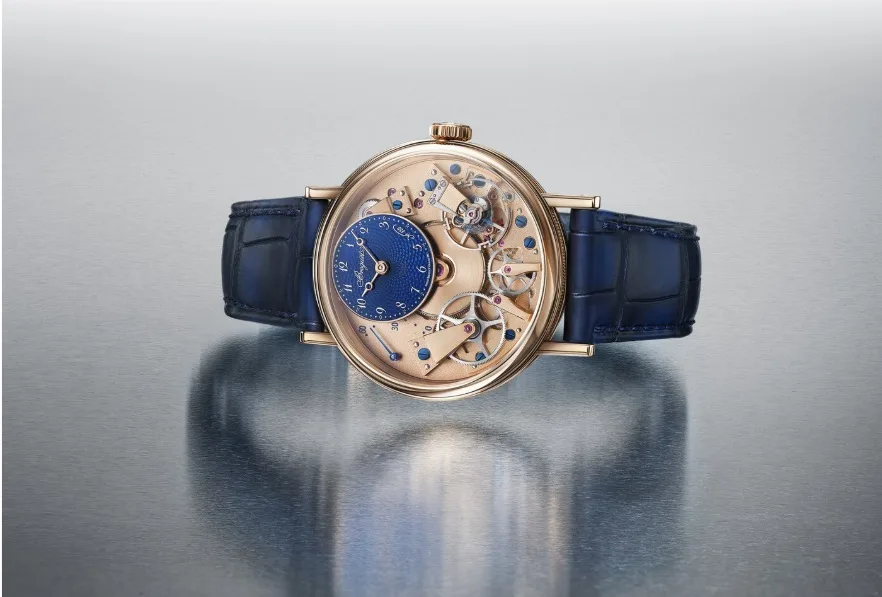
The Breguet Tradition Collection was introduced in 2005 with the launch of the 7027 model. With its avant-garde aesthetic, which has since become its signature, the Tradition collection continues to captivate through its timeless appeal. Inspired by the pure design principles of Breguet, it combines boldness and innovation in fine watchmaking, embodying a unique alchemy where heritage, technological progress, and contemporary vision meet. In 2025, as Breguet celebrated 250 years of existence, the Tradition collection was enriched with the Tradition Seconde Rétrograde 7035 model, unveiled in Shanghai.
The Marine Collection, a tribute to A.-L. Breguet
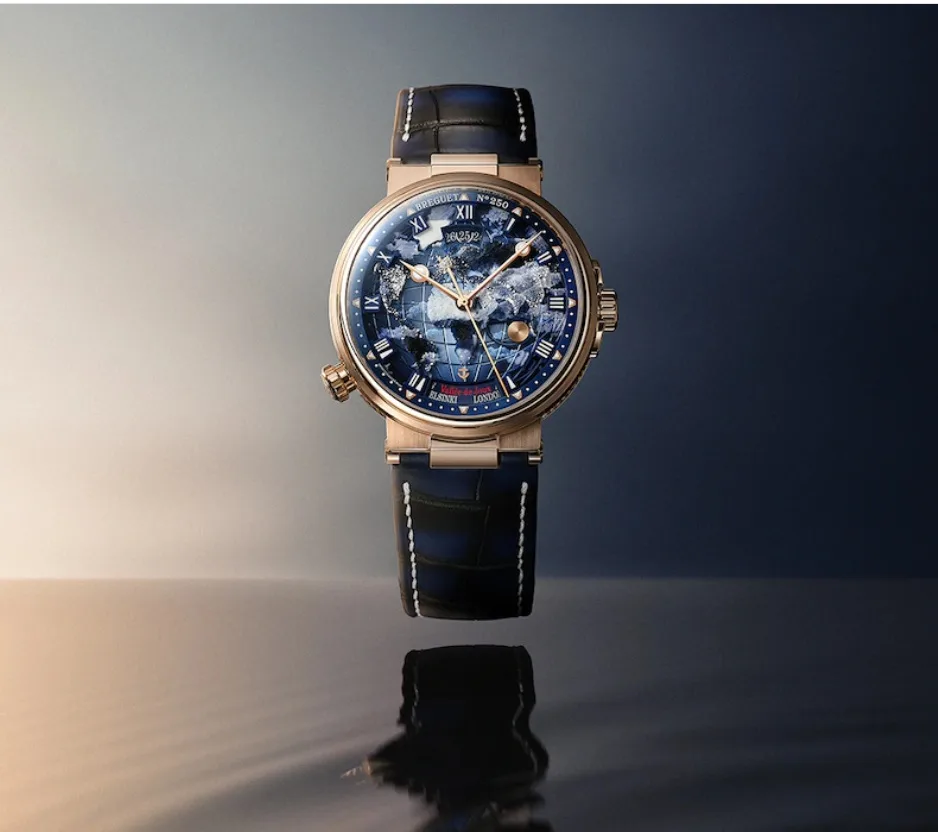
The Breguet Marine collection was officially launched in 1990 as a tribute to the Maison’s historical heritage and to the appointment of Abraham-Louis Breguet as watchmaker to the French Royal Navy by King Louis XVIII in 1815. The collection was relaunched in 2004, while a new generation of Breguet Marine timepieces was introduced in 2017.
Several details of the Marine watches evoke the maritime world, such as the seconds hand, whose counterweight features a nautical signal flag bearing the Breguet initials. The crown of the 40 mm model is framed by wave-inspired decorations. On the reverse side, a sapphire crystal caseback reveals the automatic movement and an oscillating weight reminiscent of a ship’s rudder.
Reine de Naples, the line dedicated to women
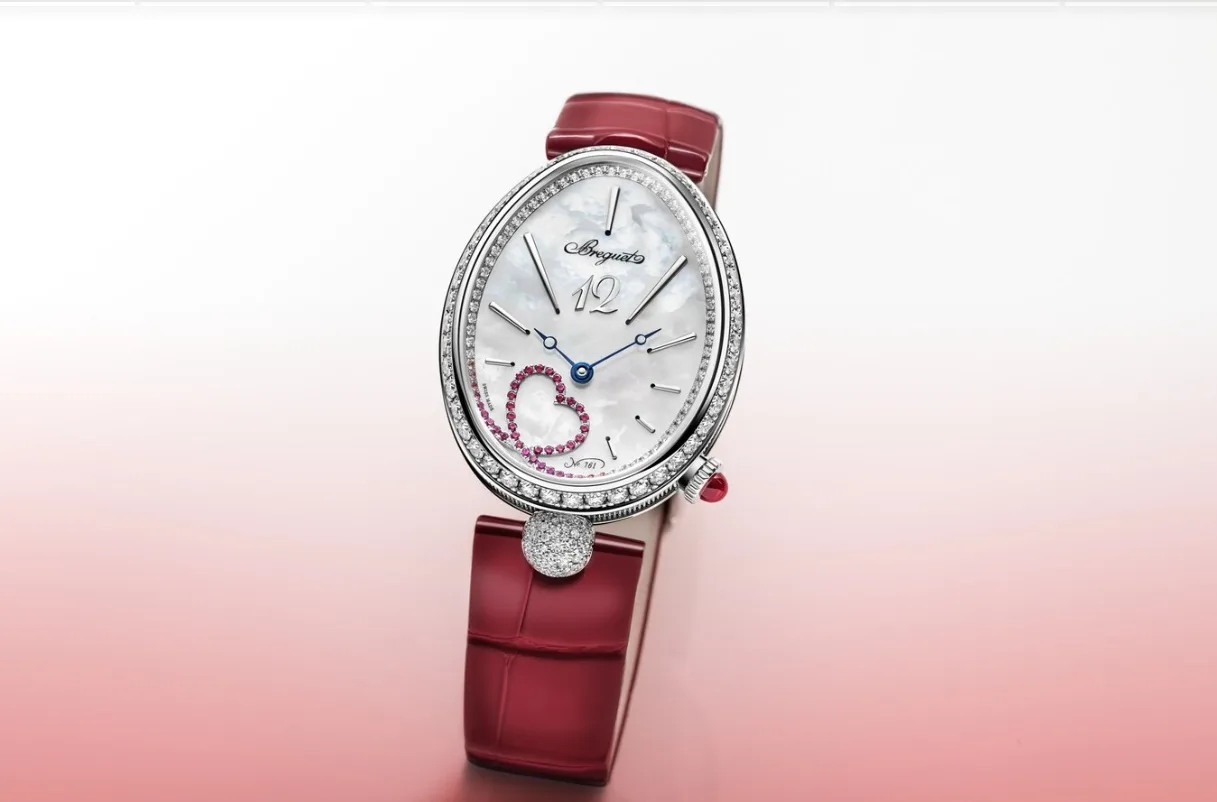
This collection is a free reinterpretation of the very first watch designed to be worn on the wrist, originally created by A.-L. Breguet for Caroline Murat. The pieces in this collection are a refined expression of elegance and precision. The line includes 11 women’s watches crafted in 18K gold and adorned with diamonds, sapphires, or pearls, depending on the model. The Reine de Naples 9915, released in a limited edition of only 28 pieces, was launched to celebrate Valentine’s Day in 2025.
Expérimentale I, an avant-garde timepiece
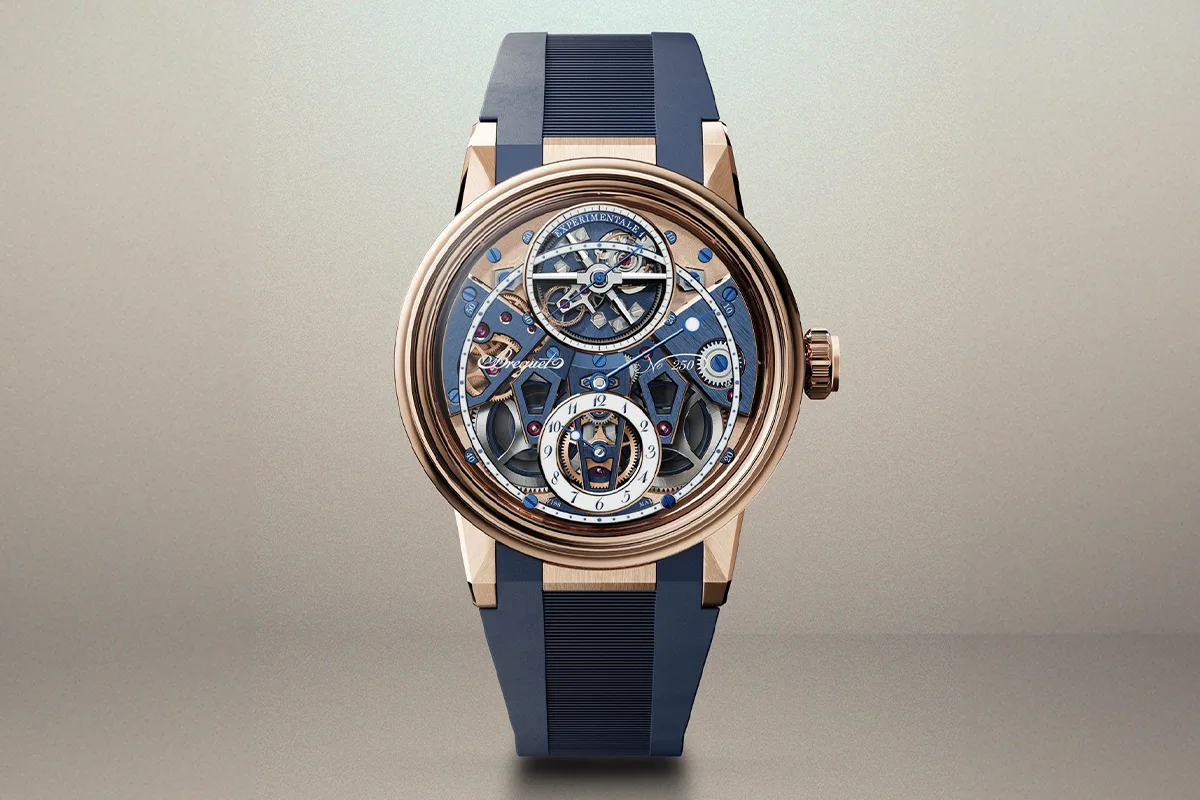
Crafted in gold, the Breguet Expérimentale I was created in 2025 and unveiled later that same year to mark the 250th anniversary of the Maison. The watch is equipped with the first high-frequency 10Hz tourbillon featuring a magnetic escapement capable of transmitting constant force to the balance wheel. By combining a tourbillon, a constant-force escapement, and controlled magnetism, this innovative architecture was designed to enhance stability and precision, earning the Expérimentale I certification from the House of Breguet in the Scientific category.