by Alice-Claudia Gherman, photo archive Rovos Rail
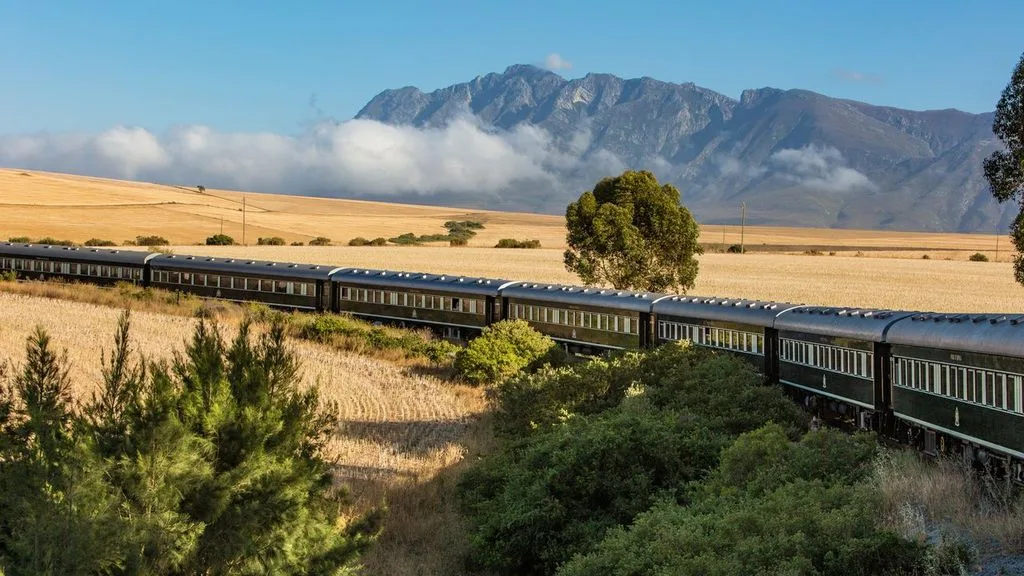
There are train journeys, and then there are train journeys. Some are measured simply in kilometers ; others in the pleasures of life on board and in the rare sensation of time itself seeming to slow down. Aboard the Pride of Africa, the elegance of a bygone era meets the sweeping landscapes of southern Africa. The savannah stretches out beyond the windows, while each stop offers a fresh perspective on this extraordinary continent.
Of course, the mileage is impressive in its own right. The Pride of Africa covers approximately 5,800 kilometres on its journey from Cape Town, South Africa, to Dar es Salaam, Tanzania. Those who choose to travel aboard Rovos Rail’s celebrated trains, with fares ranging from $18,200 for a Pullman Suite to $31,500 for a Royal Suite, are undoubtedly seeking something far beyond the mere experience of covering a distance. They are drawn by the promise of a journey in which the passage itself becomes part of the destination - an invitation to contemplation, leisurely conversation and the quiet pleasures of taking in some of the most captivating scenery on earth.
The Pride of Africa: From Agony and the Ecstasy
The story of the Pride of Africa began in 1985, born out of South African entrepreneur Rohan Vos’s passion for vintage trains. Having acquired a few old railway carriages at auction, he envisaged a kind of ‘railway caravan’ in which he could travel with his wife, Anthea, and their four children. When he discovered the exorbitant government charges for hauling privately owned carriages, Vos decided to sell tickets to tourists to cover the costs, thereby laying the foundations of Rovos Rail. On 29 April 1989, the first Pride of Africa - a train comprising seven restored carriages – set off on its maiden voyage through the Mpumalanga region. Those early years, however, were a far cry from the glamour now synonymous with the train. The carriages often travelled almost empty, and mounting financial losses eventually forced Vos to sell his home, his private aircraft and much of his personal property.
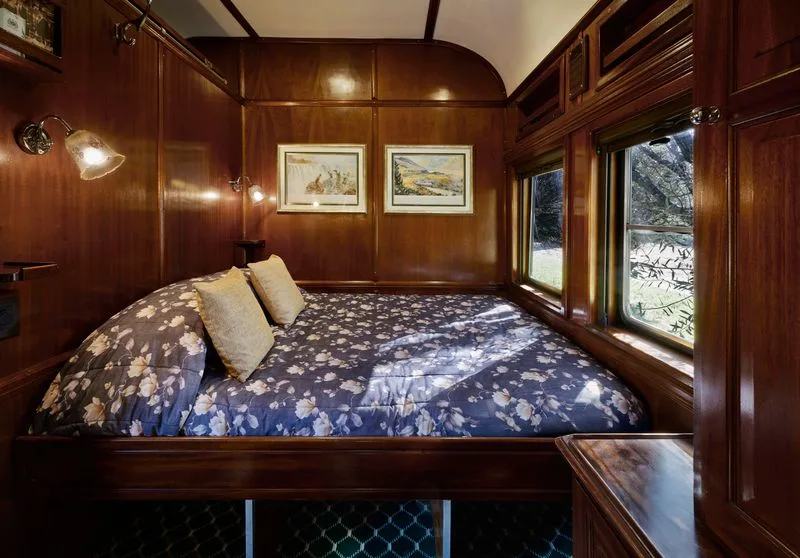
A turning point came in 1993 with the launch of the Cape Town to Victoria Falls route, following a meeting with British travel agent Philip Morrell. The success of this itinerary gave the company a fresh start and enabled it to acquire another 38 historic carriages in just 90 days.From that point onwards, Rovos Rail began to shape its identity around the restoration of railway heritage. Dating from the 1920s and 1930s, the carriages were lovingly brought back to life with mahogany panelling and Victorian-inspired furnishings, while discreetly incorporating the comfort of modern bathrooms.
Vintage Train Carriages Hauled by Locomotives Named in Honour of Rohan Vos’s Family
The names of Rovos Rail’s vintage locomotives tell a rather personal story. Founder Rohan Vos dedicated them to his children and his mother, as a tribute to the support they gave him during the company’s formative years. Bianca and Brenda, twin Class 19D locomotives built in 1938, are among the most cherished members of the fleet. Bianca, the first locomotive acquired by Vos, was rescued from a scrapyard and painstakingly restored over almost two years before going on to haul the inaugural journey in 1989.
Another remarkable piece of railway heritage is Tiffany, built in Scotland in 1893 and the oldest operational steam locomotive in the fleet. Shaun, named after the founder’s only son, was restored in the company’s own workshops in Pretoria, while Marjorie - named in honour of Vos’s mother - is distinguished by her considerable power and its conversion from coal-fired to heavy fuel oil operation.
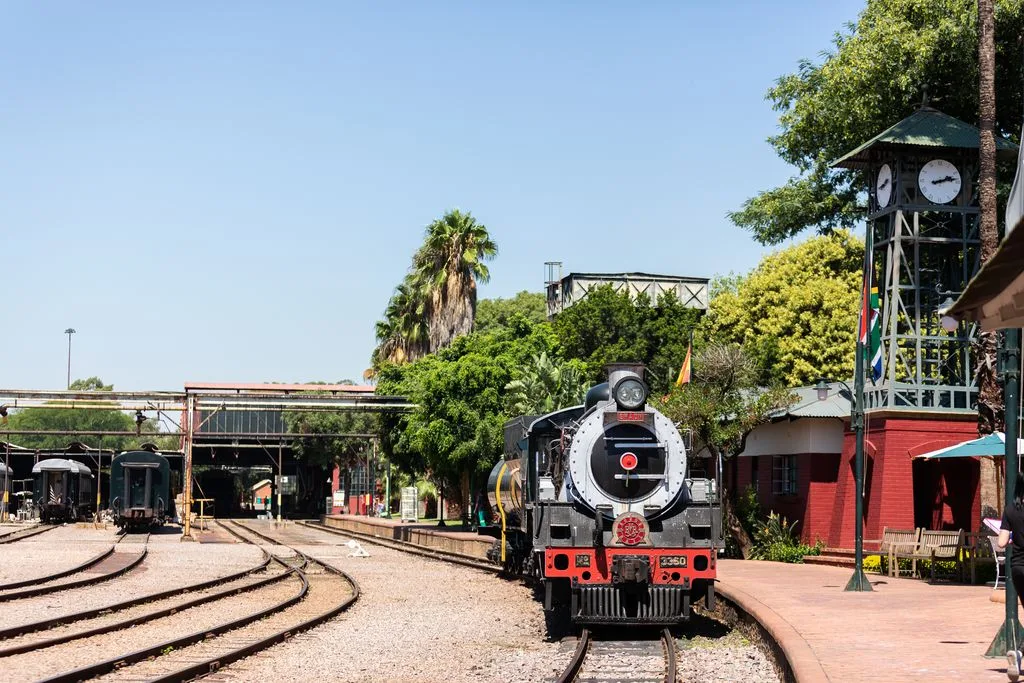
Today, the steam locomotives are reserved largely for ceremonial departures and arrivals at the private Capital Park station, as well as for selected scenic stretches of the journey. For longer distances, the trains are hauled by modern diesel and electric locomotives.
A Journey of Luxury and Indulgence, Far Removed from Phones, Television and Modern Gadgets
With a capacity of no more than 72 passengers, each Pride of Africa train offers an array of elegant shared spaces, where the golden age of rail travel in the 1920s meets the pleasures of contemporary leisure. In the beautifully preserved historic dining cars, meals are served amid carved woodwork, brass chandeliers, crisp white linen and fine porcelain. At the very rear of the train, the observation car offers ever-changing views of the African landscape, enjoyed through panoramic windows or from its open-air balcony.
The Lounge and Club Car, inspired by the quintessentially British private members’ clubs - featuring Chesterfield sofas, a modest library and a souvenir boutique - have the purpose of inviting guests to linger, converse and unwind. The atmosphere is one of unhurried refinement, deliberately free from the distractions of modern life. There are no televisions, radios, mobile phones or other contemporary gadgets to interrupt the experience. Aboard the Pride of Africa, the greatest luxury is the freedom to disconnect, slow down and rediscover the pleasure of living the moment.
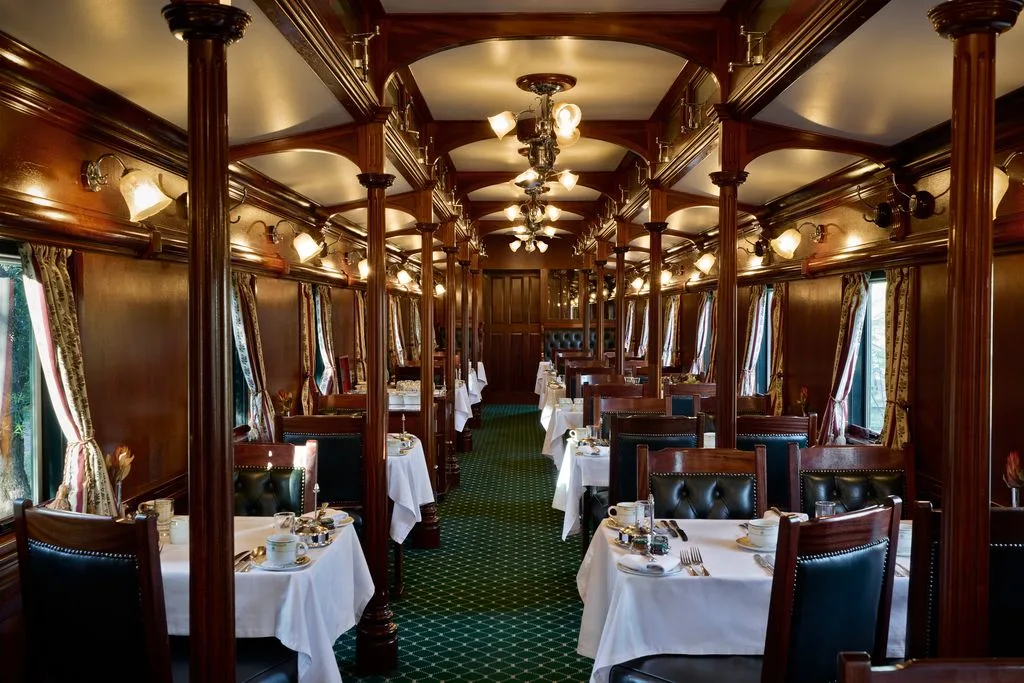
Attire also follows a subtle code. During the day, smart-casual attire is preferred, while safaris call for comfortable clothing in neutral tones, complemented by a hat and suitable footwear. As evening falls, the atmosphere on board takes on a more formal tone. Dinner is served in a single sitting, and elegant attire - such as collared shirts and ties for gentlemen, and cocktail dresses or sophisticated suits for ladies - is very much part of the ritual. On selected itineraries, themed evenings add a playful flourish to the experience, with inspiration ranging from the glamour of the Roaring Twenties to the rich colours and motifs of Africa.
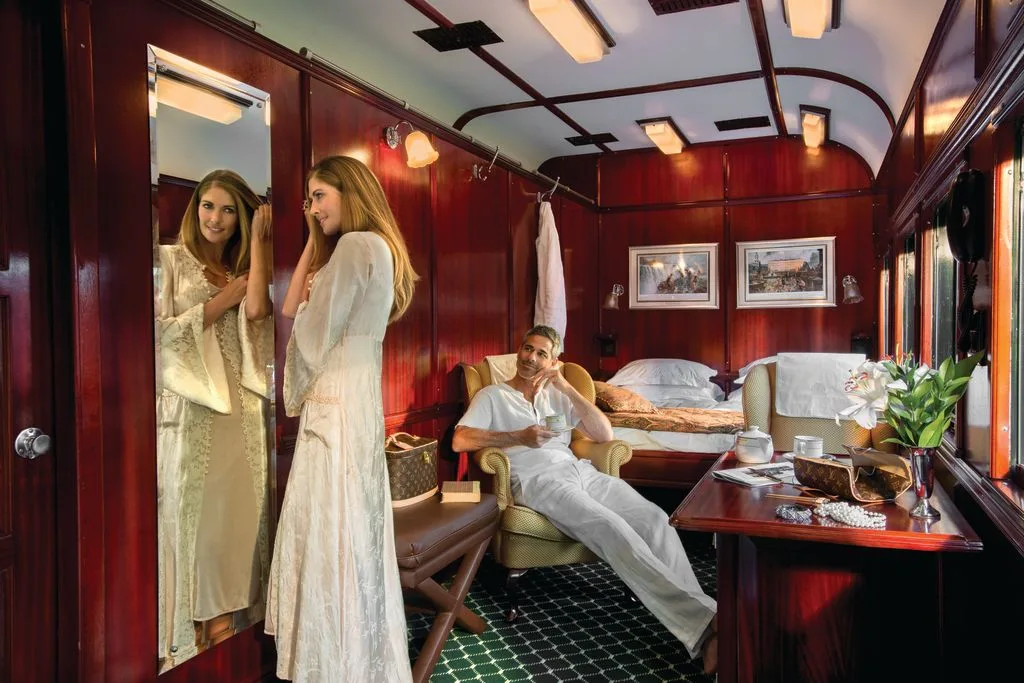
The same thoughtful consideration for the comfort of all guests extends to the finer points of on-board etiquette. Smoking is permitted only in designated areas, children are welcome, provided they respect the tranquillity of shared spaces and guests are encouraged to pack with restraint, although no strict luggage weight limit is applied.
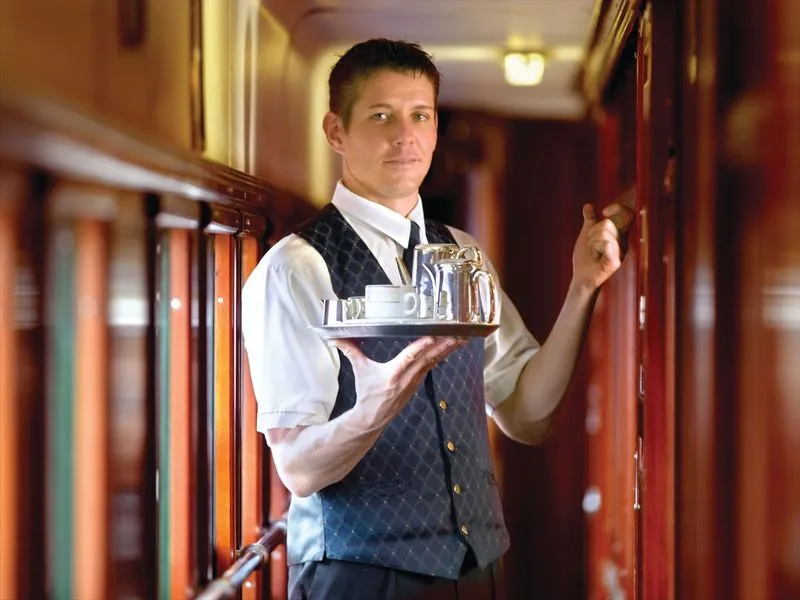
Gastronomy is an integral part of the journey’s ritual. Served in the train’s vintage dining cars, exquisite meals - from breakfast to dinner, announced by the sound of a gong - are included in the fare, with vegetarian options included. The menu brings together South African specialities and international dishes, complemented by local wines and a carefully curated selection of fine beverages. Dietary requirements can also be accommodated, provided they are communicated in advance.
From the Atlantic to the Indian Ocean
What began as a series of itineraries within South Africa gradually expanded far beyond its borders, reaching as far as Dar es Salaam in Tanzania, Namibia and even venturing along the Trail of Two Oceans route to Angola. Today, this family-owned enterprise operates a fleet of six trains, remaining faithful to a vision in which rail travel becomes an experience of heritage, refinement and discovery. Rovos Rail has thus earned its reputation as one of the world’s most exclusive luxury rail travel experiences.
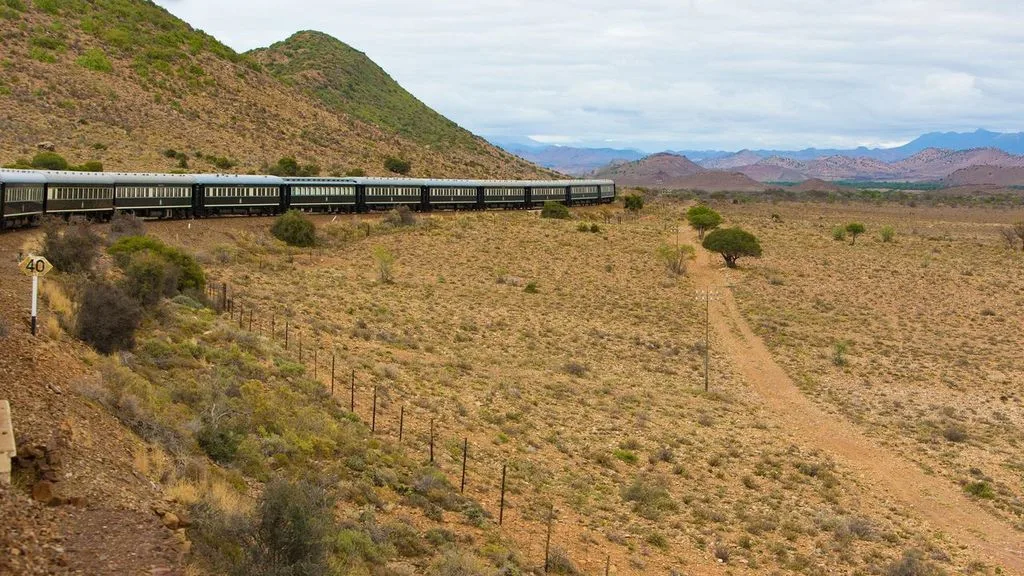
From intimate escapes of two to four nights to grand expeditions lasting more than a fortnight, the Pride of Africa itineraries reveal the splendours of southern Africa at an unhurried and privileged pace. With frequent departures from and arrivals at Rovos Rail’s private station in Pretoria, the eleven principal routes traverse some of the continent’s most captivating landscapes - from the elevated expanses of the Highveld and the arid reaches of the Karoo to the Cape Winelands (the wine-growing regions of South Africa’s Western Cape province, around Stellenbosch, Franschhoek and Paarl, east and north-east of Cape Town – ed.), to the Namib Desert and the Indian Ocean shoreline. Safari experiences, historic landmarks and stops at some of the region’s most evocative towns lend each journey its own distinctive character.
For those wishing to venture beyond the borders of a single country, the Pride of Africa’s grand expeditions span the continent on journeys lasting between 14 and 16 nights. Among them is the celebrated Cape Town to Dar es Salaam route, with stops at Victoria Falls and in Nyerere National Park, as well as the Copper Trail, which follows the historic copper route towards the Angolan port of Lobito.
The African Trilogy links the Indian and Atlantic Oceans, by passing through landscapes that encompass Kruger National Park, the Drakensberg Mountains and the Namib Desert. Meanwhile, the Malawi Meander traverses four countries on its journey from Pretoria to Lilongwe, with memorable stops along the shores of Lake Malawi. Each itinerary offers a sweeping perspective on southern Africa, combining remarkable distances with safari experiences and stops in places of extraordinary natural beauty. These routes wind through national parks, deserts, mountain ranges and regions steeped in history, offering far more than a railway journey: an immersive exploration of an entire continent, experienced in the distinctive comfort and understated elegance of Rovos Rail.
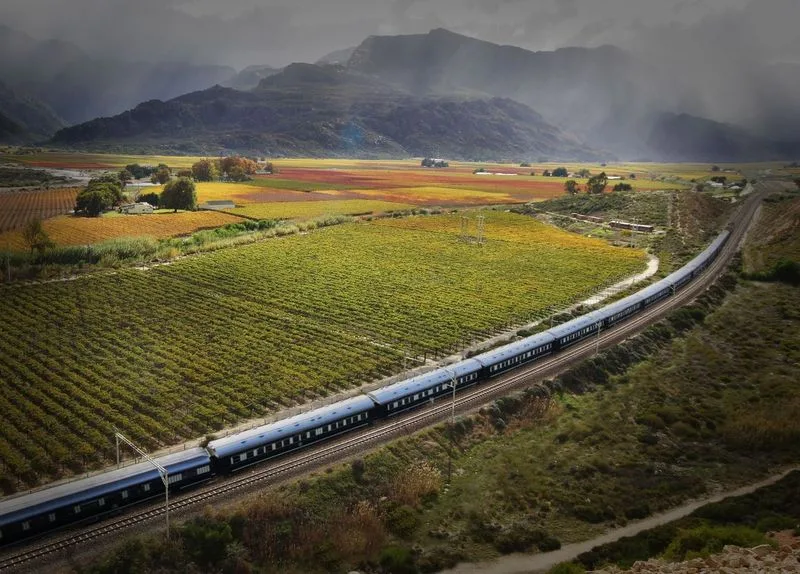
On the South African luxury rail travel scene, the Pride of Africa has a distinguished rival: The Blue Train. Both embody distinct interpretations of refinement and indulgence. The former evokes the nostalgic elegance of the 1920s, inviting guests to disconnect from the modern world on grand expeditions spanning several countries. The latter, by contrast, offers all the comforts of a contemporary five-star hotel on rails, with dedicated butler service, state-of-the-art amenities and shorter itineraries.