Traditional Peasant Houses
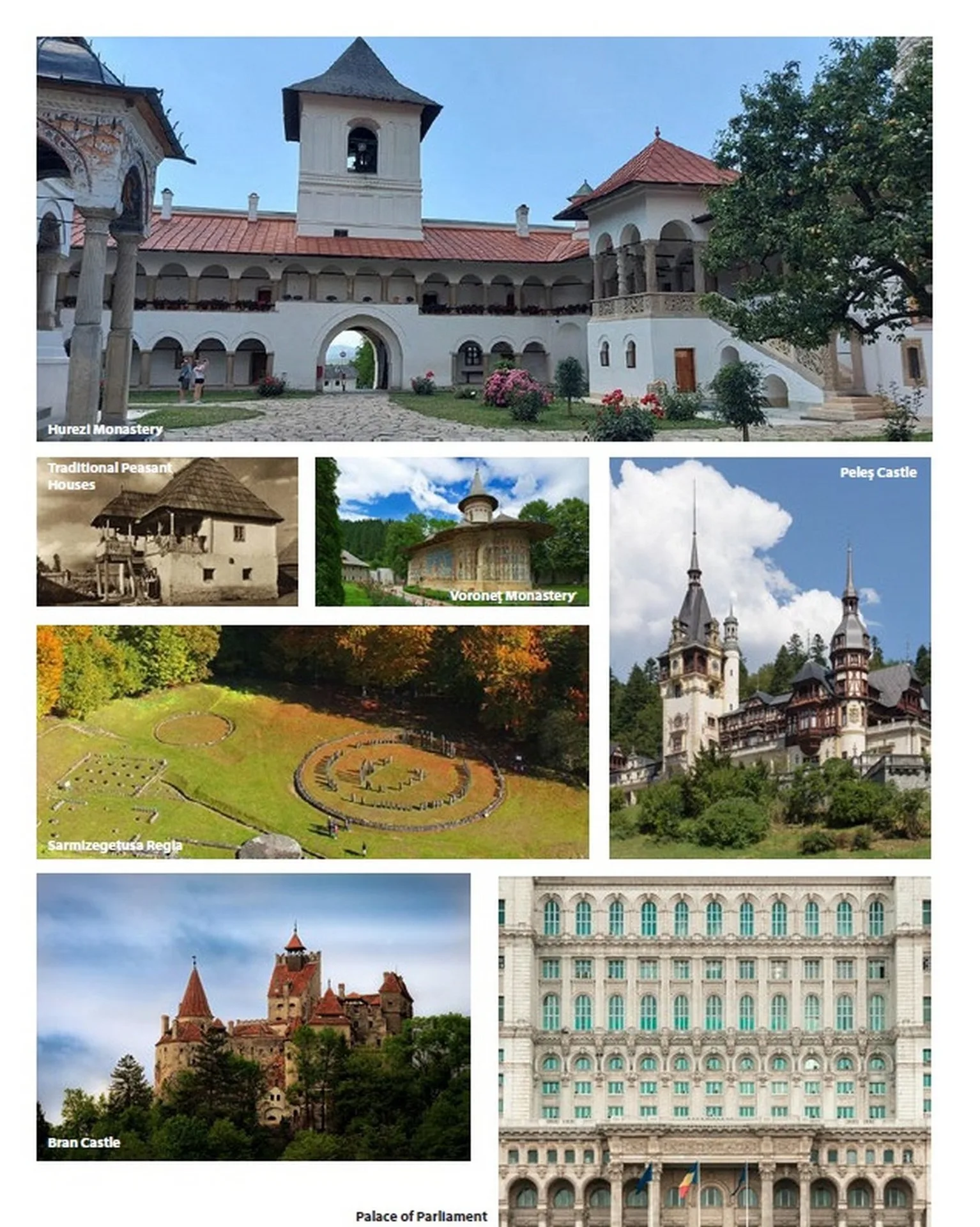
Romanian peasants built homes in harmony with nature. Wood, clay, and straw formed the backbone of village architecture. In Maramureș, towering wooden churches with shingled spires reach for the heavens, their intricate carvings telling biblical stories without words. These UNESCO-listed treasures were built without a single nail, a testament to the skill of craftsmen
The Dacians and Romans fortresses
Over 2,000 years ago, Dacians built their citadels into mountaintops. These early stone fortresses, like those in Sarmizegetusa Regia, were both sanctuaries and observatories— evidence of a civilization as mystical as it was sophisticated.
Then came the Romans, with their arches and order, imprinting their empire’s elegance onto Dacian soil. The ruins of Ulpia Traiana Sarmizegetusa, the former capital of Roman Dacia, display evidence of amphitheaters, baths, and meticulous geometry.
Medieval Fortresses and Churches
In the Middle Ages, Romania became a battleground of empires. The Saxons, invited to guard Transylvania’s borders, built fortress-churches like the one in Biertan, where concentric walls and watchtowers defended against invaders. Inside, golden light spilled through stained glass onto frescoes of biblical scenes – symbols of faith and resilience.
Bran Castle, is often tied to Dracula’s legend, but its true story is of a strategic stronghold: a customs post between Transylvania and Wallachia.
Further south, in Oltenia and Muntenia, peasants’ houses wore broad, sloping roofs to shield against snow and sun, their verandas adorned with geometric motifs. Each pattern held meaning – zigzags for life’s twists, circles for eternity. The cula – a fortified stone house with thick walls and small windows – stood guard against Ottoman raids.
Moldavian Painted Monasteries
In the hills of Bucovina, North of Romania eight monasteries were built in the 15th and 16th centuries, their outer walls blaze with vivid frescoes of angels, martyrs, and the Last Judgment. Voroneț’s “Sistine Chapel of the East” shines in a unique shade of blue – Voroneț blue – a pigment lost to time. These monasteries places of worship that tought faith through color and light.
Brancovenesc style
Is a stunning blend of Byzantine, Ottoman, Renaissance, and Baroque elements. In the late 17th century, during the reign of the Wallachian prince Constantin Brâncoveanu, the new architecture oscillated between East and West, with open loggias, intricately carved stone columns, and floral motifs that wrapped buildings like embroidery. The Hurezi Monastery and stands as its masterpiece, a UNESCO World Heritage site that breathes harmony and grandeur.
Neo Romanian Style
The 19th century arrived with Romanticism and a thirst for identity. Architects reached back to folklore and national myths, creating the Neo-Romanian style: steep roofs, rounded windows, wooden balconies, and folk motifs were reflected in buildings like the Cantacuzino Palace in Bucharest Peleș Castle, a 19th-century Neo-Renaissance masterpiece was King Carol I’s answer to European elegance, its halls dripping with stained glass, Murano chandeliers, and hand-carved walnut.
The Grandeur and Decadence: Belle Époque and Communist Architecture
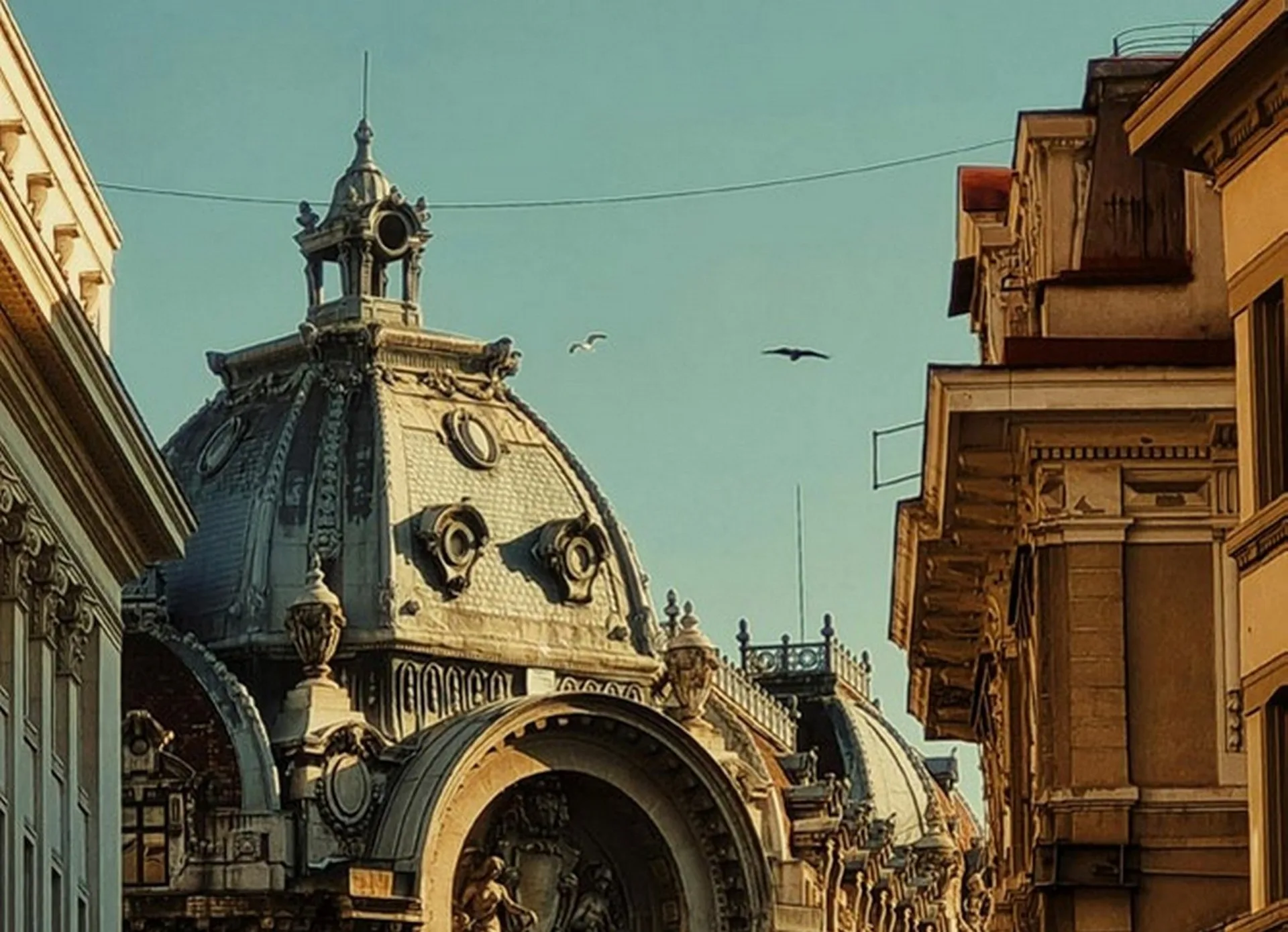
In the 20th century, the winds of modernism swept across Europe, and Bucharest earned its nickname – the Little Paris – with grand boulevards and Art Deco facades.
Yet, this way of developing cities was brutally interrupted by communism. Communist regime reshaped the country’s architecture with monolithic structures and wide avenues, culminating in the colossal Palace of the Parliament – the second-largest administrative building in the world, and a controversial monument to both ambition and oppression. Alongside megalomanic buildings, rows of uniform communist-era blocks stand as stark reminders of a time when individuality was suppressed.