by Alice-Claudia Gherman, museum archive photo
2026: A New Generation of Museums on the Horizon
From Abu Dhabi to London, from Los Angeles to Tashkent, a new generation of museums will open its doors to the public, changing the way we experience art, architecture, and culture. We invite you on a brief journey through the world of contemporary museums in 2026, offering many destinations to explore should you find yourself in any of the cities that will host them.
V&A East Museum, London, United Kingdom
This spring in London, in the Queen Elizabeth Olympic Park area in Stratford, the V&A East Museum will open on April 18, 2026. “With galleries, exhibitions and events that highlight the people, ideas and creativity shaping global culture today, the V&A East Museum will be a place for meeting, inspiration, and new ideas,” promise the organisers. Designed by Dublin-based architects O’Donnell & Tuomey, the V&A East Museum spans five floors and offers inviting spaces for socialising, alongside major exhibitions, festivals, commissions, installations, live performances, temporary programmes and evening events. The museum aims to bring underrepresented communities and art forms to the forefront.
It should therefore come as no surprise that among the several thousand exhibits visitors will discover an intentionally unsettling chest of drawers entitled You Can’t Leave Your Memories, designed by Tejo Remy in 1991 and manufactured by Droog Design after 1993 in the Netherlands, as well as an animated GIF sticker of a puppy blowing soap bubbles, created for use on the WeChat app in 2017 in Shenzhen (Guangdong), China, and many more. All of these works represent artistic forms of expression that deserve special attention and an open mind, whatever form art may take.
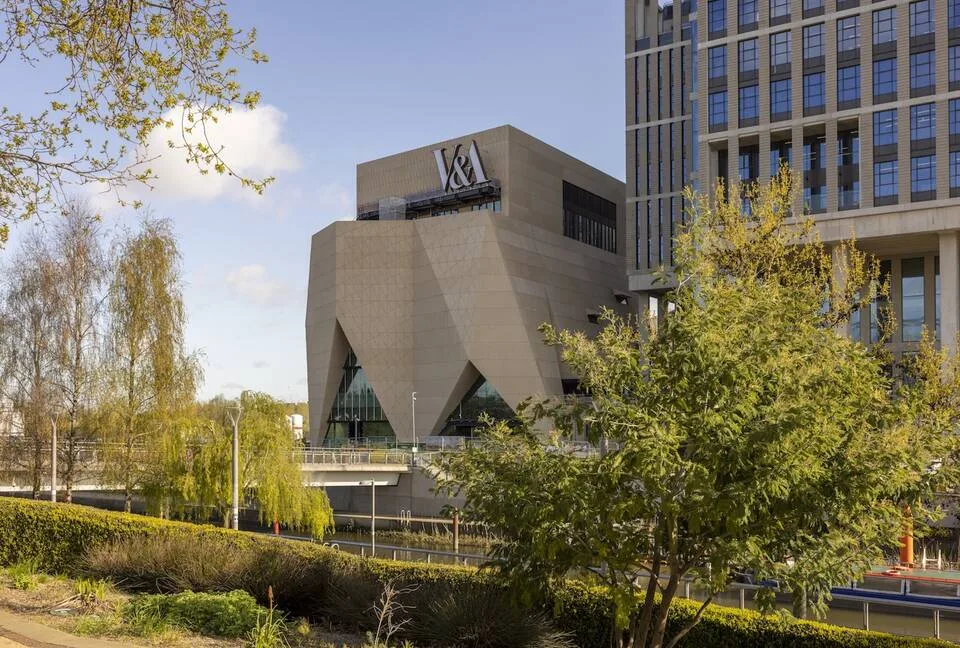
Photo: by Peter Kelleher, Victoria & Albert Museum, London
AMOCA, Cardiff, Wales
We remain on British soil for the opening of AMOCA in Cardiff, Wales, scheduled for the first decade of June. Its aim is to provide a meeting place for innovative contemporary art, establishing AMOCA as a key platform and museum for exhibitions, discussions and symposia. Conceived as a mediator between the public and contemporary visual artists, AMOCA promises to achieve the essential goal of bridging the gap between audiences and contemporary art. It will offer educational activities such as seminars, workshops, artist talks, interactive exhibitions, and an extensive digital platform showcasing both established artists and emerging talent, as well as voices from previously marginalised communities.
Visitors can expect to encounter paintings, sculptures, art installations and digital works brought together in one place, offering a broad and compelling view of today’s contemporary artistic landscape.
Drift Museum, Amsterdam, Netherlands
While we remain on the old continent, we invite you to visit the Drift Museum in Amsterdam. Originally scheduled to open in 2025, it will finally welcome the public this year, although a fixed opening date has not yet been announced. The project’s initiators promise that “the Drift Museum is for everyone: adults and children, tourists and locals alike.”
At the heart of the redevelopment of the historic Van Gendt Hallen in eastern Amsterdam, across an area of 25,000 square meters, stands the Drift Museum, a purpose-built cultural space dedicated to the projects of the Dutch experimental art studio Drift. Designed by the architecture firm zU-studio, the project consists of five monumental 19th-century factory buildings transformed into a dynamic destination where art, architecture, and sustainability converge. This extensive adaptive-reuse initiative not only preserves a significant part of Dutch industrial heritage, but also reimagines it as a future-proof, energy-neutral landmark for contemporary culture.
Of the total 25,000 square meters, approximately 8,000 are dedicated to Drift’s experimental art installations. “The Drift Museum is the result of everything we have created over the past 17 years. We hope it will be a place that generates wonder and emotional responses from our visitors and helps them feel more connected to our planet and to nature,” say Lonneke Gordijn and Ralph Nauta on the museum’s website.
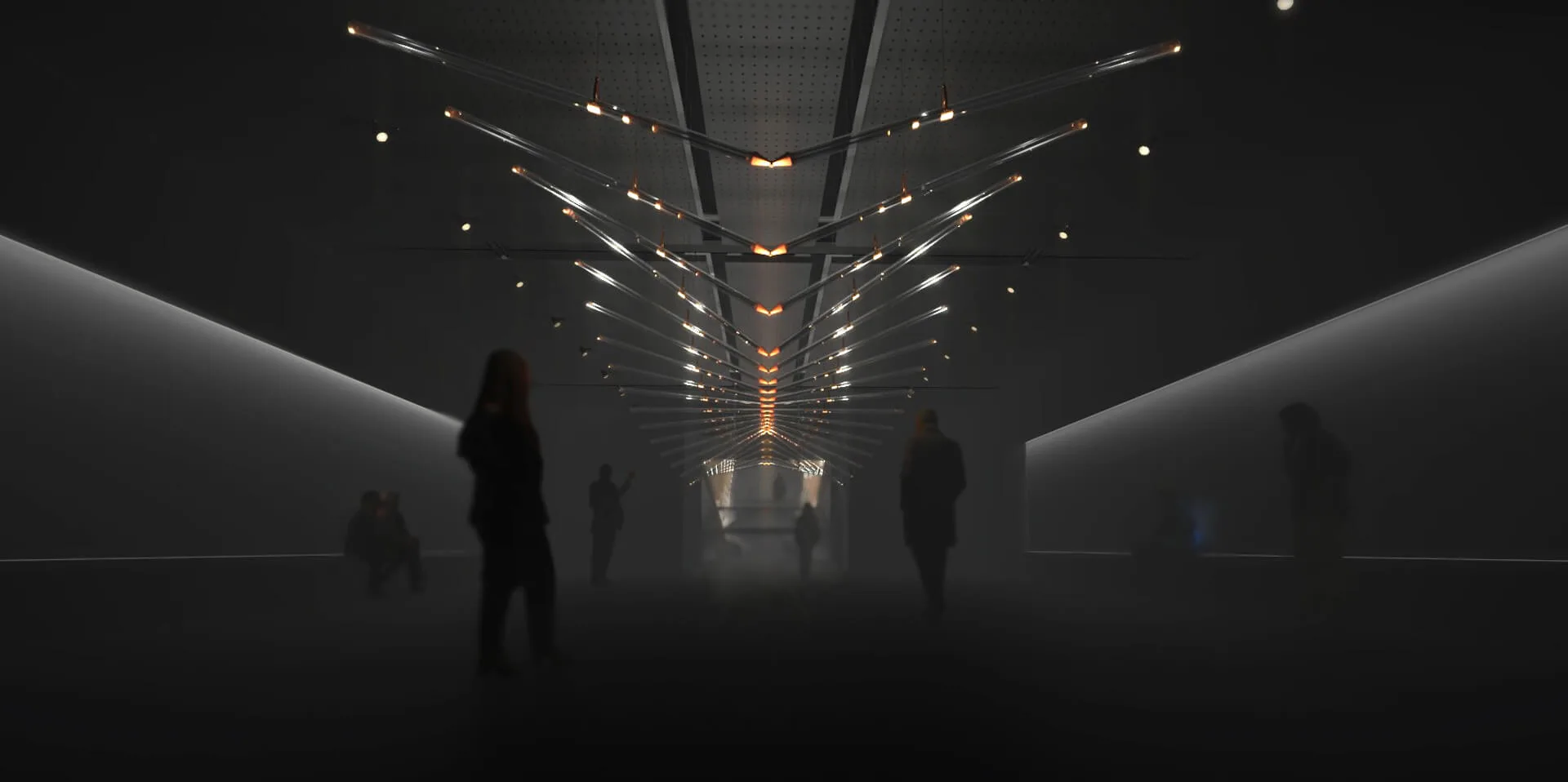
Photo: DRIFT Museum, Art space for Drifters. Architecture by zU studio, by Céline Laurand
UBS Digital Art Museum, Hamburg, Germany
We remain in Europe for a brief stop at the UBS Digital Art Museum in Hamburg, Germany, another major new museum opening this year, although its exact launch date is still to be announced. The new institution will become one of the most significant platforms for digital and immersive art in Europe, and consequently one of the most important venues for these art forms worldwide. Its goal is to make this emerging genre accessible and tangible to everyone.
What will make it truly stand out is the way digital works are presented. Artworks will extend beyond the rooms in which they are displayed, communicating with one another, influencing and sometimes merging into a boundless visual world. As visitors immerse themselves in this borderless environment, they will “wander, explore, and discover,” the curators promise.
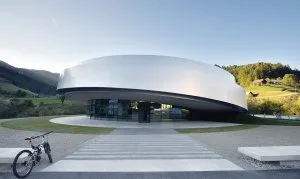
Across Europe, another six or seven contemporary art museums are expected to open this year. This article does not aim to be exhaustive, so not all of them are presented here. However, it is worth noting that in Slovenia, near Lake Bled, the Lah Museum of Contemporary Art is scheduled to open around July 17, 2026. In Brussels, the Canal–Centre Pompidou will open on November 18, 2026, while toward the end of the year, the New London Museum, located in the former Smithfield Market and representing a £437-million project is also expected to welcome its first visitors.
Lucas Museum of Narrative Art, Los Angeles, USA
Across the Atlantic, in North America, and more precisely in the United States, around eight new museums are scheduled to open this year. Three of these are expansions of existing contemporary art institutions: the New Museum in New York, the Crystal Bridges Museum of American Art in Bentonville, and the Los Angeles County Museum of Art (LACMA), while the rest are entirely new museums.
Three major museum projects will open to the public in Los Angeles alone. The expansion of the Los Angeles County Museum of Art, designed by architect Peter Zumthor, will open in April 2026, nearly doubling the museum’s exhibition space. In downtown Los Angeles, artist Refik Anadol will inaugurate Dataland, the world’s first museum dedicated to art created with the help of artificial intelligence. However, the most ambitious and highly anticipated of the three is the Lucas Museum of Narrative Art, which is scheduled to open on September 22.
Striking and monumental in its exterior architecture, the Lucas Museum is a billion-dollar project initiated by filmmaker George Lucas and dedicated to narrative art in all its forms, from cinema to digital media. The building resembles a futuristic spacecraft, reminiscent of the Enterprise from the iconic sci-fi series Star Trek.
The museum was founded by George Lucas, the creator of Star Wars, together with businesswoman Mellody Hobson. Designed by Ma Yansong of MAD Architects, the Lucas Museum is located in Exposition Park, south of Los Angeles. Its campus includes a large green space designed by Mia Lehrer and her team at Studio-MLA. Inside, the galleries explore timeless themes—family, love, work, play, fantasy, and more—expressed through painting, photography, film, and digital media. Additional spaces include two state-of-the-art cinemas, along with areas dedicated to learning, dining, retail, and events.
George Lucas’s lifelong passion for collecting art began when he purchased his first piece while still in college: an illustration of Alley Oop, the time-traveling caveman. Together, Lucas and Hobson have since built and carefully curated a collection that spans everything from classic illustration to contemporary comic-book art.
In addition to its art holdings, the museum houses extensive film archives, including the complete Lucas Archives (1971–2012)—original Lucasfilm materials retained by George Lucas after the sale of the company.
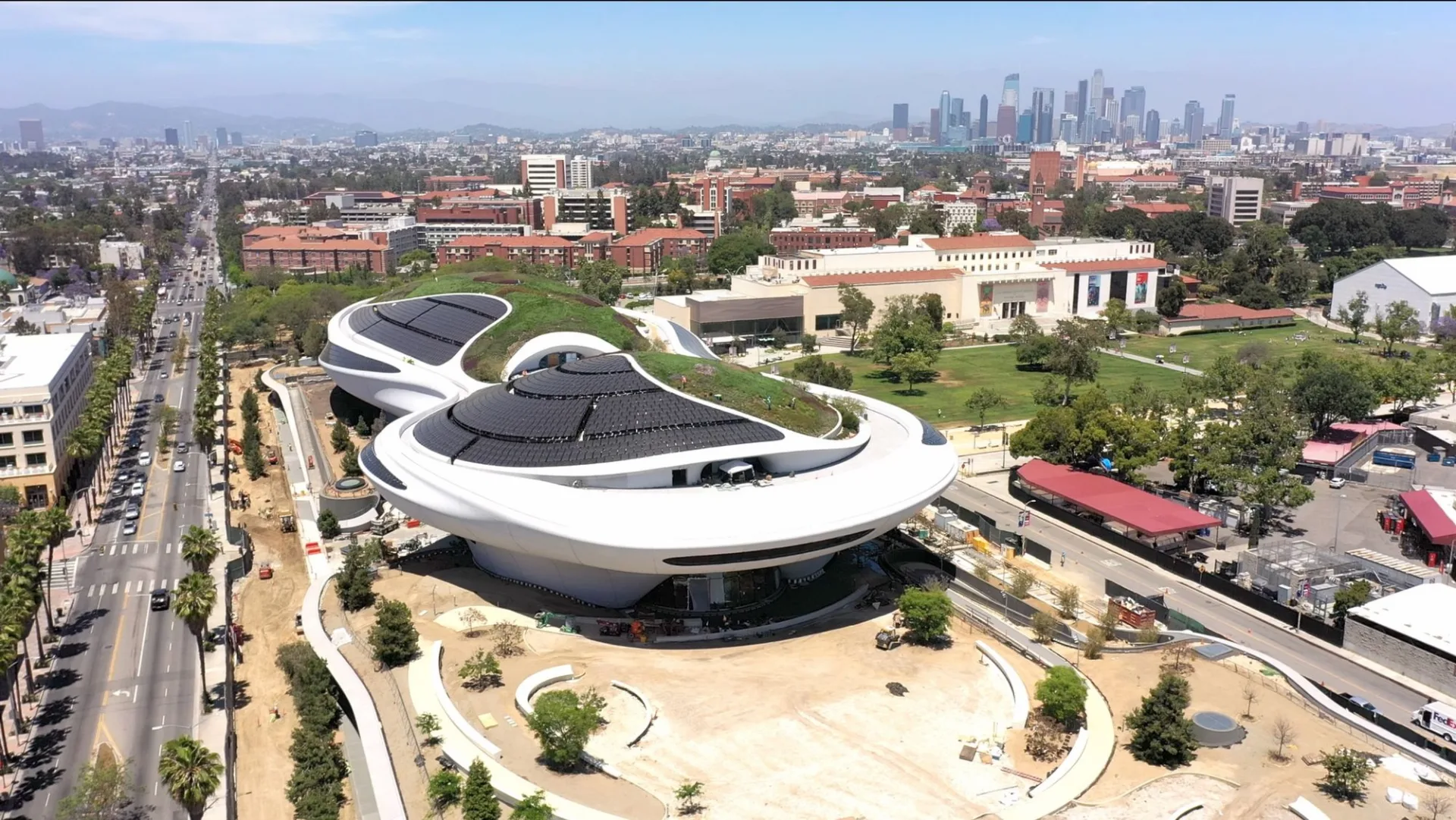
Photo: Lucas Museum of Narrative Art, Los Angeles © 2025 JAKS Productions.
Guggenheim Museum Abu Dhabi, United Arab Emirates
To maintain an atmosphere of absolute grandeur, we turn toward the Middle East, to the United Arab Emirates, where the Guggenheim Abu Dhabi will open later this year. Designed by Frank Gehry and initiated in 2006, the project has taken two decades to complete. Spanning approximately 30,000 square meters, the museum features 11 conical structures that stand in striking contrast to its monumental volumes.
Gehry describes the design as “a deliberate disorder that achieves clarity,” reflecting his signature approach to innovative and dynamic architecture. Dedicated to modern and contemporary art, the Guggenheim Abu Dhabi will impress not only through its bold architectural presence, but also through its collection, which will include both renowned Western artists such as Dan Flavin and Jean-Michel Basquiat, as well as lesser-known talents from Asia, Africa, and the Gulf region.
Tashkent Contemporary Art Center, Uzbekistan
We remain on the Asian continent, this time moving to Central Asia for the opening of the Tashkent Contemporary Art Center, scheduled for March this year. The new institution promises to become a key platform for integrating Uzbek art into the global cultural circuit.
The center is the first of its kind in Central Asia, dedicated to contemporary art, research, and community engagement, and is located in the heart of the historic city of Tashkent. It is housed in a revitalized 1912 industrial building—originally a diesel station and tram depot—now reimagined by the award-winning architecture firm Studio KO.
Suzhou Museum of Contemporary Art, Suzhou, China
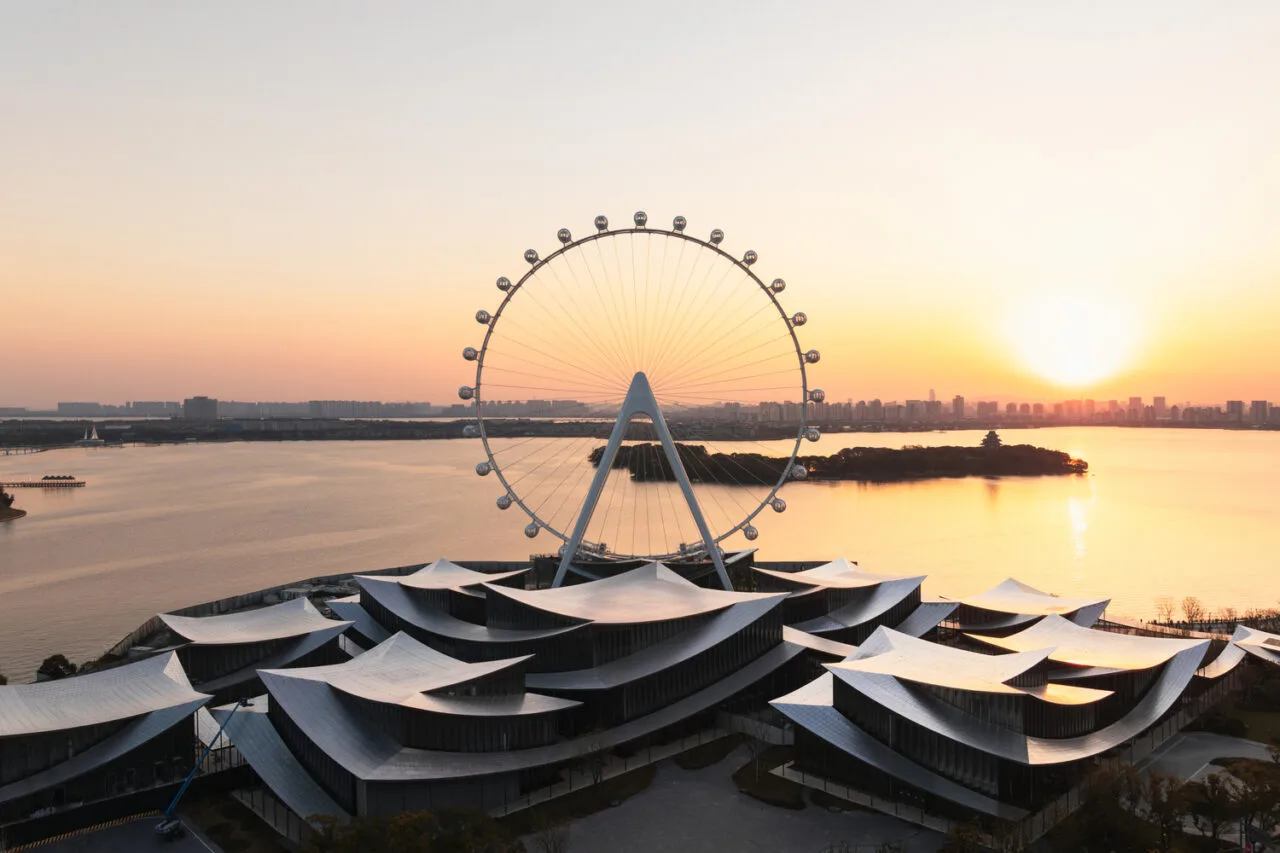
We continue our Asian journey through contemporary art museums with a stop at the Suzhou Museum of Contemporary Art in Suzhou, China. Built on the banks of Jinji Lake, the 55,700-square-meter center is set to open to the public in 2026 with its inaugural exhibition, Materialism, curated by BIG. Designed in collaboration with ARTS Group and Front Inc., the complex is conceived as an ensemble of twelve pavilions unified beneath a continuous, fluid, ribbon-like roof.
The design reinterprets the typology of classical Suzhou gardens, particularly the concept of the lang: a covered corridor that guides visitors through a sequence of interconnected spaces. The landscaping continues Suzhou’s tradition of integrating architecture with nature, leading visitors through a succession of gardens that transition from stone plazas to areas of vegetation and water, before opening onto the lake.
The project aims to achieve GBEL 2-Star certification for green buildings through the use of passive shading, natural ventilation, and local materials.
The museum landscape of 2026 presents a remarkably rich offering, reflecting a global commitment to art, beauty, and public engagement with diverse artistic forms.
Visiting even one of these unique, spectacular institutions requires time, curiosity, and an openness to contemporary art, but the experience promises to be deeply rewarding.
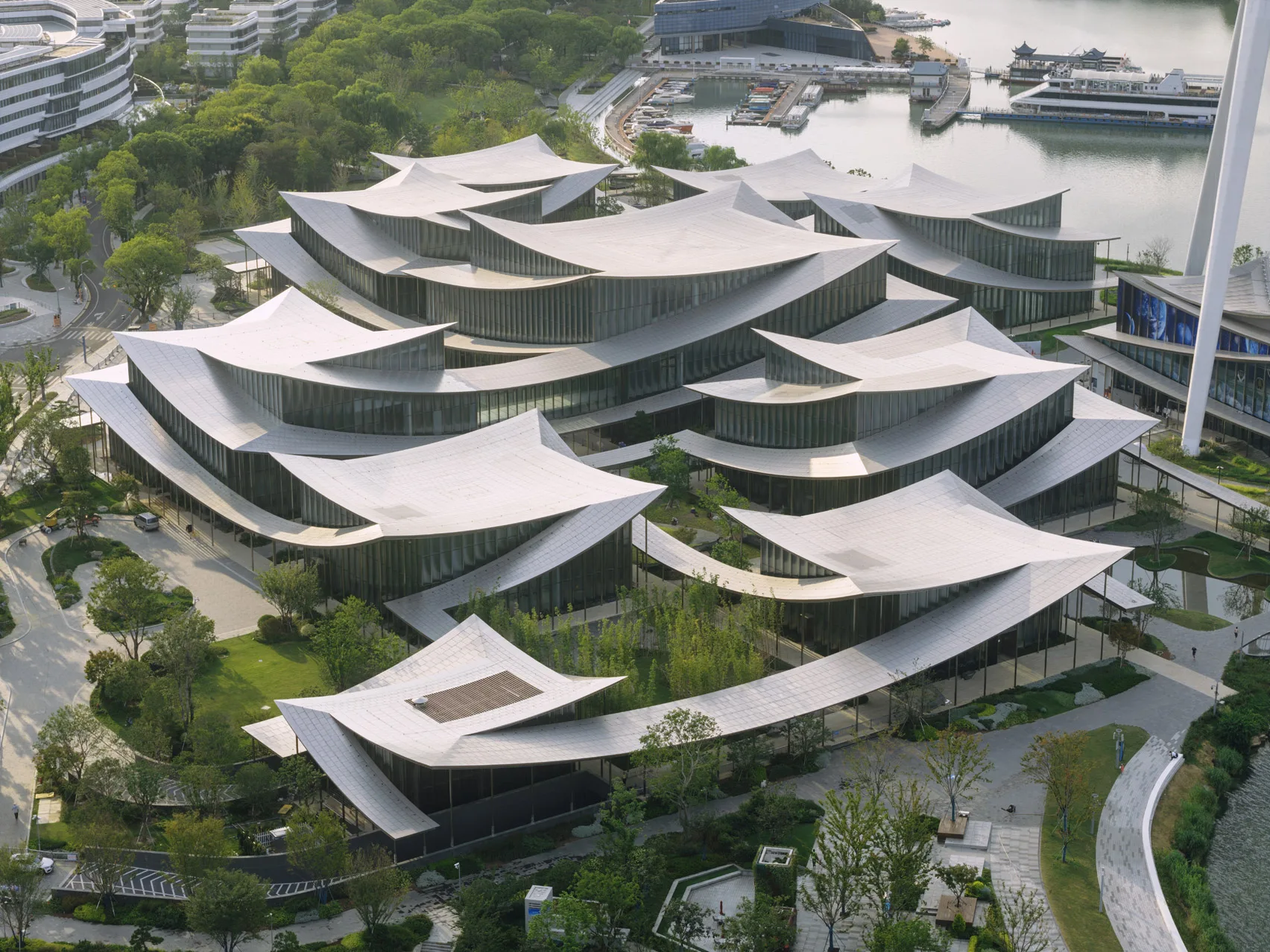
Opening and closing article photo: by Ye Jianyuan - www.dezeen.com