by Alice-Claudia Gherman, photo Alice-Claudia Gherman
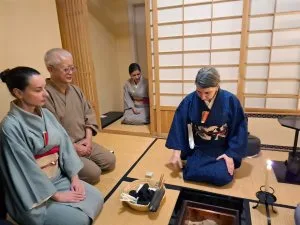
I had the great joy of participating in a Chinese tea ceremony : Gong fu cha, led by tea teacher Li Weirong at the Chinese Culture Institute in Bucharest. I had attended Japanese tea ceremony before, but never a Chinese one. The difference is significant: the Chinese tea ceremony emphasizes taste and technique to achieve optimal extraction rather than ritual and mindfulness. This does not make it any less fascinating. On the contrary, it adds value by offering a new perspective on tea and Chinese culture. Furthermore, both experiences — Gong fu cha (Chinese tea ceremony) and Chado (Japanese tea ceremony) now complete my understanding of this legendary beverage of the Far East.
“The philosophical foundations of the Chinese tea ceremony can be understood as a synthesis of Taoism, Buddhism, and Confucianism, further shaped by historical and cultural influences over time. ”
Gong fu cha — the Intersection of Taoism, Buddhism, and Confucianism
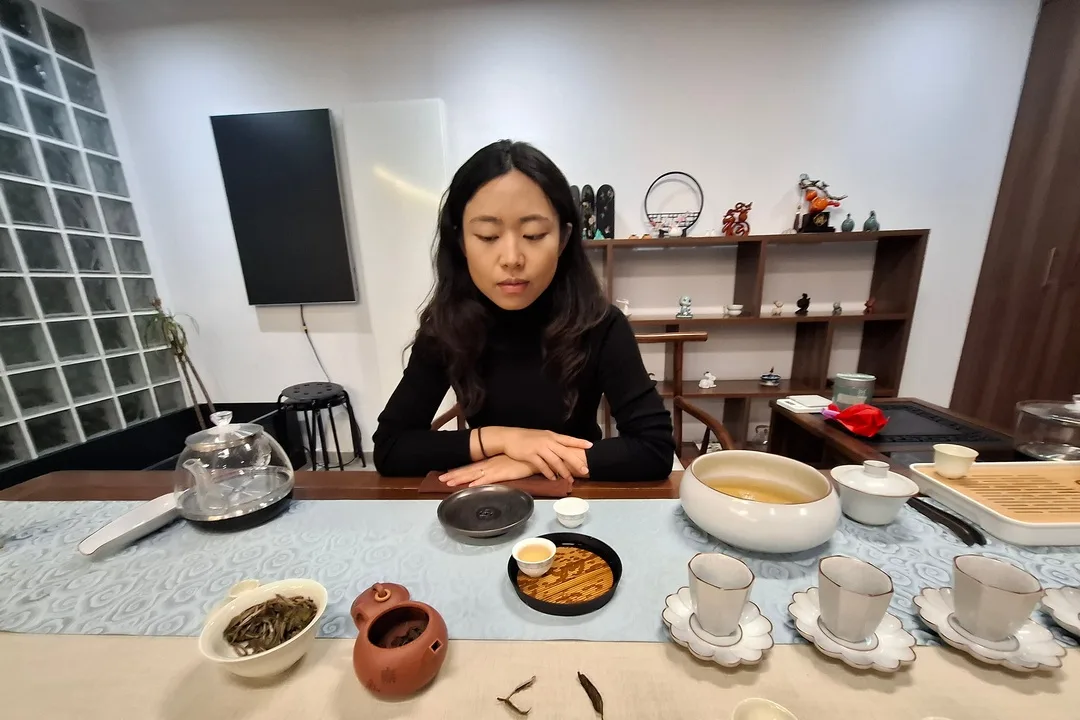
To participate in Gong fu cha, you do not need to follow a strict etiquette. It is enough to dress comfortably, avoid strong perfumes, and, of course, behave respectfully and orderly. Participants sit around a regular wooden table on chairs, and the host prepares multiple infusions, not just one. All the utensils are generally delicate and small, handled with care by Mrs. Li Weirong, who herself seems like a character taken from a fairy tale. Common tools used in a Chinese tea ceremony or in the preparation of Gong fu cha include the gaiwan, the clay teapot, and the tasting cups.
“The Yixing teapot is made from clay from a unique and finite geological region and often considered particularly valuable due to its rarity, material properties, and craftsmanship. At the same time, ceramics made by contemporary artists or skilled artisans, as well as antique teaware, can also hold significant value, whether for their aesthetic qualities or for the historical significance and character they bring to the tea experience,” Ms. Wierong explains as she shows me the various teapots and brings the water to a boil.
Despite the absence of strict rules or codified procedures, the Chinese tea ceremony follows natural and intuitive movements; a harmony that emerges organically. Like reading a story, observing gestures and paying attention to subtle changes contributes to an engaging state of mindfulness.
“The philosophical foundations of the Chinese tea ceremony can be understood as a synthesis of Taoism, Buddhism, and Confucianism, further shaped by historical and cultural influences over time. The forms of tea and the methods of preparation at each stage reflect the philosophical ideals of their respective periods. From the Ming and Qing dynasties to the present, the central concept has remained consistent: to harmonize with nature, appreciate beauty, and cultivate inner calm, thus fostering a deeper connection with the outside world. Chadō (Japanese tea ceremony), on the other hand, was strongly shaped by the practice of powdered tea, which became widespread in the 11th and 12th centuries, and by Zen Buddhism,” says Professor Li Weirong.
Nín xiǎng hē chá ma? Would you like some tea?
Li Weirong uses two types of tea for the ceremony I attended: white tea and oolong. Unlike the Japanese tea ceremony, which uses only matcha green tea, Chinese tea ceremony can feature a wide range of teas. These are generally whole-leaf teas made from the Camellia sinensis plant, including green, yellow, white, oolong, black, and dark teas, all prepared as whole leaves.
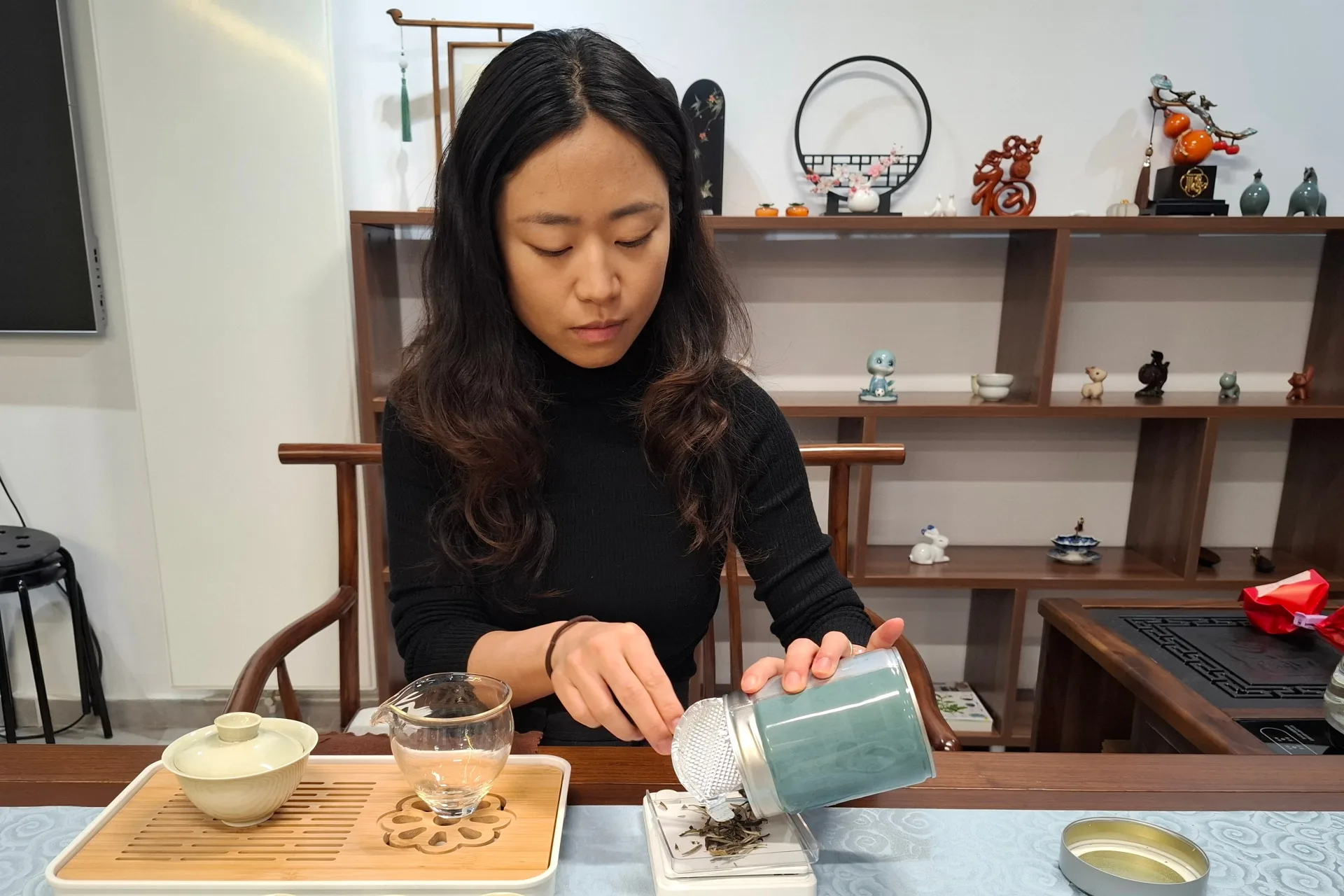
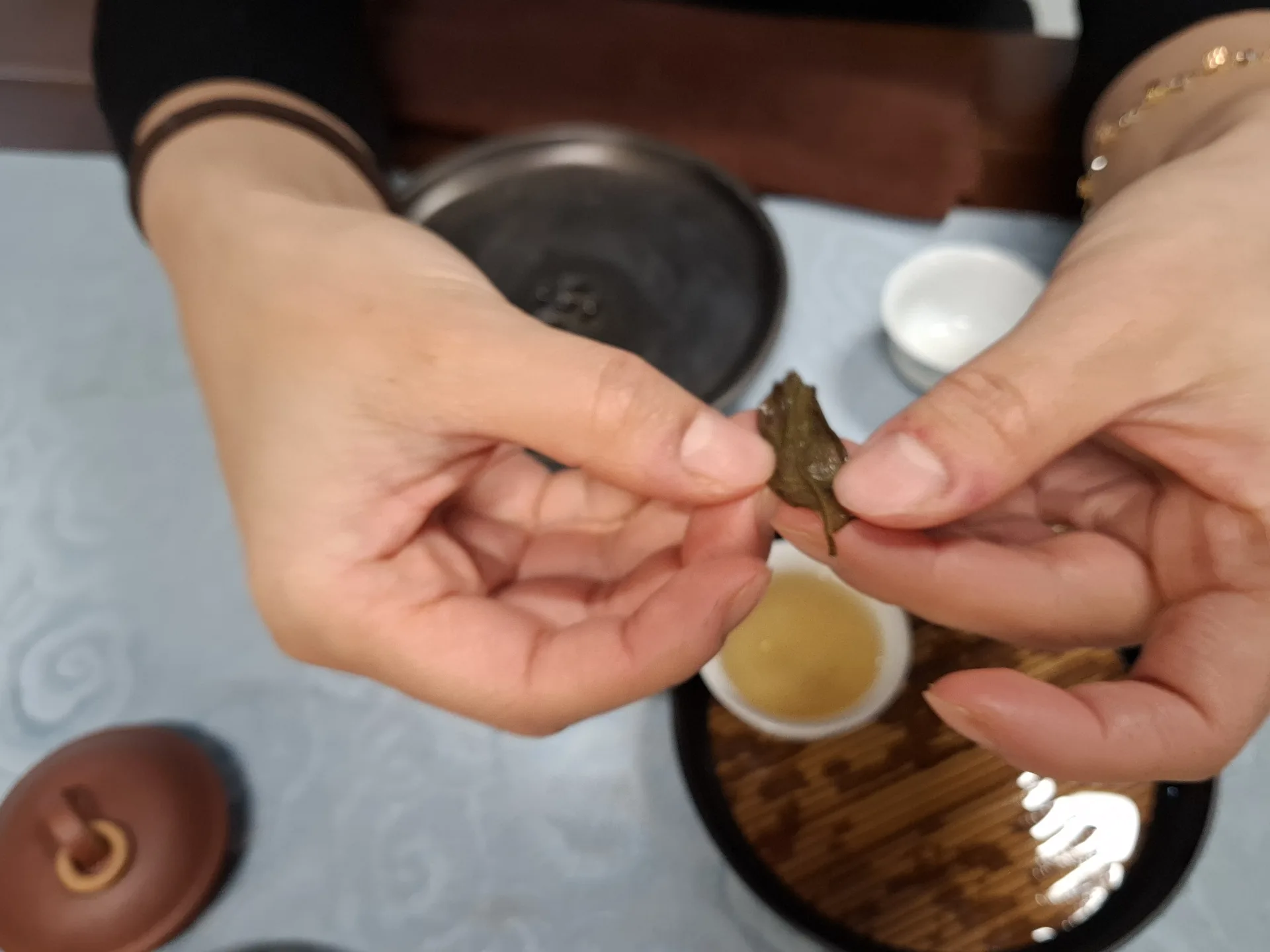
“The quality of tea is determined, among other things, by the fact that the leaves are whole, not broken or shredded as in standard tea bags,” Li Weirong explains. White tea is made from the young leaves and buds of the Camellia sinensis plant, which are not allowed to oxidize or ferment, unlike other teas such as oolong, green, or black tea.
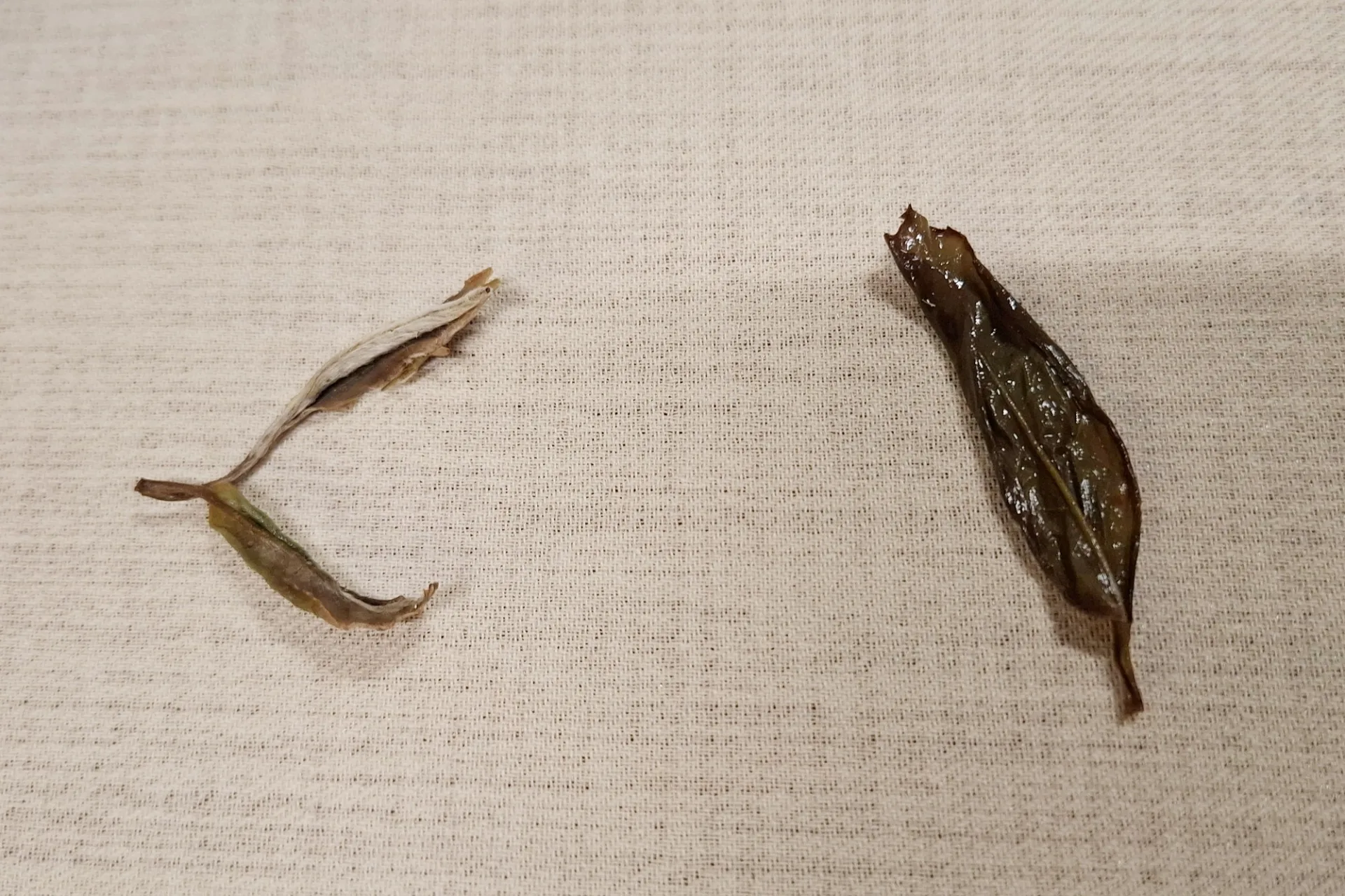
Li Weirong prepares several infusions. He pours hot water over the leaves and allows them to steep for a few dozen seconds, explaining: “Usually, infusions are made in less than a minute. The first infusion is steeped for 20–30 seconds, the next for 40–50 seconds, and the third for about one minute. It is never infused for 3–4 minutes like tea bags. The infusion time also depends on the taste and color we want to achieve and how much the tea maker wants to intensify the aroma.”
I have the opportunity to taste the various infusions almost immediately. The first cup of white tea has a delicate yellow color and a mild flavor. The second infusion produces a tea with a much richer color and a more pronounced taste. By the third infusion, I begin to perceive subtle fruity notes that were not present before.
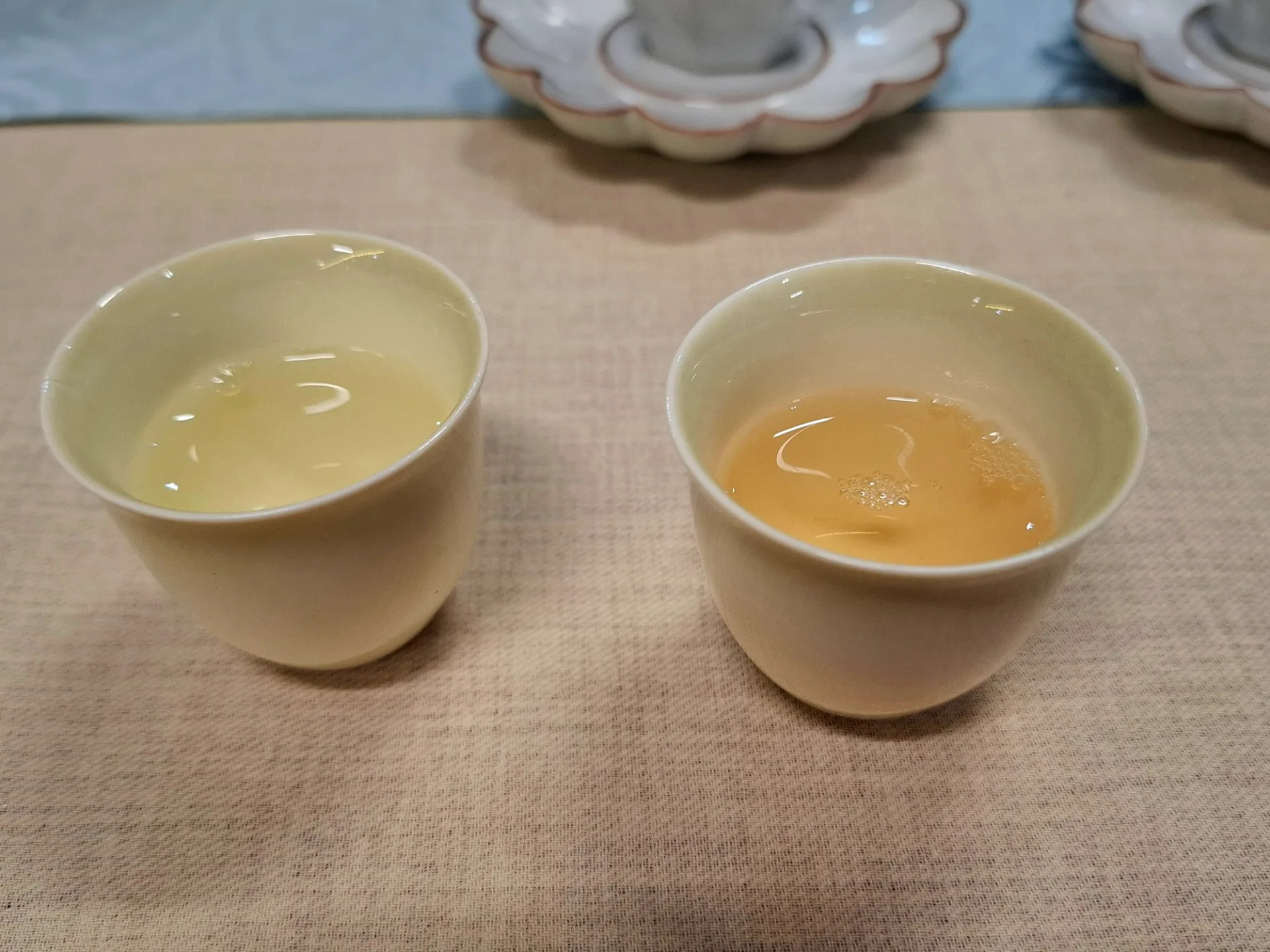
The experience with oolong tea, a semi-fermented, semi-oxidized tea (delicately fermented compared to black tea or Pu-erh tea from Yunnan) is distinct. Its infusions display a richer straw-yellow color and a taste with more pronounced floral notes than the white tea, offering a completely different sensory and gustatory experience.
Each new infusion is served in small, delicate teacups — almost like the ones made for dolls — transports me into a new universe of aromas and sensations. It reveals the subtleties and mysteries of Chinese tea in a way completely different from a standard 200 ml cup of tea, whether it be green or black, prepared in the typical European style.
Tea as a daily practice in China
For the Chinese, tea is part of everyday life in private households, particularly in regions such as Fujian and Guangdong, where it is performed informally to host guests or facilitate social gatherings. The ceremony is also offered as a service or guided experience in contemporary tea houses, used as a social or cultural ritual during meetings, business exchanges, formal occasions, or even as a cultural performance within tourist programs and public cultural platforms. Unlike Chadō, there are no official “schools” of Chinese tea practice. Instead, tea preparation methods have evolved in relation to historical periods and cultural contexts. Examples include the boiled tea tradition of the Tang Dynasty, the blended tea tradition of the Song Dynasty, and the infusion techniques that emerged during the Ming and Qing Dynasties.
“Contemporary tea practices are largely shaped by regional and ethnic influences. These include, for example, the Fujian Gong fu cha tradition from Fujian Province, Chaozhou (Chao Shan), Gong fu cha from the Guangdong region, and the various brewing methods found in Yunnan, many of which are maintained by local ethnic communities,” Li Weirong explains.
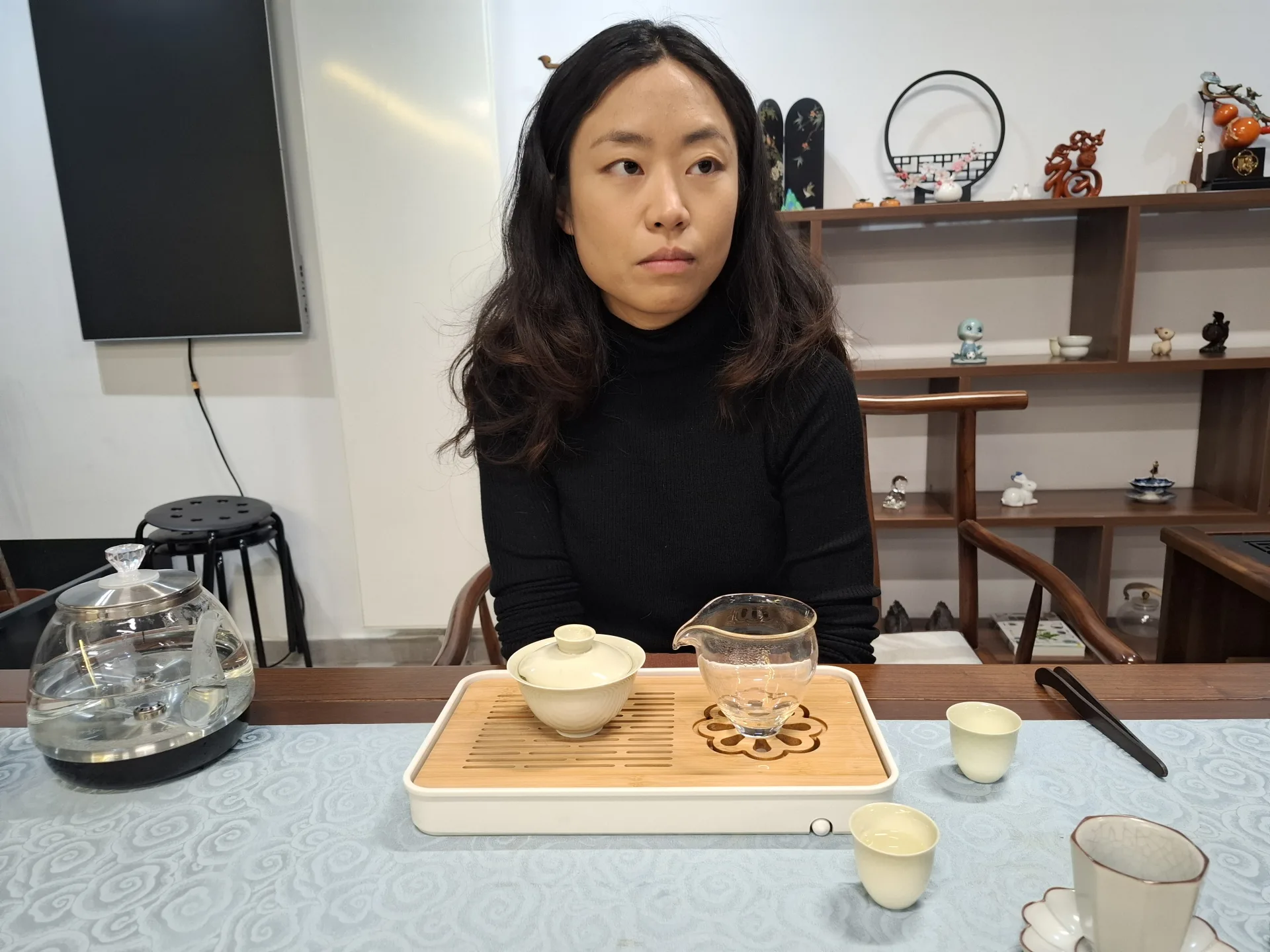
The Chinese tea “ceremony” is flexible, deeply social, and sometimes informal. It does not require rigidity or isolation; rather, it invites participants to savor the moment, focus on taste, and allow connection and presence to emerge naturally.
Each cup of tea is a sensory and cultural experience
Ms. Li Weirong has been teaching the Chinese tea ceremony in Romania for over two years at the Chinese Cultural Institute (ICC), and she also conducts tea lessons in France. Married to a Romanian and living in Romania for more than five years, Li Weirong initially taught tea ceremony lessons privately for friends, before beginning formal classes at ICC.
Li Weirong grew up surrounded by tea ceremony at home, witnessing tea served to family and friends as part of everyday life. “This early exposure continues to shape my practice, which draws inspiration from everyday Chinese tea-making traditions, combined with both historical and contemporary influences. My approach to tea focuses on attention, on the taste of the tea and the atmosphere it creates around the table.” Rather than reproducing a fixed format, each tea preparation is treated as a sensory and cultural experience. The configuration is carefully planned and designed in response to the character and aroma of the tea itself. “For me, the emphasis is not on performance, but on presence, something that emerges naturally through taste, rhythm, and conversation, cultivating calm and a sense of connection in a contemporary setting.”
In Romania, as well as in France, Li Weirong teaches classes to a significant number of students. “We have many students, even more than I expected. There is great curiosity and an extraordinary openness to experimenting with this type of ceremony. I have classes of 7–8 students, who participate in courses held over several months. During this time, they learn where teas come from, the different types of tea, how they should be prepared and combined, what qualitative differences exist between them, and how they can prepare them at home. We also hold small tea ceremony workshops at the Chinese Cultural Institute, especially on weekends, where people can do tea tastings and learn how to pair teas with certain Chinese dishes.”
Recent research highlights the health benefits of different teas made from the Camellia sinensis plant, including their antioxidant, detoxifying, and blood pressure–regulating properties. As a result, green tea in particular has seen growing interest worldwide. For those wishing to specialize in tea, Li Weirong emphasizes the importance of combining study, practice, and hands-on experience, noting that there is no single official path to becoming a tea specialist. “Xièxiè nǐ, Li Weirong!”
“To properly understand the Chinese perspective on tea requires in-depth knowledge in areas such as tea biochemistry, horticulture, processing methods, and tea history. This expertise is complemented by lifelong sensory practice: tasting and preparing a wide range of teas, which enhances sensitivity to aroma and cultivates the ability to extract, interpret, and appreciate the unique characteristics of each tea.”