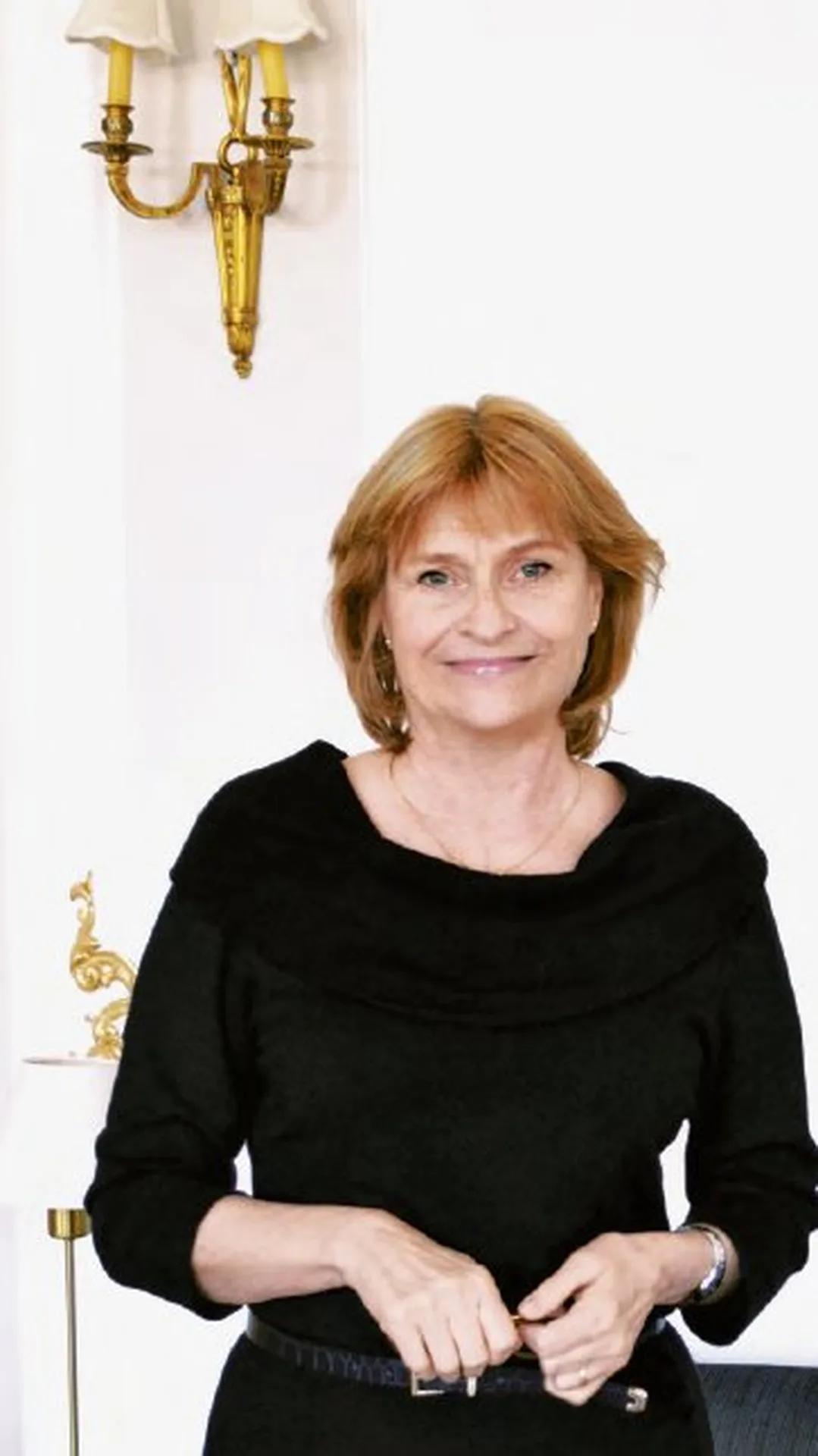
Interview by Bogdan Munteanu
According to various polls and studies, Sweden often comes among the first countries (for instance: less corruption, happier people), while Romania lies at the bottom (prevalent corruption, rather unhappy people). How do you find our country, not as a diplomat, but – let’s say – an ordinary expat who happens to live in Bucharest?
I think Romania is a very exiting country and I am really looking forward to getting to find out more about all it has to offer. I will spend as much of my free time as possible to explore the beautiful countryside and also the rich cultural life of the big cities.
Could you think of anything that Romanians do very well and Swedes could learn from them? And viceversa?
I believe many Romanians are very talented in languages and that is something I think we should try to encourage more in Sweden. There is also an acceptance and interest of different cultures which I believe is associated with the many influences throughout history in Romania from diverse regions. The Swedes have some characteristics that I think could be interesting for Romanians. One is the non-hierarchical, informal organizational structure of business and public offices. A flat organization means more delegated powers to the employees making it easier to benefit from the creativity and knowledge of all staff. Employees are encouraged to speak their mind and to contribute to the efficient running of business.
One thing that people in our country complain of over and over again are their political leaders. Does this also happen in Sweden or is there another kind of relationship between voters and those in power?
I think Swedes demand a lot from their political leaders and have very little tolerance for any wrongdoing, especially corruption. This is very good and the way it should be. It is a huge responsibility to represent the voters and politicians should always remember that they first priority is to serve the people who voted them into office in the best possible way.
What is specifically Swedish in terms of people’s attitudes?
It is hard to generalize and Swedes are as diverse in their views and attitudes as any other population. I think one good thing about Sweden is that there is a lot of equality between men and women. It is, of course, not perfect, but generally speaking it is good to be a woman in Sweden. Another thing I like is that there is consensus about having a comparatively strong welfare state where education is free and health provided at an affordable cost for everyone. The Government also makes it a priority that children and adults with disabilities can live full lives. It means efforts to ensure access to services, the right to education and adapted workplaces.
Some nations feel that they play a global role. Do Swedes feel the same? Which are the values that people believe their Government should defend on the world stage?
Sweden is active on the global scene with a strong engagement in EU and UN, with Development Cooperation and also promoting global free trade. There is a broad consensus in Sweden about our Government promoting respect for Human Rights and Gender Equality. In fact the current Swedish Government, which is in place since October last year, promotes a Feminist Foreign Policy. This means having a gender perspective put into all areas of foreign policy that Sweden is active in. It makes a lot of sense to me! Other important aspects of respect for Human Rights are children’s rights, LGBT rights, freedom of expression etc. We are also, of course, keen on democracy, transparency and good governance.
Since the latter half of the 20th century up to this day, many people from all parts of the world found a safehaven in Sweden, so that 1.85 million of today’s Swedes (19.6%) were born abroad or born from parents born abroad. How did the Swedish society change over the past decades from ethnically homogeneous to a multicultural one?
It is true that the change has taken place rather rapidly. There has been a strong political consensus among most political parties in Sweden around a generous policy to receive asylum-seekers and in later years also to have people come to work in Sweden. The society has benefited a lot from the competence of all these newcomers to Sweden.
Many people envy Swedes for living in a paradise on earth. Which are the (maybe not so obvious) dysfunctionalities in Swedish society that need to be overcome?
Most Swedes I know are very open to change and I think that is good because most things can improve and societies need to constantly change and deal with new challenges. Related to your previous question, one such challenge is to better integrate the newly arrived Swedes into society and get them into jobs quicker. Another challenge is to deal with the increase in anti-immigrant sentiments. With so many new Swedes there are also of course clashes between the different cultural/religious norms and habits. It is a challenge for all Swedes to learn more about each other and to promote tolerance.
Apart from Sweden, other nations also have prosperous economies and stable political systems, but the Swedes appear to have found the right balance between work and family life. Is there a secret to that?
Swedish Governments have for a long time been promoting measures to facilitate combining work and family life for both men and women. In an international comparison Sweden has very generous paid parental leave for both parents. We also have an excellent state subsidized child care and the possibility to take paid time off from work when children are sick. All these measures contribute to a very high percentage of working women with children in Sweden. Young families of course still struggle to balance work and family life. I think in my own experience – and I have three children who are now grown up – that for a while when the children are small you cannot expect to have much free time outside work and family.
I like the positive change I see among my young male colleagues that they are more and more involved in the lives of their children and it is perfectly normal for them to share parental leave with the mothers and take care of their children when they are sick. I strongly believe that it is a win-win situation for men, women and children to have an equal society!
Half of the Swedish population takes part in sport activities, but how vivid is the interest in music and art in Sweden nowadays?
It is very high and since the successful group ABBA became popular around the globe 40 years ago we have had a steady flow of internationally recognized musicians such as Ace of Base, Roxette, Swedish House Mafia and now the popular DJ Avici. A large percentage of Swedes belong to a choir and there are all kinds of events where they perform for enthusiastic audiences. In the summertime Swedes also get a chance to sing popular old and new songs together – in what we call “allsång” – in outdoor theaters. “Allsång på Skansen” in Stockholm and “Lotta på Lisseberg” in Gothenburg are two such weekly very popular televised shows.
Regarding art, there is a steady growth of young talented painters, filmmakers and other creative performers. Two names on the art scene are the young artists Klara Lidén and Nathalie Djurberg and there are many more. In Swedish film we have Roy Andersson who won a Golden Lion recently at the Venice Film Festival 2014 for the film “A Pigeon Sat on a Branch reflecting on Existence”. Sweden also has many talented documentary film makers.
What are the most representative cultural goods from contemporary Sweden that you would put in a time capsule to be opened 100 years from now?
It would be hard to choose! I would perhaps put a watch from Sjöö Sandström, a couple of dresses by designer Ida Sjöstedt and the brand ALTEWAISAOME. A bottle of whisky from Mackmyra and some glass items from Orrefors and Kosta Boda. Perhaps some recorded music by Tove LO and others and a few Swedish detective stories by, for example, Henning Mankell and Stieg Larsson. I would also add some beautifully designed Swedish household products and furniture perhaps one item by Monica Förster who draws her inspiration from Sami craft. Then I would add several Swedish movies of different genres; documentaries such as “Searching for Sugarman”, “Palme”, the Millennium film “The girl with the Dragon Tattoo” and several others.
If you were not born in Sweden, which could have been the next best placed to be born in?
Impossible to say as there are so many different countries I really like. If I really had to choose one, it might be France because I love French food and the variety and beauty of the landscape.