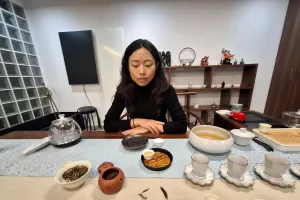
by Alice-Claudia Gherman, photo Alice-Claudia Gherman
Japan in the heart of Bucharest
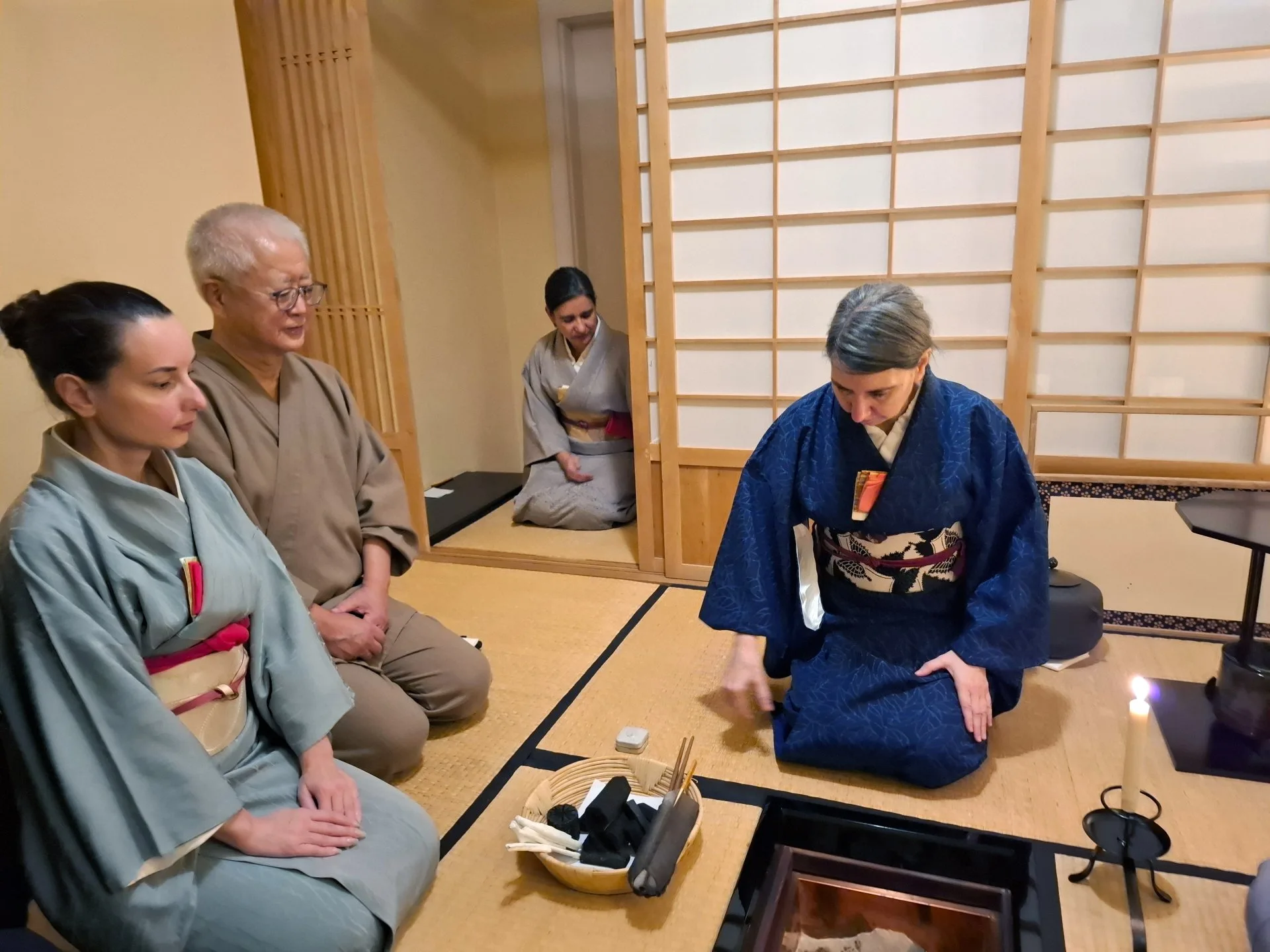
Somewhere in the center of Bucharest, in an apartament building , Cristina "Sona" Sensei (i.e. the tea ceremony teacher Cristina Comanac from the Urasenke School, one of the Japanese tea schools in Bucharest) has set up a special room, traditionally Japanese, where she holds tea ceremony classes, as well as various meetings with other practitioners, when they wish to mark important moments of the Japanese calendar.
When you enter the
apartment, just like in any other in
Bucharest, and suddenly, you will find yourself climbing some wooden
stairs and passing through a sliding door - shoji (specifically/
characteristically Japanese), entering
the chashitsu room (tea room). In other words, you leave the profane world
behind, and enter a sacred space. This room was designed for exactly this
purpose, to break away from the bustle of the city, to forget for a moment that
you are in Romania and to immerse yourself in the mysterious atmosphere of a
home in the distant Land of the Rising Sun.
A tea ceremony according to all Japanese customs can last 4-5 hours or even longer.
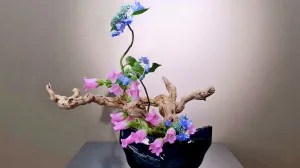
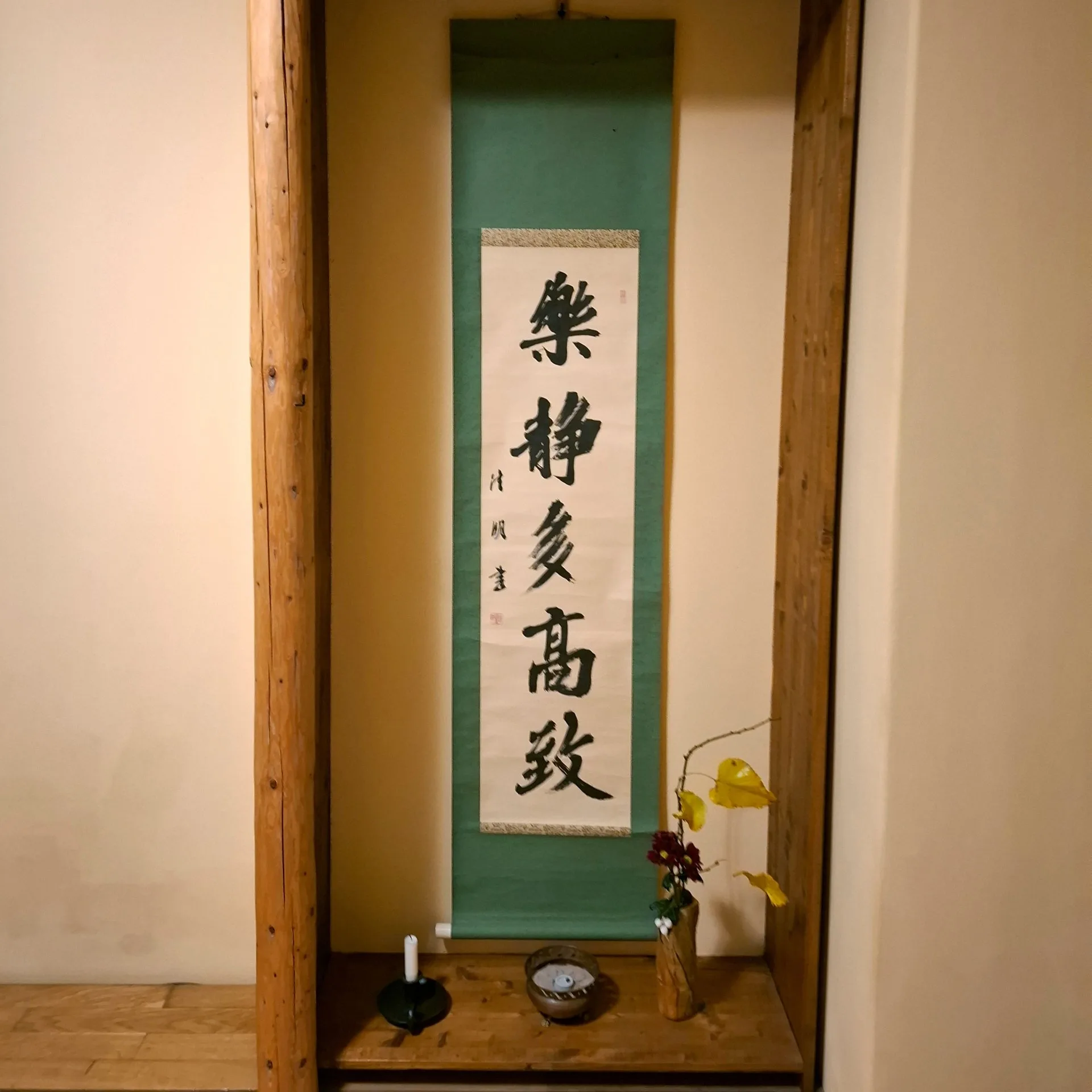
The chashitsu is simply decorated, with a wooden floor, tatami, respecting Japanese tradition. The room is not missing the tokonoma – the extremely important place in a room prepared for the tea ceremony. Today, the tokonoma in Cristina's room is decorated with a scroll containing a calligraphy – kakeijiku which reads: In silence, joy appears; in deep research, spiritual refinement is achieved. In the tokonoma area there is also a bowl and a chabana, a simple flower arrangement meant to reflect the current season, which in this case is winter. In fact, this is precisely why we have gathered here today: to witness a tea ceremony that marks the transition from the warm to the cold season. Today's ceremony is held in honor of Kazuo Tanaka Sensei, a student of Cristina, a tea ceremony practitioner and a priest at a zazen temple in Kyoto . He is returning to Japan after a three-month stay in Romania.
As a result, the tea ceremony that I will witness, as a guest, is a special one. It will not last 30 minutes, as a tourist demonstration might, but five full hours. A tea ceremony according to all Japanese customs can last 4-5 hours and even longer. This means that ruri kaiseki food - a special food for the tea ceremony, will be served first followed by the famous Japanese mochi cakes, and in the second part the thick koicha tea, and finally the thin tea - usucha.
Ro-biraki, the
transition from the warm to the cold season
To participate
in a tea ceremony as a guest, you must follow a certain etiquette – black suit
and a white shirt. My host “Sona” along with the other participants– tea
ceremony practitioners who have reached different levels of mastery in this
ritual– are all dressed in kimonos in dark or pale colors, so as not to draw
attention to themselves. All attention must be directed toward the tea. The
women should not wear jewelry or bright accecories, only on their kimono, they
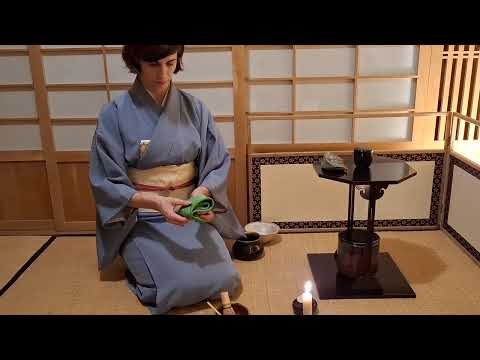
have various handkerchiefs - fokusa (silk napkins for wiping utensils for
ritual purposes) and a fan with haikus. Guests enter the tea room in a specific
order, as tradition requires.
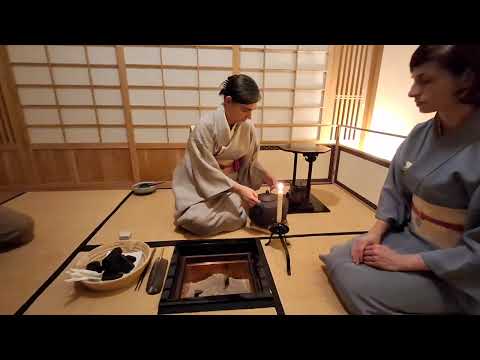
We wear slippers until entering the chashitsu, then we take off our shoes because that’s the proper way. You do not step into someone’s home—or into someone’s soul—with your shoes on. Here, every gesture has meaning and weight. So we enter in white socks (me - a layman), and the rest in traditional white tabi (socks characterized by the separation of the big toe from the rest of the toes). We first admire the tokonoma. The first participant asks the host about the chabana arrangement, about the kakeijiku inscription, etc., exactly as Japanese politeness requires at such a moment. Then we sit in seiza (sitting correctly, with your legs together under you - n.r.) as you should sit during this ceremonial. The ro-biraki ritual (opening the hearth) begins. This is, the moment that marks the transition from the warm to the cold season. And yes, beneath the floor of the room there is a hearth exactly like in traditional Japanese tea rooms, constructed so that hot coals can be placed inside without touching anything that could catch fire.
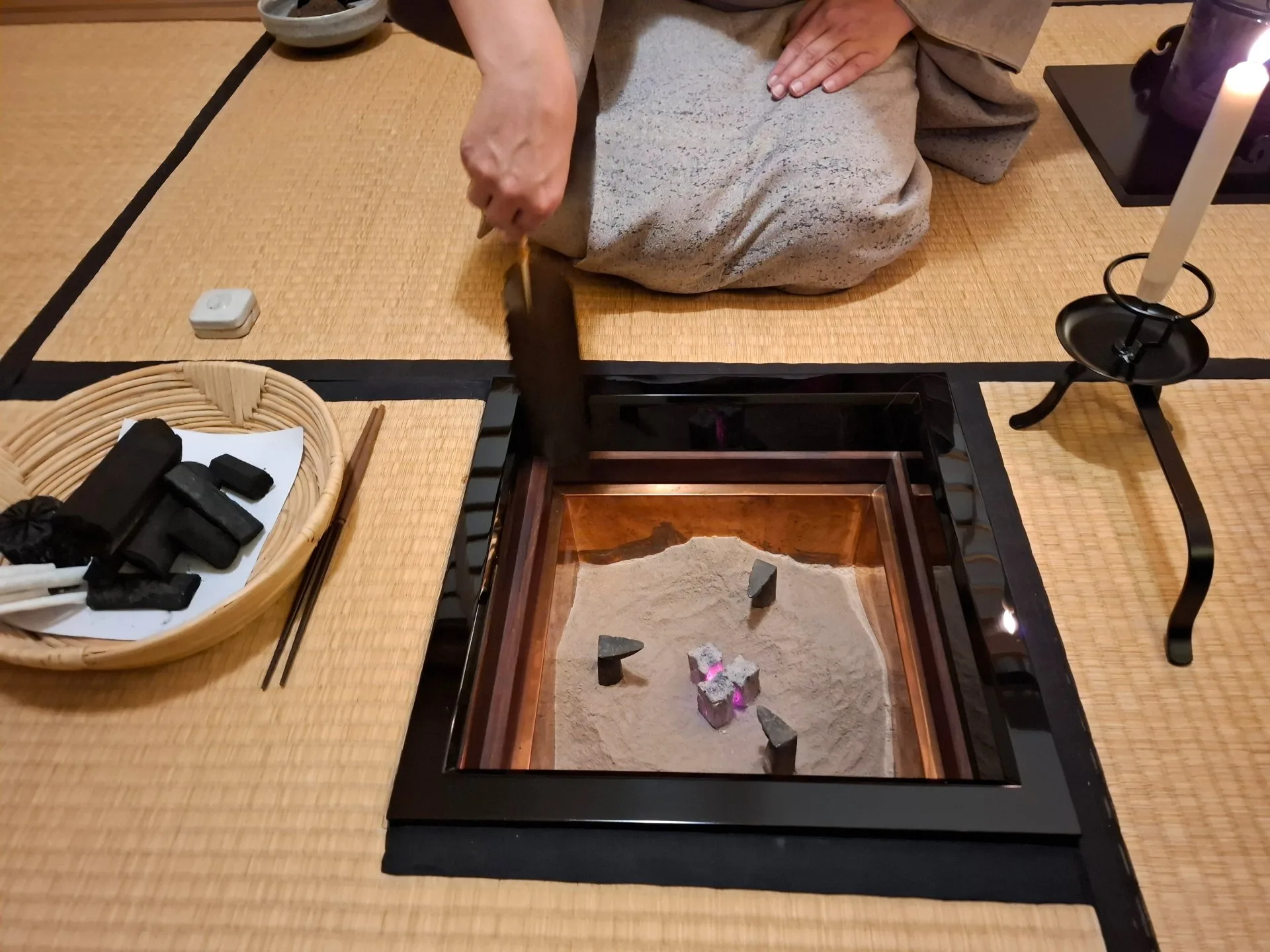
“Ro-biraki is a
special moment that marks the bringing of fire to the hearth on the occasion of
the beginning of winter. It takes place at the beginning of November. The fire
is closer to the host and guests to warm them and finally prepare the tea,” Andreea
Hoșman, a tea ceremony teacher, tells me a little later, when there is a break
from the ceremony.
Cristina Comanac began practicing the Japanese tea ceremony in 1998 in Bucharest, with Kazuko Diaconu sensei. She continued it in New York, at the local branch of Urasenke in Kyoto. She returned to the country in 2007, then resumed the practice in Belgium, London and Kyoto. "Currently my sensei is Kimura sensei from London. Since 2019, I have a name for the tea ceremony - Sona, which refers to my membership in the Urasenke Kyoto family, and the rank of advanced instructor. I am part of the Chado Urasenke Tankokai Romania branch." Cristina "Sona" has been teaching at the University of Bucharest since 2010, and has established, together with her other colleagues and teachers, 2 branches of the Urasenke school in Bucharest.
Grace and
ritual politeness on an initiatory journey
With graceful
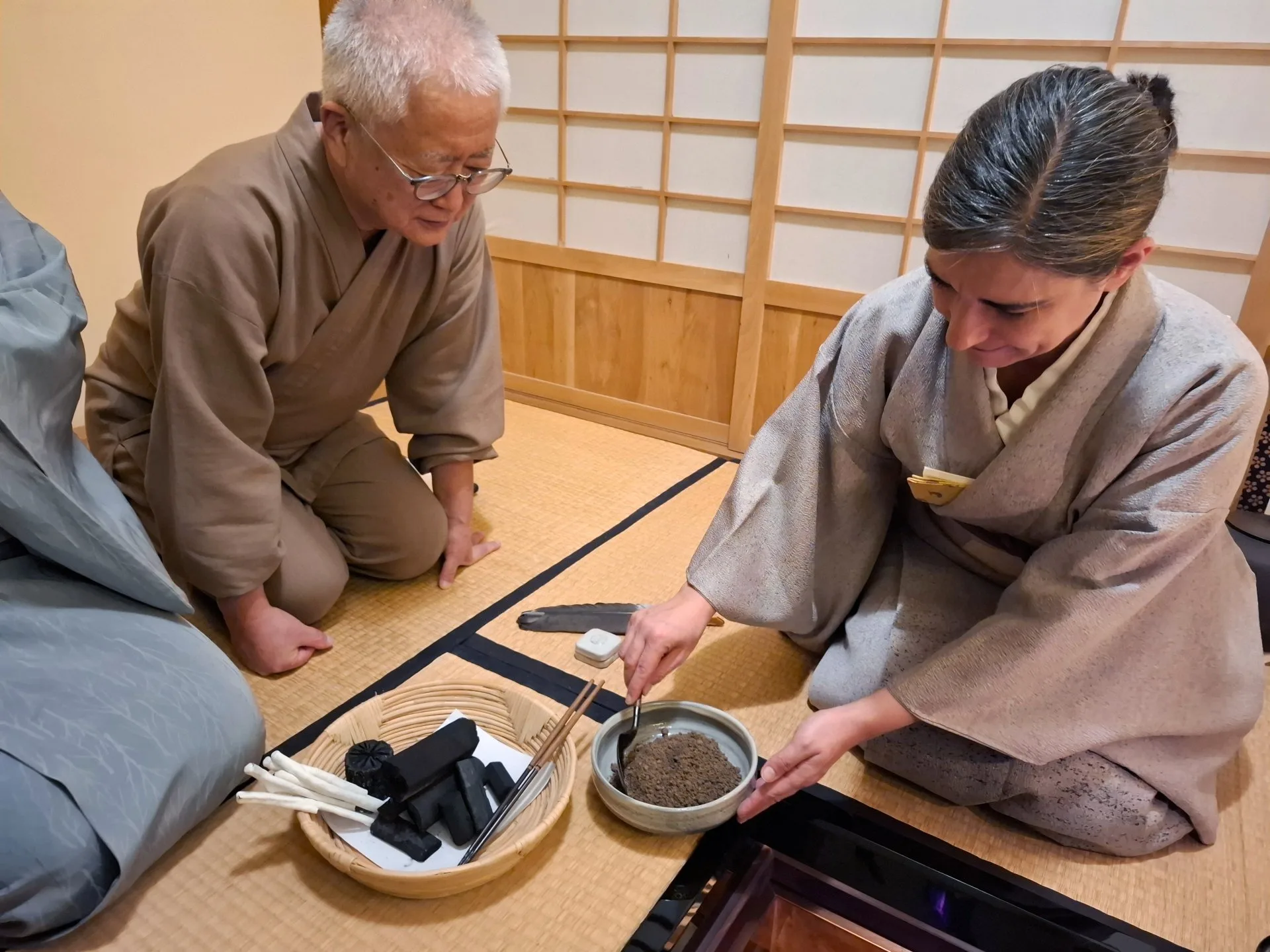
movements, the hot coals are placed in the hearth of the fire, over them, our
host "Sona" adds a resin with a fragrant effect. She then ritually
wipes the edges of the hearth of the fire with a special instrument. Everything
takes place in complete silence, the movements are slow, elegant and precise.
The bowl is placed on top of the coals to prepare the water for the tea. Then,
silently, the box containing the fragrant resin is admired by each guest, one
by one. Then, silently, the box containing the fragrant resin is passed from
guest to guest, each taking a moment to admire it. Every time the box is handed
to someone, the expression “osakini” is used: a polite apology for admiring,
drinking, or performing any action before the other. Walking in the seiza
position towards the exit of the room, “Sona” retreats with Kazuo to prepare
the food and brings the first of the five Japanese dishes prepared for today’s
ceremonial. When the host is present in the tea room, no talking is allowed.
If the main host leaves the room, the guests are allowed to talk to each other, not loudly and noisy, but in a low and polite manner. That’s how I find out that Marcin, the guest on my left, is Polish, has come to Romania on business, and is a practitioner at the zazen temple in the Dristor area,. He has also cooked one of the soups and is a student practicing the tea ceremony. Mihaela Oancea, the guest on my right, has been practicing the tea ceremony for several years and is also a student of Cristina. She prepared the duck with teriyaki sauce and the chestnut cakes.
Kazuo Tanaka is a physics professor and the former technical director of the Laser from Măgurele. Now, at 75, he continues to collaborate with the prestigious institute. In addition to being a zazen priest in Kyoto, Kazuo also practices the tea ceremony and studies under Cristina “Sona” when he is in Romania (for about three to four months each year). In his free time, he creates the famous Japanese tea bowls—chawan—and today contributed significantly to the design of the culinary menu for this ceremony.
Mihaela Necula has also been a practitioner of this special Japanese ritual for many years, and her husband, Vlad, is, like me, a simple guest. After we finish eating, there is a break, during which we leave the ceremonial room and politely take seats on regular chairs in an adjacent room.
I realize that
we are already halfway through the ceremony. At this point, jokes are shared,
hot water with lemon is served as a kind of cleansing ritual before the tea,
and guests reminisce about their experiences traveling in Japan. Cristina then
invites us back into the chashitsu, following the original order of entry.
The ceremony demands elegance and gentleness in every gesture—a certain tenderness of touch that can perhaps be found only in love.
Chadō – The Way
of Tea: A Ritual of Mystery, Peace, and Introspection
The most
anticipated part of the ceremony now begins. First, we will be served thick
koicha tea, followed by the thin usucha tea. Andreea Hoșman is in charge of
preparing the tea. She has all the specific utensils for the ceremony at hand:
the chawan (tea bowl), chasen (bamboo tea whisk), chashaku (tea spoon), kama
(water vessel), natsume—the container holding the finest matcha tea powder from
the current year, brought from Japan by Kazuo Sensei—and fukusa, the silk cloth
used to ritually cleanse the tea utensils. Everything
unfolds in complete silence and harmony, for this is a moment of meditation and
introspection.
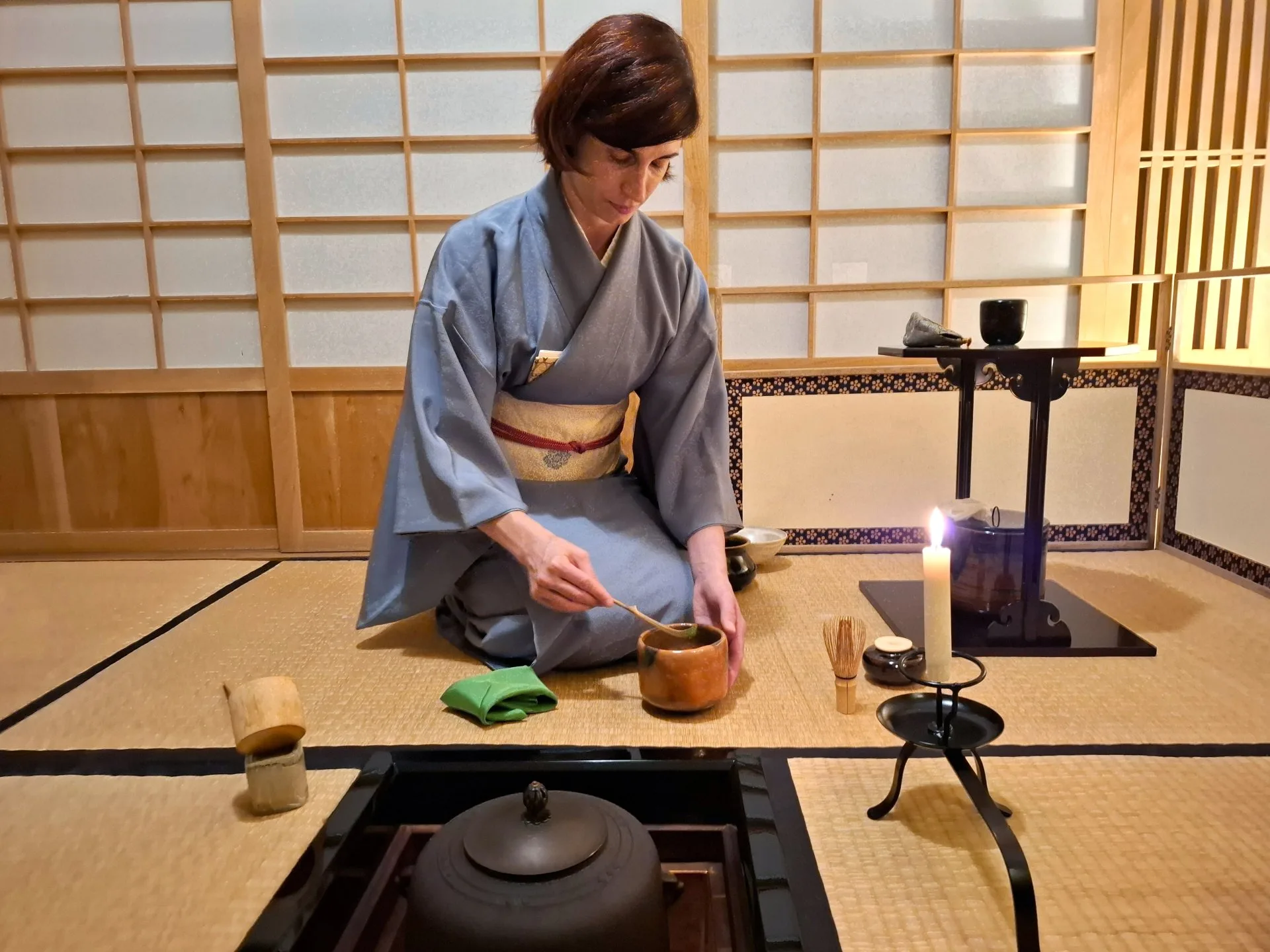
Andreea handles each utensil with great delicacy. The ceremony demands elegance and gentleness in every gesture—a certain tenderness of touch that can perhaps be found only in love. Only when she mixes the tea powder with water using the chasen do her movements become slightly more vigorous.
When the tea is ready, Andreea offers it with a ritual gesture to Cristina, who lifts it respectfully and says words of thanks, “Domo arigato gozaimasu”, while simultaneously apologizing (osakini) to Mihaela for drinking before her. After drinking from the bowl, it is wiped with a napkin and passed on to the next guest. Koicha is a thick, paste-like matcha tea of the highest quality, with a fragrance reminiscent of milk and young plants, full of flavor and rich in antioxidants.
From Koicha to Usucha: On the Path of Tea
After this first part of the tea service has been completed, all guests are invited to admire each chawan individually. Questions about the origin of the chawan may be asked of the host. Following the koicha, the thin tea—usucha—is served. The ritual movements remain the same, only the tea is more diluted, forming a green foam with the taste of young tea leaves.
Because there
are many guests, the serving of usucha is performed in turn by Mihaela, Kazuo,
and Cristina “Sona,” so that everyone may enjoy it. “In the past, the Japanese
only prepared koicha, the thick tea, but because they noticed that tea left in
the containers would oxidize and much of it would go to waste—there were no
refrigerators back then—they decided to consume it in the form of thin tea,
usucha,” explains host Cristina. This custom has been preserved to this day.
The ceremony, which unfolded over the course of five hours, concludes with words of thanks to the host and for the smooth running of the ritual. We all express our gratitude for these special moments shared in one another’s company: “Domo arigato gozaimasu, Mr. Kazuo Tanaka! Domo arigato gozaimasu, Cristina ”Sona.’”