by Alice-Claudia Gherman, photo archive Nona Marian
A big step at It Step Academy
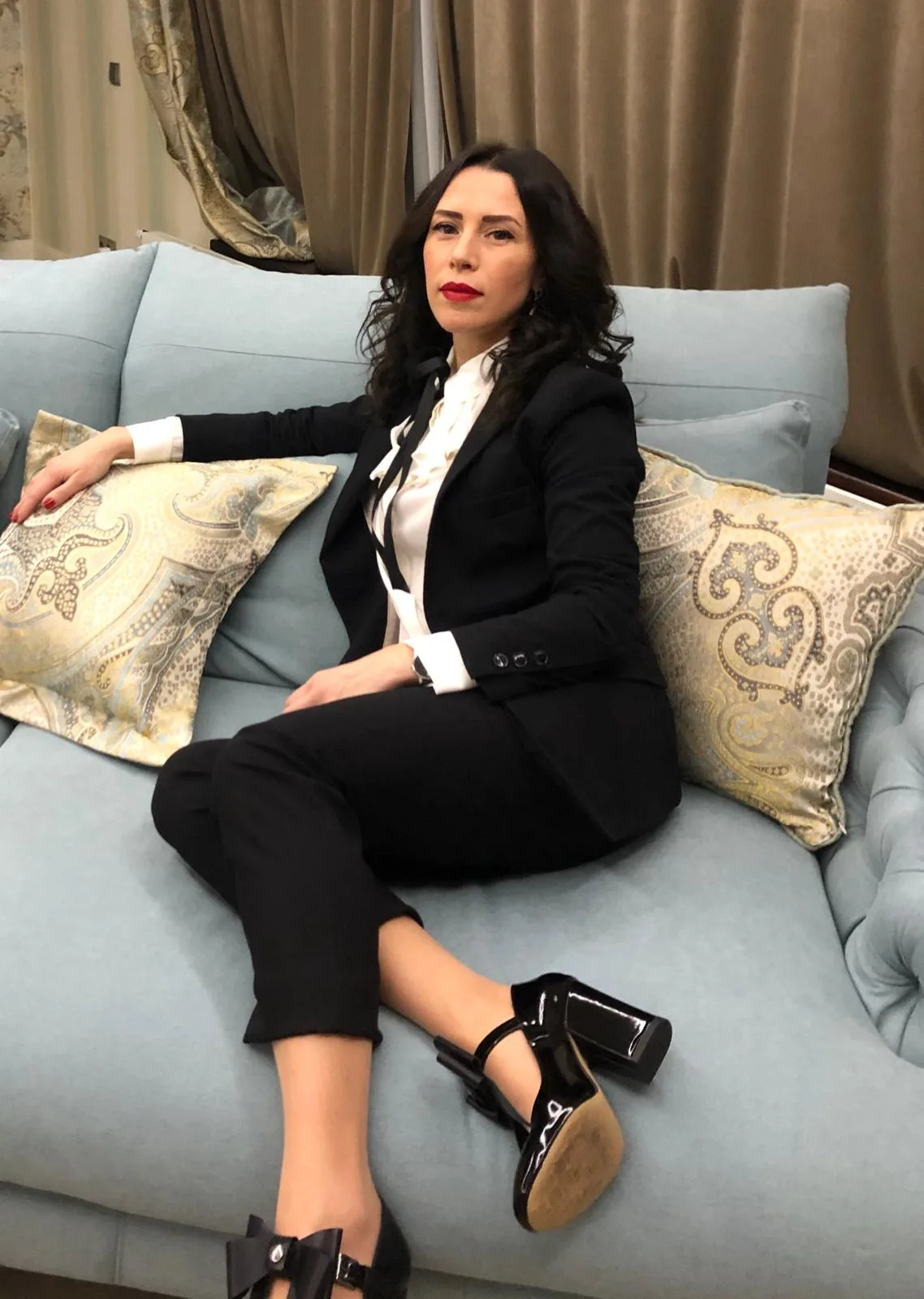
Some passions never change, while others are discovered over time, sometimes pushed forward by circumstances. Nona Marian is a musician by profession. She was a member of the band Fresh, a girl band from the Republic of Moldova that made waves between 1998 and 2004 and collaborated for three years with Media Pro Music from Romania. When the band broke up, Nona Marian began organizing music events for top artists from across the Prut River, as well as events such as the National Light Music Awards in the Republic of Moldova. However, the pandemic turned all her artistic plans upside down and forced her to rethink her professional life. Passionate about architecture, Nona Marian hesitated to enroll in an architecture faculty at the age of 40, but at the suggestion of an acquaintance she considered that some courses in interior design would be useful, especially since she already enjoyed decorating and arranging her own home or those of her friends. That is how she attended the It Step Academy courses and eventually became known and appreciated in some of the most distant corners of the world. “I think it was something cyclical. Every ten years or so I would move with my parents or later with my own family to a new place, sometimes another apartment, sometimes another house, and each time I would start creating new interiors and decorations. In a way I already had experience, I just didn’t have a degree,” Nona says, half joking and half serious.“At It Step Academy I learned to use a computer program that allowed me to create visualizations and technical sketches for craftsmen, everything that is useful in interior design. It is a prestigious school, one of the best in the field, after those within the great universities of the world. We also have a very good architecture school here in Chișinău, but at 44 I felt that I did not belong in a faculty amphitheater together with students who are 20 or 22 years old, so I chose Ice It Step Academy, a respected and recognized school in more than 36 countries.”
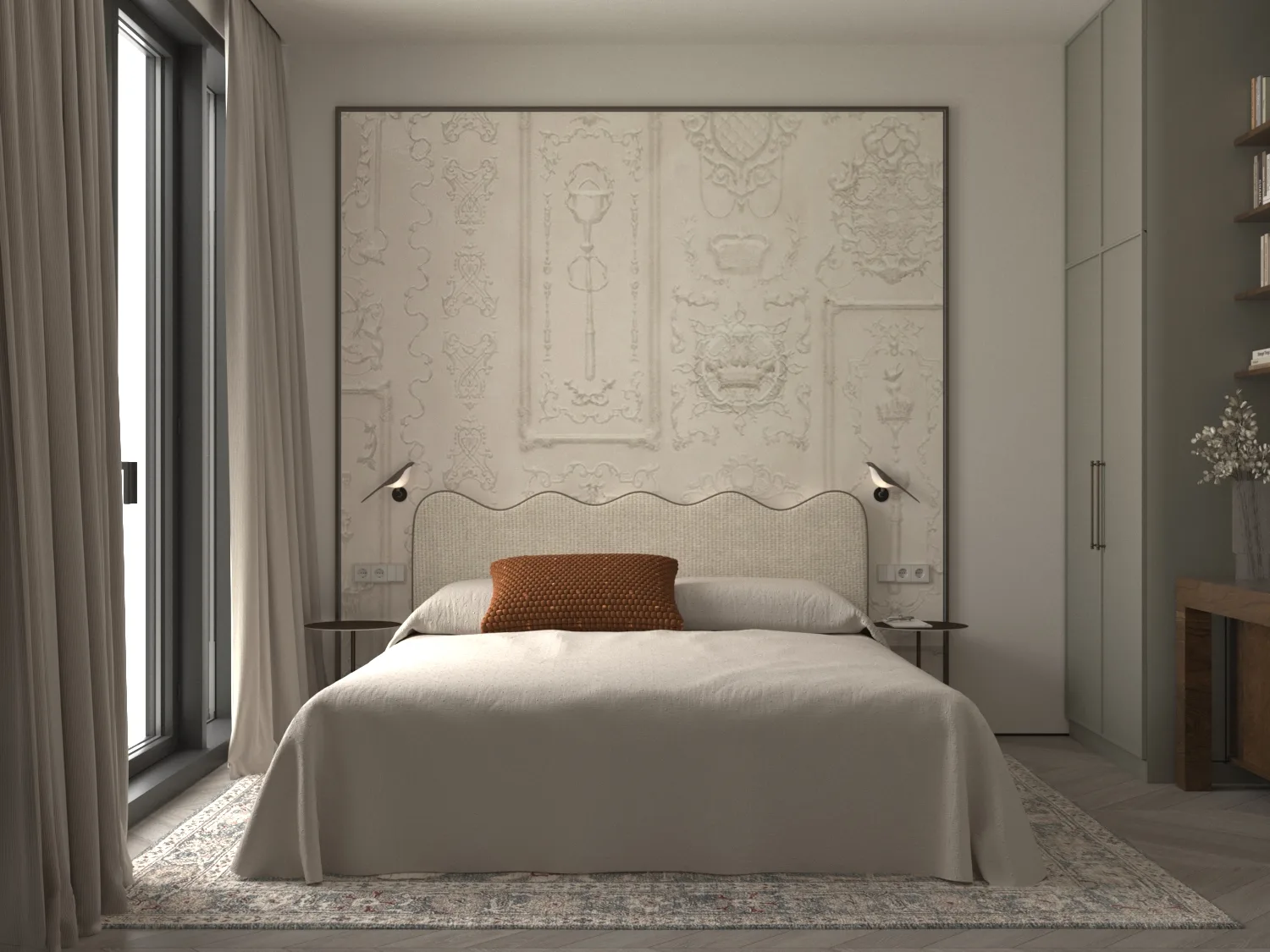
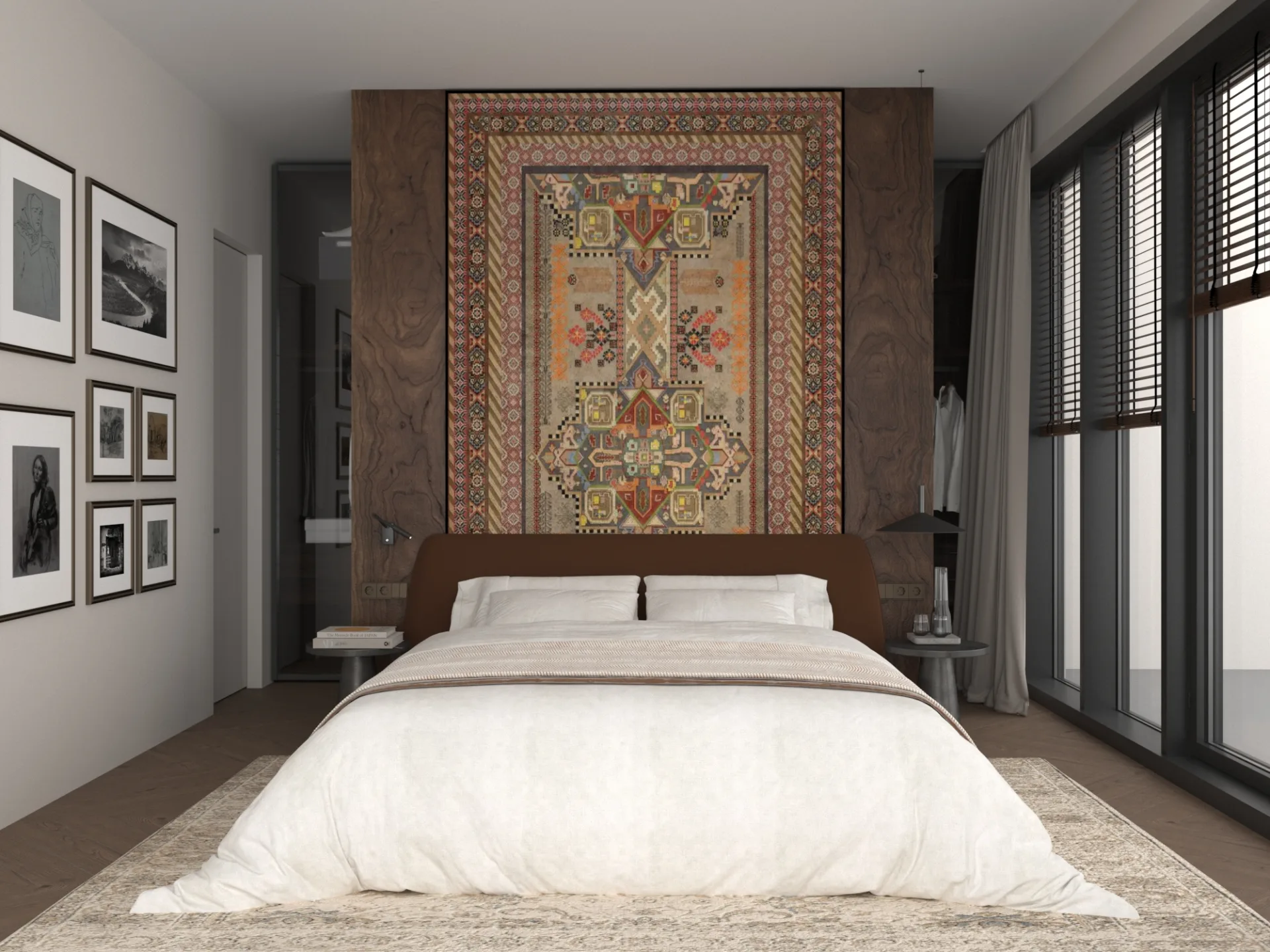
“I put Romanian wallpaper in a
Moldovan house and it looks so good!”
It was not easy for Nona to make
this 180 degree change in her professional life, but this is precisely where
her courage lay, in being able to say: “Stop playing. From now on I will no
longer make music, I will do something else, I will do interior design.” The
first person who trusted her creative strength and ideas in the field of
interior design was the writer from across the Prut, Viorica Nagacevschi, for
whom Nona first designed an office, and later the entire house. This gave Nona
the motivation and the confidence that what she was doing was both valuable and
in good taste. Even though, at first, some of her
compatriots still had doubts about the path she had chosen, Romanians in
Romania gave her their full trust and quickly understood the value of Nona
Marian’s ideas, appreciating her work from the very beginning. “Most of my
clients are from Romania or are Romanians, about 70 to 80 percent. They may
live in the UK, Australia or the United States, but they are Romanians, born in
Romania. To them are obviously added many people from the Republic of Moldova.
I like this, because I realize that through what I do I unite Romanians
everywhere, whether they are in France, Germany, Bucharest or here in Chișinău.
We all think and feel in a similar way, and this gave me confidence that the
change I made was for the better. I put Romanian wallpaper in a Moldovan house
and it looks so good. This makes me feel that through creation and ideas, this
is how we, as people, unite,” says Nona Marian.
A designer is like a therapist: he
asks many uncomfortable questions
The professional backgrounds of Nona
Marian’s clients are extremely varied, from Moldovan bloggers and vloggers to
doctors from Baia Mare, from lawyers in London to writers from the Republic of
Moldova or financial directors from Romania. What unites them all is the need
to have a home where they truly feel at home.“You know, a designer asks many
uncomfortable questions to the client he works with. When I start creating a
sketch for kitchen furniture and I think, for example, about the kitchen
cabinets, I have to ask: how many pans do you have, what sizes are they, do you
enjoy cooking? Or do you prefer eating out more often? Through intimate
questions related to everyday life, you create a functional home. Because
interior design is not only about beauty, it is also about usefulness and
functionality.Then I ask how much underwear a person has: one, two, five or
twenty two. Every family has different needs. If you do not think functionally,
you will not have adequate storage space. It makes no sense to buy a minimalist
wardrobe with a single bar in the middle and two drawers if you have many
clothes and a lot of underwear and end up cramming everything inside, because
that wardrobe was not designed according to your needs. Or you may have a
beautiful seventy centimeter space in the wardrobe that is unusable because it
is simply decorative, and you are forced to stack T-shirts over shirts, over
other T-shirts, and when you pull one item out, all the others fall. This is
the problem with ready made furniture. It is not functional and it does not
respond to the client’s needs. That is where the interior designer comes in,”
explains Nona Marian. She adds: “Ready made furniture is
designed to be minimal in order to keep the price low, but it does not reach
its potential in terms of functionality. It is true that when a designer
carefully plans every shelf and every corner, the price increases, but over
time you realize that although you have many things, there is space for
everything and even more can be added to the house, because everything has been
calculated and designed down to the millimeter. There is always room for future
purchases because a designer thinks in terms of functionality and
organization.”
Disorganized spaces create a kind of
visual noise in the home, which can be disturbing for the mind.
Nona Marian believes that an
interior designer is not a luxury, a way to impress with elegance and good
taste, or a matter of social status. Instead, it derives from a psychological
need for order and organization. “The way we arrange our home influences us
psychologically, because everything must have its proper place. When you enter
that house, you should not feel overwhelmed by the presence of too many objects
and things. Poorly stored items that are not in their place create a kind of
noise that disturbs the psyche. It is not only the style of the house that
matters, whether the colors match or not, if everything is not functional. That
is why an interior designer is necessary, for the correct and efficient
organization of the space. For example, I once visited an owner who had
renovated an old house with two bedrooms, a kitchen, a living room and a
bathroom, and there were only two electrical sockets in the entire house. I
said to him: you will not have a refrigerator because there is no socket for it,
you will not have a stove or a hood either. Where are the sockets? You cannot
run cables all over the house just to have access to electricity. The man was
slightly perplexed and said: I am looking for carpets and sofas and you are
asking me about sockets? But then he understood. This is a good example of why
you need an interior designer who can tell you not only what colors match or
what is trendy, but also how to create a truly functional home,” says Nona
Marian.
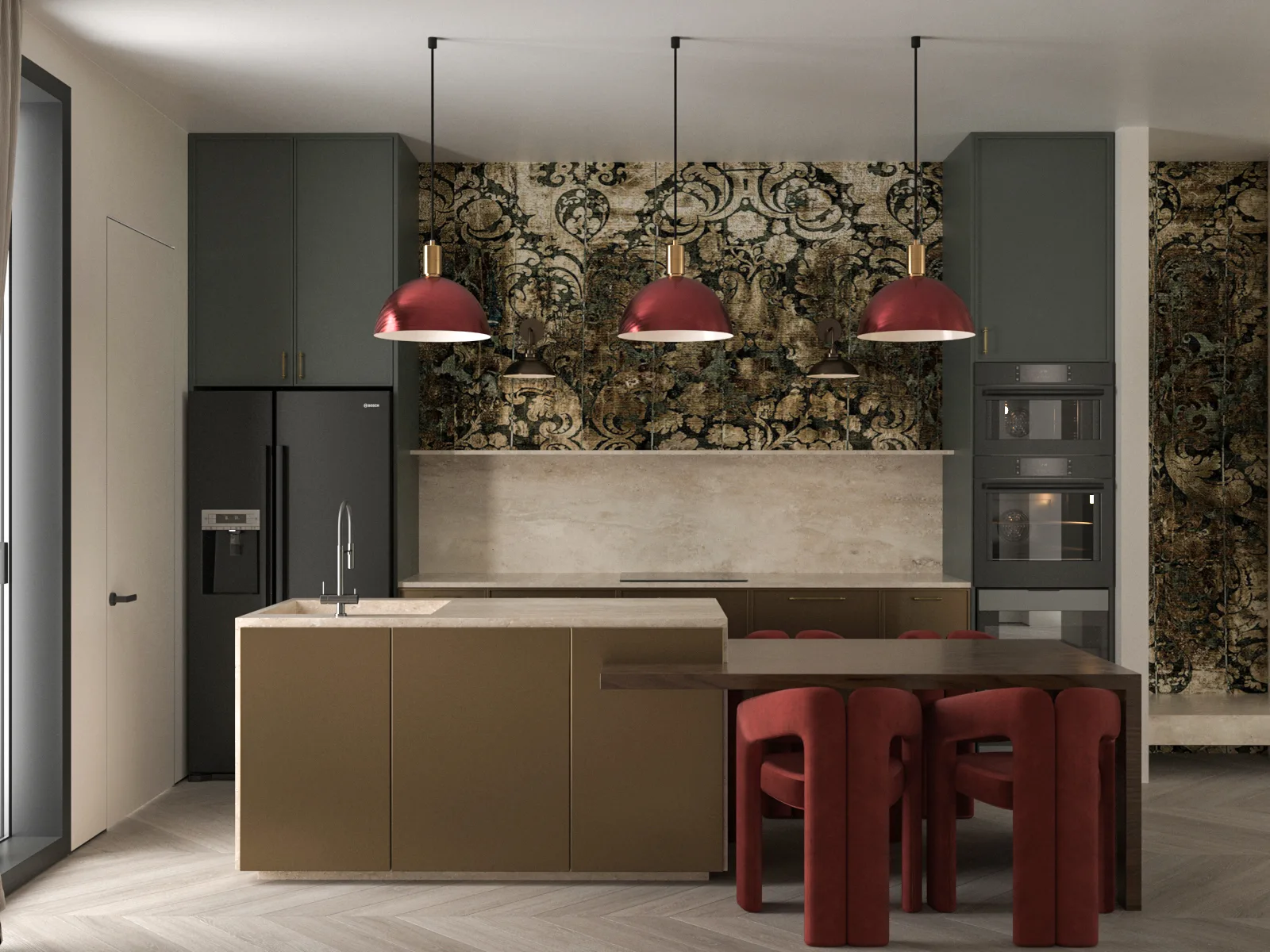
This does not mean that an interior
designer imposes a certain style in the decoration of a home, in the choice of
colors or in other aesthetic decisions. “Every person is different. Someone may
have a professional life that involves many meetings and social interactions,
and when they return home they simply want peace. In that case they will choose
pastel colors and minimalist furniture that will not overwhelm them. I respect
that. Someone else, on the contrary, works constantly on the computer and wants
to return home to an environment that energizes them, perhaps a colorful,
bright and expressive apartment. As an interior designer you try to combine the
client’s ideas in such a way that they look harmonious, while also explaining
where certain adjustments might be necessary. It is always a collaboration
between you and the client’s ideas. For me it is very important that the person
enjoys their home every single day, and I always complete my projects from
beginning to end. I promote a personalized style. We are all different and that
is wonderful in design. If you love minimalism and it represents you, that is
perfect. If you prefer maximalism, that is equally wonderful. What I do not
like is when someone does not know what they want and simply tries to copy
others, because the godfather did it that way or because the neighbor did it
that way. No. The godfather did it for himself, you should do it for yourself.”
To a large extent, Nona’s experience as a musician and organizer of musical
events helped her develop the ability to socialize, communicate with people and
understand their needs.
An interior designer is like a doctor
Regarding the competition in the interior design market, Nona Marian speaks with great openness. “I am personally happy for all the designers who create beautiful projects. I like competition, it is a healthy thing, and because of it I try to do things a little differently, in my own way. I believe that every interior designer is, in a way, like a doctor. When someone turns to an interior designer, it is similar to going to the doctor because something hurts. A person goes to the doctor, receives a prescription, the problem is solved and the person is happy. It is exactly the same with a house. You go to the designer, he offers you a solution, you pay a certain amount, but in return you have a home where you truly feel good. Of course, I follow what other designers are doing. I appreciate several Romanian designers, but the one I admire most is Kelly Wearstler, the American designer known especially for hotel interior design. I like her style and the technical possibilities she proposes. I believe she is among the top one hundred designers in the world.” In fact, Nona Marian’s dream is to design interiors not only for private homes and offices, but also for restaurants and hotels. “I would love to take care of a boutique style hotel, something not very large but very chic and special, because in the case of a hotel you often have more creative freedom. Investors are usually more open to making larger investments, and this gives you a much wider space for creativity. In such projects you can truly express yourself as a creator.”