by Alexander Peyre Dutrey
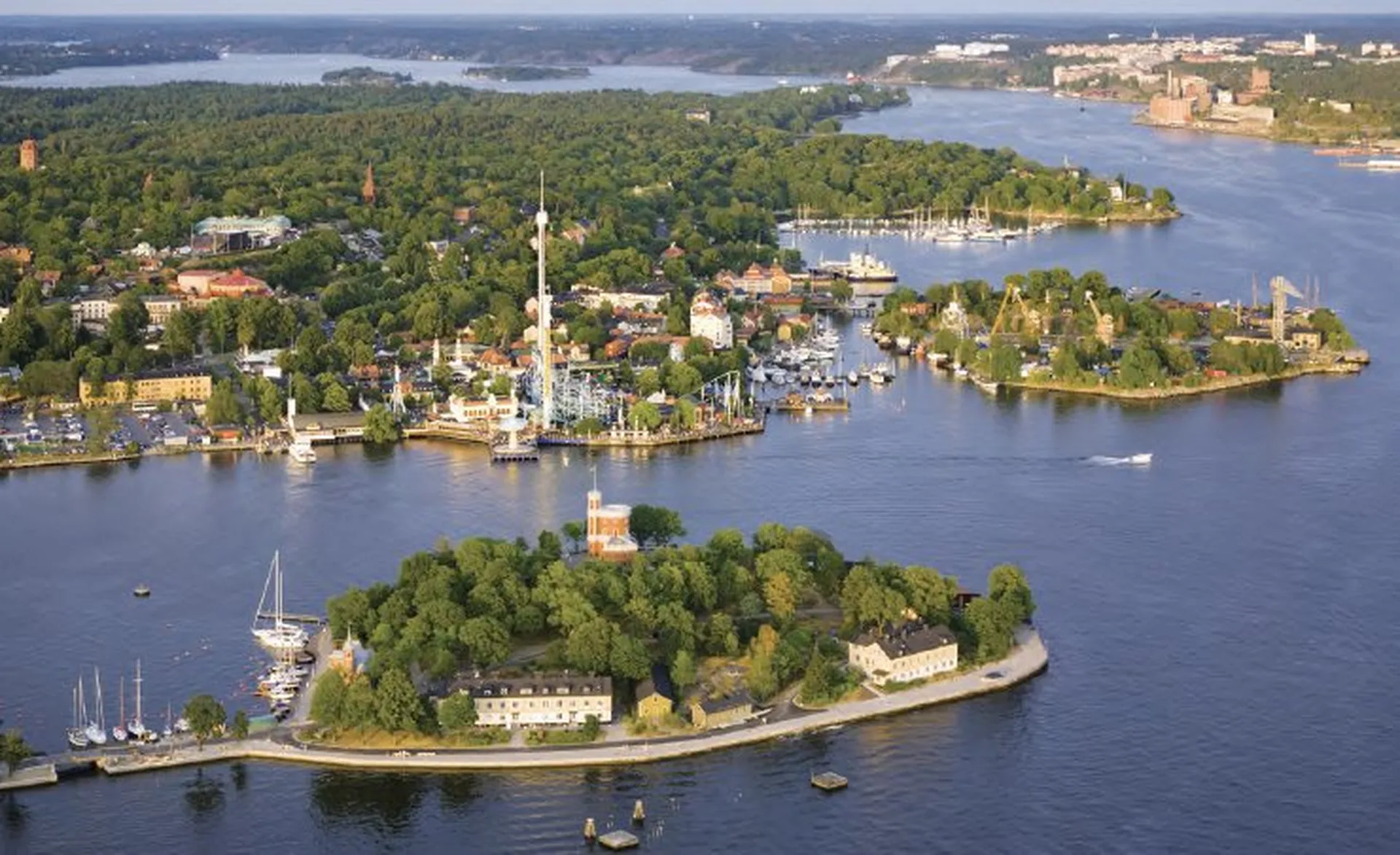
My hometown Stockholm is a unique city where nature, water and culture interact like no other capital in Europe. Although I have lived abroad for many years, and have many favourite cities, I must say Stockholm is special and really deserves a visit. There is no coincidence the city is called The Capital of Scandinavia. Let me explain more by following me through a cultural day in Stockholm. I begin my day by paying a visit to the heart of the island Södermalm in Stockholm. After navigating the narrow streets, I arrive at Café String, a place famous for combining a second hand furniture shop with café. Therefore, the multitude of various kinds of armchairs, tables, sofas and paintings is both up for sale and the place where I enjoy my breakfast. As it is usually quite crowded, I am given some sound advice on how to get a seat; buy the chair and tell the person sitting on it to move. It is a great mix of all kinds of colorful furniture, people and baked goods. The atmosphere is framed by the large panorama windows facing the busy street outside and the music playing nonstop. The public is the alternative and trendy crowd typical for Södermalm, and the café is just next to Nytorget, the little square that could be described as the heart of the hip so called SoFo area. The girl behind the register suggests that if I want to stay for a while, I can order a thermos of coffee instead of a mere cup. All the little details add up to a very personal feeling, it might as well be my living room. I nonetheless go for the cup rather than the thermos, as there are plenty of other things on today’s agenda. While I sip out of the colossal cup of coffee I’m served and watch the people go by, I start planning my upcoming culturally packed day.
Since the weather is crispy cold but sunny, I decide to take a walk towards the Photographic museum, (Fotografiska). Fotografiska is located in the old customs house next to the central cruise terminal, with panorama views overlooking the ships coming in and out of the harbor. The photo exhibitions and the themes vary all over the spectra with exhibitions from the best photographers worldwide. This private-owned museum has just in a couple of years managed to become a leader in Europe when it comes to photo art. I stroll around watching and reading, occasionally find myself unable to tear away from a photograph. The current exhibition is called Narratives, by Adi Nes. It is a fascinating mix between scenes from the history of art, bible stories and the complex political situation in Israel. As a young homosexual man, Adi Nes weaves in his own experiences from growing up and the time he spent in the Israeli army. In the museum’s excellent gift shop I flip through some glossy coffee table books before I make my way back out into the chilly spring air, to head towards the next destination of the day.
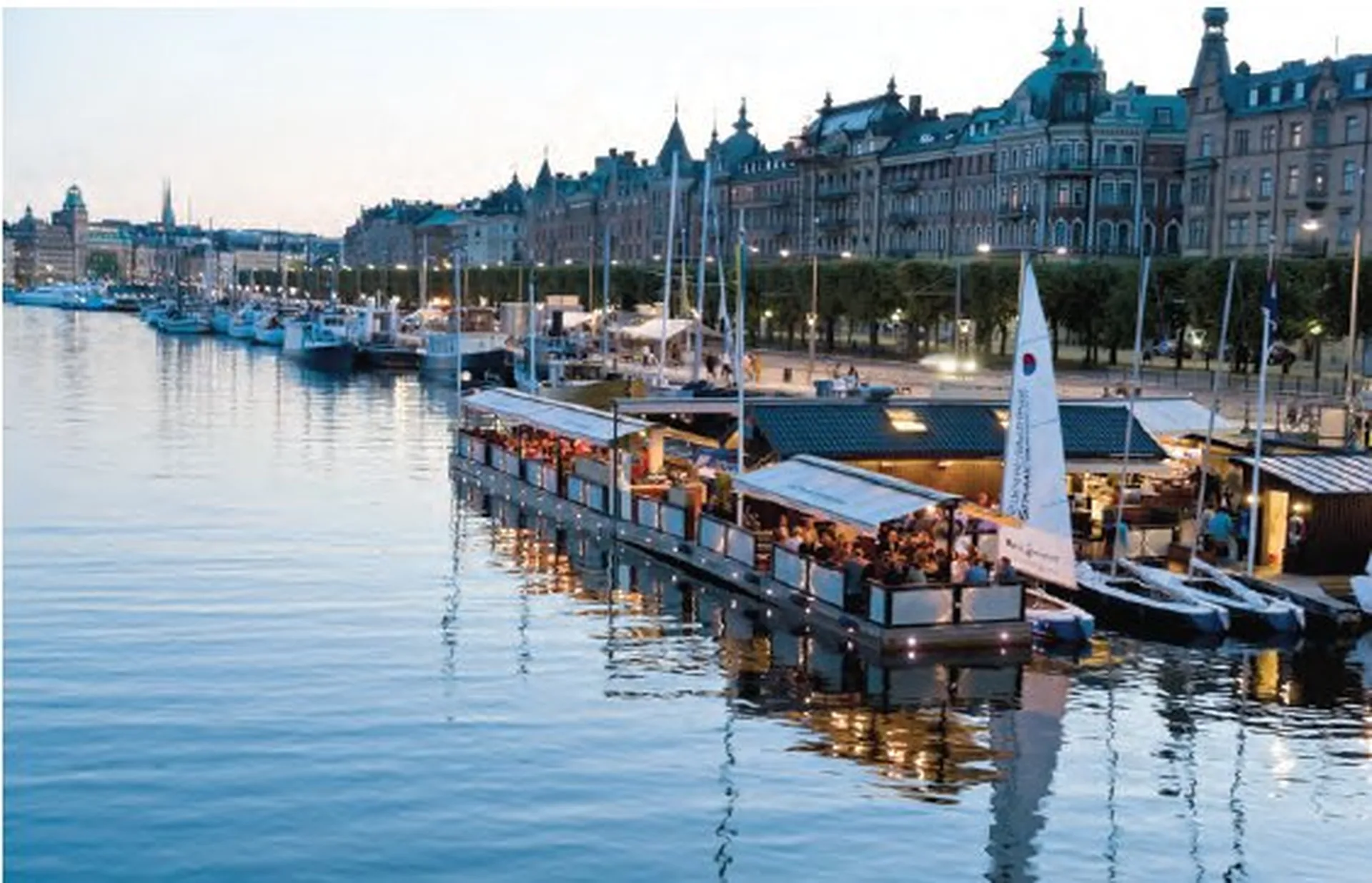
Conveniently enough, since I am already by the sea, the next cultural stop is best reached via ferry. It admittedly takes a little longer than going by other means, but the fresh sea air and beautiful surroundings does make it more than worth your while. Stockholm, a city largely built on islands has an extensive network of ferries to the most important of the 30 000 (!) islands in the Archipelago of Stockholm. I enter the ferry, sit back and watch the Archipelago go by. After an hour or so, the ferry docks close to the the suitably named museum Artipelag. It is a fusion of the words Art, Activities and Archipelago. The environment surrounding the museum unmistakably feels like it is part of the exhibition. With the calm sea and pine trees outside the floor to ceiling-windows, it is difficult to imagine that the busy city is just 20 minutes car drive away (that is, if you skip the ferry). Part of Artipelag’s exhibition is a long wooden decking that stretches from the piers, through the diverse nature and back to the main building. I decide to start my visit by going for a stroll there, getting into the right mood before entering the actual exhibition.
It is a spectacular building. The architect Johan Nyrén claims he wanted the visitor to become in touch with the four elements just by stepping into the building. Thus there is fire cracking in the big open fireplace, earth and mountain are represented in the sense that the building is resting upon it. Finally it is surrounded by the clear air and sparkling water all around. The current exhibition goes along the same theme. It is called Earth Matters - When Natural & Creative Forces Meet. One of the creators explains how the 21st century has been defined as an era of reflection and radical change. It is characterized as an attempt to reset hundreds of years of ecological abuse, overconsumption, greed and violence. He sees a post-fossil community evolving, with a larger use of natural raw materials that brings alternatives with new hope for the future. The exhibition is thus both an eye opener for the overconsumption of earth’s resources, as well as a tribute to the very same resources. It gets you thinking of your own habits, and how they affect earth in a larger sense. Admittedly, I was not expecting to ponder upon my recycling behavior in direct relation to the arty day that is underway.
The museum’s closeness to the nature becomes clear in a very literal way when I step into the cafeteria. From the floor, there is a massive rock surfacing. I am told that it originated some 2000 million years back, and rose from the sea circa 1000 bc. It is quite obvious that they have chosen to collaborate with nature rather than the opposite. Something that is refreshing in more than one way.
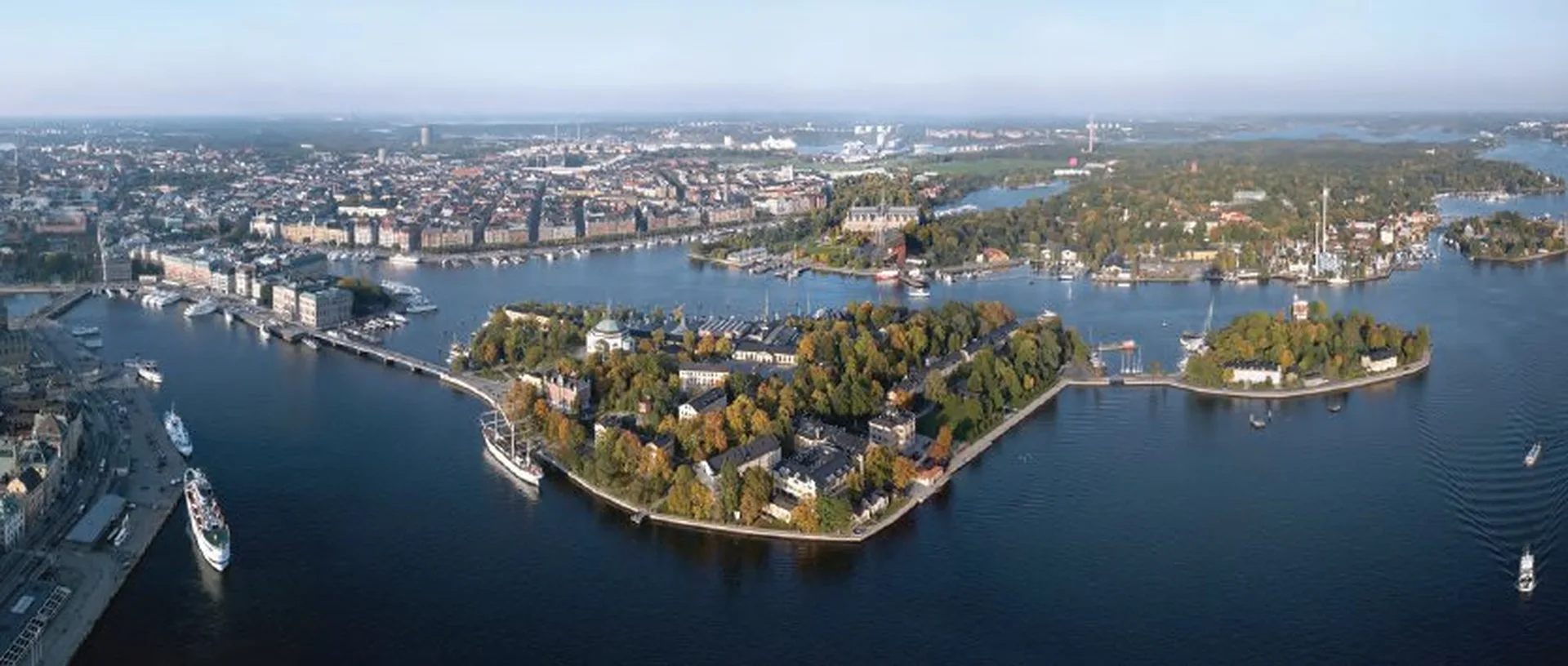
After this break on the countryside, I start making my way back to the city. The next stop is the Modern Museum, Moderna, which is also located by the water (no, there is no escaping the water) on the inner city island of Skeppsholmen across the bay from the Royal Castle. The best ways to go there is either to take another ferry (amazing view and photo opportunities) or grab one of the (almost free) Stockholm City Bikes and use the city’s excellent bike lanes. The Modern museum is Sweden’s most important contemporary art museum, with Swedish and foreign art from the whole of the 20th century. Before entering the actual museum, I notice an outdoors exhibition just outside. If you would happen to find yourself out here on a day when the Modern Museum is closed, or if the weather is exceptionally good, you can download what the museum calls a “treasure map” from the internet and take a tour for yourself. There are 14 sculptures to be discovered on the island of Skeppsholmen, varying from enormous colorful sculptures with names like The Four Elements and The Fantastic Paradise to sculptures in the separate end, named The Monument of the Last Cigarette. It really is worthwhile to stroll around in the sunny weather accompanied by my treasure map. Inside is one of the foremost collections in Europe, which is famous all over the world. The Western traditions are still dominating the collection, but there is a continuous growth of alternative stories that gets to take place. To navigate in this massive collection, it may be fruitful to take a guided tour, to really grasp what it is you are looking at. The tour begins at the turn of the century and finishes in present time and you will enjoy the Museum’s collection of artists like Picasso, Matisse, Dali and Warhol. The Swedish government has recently decided that all state museums will be free of charge as a way of increasing the access of the museums to all its citizens, so use the spare money to buy some cool souvenirs in the excellent museum shop of Moderna. After this we take a walk or a bike ride to Stockholm’s most impressive cultural institution, Kulturhuset.
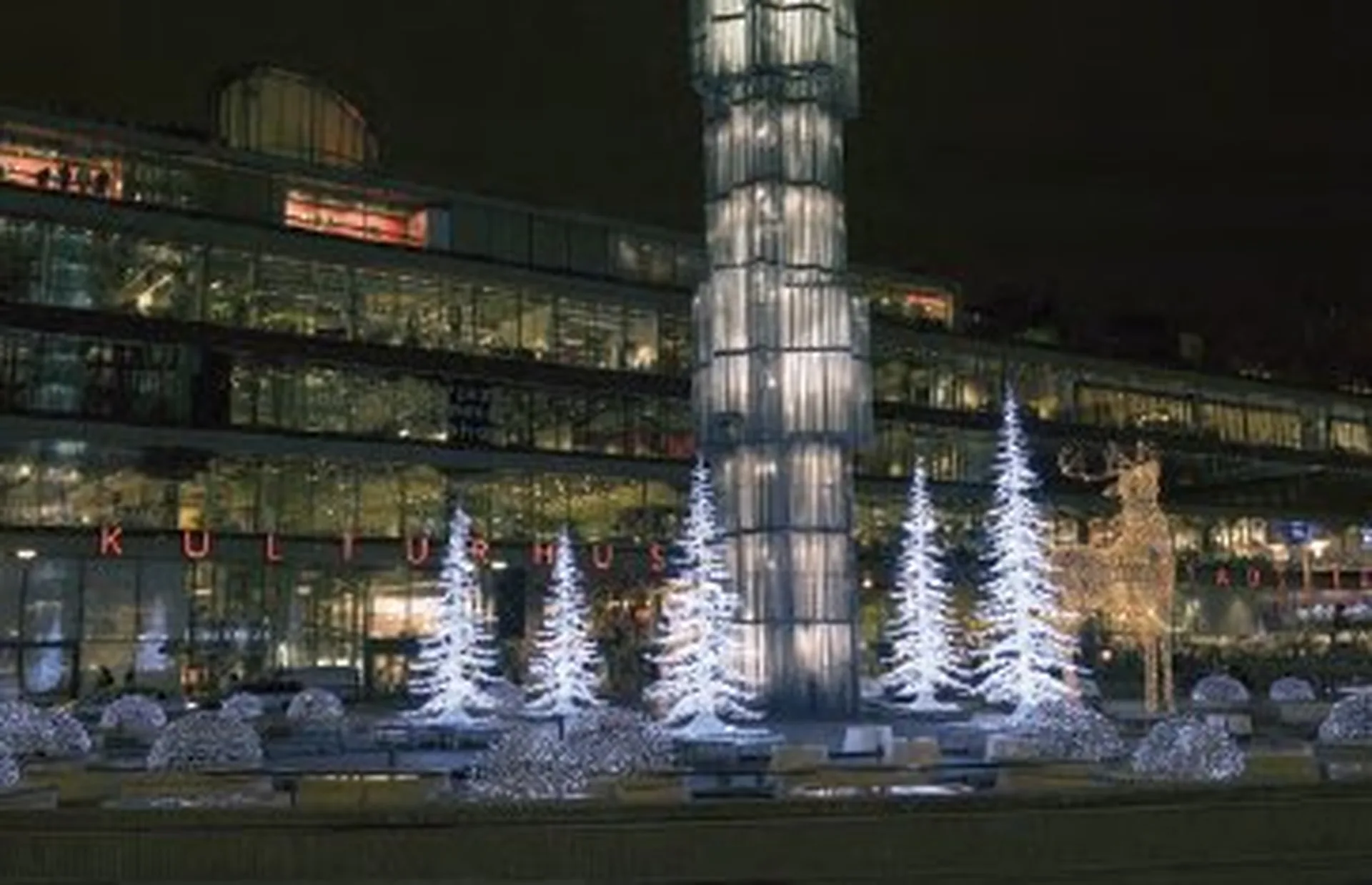
The emblematic modernist building Kulturhuset (The Cultural House) is the city’s center for photography, art, cinema, literature, music, dance and theatre. Think all kinds of cultural expressions in one huge building. The five-floors high Kulturhuset is about as centrally located Stockholm as it possibly could be. Being completely covered in glass it serves the architect Peter Celsings idea of transparency and visualizing all activities taking place in the building. Beneath this cultural oasis is the central station. People are rushing towards different places, and no wonder since the building is surrounded by Stockholm’s busiest shopping areas. Finding things of interest in Kulturhuset should not be too difficult. It houses Stockholm City Theatre with a constant flow of classical, political and musical theatre, including dance. The theatres even offer lunch theatre for the stressed office worker in need of a cultural injection during the lunch break.
In terms of art, there are various exhibitions running that covers video installations, photographs and sculptures. A current photo exhibition by the artist Robin Rhode captures my attention. Rhode paints on street walls around the suburbs in Johannesburg in South Africa. He compares its walls to our prehistoric cave paintings, stating “the city is my cave wall”. Originating from a generation of artists that grew up after apartheid, the environment has been strongly affected by street culture, hip-hop, movies and sport. What I found most striking about Rhodes artwork is how his photos are a fusion between the wall paintings and the people interacting with the paintings in the photos. He plays with the illusion between picture and reality. Nonetheless is certain seriousness always present, in the reflection of social and political issues that touches upon poverty, race or consumption.
As I am not yet fed up with Stockholm’s most central cultural house (mansion could be a more suitable name), I continue going through the long list of things to experience. Literature is another theme. Frequently there are discussions with and between various international and local authors, which is open to the public. In a less formal setting, there are also readings and interactions arranged in a bar environment with newly released authors. Moving down the list is of course also music. There are concerts for children and for people of all tastes. What I particularly like is however the last point of the list. It is the category forum/debate, which is arguably a substantial part of culture. Next up in this category is a live talk show called Moa Svan with guests. Svan has been nominated for Comedian of the Year at the Swedish stand-up gala. She claims that she wants to go back to the roots of the talk show. “It will be fast, sharp, smart, unfiltered and raw. My guests have all of this – they are the best comedians, the heaviest artists and generally cool people I really like. For me, a talk show is love and respect.” Unfortunately for my day-time visit, the talk show is not running right this very moment. I decide to scribble it down on my mental to-do list and head on towards new cultural experiences.
At Kulturhuset there are also several restaurants, but my personal recommendation is the one located on top of the roof – the perfect location for a lunch. Here you can sit comfortably with a view of the tall buildings; the characteristic black and white checkered flooring outside the metro and the main shopping street just beneath. The restaurant in their own words portrays it in the following manner; “Think concrete jungle, rosé wine, barbeque buffet, iced tea with pennyroyal, sun chairs, micro-brewery beer and guest DJ’s.”
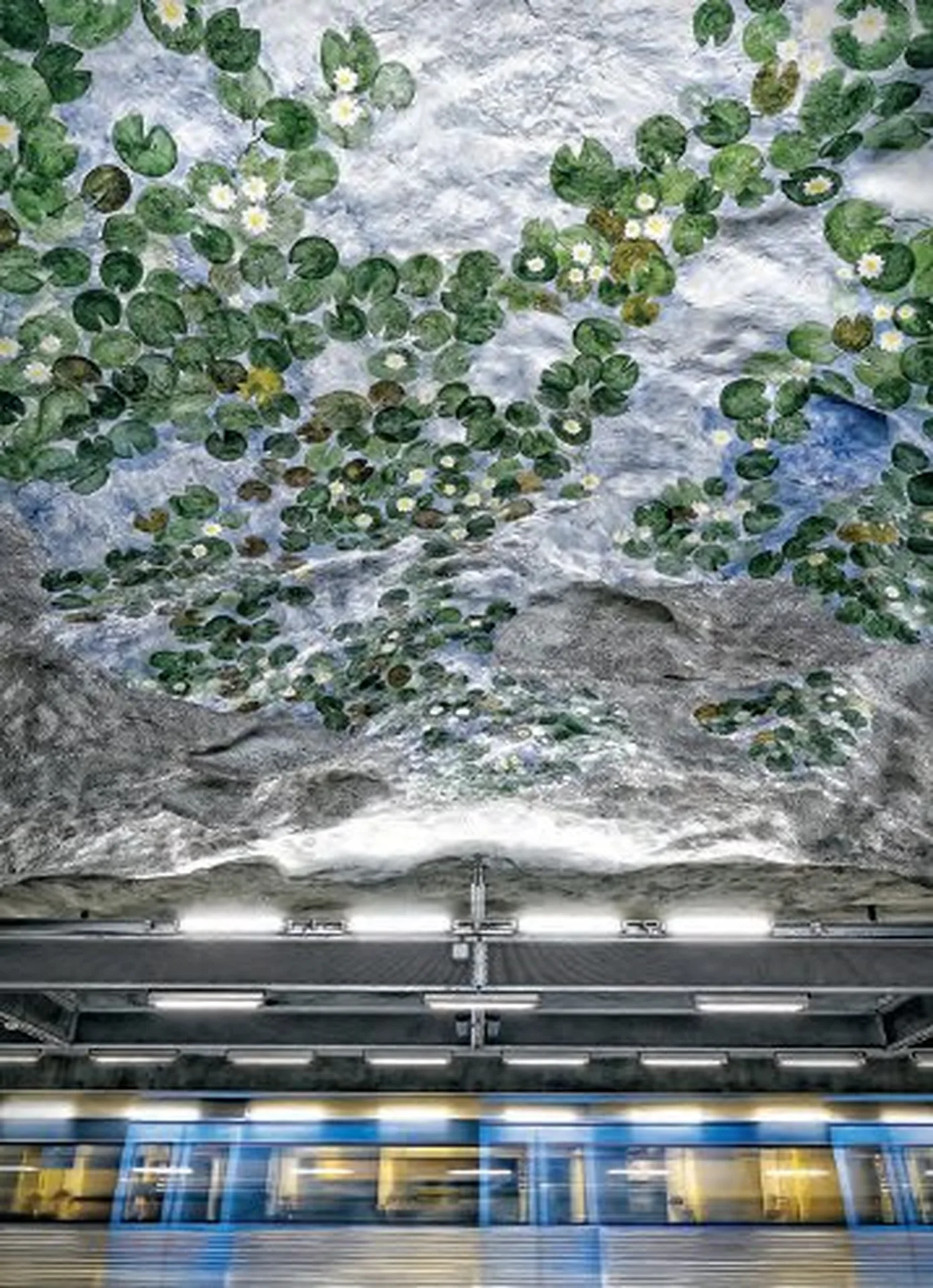
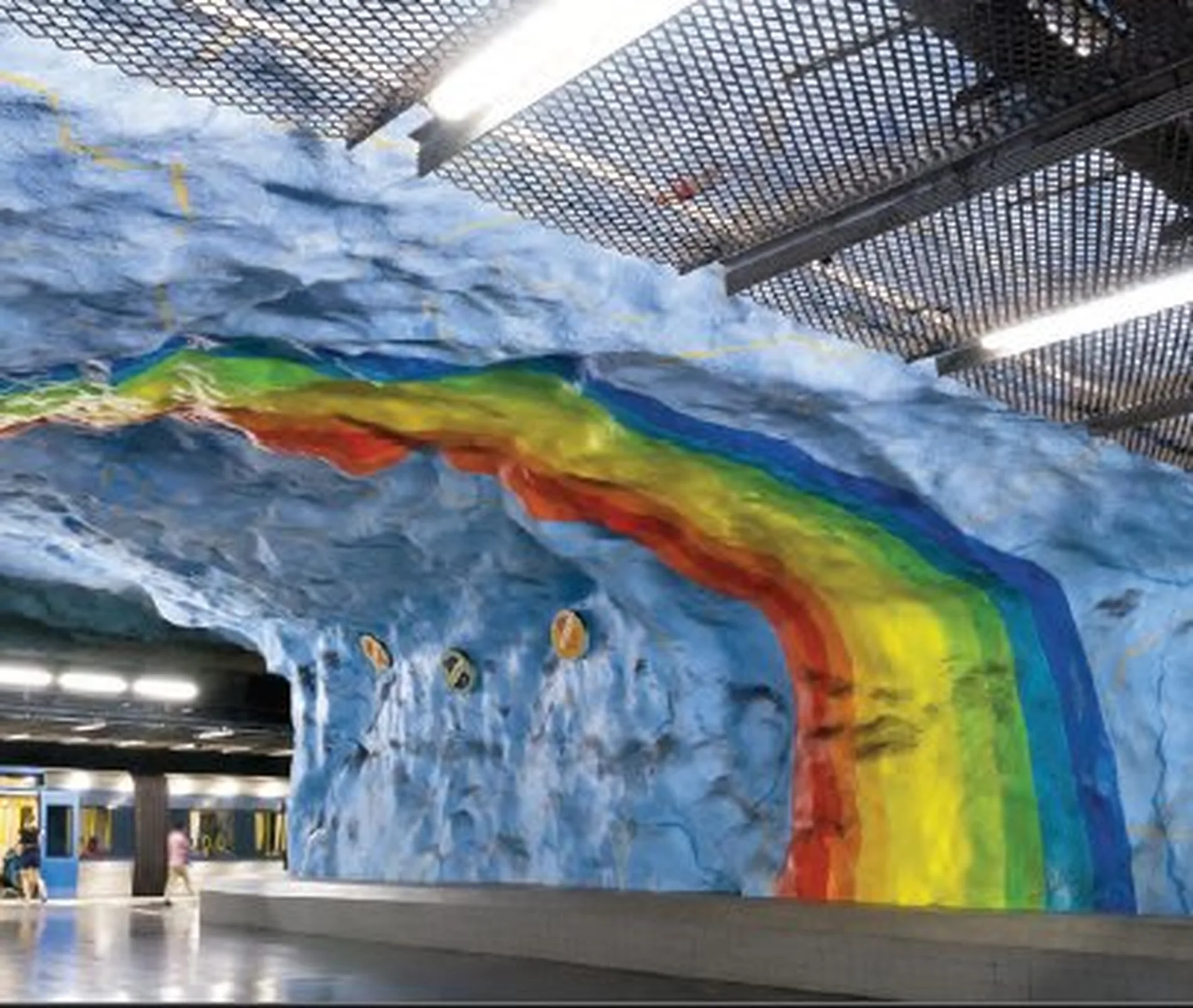
After the lunch, the trip continues to explore the cultural setting that takes place outside the absolute central parts of the city, this time to the suburb of Tensta, where we travel by metro. The Stockholm Metro is well known for its decoration of the stations; it is frequently called the longest art gallery in the world. To go to Tensta you use the blue line, which is known for having the most important art installations of the metro lines. Some of the stations are left with the bedrock exposed and unfinished, or in other cases as an integrated part of the decorations. At Rissne, for example, the platform walls are covered by a wall fresco about the history of Earth’s civilizations.
After some 20 minutes of Metro and art spotting through the stations, I step off at the suburb Tensta in the western parts of Stockholm. Most of Tensta was built in the 70s in large prefabricated block buildings, not very different from the block buildings you find in Romanian cities from that period. The neighborhood is today one of the most multicultural in Sweden with people from all corners of the world. I am standing in front of a concrete building with a multitude of road patterns painted on the ground. There are zebra crossings, bicycle lanes and arrows in various directions, all across the area outside the entrance. On top of it all stands a large amount of white plastic chairs. They are standing around in different constellations, as if a bunch of small intimate conversations just finished. It is the work and entrance of Tensta Konsthall (Tensta Art Hall).
Inside the building, the café is also what makes up the entrance of the art hall. It is meant to be a meeting point for individuals, workplaces and and organizations. The menu varies from day to day, and the culturally tied baked goods with it. In terms of companions for coffee, there are currently baklava and cinnamon buns to choose from. A non-profit social company called XpandiaVision runs the café. The excess profits goes to creating new jobs and career development for people outside the labor market. Thus it is a place where you can eat your calorie-rich baklava with good conscience.
The current exhibition is based on the works of the multitalented Frederick Kiesler (1890–1965). During his lifetime, he managed a number of professions; architect, artist, set designer, educator, theorist, and not least, a groundbreaking exhibition designer. He worked in a manner that was genuinely trans-disciplinary. Behind much of his work were thoughts of the continuous connections between the human and her natural and technical surroundings. The exhibition contains models and documentation from Kiesler’s buildings, interior designs and window dressing designs from different eras. The exhibition will also contain prototypes from his most famous project; the endless house. The main focus of the exhibition is the cutting point between art and life and how this particularly was manifested in his works.
Dare I say is the complete opposite of Kiesler’s architectural art, is the neighbourhood walk, map and audio guide called I’m Every Lesbian that departs from Tensta Konsthall. In a first person manner, it presents the lesbian history of a physical place. Based on interviews with lesbians living in that specific place, the city walk elaborates on both the place’s official lesbian history like laws regarding LGBT issues, social movements and significant manifestations, but also focuses on personal stories of love, friendship and other relationships. The purpose of combining the two is for the visitor to reflect on how political and social movements affect the individual. The personal is political and the political is personal.
The point of telling these stories in a public space is said to be a way to highlight lesbian history, which is often overshadowed by normative history writing. Lesbians have, noteworthy enough, also been overshadowed in the LGBT context, in which gay men have been the focus at the expense of lesbians and transgender people. Thus, to conduct the project in form of a city walk is a way to let lesbian history take place at the traditionally male arena – the public space. If nothing, this may be the clearest indication of the day that art can be found at a bus stop, the district administration or at a preschool – which are all stops in the city walk around Tensta.
The day is slowly coming to an end, and I am standing in front of a large 19th century style industrial factory building in the southern suburbs, Färgfabriken (The Color Factory). It was brought up in 1889, and a few years later, a color factory moved in. Besides color, also soap and various artistic articles were produced here. It is from here the museum derived its name. Today it is home to exhibitions of various sorts, brunches, clubs and concerts. Thus high ceilings and large open spaces characterize the interior, with many original details preserved.
Färgfabriken’s exhibitions focus on a broad spectrum of art, architecture, society issues and city development. Much as certain activities previously mentioned in Kulturhuset, Färgfabriken also aims to provide a platform for lively discussions and seminars. They describe themselves as experimental and cross-border. The museum wants to create and give space to new thoughts, ideas and unusual exhibition projects. They want to give space for the unforeseen by bringing together different worlds and interests within art, architecture and society.
Another thing that stands out with Färgfabriken is their striving to go beyond not only the walls of the factory, but the country borders. In international workshops and projects, they bring in new perspectives, experiences and complements to their internal business. One example is the exhibition called Building Blocks, which was carried out in Stockholm, Oslo and Berlin. The basic thought was how children’s visions make up the foundation for a new kind of architecture that challenges our habits and inspire new thinking.
Time for dinner and why not try the very best of the innovative Swedish Cuisine? My pick would be the one star Michelin Restaurant Gastrologik, considered one of Stockholm’s best restaurants. The restaurant, which opened in 2011, let the producers decide what is on the menu since food is based on seasonal local products. It is located in the elegant and posh neighborhood of Östermalm, considered to be among the most exclusive in Sweden.
After an excellent dinner you can finish the evening having a drink at the theatre and bar Södra teatern, Stockholm’s international scene for music theatre and debate. Besides a panoramic view of Stockholm – in summer also from the beloved outdoor theatre terrace Mosebacke – you might have the luck of seeing a concert from any corner of the world. The theatre is known to hold concerts with famous European, Latin American, Arabic and African artists. Internationally known Romanian brass bands such as Mahala Rai Banda and Fanfare Ciocărlia have had several successful concerts at Södra Teatern.
This is just a glimpse of all that Stockholm has to offer. Stockholm is since one year also closer thanks to that Tarom is now flying 4 times a week to Stockholm from Bucharest. I believe it will lead to more Romanians discovering Stockholm - and also more Swedes discovering Romania! I hope you take the chance to visit Stockholm, you will definitely not regret it.