Prof. ddr. Rudi Rizman
Prof. of Sociology and Political Science at the University of Ljubljana and University of Bologna
Although Slovenians acquired their own statehood only 25 years ago they were nation much earlier. Their ethnic survival as one of the smallest nations in Europe amidst frequent wars in bloody European history, which always affected this nation due to its central geographical position, is not contingential. It should be credited to its entrepreneurial capability and accommodating to continuous social, epochal and cultural changes while simultaneously keeping their awareness of distinct cultural identity.
Many scholars and common people observed that Slovenians are individualists, hardworking and at the same time open to new ideas coming either from inside or from outside. In order to sustain their political, economic and cultural distinctiveness Slovenians relied throughout their history upon dictum that one needs both roots and wings. This explains well the precious historical act that four-hundred and thirty years ago Slovenians together with thirteen other European nation translated Bible into their own language
Thus it is quite obvious that Slovenian cultural identity, anchored in its own language, could not survive without relying upon viable and vibrant economic basis and living entrepreneurial spirit. Embedded between Alps and Mediterranean on the one hand and between Pannonian plains and unique Karst formed and impregnated Slovenian both material and cultural creativity. To this one should add permanent economic and cultural openness to both the positive and negative influences coming from the outside world. In this regard it would be superfluous to classify Slovenians among either Northerners (Germans) or “Southerners (Italians), because they in fact enjoy a hybrid style of life. To allow ourselves some generalizations, Slovenians connect work and discipline ethic of work with “deserved” enjoyment which is complemented with various leisure time activities (from sport, recreational and cultural) to their engagements in civil society activities and last but not least in vast gastronomic choices.
Slovenians, as can be extrapolated from history and present time, were highly motivated and active concerning sensitive and critical social issues. This refers in particular to protection and sustaining the common good, both nationally and internationally. Proofs to this effect are numerous, above the average in the European Union, activities and initiatives performed by civil society. Most of the mentioned activities are focused around such themes as: the rise of inequality in today’s societies, democratic deficit, problems related to the crisis in Eurozone and European integration, concerns for migrants, violation of human rights, unjust wars etc. Slovenians are much less attracted by continuous and routine engagements in everyday professional politics. In this last case they take the critical distance, but occasionally take the rebellious stands, when politics and politicians assume excessive forms (corruption, clientelism, the prevalence of partitocracy etc). In this respect Slovenian citizens more or less follow the behavioural patterns in other European states.
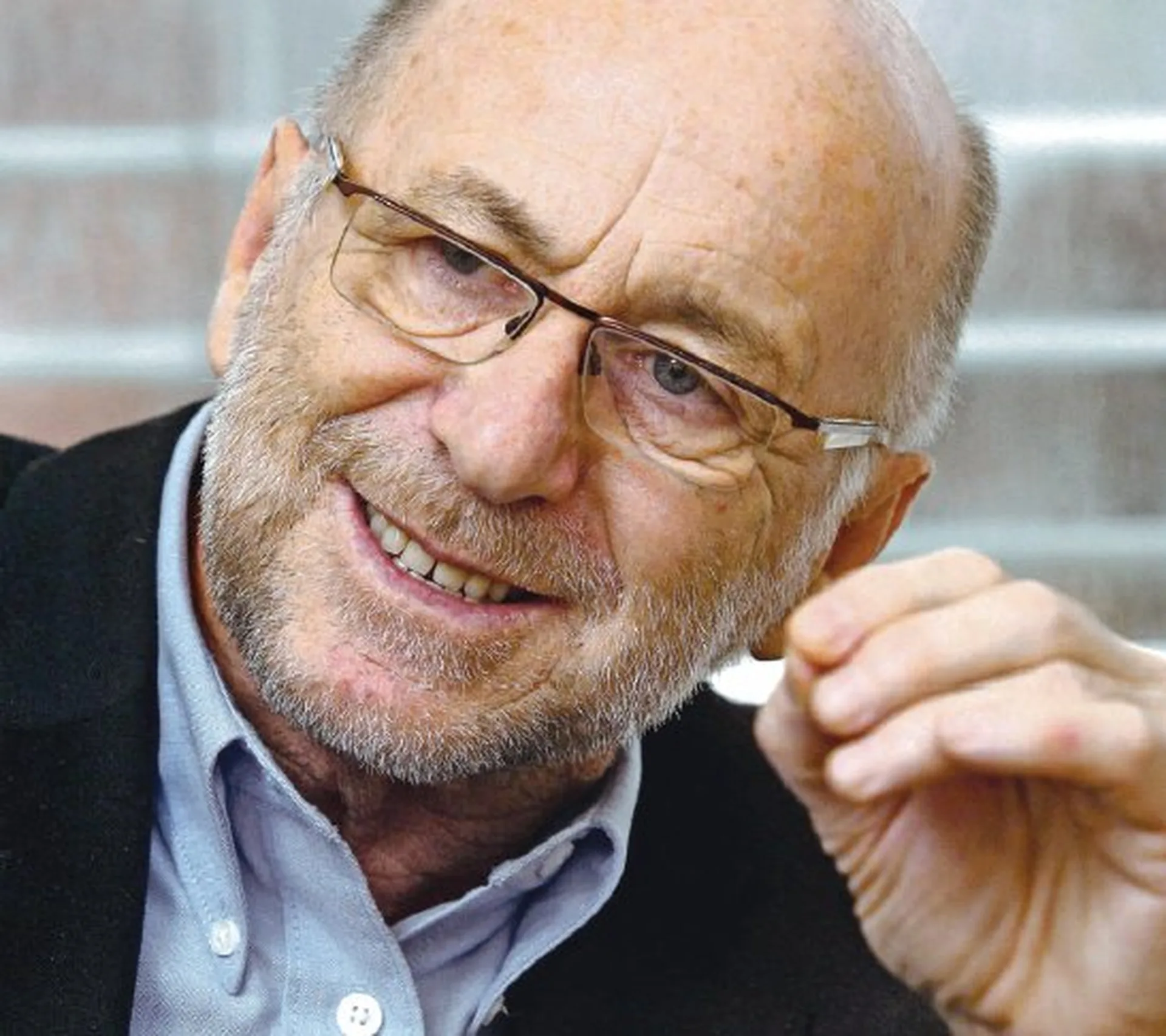
Prof. ddr. Rudi Rizman
FOTO: www.delo.si
One of the most challenging issues for the further maintenance of Slovenian distinct identity is confronting the driving forces of globalization. Slovenians are aware that they can succeed in this endeavour only hand in hand with(in) the European Union in alliance with other progressive forces in the wider international community. As a country where two thirds of its territory is green, covered by forests and woods, its present developing strategy for year 2020 and relying in this regard upon financial support of European Union focuses on »smart specialization«. Which means that this country’s priorities in the mentioned time-span rest on establishing the reality of introducing nature-friendly technologies (biotechnology, microelectronics, nanotechnologies and information technology), »smart use of resources«, healthy life and attractive location for human living and recreation, innovative creativity and the like. The fact that such a strategy has hardly any other alternative, besides counting on the support of European Union, this to a significant extent also guarantees its eventual success.