by Bogdan Munteanu
The stories of the thousands of Saxons who left Romania these last two decades are overshadowed by sorrow; no matter how well they have managed to restore their lives in Germany, many of them are missing their Transylvanian home very much. What is the story of your coming back here?
That is true; the Saxons leaving has been a painful experience for most of our community members. The emotional bond with their home towns can be still seen today, when the second, or even third generation Saxons actively participate in the projects developed by the associations in the field and return periodically to Romania and organize reunions in Germany on a regular basis.
The activity I carried out for the Transylvanian Saxons association during the `90s, has kept me close to Romania and I returned here to coordinate some social projects. While I was a student I worked as a volunteer for this association and back then, there were some funds from the German Ministry of Foreign Affairs which, initially, were intended to go into Ceauşescu`s accounts to pay for the Saxon emigrations. Now that Ceauşescu was gone, the money became available for other projects.
The Minister of Foreign Affairs of that time, Hans-Dietrich Genscher, suggested using the money in Romania for several projects; one of these projects had the target to discontinue somehow the emigration of the people of German origin. In September 1990, when we had a so-called census, we realized that 120.000 of these people had left, especially the young ones. Therefore, we have designated the remainder of the money for old age home retreats; the first one was built between Rupea and Sighişoara.
My whole family thought I was crazy. I was the one who, at age 17 (in 1977), went to the passports office in Braşov to push for the emigration decision. After spending 10 years in Germany - where I had integrated, studied at university, had a good engineer`s job at Siemens – I came back in 1990 to relocate in Romania!
How did you move from socio-cultural activities to a successful auto business?
The socio-cultural projects I was involved in since my student time also had an entrepreneurial component and, together with my experience as a young Siemens employee, have educated my business sense. The news about BMW`s intention going on the Romanian market came at the right time, a time when I already had the necessary maturity to coordinate a business on a developing market such as Romania back then. The journey was not quick or easy but it was extremely motivating.
You have started with three employees and 11 automobiles sold in the first year. How difficult was to get to the flourishing business you own now?
In 1994, I started the business in the first office building of Bucharest, Sitraco Center, located in the Unirii area. A year later, the Sofitel Hotel opened and we had a small showroom there, with room for just one car. After that, I bought the land in Otopeni and I started the construction in `97. In `98, I had the grand opening and I was all alone on that field.
I had great legislative problems. It was very hard to do decent commerce through a company. Immediately after the Revolution, commerce took place between natural persons; a modest customs duty of 100 Marks was paid. In September 1994, a customs duty was introduced - 50 % for legal persons - and it blew us away. If we cashed in the money for a car and didn`t exchange the currency immediately, we`d lose 10%. We cashed in 80.000 Marks, but the next day we had 8.000 Marks less.
At a later time, we lobbied through the Association of Automobile Producers and Importers for the introduction of a leasing law that made commerce more civil. We didn`t have to pay taxes on the leasing imported cars, but only 20% of the residual tax. We had 14 good years, almost every year the sales doubled. Each cent I earned was reinvested on the country`s auto service network.
Were you affected by the economical crisis of 2008-2009?
We had a drop in the premium segment, but not so much as other brands. We have a stable clientele who change their cars regularly after 2-3 years. When this time is near, the sales persons may already contact the clients. In 2009 we said that we could go back to the numbers of 2007 only in 2014. And this is the first growth year, because so far we only had degrowth. But, we are still far away from what we had in 2007-2008.
Between 2004 and 2008, the market was overheated, the banks were too generous, the leasing firms were approving the contracts with their eyes shut - this was a phase of the market growing up. Now, even after six years, the banks are reserved.
How does Automobile Bavaria Group look today, in terms of number of employees and level of sales?
If we refer also to the MAN group, the total number of employees in Romania and Germany is almost 1.000 persons. The number of BMW and MINI pieces sold each year has varied a lot in the last few years due to the market`s uncertainty. Generally speaking, the last three year`s average is 1.500 cars sold per year in Romania and 2.000 in Germany.
Regarding the Rolls Royce brand, in Romania we own the only auto service center for this brand in the region. In Germany, our group owns the only Rolls Royce dealer in Munich. Here, we sold 30 cars in 2014.
”There are also some new opportunities – in our case – the new generation of BMW electric cars. Automobile Bavaria will soon become dealer and authorized service for these automobiles.“
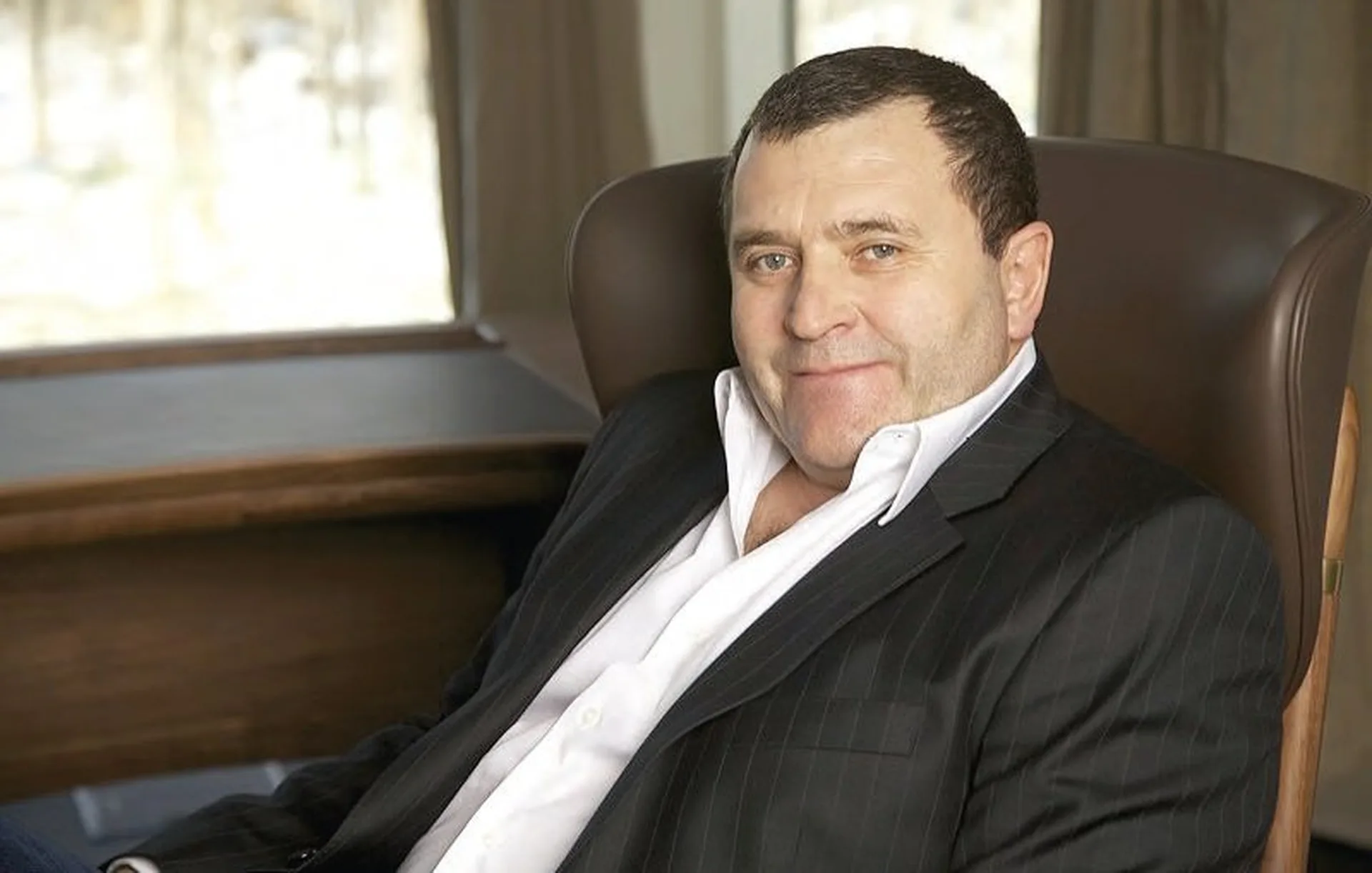
Beyond the quality of the brands you sell, was your success due to certain leader abilities?
During the 20 years since I have started Automobile Bavaria, I have never stopped for one moment playing an active role in the company`s management. Even today, there are clients who contact me personally whenever they buy a car or to resolve a repair problem. But, it is very important to have valuable people around you, a team who lives up to the brand`s expectations, has a vision and conveniently reacts to the changes of the market.
I have never stayed in one place, I took over other brands. I have always been on the move. While the crisis was here, I moved to Germany and invested there. And right now, I am again looking for opportunities. In Romania there is a certain saturation and I have a capacity that is not being used.
I have always been against the flow. In the `90s, when there was no specialized staff in this area of expertise, I brought the middle management from Germany. Now, it is the other way around, I am taking Romanians to work there. They have performed here, now they do a good job in Germany. The IT staff is very much available, so are the mechanics and the electronic engineers, but not the sales persons because it is necessary to know the language.
What is the future you foresee for the Romanian auto market?
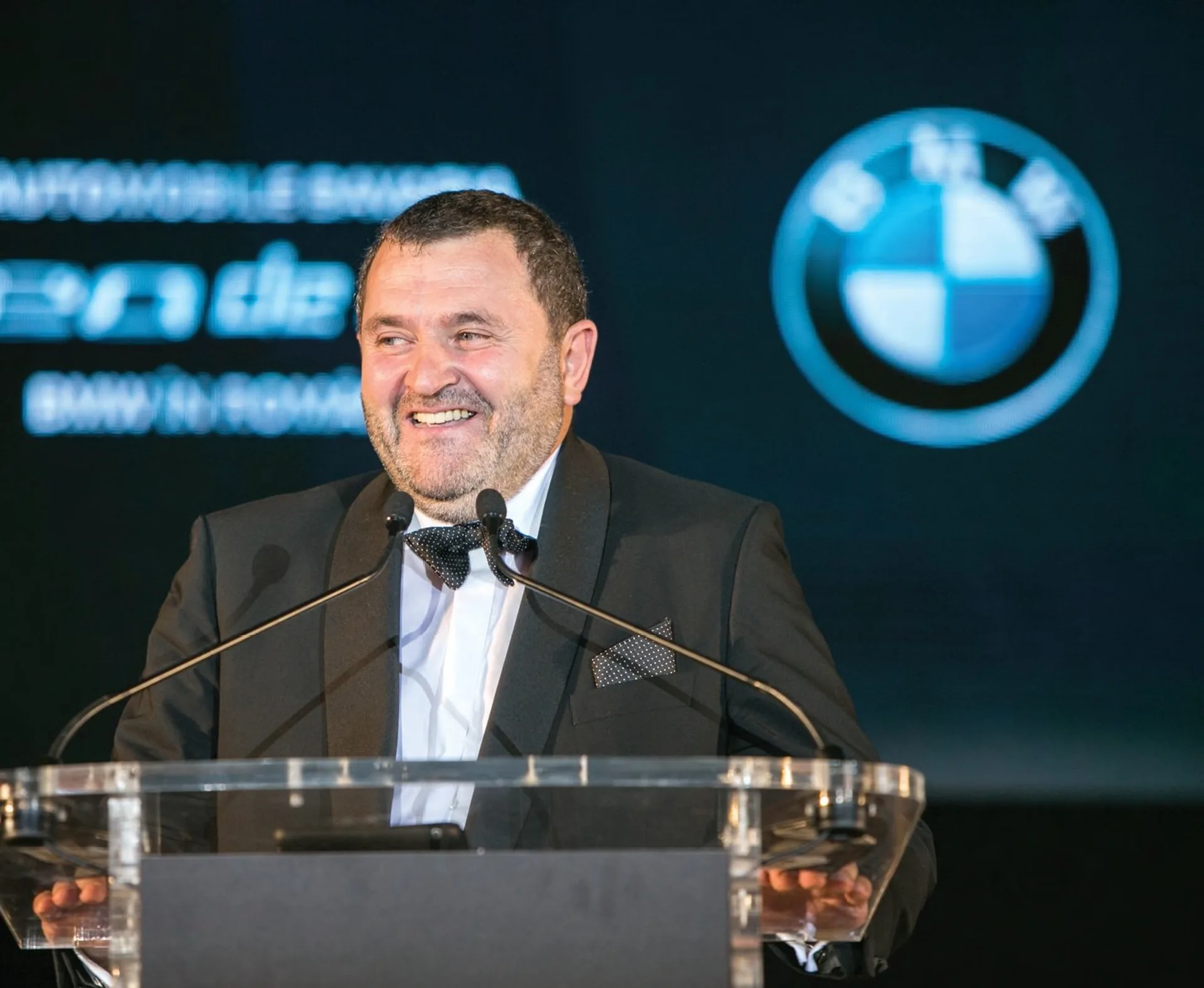
When it comes to the new cars sales, I believe that, on medium term, the volume of sales shall continue to remain constant and sensitive to the economy`s comeback. But, there are also some new opportunities - in our case - the new generation of BMW electric cars. Automobile Bavaria will soon become dealer and authorized service for these automobiles. In fact, the new models BMW i3 and BMW i8 were presented as a preview at the “Automobile Bavaria Gala, 20 years”, on the 29th of September 2014.
Automobile Bavaria Group pays a special attention to the used premium cars segment. This year we have reorganized this division within the group and came up with a new strategy. We have a series of competitive advantages that we can provide to our customers, from a fair evaluation of the cars and warranty provision to purchase and finance channels.
The selling of trucks can be a good economic indicator. As the group you manage is also selling MAN trucks, can you diagnose the Romanian economy?
Yes, the trucks represent a good indicator in terms of investments the companies need to make within an economical system. But this also applies to the investments in expensive goods and the trucks are expensive.
This is the reason why the truck market decreased since the 2009 crisis and is coming back with more difficulty than the rest of the economy. The purchase of trucks requires capital and financing lines and the Romanian companies are still having a hard time to access these. Therefore, many clients purchase used trucks.
Last year approx. 17.000 used cars were sold in Romania and only 4.000 new trucks. A normal volume sales of new cars, for a country as Romania, is somewhere around 20.000 pieces. In 2014, our prognosis for the trucks` market is a total volume of 5.000 pieces, which represents a quarter of a normal year.
Do you think it is possible to increase the Romanian drivers` level of education?
I believe that the larger number of fines represented a step forward. Unfortunately, there are many Romanian drivers who are very rebellious to the point where the lives of people are being lost. Between `94 and `98 I have commuted between Bucharest and Braşov each week, I know how it was like… Since then, things got better, including the behavior in traffic.
Certainly the situation is not ideal, but you may go to Italy for example and see that things are not better, especially in the South! Then, in any European country there are these so-called weekend drivers who go out once a month, and don`t have that much experience. Second, there is the highway shortage …
Do you think it is possible to see these highways constructed sometimes in a foreseeable future?
I am very optimistic, I wouldn`t be here if I didn`t have faith. A lot was done, but a lot is yet to be done. In the `90s I could see with my own eyes how quickly the Austria – Budapest highway was built, partially also in Romania. All the considerations say that a country who wants to open, develop and attract investors must pay attention to its infrastructure.
Which are the dearest projects you have developed through the foundation that has your name - Michael Schmidt Stiftung -, and what are your future plans?
I have set-up the Michael Schmidt Foundation when I turned 50 years old (in 2010), and my intention was to consolidate all the charity projects that I have developed and initiated all these years. We focused on restoring and invigorating the Saxon patrimony in Transylvania. An important step was made in 2012, when, together with artist Peter Maffay, we have launched a large cultural project called “Haferland Week”; the project takes place each year and includes several places in Braşov County, such as Saschiz, Rupea, Bunești, Criț, Viscri, Fișer, Meșendorf and Roadeș. The project`s first two editions have brought a few thousand participants and increased the area`s visibility.
The most significant actions and investments implemented by the Michael Schmidt foundations were done in my home village, Criț - we have completely restored the 200 years old baroque organ belonging to the Evangelic Church and rebuilt the village`s former church house according its original plans. Next year we shall continue the restoration of two 18th century households.
Another important part of the Foundation`s activity includes the support of German language education. We have created the first projects that grant support to students who want to become German language educators and teachers. There is a great interest to learn German but there are not enough teachers. In Bucharest there are American, British and French schools but if there were two private German high schools, they`d be packed with students.
The architectural treasures can be restored; the traditional costumes can be kept in museums. But to whom do we pass on the values of the Saxon communities and their life style that marked Transylvania`s history and also influenced the Romanian people up to this day?
This is one of our Foundation’s objectives, which, together with other similar organizations from Romania and Germany and with the Transylvanian Saxons, is making constant efforts to preserve and convey these messages to the future generations. If you visit these areas, you will easily discover the Saxon stories and traditions, proudly promoted by the locals.
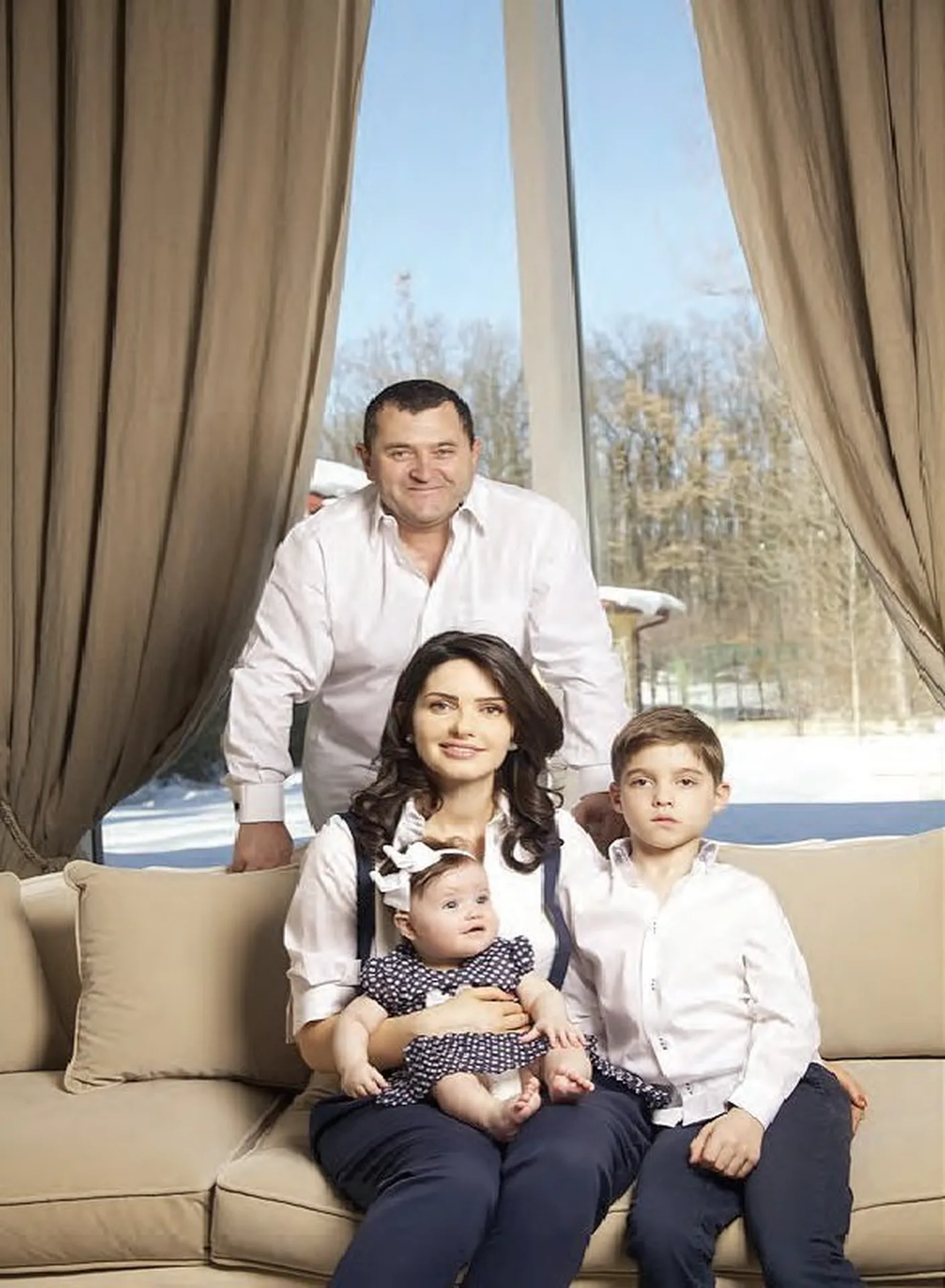
That is why I invested in Criţ, my home village; I have restored the former nine room church house so that tourists from around the world can visit it. My wife would like to organize educational camps for children there.
I am in favor of the Saxons coming back, as many of them as possible. Many of them left with disappointment, but it is a true joy to see young people born in Germany who want to know their roots. I have two nephews from my sister, they are over 20 years old and were born in Germany; they take Romanian classes and come here to visit at least once a year.
Despite of what could be an advantage – hundreds of thousands Saxons and tens of thousands of Romanians living in Germany, many of them having successful careers – Romania’s image in Germany is not quite flattering. Why is that?
Unfortunately, the German press does not have a positive attitude towards Romania. This fact is rooted in the `90s, when there was a lot of talk about the street children, then the gangs stealing money from ATMs. The tabloids love to write about scandals. The positive issues are not of interest. We need to have more positive communication.
On the other hand, Germans and Prussians are more conservative people. When they do business they need to know nothing bad is going to happen. The Austrians are more open-minded, more relaxed. We can also see this in history; and the saying “Balkans begin in Wien” is true. We can see this fact in the Romanian banking and insurance system that is controlled by the Austrians.
As a person who has daily activities in both worlds, personally speaking but also running the businesses I have built, I can confirm that once the visitors of our country overtake the bad publicity, their opinion changes very easily and they are impressed with what we have here.