The rules of modern trade are relatively new to the Romanian territories as they were introduced only about 150 years ago, while in Transylvania these practices had arrived at much earlier date under the Germanic influence. At the time when these Transylvanian Saxon towns developed in the commercial areas the first businesses that complemented harmoniously the ground floor storefronts with first floor housing, in the cities and boroughs of Walachia, the southern Romanian province and Moldavia, then the eastern Romanian province, the rules were different.
by Adrian Majuru
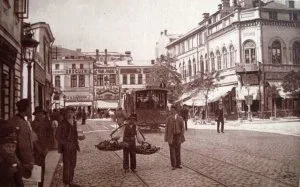
We are in Wallachia, sometime in the seventeenth and eighteenth centuries. Asides from apothecary shops, workshops and small businesses owned mostly by foreign traders from the Balkans or the German land, most outlets, wholesale merchants and retailers sold their goods by freely displaying them at the entrance to their stores following the oriental model. This is how the customer discovered what types of goods were inside the manufacture or the warehouse.
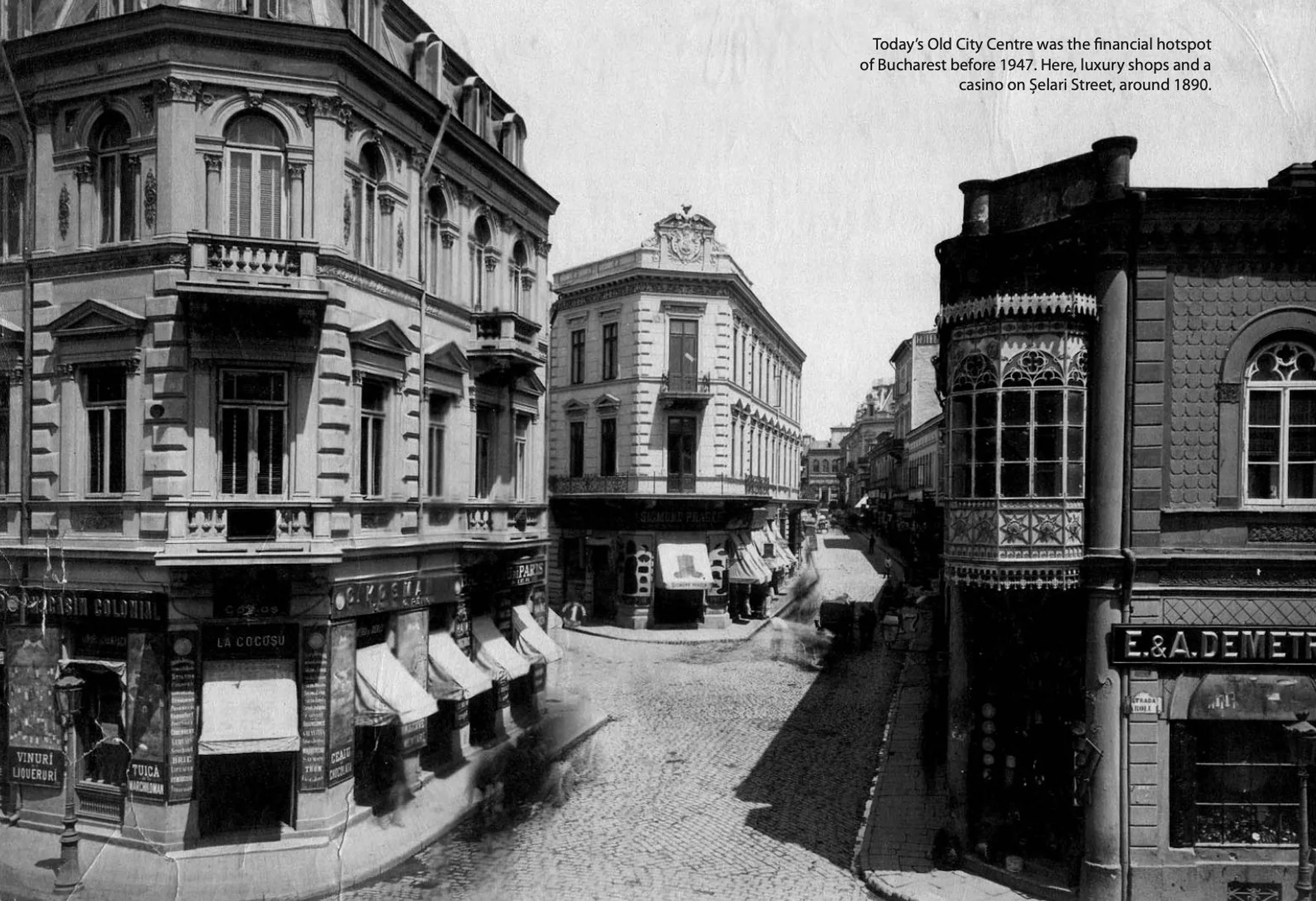
After 1850, a shift from competition to downright confrontation took place in the trade practices. Competitors from the consumer market, regardless of the industry they belonged to, were struggling to convince and to conquer vast and varied numbers of consumers. The storefronts and the facades of all kinds of institutions become true spaces of play foreshadowing the possibilities of today in the sense that they quickened the imagination, the fantasy and the visionary mind. In essence, a nonverbal communication between the investor and the consumer was often established through these
apparently volatile filters.
More than a decade earlier, it was business and trade that opened the way to modernization. Many professionals came then to Bucharest and Iasi from the cities of Europe. Then followed surgeons, opticians, dentists, tailors, fashion designers, and mostly the many merchants, traders and large investors who began to build a new world for the people living in these
cities.
The first luxury shops in the Western sense of the word were now born, albeit very small in numbers and for a limited clientele at first, clientele that would see a demographic explosion in less than a decade. Under these circumstances the first company stores, manufactures, pubs, cafes, variety theatres, banks and last but not least, the self-employed private companies offering a variety of services appeared ‒ lawyers, doctors, teachers, governesses, clerks of all kinds and many more.
In the mid-nineteenth century the printed advertising "exploded" in the newspapers, popular calendars and high society almanacs of the time too. The advertising was not only intended to invite and to capture the goodwill of the customers convincing and appealing to them before their purchase, but it was also meant to educate by providing the most complete and relevant information available on the store itself and the variety of products so necessary for every day life it sold. Often many of the advertisements described the range of products manufactured or sold together with how important they were in the life of the customer. So, in other words, the advertisement was a predetermined dialogue that would almost always ensure inside the store between the customer and the salesman or the dealer.
The great successful businesses of the nineteenth century shaped different tastes for life. This led on the one hand to a wide array of products from the finest to those of basic necessity to be advertised and included in catalogues and on the other for shopping practices to develop what today we would call second product discount.
The purchases were made coming in direct contact with store boy, the store vendor or the store owner, especially when the ordered merchandise was items clothing or travel goods. Each item purchased was wrapped as if it were a piece of art. This attention to detail has since disappeared with the exception of luxury shops from the reality of the routine long-run shopping experience.
Investing in comfort determined the most important changes in the everyday life aspects closely linked to people’s private lives. Every generation’s desire for comfort has had the market competitors take notice through their projects and has had them anticipate the future desires of their potential investors.