by Cecilia Mureanu
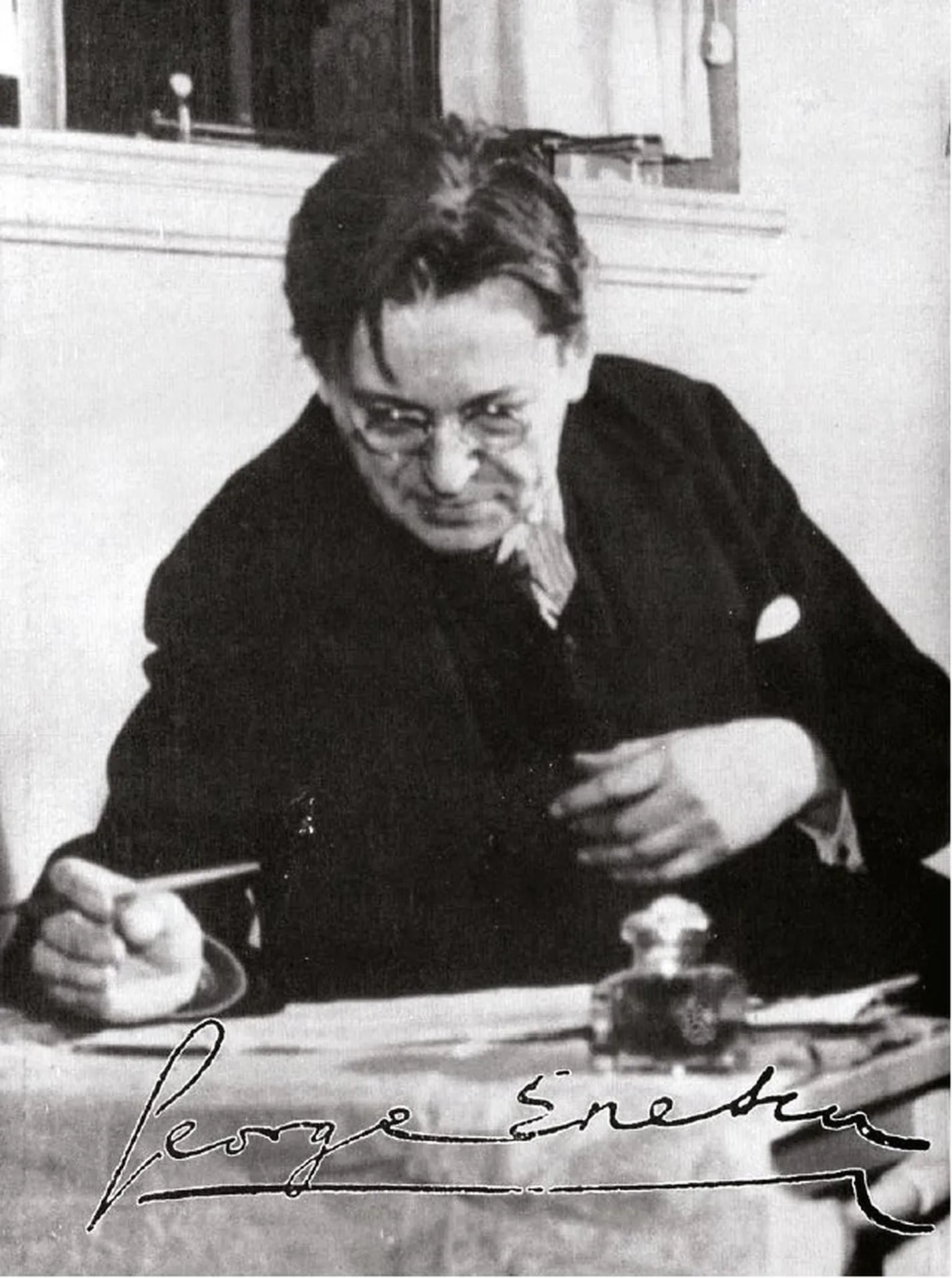
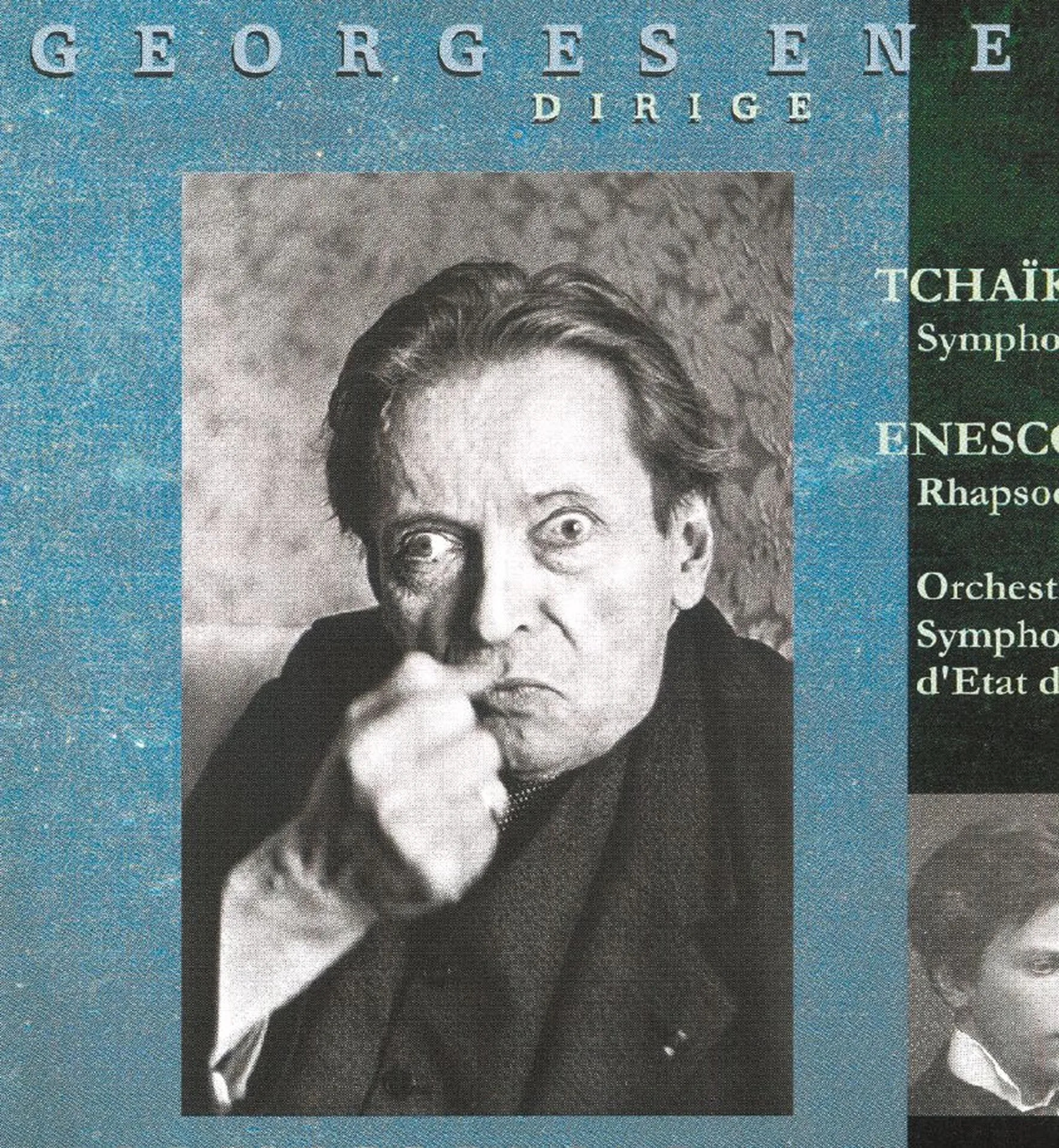
The only memories that were fortunately preserved from the fall of 1946 USSR tour are some recordings with George Enescu as conductor, in particular the 4th Symphony by Tchaikovsky. But, the artistic world still hopes to find in the Soviet archives the recital where the musician played the piano accompanying violinist player David Oistrakh; the only testimony we have so far is a photo taken during this concert. A short while after the return from the USSR tour, Yehudi Menuhin arranged for his maestro a fictional tour, in order for him to leave Romania freely, without any obstacles. The story that followed is well known: Maruca, Enescu`s wife, accustomed to live a luxurious life, started making a lot of debts that the musician had to pay; therefore he was forced to perform many concerts in the United States and in Europe, despite his poor health that was preventing him from making such efforts. Fortunately for the musical world, some very valuable recordings were still kept, more precisely several Bach works – Sonatas and Partitas for Solo Violin, Concerto No. 2 for violin and orchestra with violinist Enescu, The Great Mass and the complete series of the piano concerts where the conductor plays together with Céliny Chailley-Richez – who accompanied him at the piano for decades –, but also “Kreutzer” Sonata by Beethoven or the Second sonata for violin and piano by Robert Schumann.
During his exile years, mostly spent in Paris, Enescu was ceaselessly courted by the Romanian Government, who invited him several times in the country to perform a few concerts, but the maestro always requested some conditions regarding his colleagues musicians who were suffering during those troubled times. Due to his refusals, his works were not officially forbidden, but they were never played in Romania. Only after Enescu`s death in 1955 – when a series of unclear events took place, like the fact that the Security would have planned to kidnap the body of the maestro –, his works were included once again into the current repertoire of the Romanian orchestra.
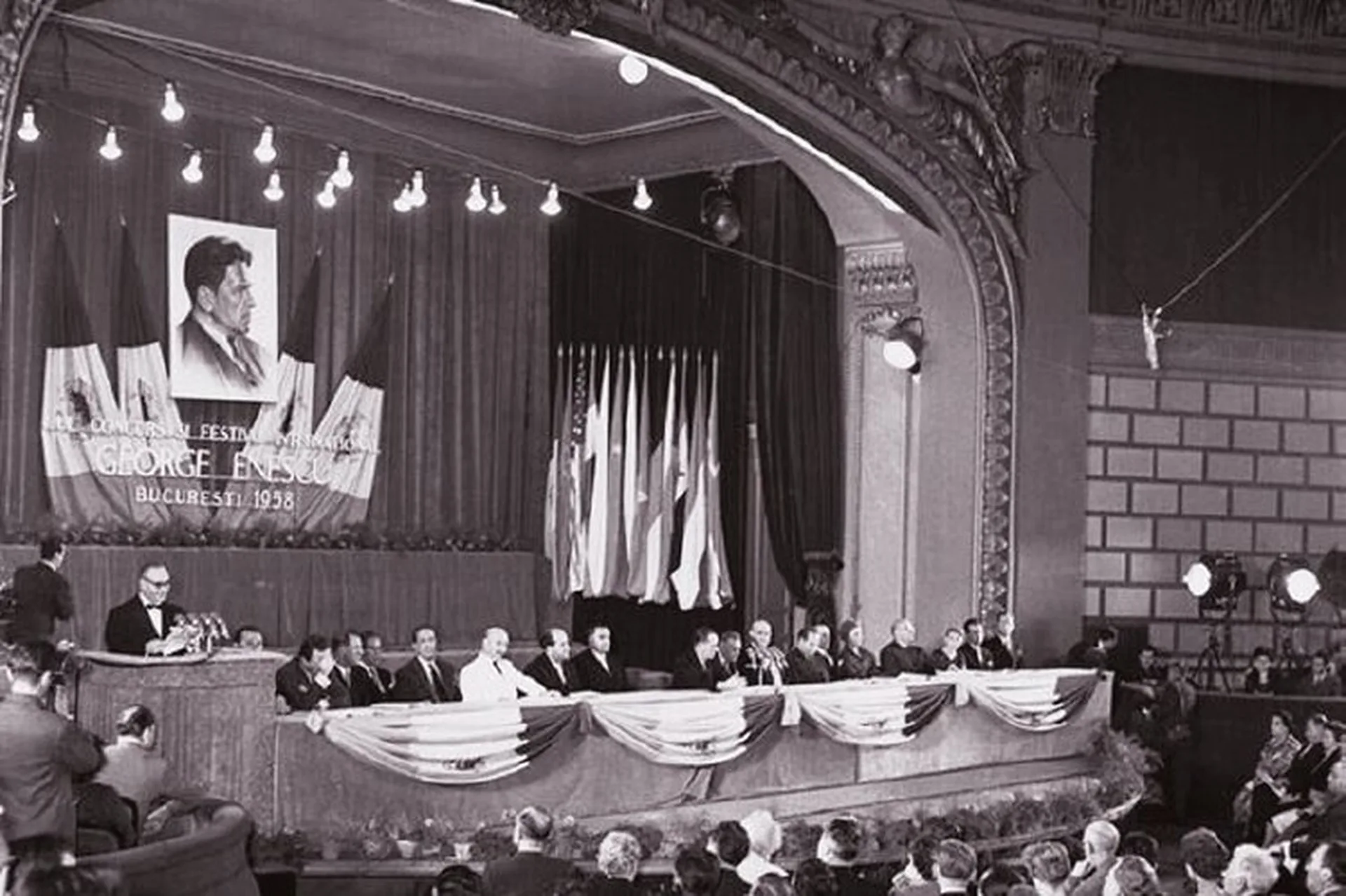
The “George Enescu” Festival and Competition is not just about preserving the memory of the musician, but, first and foremost, it is about Romania`s image in the world. The year 1958 started as a promising one.
Thanks to the relationships between Romanian politicians and the American Congress, high level invitations were made to bring conductor Bruno Walter in Bucharest; he had been a great success in the `20s, but, due to his old age, he had to turn the invitation down. The backup plan was inviting Eugene Ormandy and the Philadelphia Orchestra, which was considered back then – together with the Cleveland Orchestra conducted by George Szell – the most important American orchestra. The Bucharest concert in the spring of 1958 was an important step in the Romanian – American musical relationships.
Regarding the “George Enescu” Festival, there are many stories from the first edition that the public are familiar with: the arrival of the train that brought Yehudi Menuhin, the musician who had previously performed a few concerts in Bucharest, in 1946 together with his maestro; the presence of violinist David Oistrakh, of Chilean pianist Claudio Arrau, a frequent guest in Bucharest since the end of the `20s, of Russian pianist Yakov Zak – on whose recital Professor Paul Cornea has writen an emotional review –; the arrival of Sir John Barbirolli, who had to repeat the Athenaeum concert for the Conservatory students.
But, the most emotional moment of the 1958 edition was an encore played at a Yehudi Menuhin concert on the 18th of September. After playing the Concerto for violin and orchestra by Brahms under the baton of George Georgescu, the violinist went backstage to prepare himself for coming back on the scene to play the encore; but, when the curtain was pulled, Menuhin appeared, to the surprise of the public, accompanied by David Oistrakh with whom he had previously played the Concerto for two violins and orchestra by Bach – the recording was published for the first time four years ago and for half of century it was one of the most aired pieces the Romanian radios.
The presence of Yehudi Menuhin on the Athenaeum scene (who represented in a way the American people who were still expected, by some perhaps naïve Romanians, to come and save us from the Russians) and of David Oistrakh remained one of the most important events in the entire history of the Enescu Festival. In the Athenaeum hall, among the most enthusiasts public there were Tudor Arghezi, Lucian Blaga and G. Călinescu.