by Andrei Băluțiu
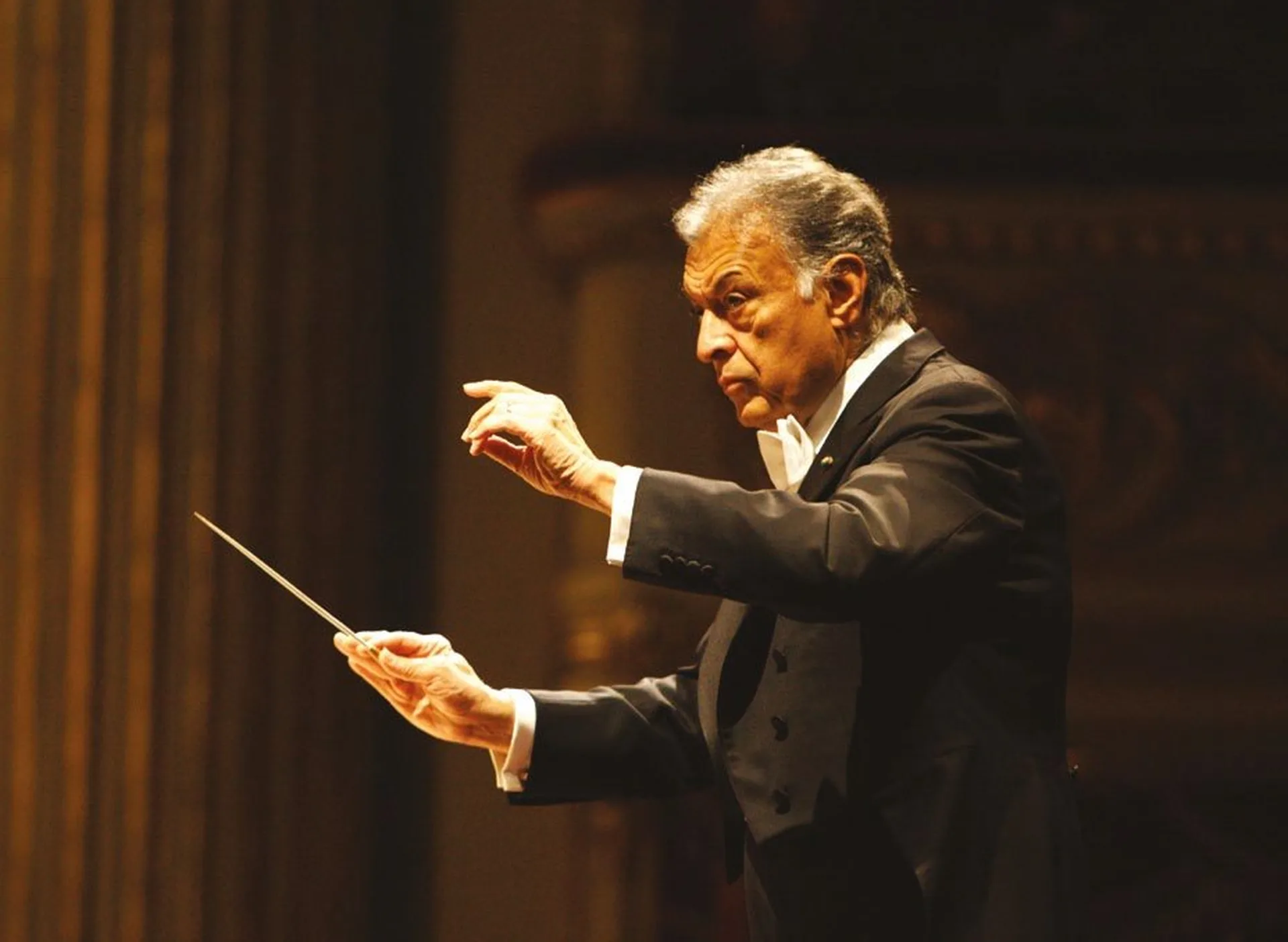
How was your first visit to Romania? The reviews were full of enthusiasm and you immediately became one of the most beloved musicians who ever come in Bucharest. Many people still recall the Seventh Symphony by Bruckner that you conducted back then.
Well, in 1964, times were difficult for Romanians and I was surprised by their living conditions. The musicians were very kind to me even though it was a difficult program for them. I think we had six pieces: a concert for cello written by a Romanian composer and in the end Bruckner. The program was received very well but I left with some sadness inside because of the situation of the people, because they were not able to speak openly, but in only in secret… So I went away having had a great success, but there was pain in my heart for how the people were living and how they were being treated. And then I came back again in 1967 with the Los Angeles Philharmonic, and even more things happened…
There was a pro west demonstration in the hall. It was a huge demonstration. I never had been through anything like that before. And there was a time, during the Festival, when a Russian colleague was also there with his Russian Orchestra. We were supposed to play in this big hall for 4,000 people, but he was scheduled to play in a smaller hall and our house was completely booked and nobody bought tickets for his concert. So the Festival organizers asked our musicians if they want free tickets for the Russian concert and I asked the artists saying: „Look, there are good musicians in Russia too, let’s go and support them…” So, the whole orchestra went to the Russians’ concert …and there was hardly any public there! That was also a demonstration. And of course the orchestra played beautifully, so we gave the Russians a huge round applause. These were my two first times in Romania, so I feel very close to this country. I’ve come many times with Israel Philarmonic Orchestra and also with Maggio Fiorentino.
And I hope and I really want that you get a good concert hall in the future, because the Romanians are one of the best publics in the world. Every time, we come we cannot forget the enthusiasm of the public. But the public needs a better hall. I hope somebody is thinking of building a new hall; this should be a priority now, because the Enescu Festival is fantastic. When you read the names of all the orchestras and the conductors and the soloists… it’s like Salzburg. You need a big hall, but you know big halls don’t always guarantee for acoustics. This wonderful public deserves a good acoustics to be able to hear the real sound of the Israel Philharmonic, Berliner Philharmoniker etc.
„I am not that familiar withall the Romanian composers. I remember the first time I came in ’64, I conducted a cello concerto by Vieru“
In 1994 you conducted Mozart’s Requiem in Sarajevo for the victims of the Yugoslavian war. What piece of music would be “appropriate” for the tensions we have now in the Middle East?
Look, there is no real piece made for any conflict, you have to lift the spirit of the people.
From that point of view, Eine kleine Nachtmusik of Mozart can do the same as the 9th Symphony by Mahler.
You have conducted many of Enescu’s works. Do you plan to approach other Enescu works or the works of other Romanian composers?
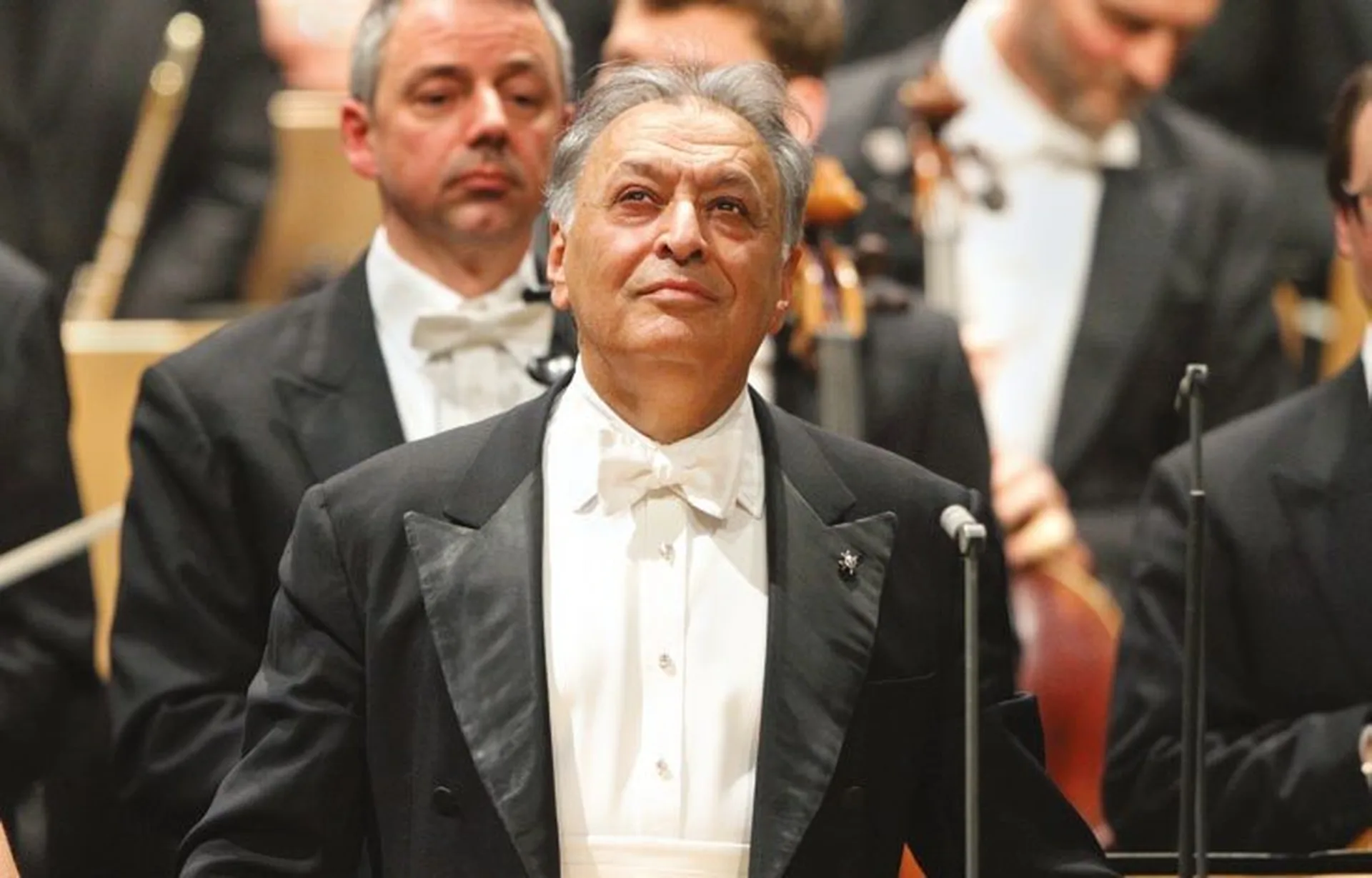
I am not that familiar with all the Romanian composers. I remember the first time I came in ’64, I conducted a cello concerto by Vieru, so I did some Romanian songs at the beginning then, now we will do Vox Maris.
You spent some years in Vienna at the beginning of your career, during a time when Backhaus and Klemperer were frequently visiting the city. Do you have a memorable musical experience from those times in Vienna?
Yes, Backhaus… I had the great honor to accompany him once in Beethoven’s 3rd piano concerto, he was a great soloist, I was a young conductor, he treated me wonderfully and of course I learned a lot. It was in 1960, the “Mahler year”, when Klemperer came to conduct the Vienna Philharmonic and I was at the rehearsals.
Who would have been the conductor you would have loved to work with in the first half of the 20th century?
Undoubtedly that would be Toscanini. He made this interpretive revolution in which he stated that you must go back to exactly what the composer had written without embellishing the interpretations; and so he was the one who broke through and who considered that Eroica has to be played the way Beethoven wrote it on paper and he proved this point and, of course, we are all his disciples, his followers.
Who is the nowadays musician, composer or performer you respect or admire most?
Well, I am a great admirer of Paderewski, Lutosławski who has unfortunately left our world, but he was one of the greatest composers ever; and then there is of course Aribert Reimann from Germany, whom I respect very much, for his opera based on Garcia Lorca.
What would you recommend to a young man who wants to get closer to classical music?
Well, I think I would tell him to listen to Beethoven’s and Mozart’s symphonies, or operas like The Magic Flute, Carmen. That’s because these are two different types of approaches.