by Luminița Paul
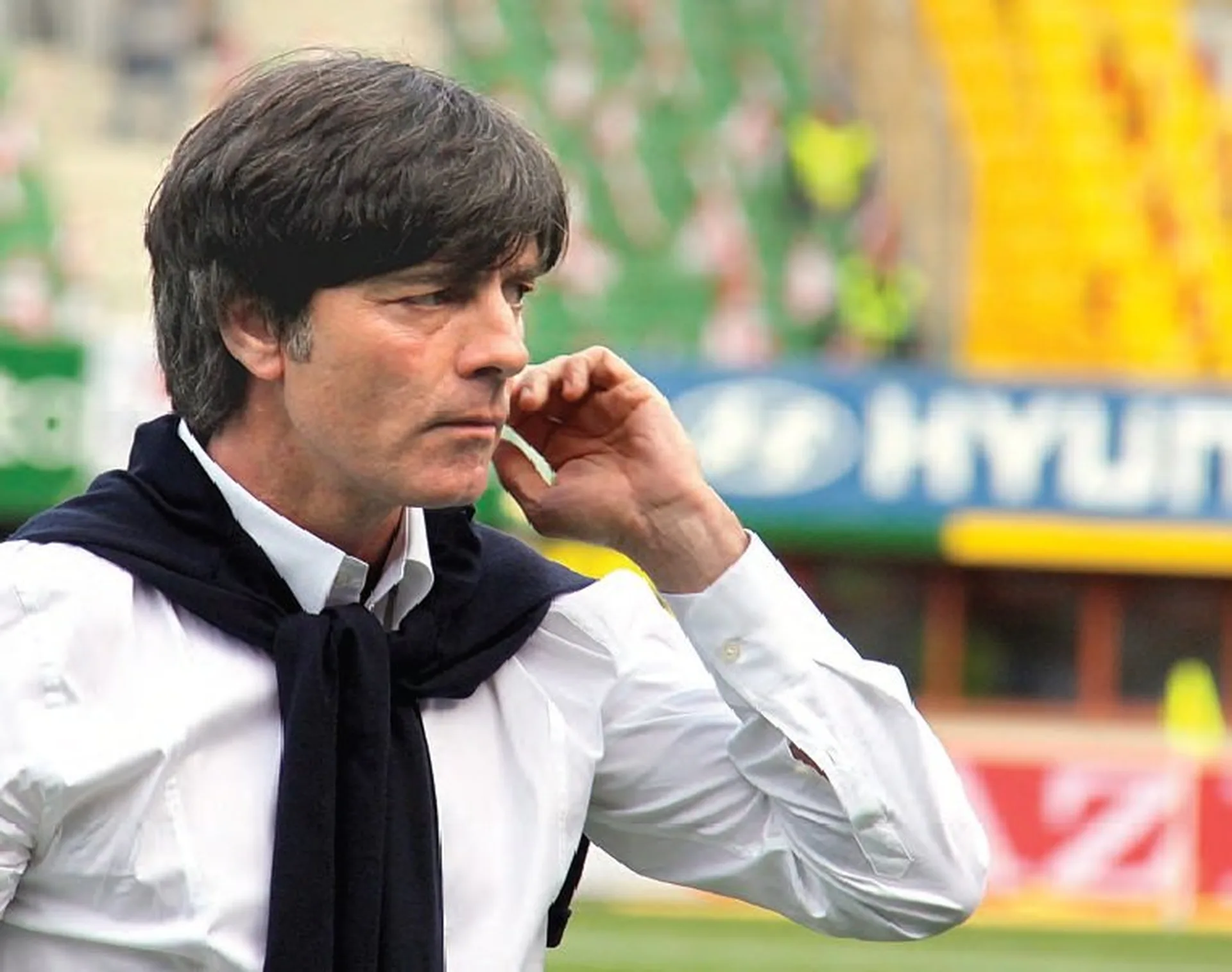
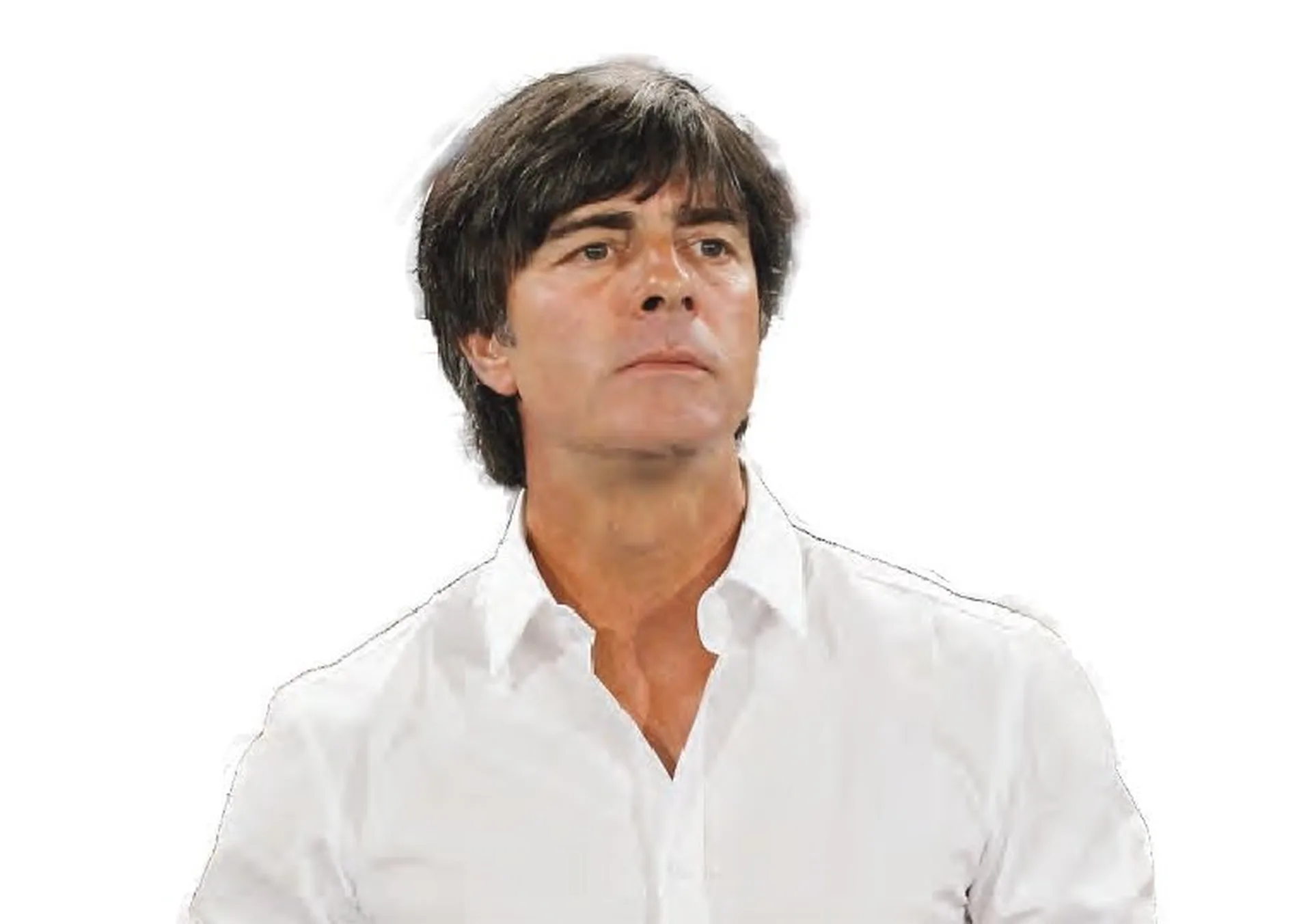
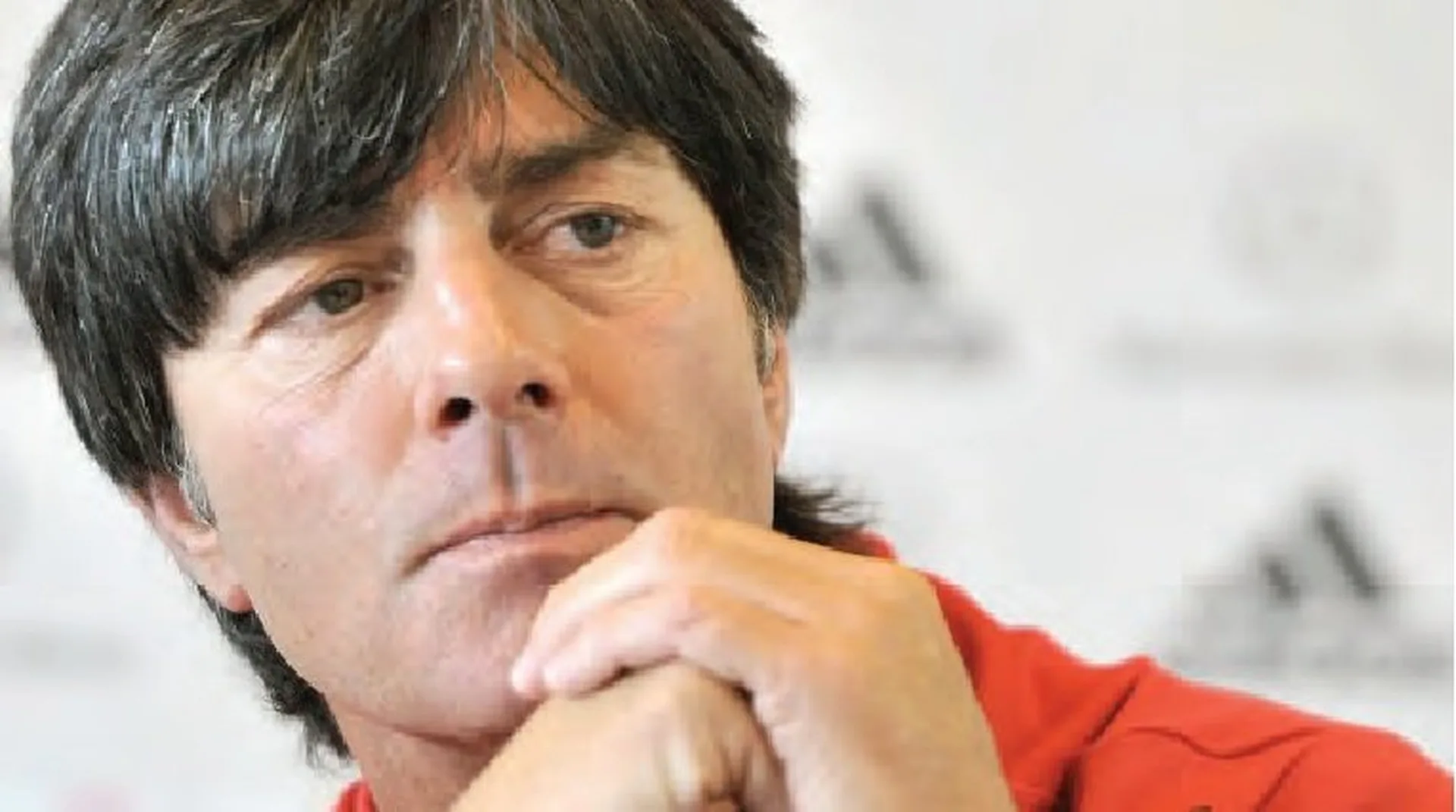
People look at this dark haired guy who wears tight trousers and unbuttoned shirts, with a sort of awe and admiration. Where did he come from? Who is he really? And how did he achieve something that other much more illustrious coaches before him did not? Joachim Löw walks with restraint and efficiency on the sideline, on the strip of grass in front of the bench. The gestures he makes with his fit arms – that the dark blue Hugo Boss shirt points out even more – have nothing of a theater act. His gestures are short and concise; the yelling is always saying something – the right thing. Even his emotions have an air that lacks drama, they are crude, authentic: the placing of hands on the head after a bust, the joy when a goal is scored. His large smile makes an appearance only at the end, when they completely strike the balance with the opponent team and his team has reached the target.
This year, at the World Cup in Brazil, Löw has lead Germany to its fourth title in history. The team has started with a contrived 4-0 against Portugal, then another victory with the USA and a draw with Ghana, all played in group G. After that, during the upper, eliminatory phases, the victims were, one by one, Alger in the eighth-finals, France in the quarter finals, Brazil in a fizzy, hot and unforgettable semifinal (7-1!) and Argentina in the final.
A great deal of this success is owed to Löw, the man who set going this mechanism that seemed irremediably stuck. But, who is he? The question keeps coming back, it persists, and the answer reveals a destiny for which the term”interesting” is just not good enough.
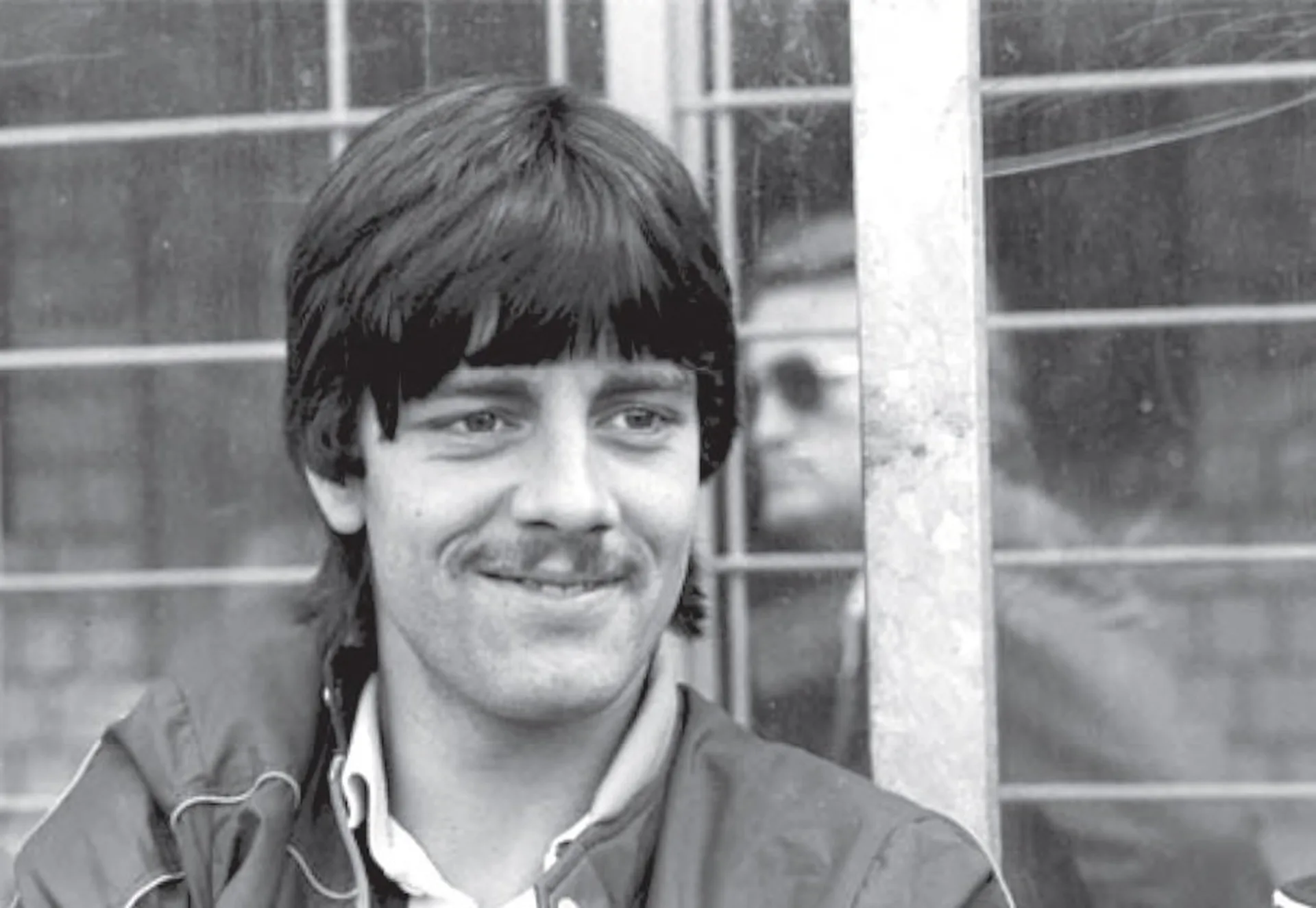
We go back in time to the year 1970. In a house located in Baden, a small German city, there is a large room, called salon, and here we find one of the latest TV sets on the market. Four excited boys are squirming around this TV, watching the national team play at the Mexico Football Cup. One of these boys, Joachim, is 10 years old and already combines two activities – he is a small football player and a choirboy at the local church. The salon with the TV, belonging to his uncle, used to gather so much as 30 guests when important matches were playing – Löw told Excelsior, a Mexican newspaper. Right there, surrounded by family and friends, he fell in love with football. “I grew up watching players like Uwe Seeler, Franz Beckenbauer and Gerd Müller. I was deeply touched by the 1972 European Championship, when we beat England, because my father was talking a lot about the return match for the 1966 World Cup final we lost on Webley”, remembers the man called Jogi by his closed ones, a short for his first name. In 1974, when Germany organized another World Cup, Löw was 14 years old and had only one thing in mind: to become a football player. And he succeeded. He devoted himself to being an offensive midfielder; his strength being his left foot. Another memory, a flashback of his joyful youth: “I was playing at Freiburg, I was 19 years old and I had long hair, just like my idol, Günter Netzer, who had this extraordinary style of playing with long passing, free kicks and a unique strategy on the field”. He knew Daniela for 2 years already, since she was 15 and he was 17. They went out for 8 years and in 1986 they got married. They are still together and have a solid marriage despite having no children.
Back to football. After Freiburg, he played at VfB Stuttgart, an important leap for the beginning of his career. He was not using any protectors and the Stuttgart team was always telling him he should use them. The exact moment when he let himself be convinced of this, he had a preparatory match with the English team Liverpool, just before the beginning of the championship. In that match, there was a moment when he found himself face to face with the English legendary goalie Ray Clemens. They collided and Löw broke both his shank and crotch. He never completely healed after this accident, nor did he recover his running speed on the field. He has only played 4 matches in Stuttgart, and then he went to Eintracht Frankfurt for two seasons and came back to Freiburg, in the second league. He made a comeback to the Bundesliga at Karlsruher SC, then back to Freiburg and ended his career in Switzerland, at FC Schaffhausen, FC Winterthur and FC Frauenfeld. He had an honest career, played over 200 matches and he was selected 4 times for the U-21 national team (when he was younger than 21).
Yet, it was impossible for him to stay away from football. He decided to be a coach and started right in Winterthur. He said that he has learnt in Switzerland things that, back then, Germany used to reject. „There were times when my country believed that strength is better than talent. That muscles shall make us better players”, he bitterly remembers. At the football coaching school he met the famous former striker Jürgen Klinsmann and, after some time, this meeting will have had a huge importance in his life as a football technician.
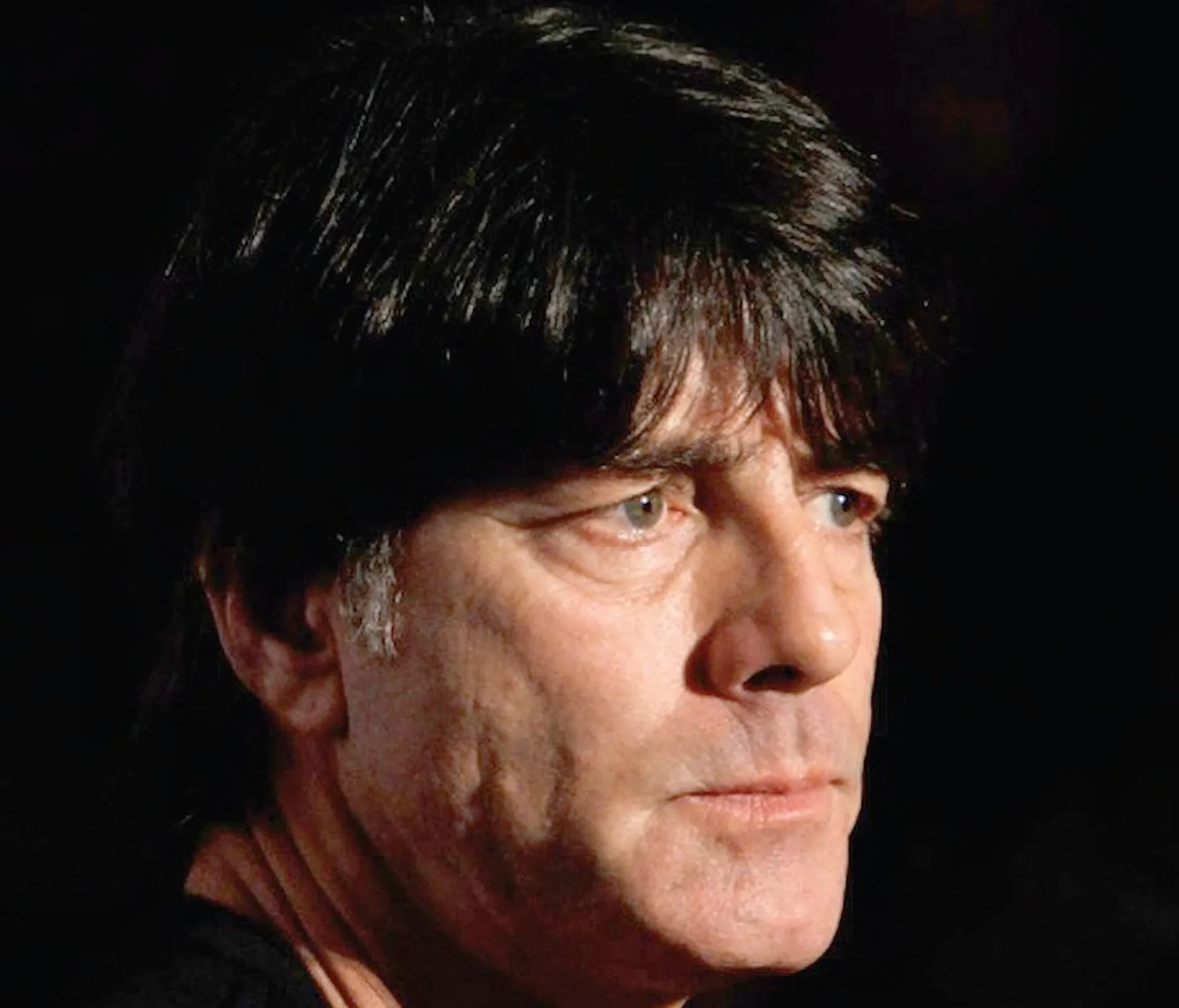
"I was deeply moved by the 1972 European Championship, when we defeated England, because my father was talking about the rematch for the final lost at Wembley, at the 1966 World Cup," recalls the man who those close to him call Jogi, a diminutive of his first name.
After the years spent on the bench having some successes in Germany, Turkey and Austria, in 2003 Klinsmann himself made him a visit to his house in Austria. He was appointed coach at the national team and he needed an assistant; Löw seemed the only possible choice considering the new concept he wanted to introduce: a much more offensive football. When he was later asked why he thought of Jogi, Klinsmann said that that there was no other person who could better explain the defensive system with 4 defenders. During the time they worked together, Löw was leading the work-outs and it was believed that he was the one who put together the tactics for each match, depending on who the opponents were. After the 2006 World Cup, when Germany got the bronze medal, Klinsmann gave up the position and Löw became head coach.
What happened next? A final lost against Spain at the 2008 Euro, bronze at the 2010 World Cup and quarterfinals at the 2012 European Championship. And, to close the circle, this year world title, the ultimate career achievement for any football coach.
Joachim Löw has had this success after 8 years of applied, thorough, serious work. “I have always said that it is about listening and understanding. I pay attention to what my predecessors tell me because the battles they fought were incredible and because their advice helps me lead this team”, Löw wisely admitted. For him, as the national team coach, the best way of spending some free time was to have coffee with Germany`s former world champions of 1954, then 1974 and 1990; that is, with Eckel, Müller, Netzer or Beckenbauer. He believes that there is always something more to learn.
Outside the football court he is slightly different. He likes the speed and this year he had his driving license suspended for 6 months after being caught speeding. He likes to risk and says he has a passion for casinos. He told Paris-Match: “But, when I am on the field, I always have a good plan prepared!” Is that arrogance? Or too much self-confidence? Maybe both; but people consider him charming. We can see his face on the billboards, advertising for Nivea. He is preoccupied with the way his face and his hands look, he smokes Marlboro Light, would rather have a glass of red wine than some beer and his taste in perfume ranges from Lagerfeld to Armani.
He did not have an easy childhood. The father and the four boys were bathing one after the other using the same water. That is why he dreads filth. That is why he pays so much attention to pedicure and he baths every evening. That is why he says that a woman`s perfume is what awakens the consciousness of beauty in a man. He still takes pleasure in returning to Freiburg, where one of his brothers runs a pub. Sometimes, on Saturday night, Jogi helps out with the serving, always with a smile on his face. He likes to jog and to go mountain biking and he has even climbed on the Kilimanjaro Mountain in Kenya.
“For me, home means the paradise where I feel protected, the place where I can relax and recover. Home is where I can read a good book, spend time with my friends or simply lay on the couch, with a glass of red wine and a plate of spaghetti, watching a police TV series”, says Joachim. He also knows what he wants as a coach. “I have developed an offensive style within the team, a combination between passing and running, regaining possession of the ball and rapid counterattack”. He does not want to play safe. “For me, a good coach means showing courage and not dodging the risks.” Risk – a word that keeps coming back; a word that he takes responsibility for; a word that has finally brought him success.
This is his true self - an individual who catches the eye, wearing dark-blue Hugo Boss shirts and petrol-grey tight pants; and an extraordinary coach.