by Mihaela Balea
Telekom is, at the moment, the largest company in the industry and the goal is to maintain and consolidate this position. You coordinate an integrated business, on a market very competitive and dynamic, in which products and services permanently reduce their validity period (become slightly perishable). What’s the look-alike of your working day and how many hours does it have?
It is true, the telecom industry is very dynamic and complex, which translates into a very fast pace working rhythm and taking decisions on multiple levels.
For me, a regular working day can mean from strategy meetings and taking important business decisions to speaking at an industry event, attending an event for employees or even going out on the field, to see how the roll out of the new FTTH technology is going.
In terms of working hours, it’s difficult to give a precise answer. Surely, there is a large amount of work, but I enjoy what I do, so I can say that I work all the time and never.
It’s said that delegating is the secret of the success in efficiently leading a business. Do you agree with this? If yes, how much do you use this tool in your daily work?
Delegating is about trust. So yes, I would say it is a key ingredient for running a business, in general. I have a team of excellent professionals, whom I trust to take care of all aspects of the business.
However, delegating does not have to mean just forwarding an email. When complex issues are at stake, delegating also involves giving a direction, empowering and inspiring the employee to whom you are delegating. This makes the difference between managers and leaders.
Your career started in banking and continued in telecom. Do banking and telecom have common points, given that the telephony appeared decades away after the first financial instruments? What are these common points?
Both banking and telecom offer mass market services which have gone through a process of democratization – a service which was at first exclusive, now is available to everyone.
Also, in both areas, it is very important for customers to have the feeling of security – of their money and of their privacy. So, again, it’s about trust.
Another common aspect is the fact that the continuity of the services and excellence in customer care are extremely important both in banking and in telecom. Downtimes, failures, mistakes are very little tolerated and can have serious impact in peoples’ daily activity – whether we talk about their professional activity or their personal life.
If returning back to 18, would you go directly to telecom or still start in banking?
If I would be again 18, probably I would choose the most challenging option, from which I can learn the most. Each stage of my career was important and has thought me valuable business and human lessons. Moreover, changing industries makes you more flexible and adaptable. Also, it’s important to spend many years in the same industry, in order to understand it in-depth. I can say I did both, so I am thankful for the professional experiences I’ve been through so far.
What’s in your opinion the telecom’s role in the evolution of society and business? How long will it continue to influence the business environment? Shall we witness in 10-20 years from now, for example, banking operation without front-office?
I say it with every occasion I have: growth cannot happen without IT&C and telecom technologies, whether we talk about education, health, business environment or even agriculture. Today’s IT&C solutions can significantly influence the companies’ and the states’ productivity and competitiveness and improve people’s lives.
Now, we have a new trend with significant growth - The Internet of Things, which means connecting and controlling machines (from home appliances to industrial ones) through the Internet. So yes, I would say the world as we know it today will be significantly reshaped by technology in 10-20 years from now.
There are banks which have self-service branches, where all operations are done through internet banking or multifunctional machines. Of course, I believe we do need human interaction at key-points in all this process, at least for supervising and special transactions. I don’t think this will disappear totally.
You have managed the DT divisions in several countries, on more continents. If you’d make a top 5 countries where you worked, where would Romania be? Why?
It is difficult for me to rank the countries in which I have worked. Each culture is special and fascinating, with distinct and own particularities.
What’s the main challenge you see in Romania, from the perspective of the company you’re managing?
This gets a simple, straight answer: the average revenue per user. It’s small in Romania, due to the aggressive price war, so we need a lot of calculation and courage to invest here. In addition, we also have an unpredictable fiscal and legislative environment, which makes it difficult to plan ahead.
What was the first thing to positively impress you in Romania and what was the first impression after meeting the first Romanians?
I admire Romanians for many things. I am amazed on the high performance Romanians are capable of when working in competitive environments. I would say you fit well in a meritocracy.
Romanians are also flexible, creative and easily adapting, always coming with viable solutions. For example, I found out that we owe many important inventions to Romanians: the jet plane (Henri Coanda), the insulin (Nicolae Paulescu) or even the pen (Petrache Poenaru).
I would also say Romanians are resilient and resourceful. They deliver quality results, learn fast, but should have more confidence in themselves.
What are Romania’s edges and how should we use them so that Romania improves the image abroad?
Investors can be very good ambassadors of Romania abroad. So, from an investor’s point of view, I would point out the excellent human resources and the interesting business opportunities, given the privileged position in the region as well as the countries’ size in terms of population. However, the country still needs to develop a competitive infrastructure and a stable fiscal and legislative environment.
After a career of almost 30 years, do you believe that the leadership is native or acquired?
Both. You get born with a sparkle, but in order to discover and develop it, one needs a great deal of perseverance, the courage to choose the less explored paths and the wisdom to learn from the mistakes and successes equally.
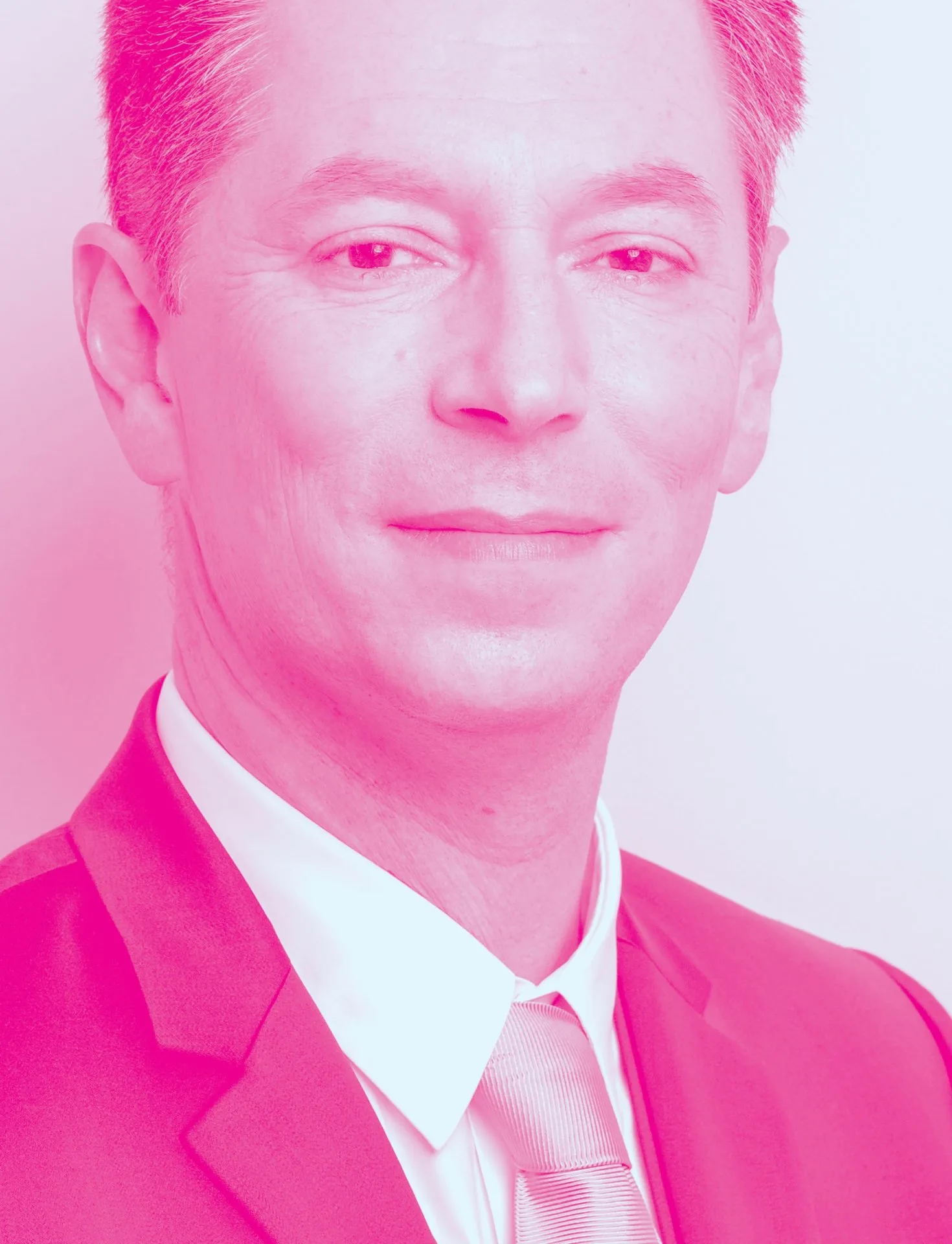
”Leadership means inspiring the people around you, getting them to join you and strive authentically towards achieving the vision.”
What’s your own definition of the leadership?
Leadership means first of all to have a clear a vision, to have the determination to make it happen and the ability to explain the vision to others and to inspire them to get on board and to genuinely strive in order to achieve that vision.
What are the differences, in your view, between a leader and a boss?
Leaders enlighten the path forward, while bosses indicate right or left. A leader listens to people, encourages them to contribute and adapts the route accordingly. Bosses use maps and a predefine route to get from point A to point B. And last but not least, leaders enjoy the journey, while bosses are obsessed to control.
Name 3 elements helping an outside observer to make a difference between a company led by a boss and one led by a leader!
I would say the agility of that company, its capacity to innovate as well as its performance during difficult times, which reminds me of the saying “A rough sea never made a skilled sailor”.
How large is, in your view, the performance of a team led by a leader and one led by a boss?
Here, I believe the question is how do you measure performance? Short term or long term? A boss is interested in quick wins, while a leader is interested in long term solutions and sustainable results. One has punctual objectives; the other one has an integrative vision.
What are your spare time hobbies?
I like playing golf and tennis, as well as skiing in the winter. Reading is also something I enjoy in my spare time, mainly history books.