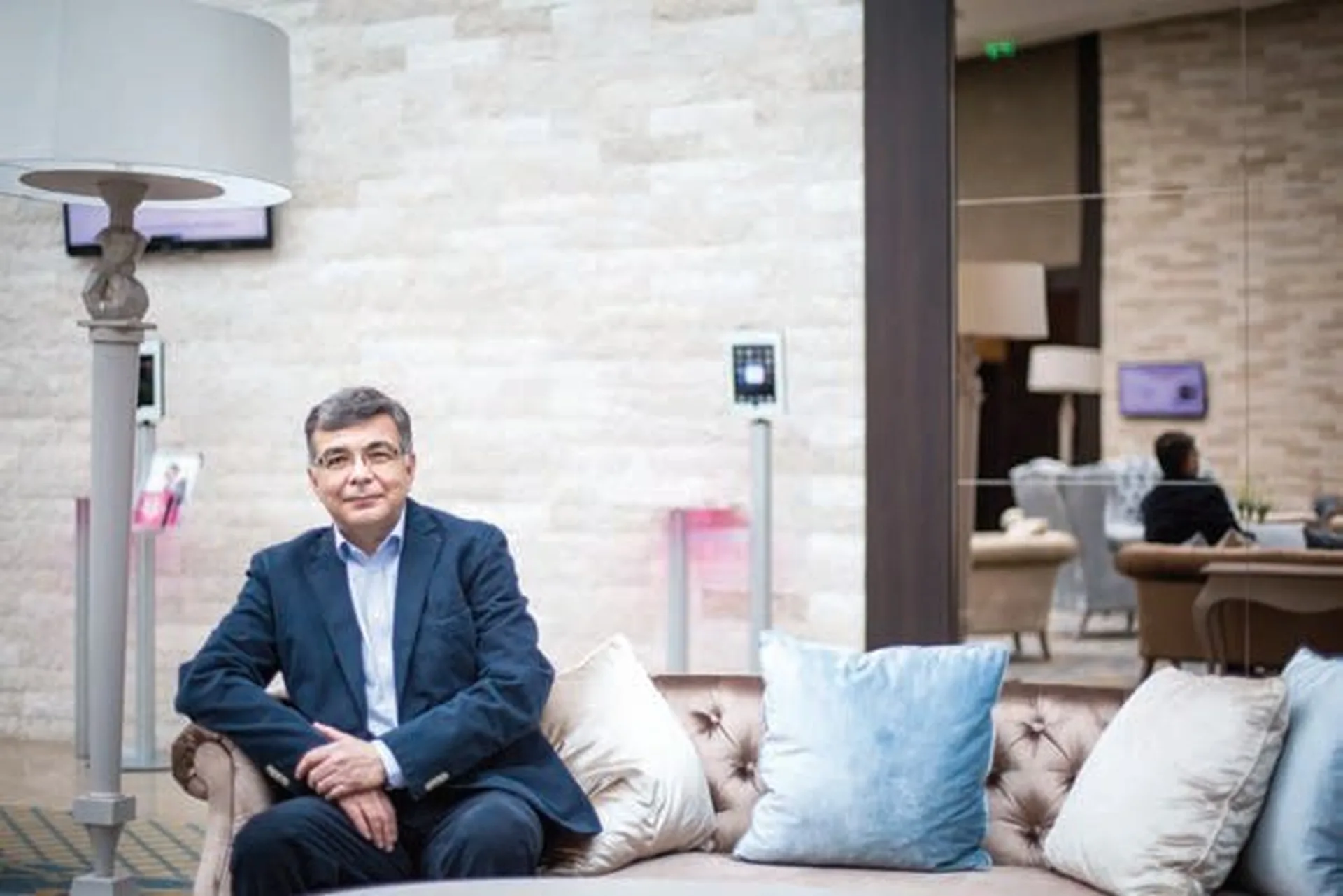
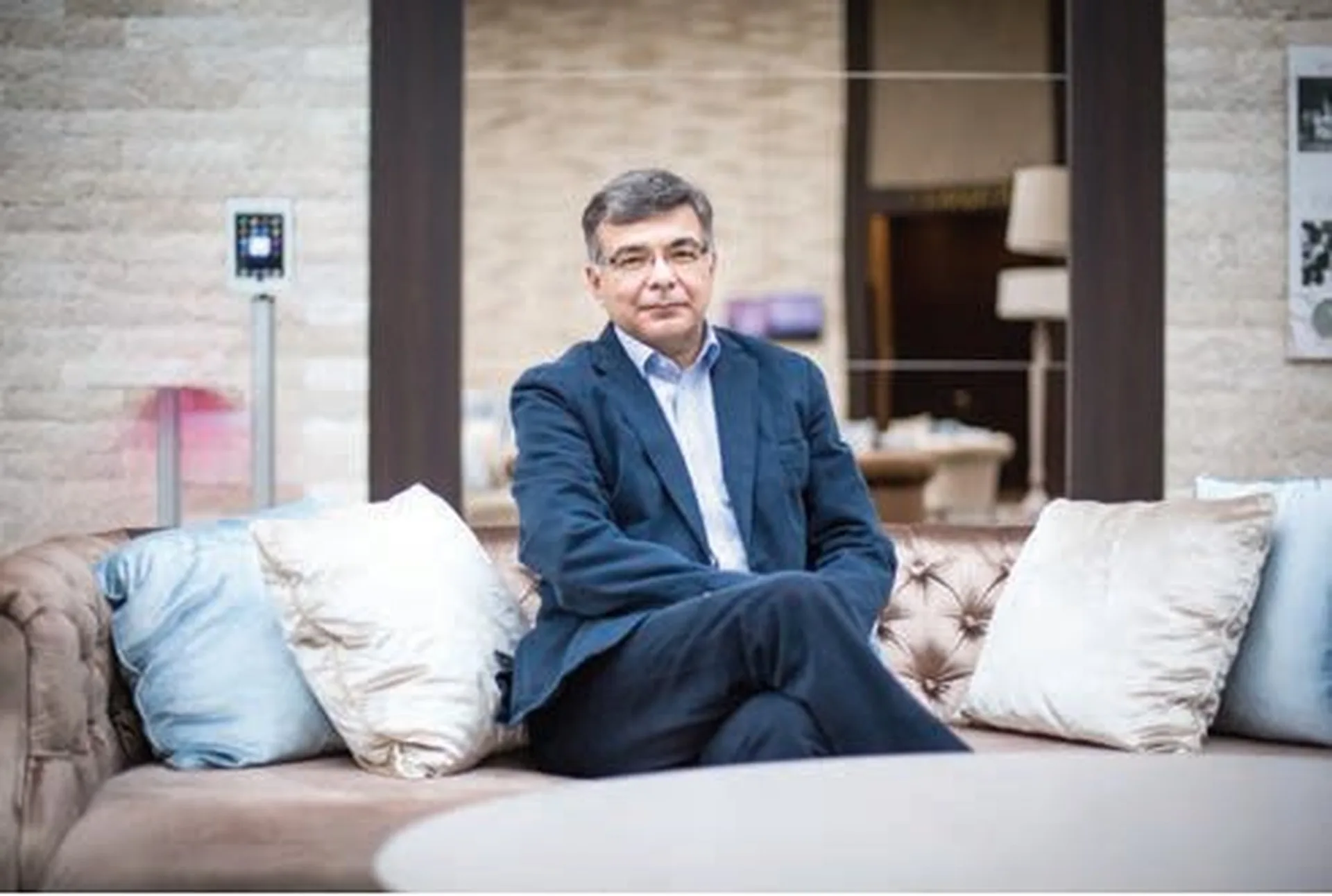
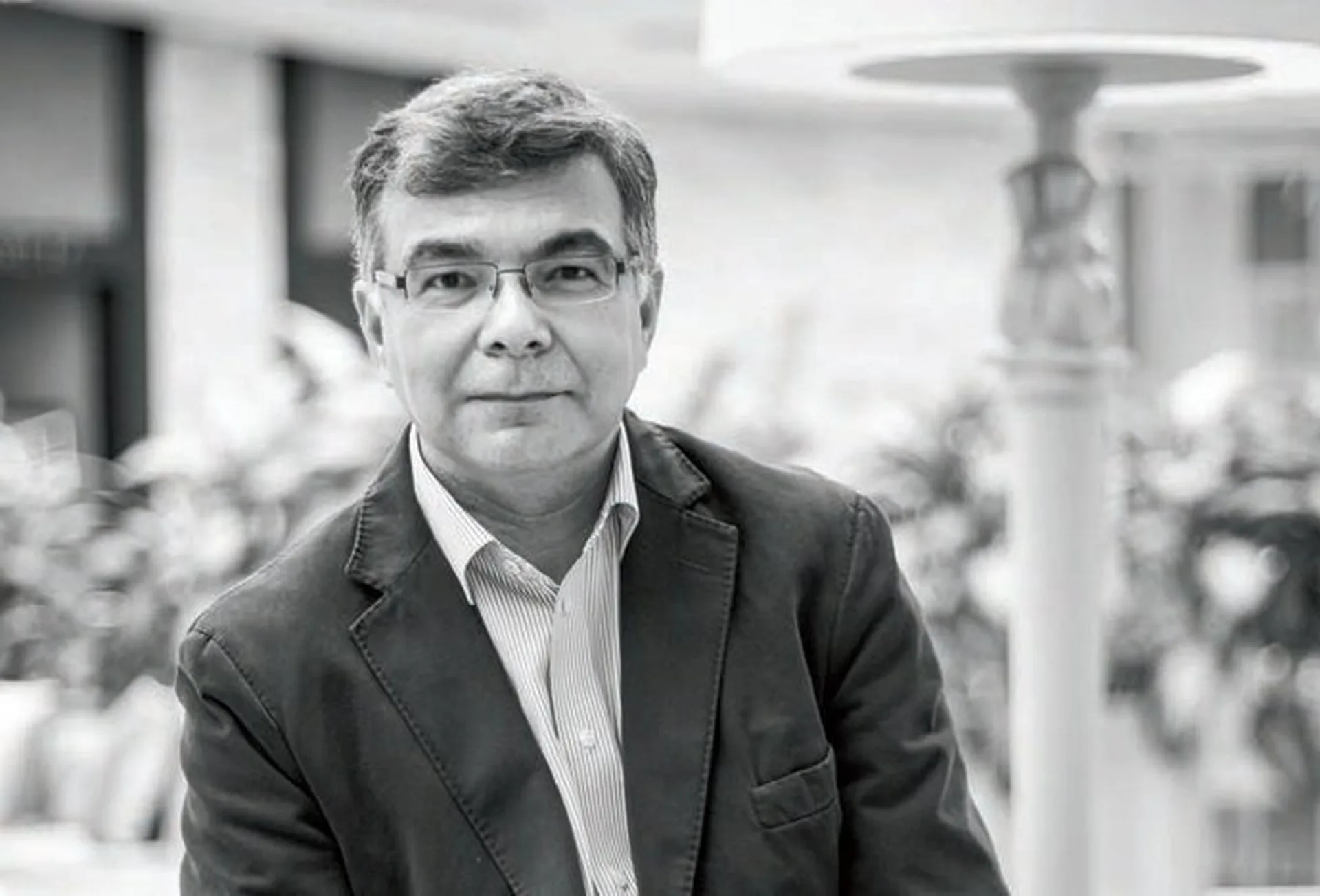
Interview by Bogdan Munteanu, photo by Ioana Moldovan
What makes a good surgeon, besides studies and lengthy practice?
There is no standard recipe for this. My father was a surgeon so I think that this is why I became a surgeon myself. During the `60 -`70s, I couldn`t see myself doing anything else but this – medicine, and most of all, surgery. Long time ago people were saying that a surgeon must have these three qualities, and in the English language they would all start with the letter H: „hand, head and heart”. There are all sorts of surgeons. I am rather a thorough, systematic, rigorous, and precise surgeon. And this helps me a lot. Because of the fact that I am precise, I am also somehow exigent. And this means trouble for my team, my family and my friends. I am very demanding of them and I am always unsatisfied. Sometimes, this annoys them. I torment the people around me very much, but I do not demand more from them than I ask from myself. Therefore, I am rather a down to earth surgeon, although, considering my temperament – I am a choleric person. And the surgeries are not always going smoothly. There are many dramatic, difficult moments when the control over the situation is almost lost… And, in this sort of moments, you need to be most cool-blooded. I often get angry during surgeries, but I do it in a demonstrative manner for the young ones, for them to remember something, to emphasize the moment and to help them learn. Usually, I don’t scold them the first time, nor the second time, but only when they repeat the same mistake several times. At my age, I believe one of the most important things that I do right now is teaching others as much as possible. I want to tell them how something should be done and why it is done; I want to explain and to make them improve all the time. For example, last week, I went to a course of study with some young doctors and residents from our department. It was the same type of course I went to almost 20 years ago. But I joined them, to give them an incentive. I care that my team knows as much as they possibly can. Wecannot get stuck in the same things we used to do 10-20 years ago, but we try to improve our practice, learn from one another and teach others.
How is surgery taught today in comparison with 20-30 years ago?
My practice started about 30 something years ago. Since then, surgery has come to use a lot of technology. And in the field of cancer there are many things that have nothing to do with the surgery itself, but with biology, radiotherapy, chemotherapy – all sort of treatments that a surgeon must have knowledge of. The types of surgical interventions have become more and more diverse, technology has evolved, but surgery continues to be an apprentice type of work; it is the relationship between the student and his disciple, as in the once upon a time beautiful fairytales. Plus, there are more possibilities to go abroad and get a major in a certain field. Yet, a trouble came up. I was lucky because Professor Alexandru Trestioreanu send me abroad before 1990, and that was an absolute exoticism; nobody thought I would come back, but I did and everyone was completely amazed. At the beginning of the `90s we were welcomed with open arms; they would talk to us, they would answer our questions, they would invite us into their homes and we would learn a lot. Full of enthusiasm – because there are all sort of scholarships right now – I sent out many residents, sometimes in the same places where I had been 20-30 years ago. I found out that things have completely changed, that there is a certain reservation, hostility; they don’t speak English anymore, but some French or Italian that is incomprehensible for a foreigner, and there are no more explanations provided. There is a great fear of competition, of the people that come from everywhere in their own countries. On the other hand, we have the advantage represented by the Romanian Society of Breast Surgery and Oncology. We organize each year international conferences; we have the opportunity to present the newest activities that we carry in Romania, but we also enjoy some of the most prestigious specialists in the world who come here and are ready to friendly share with us all the great things they do. We shall send there the young people for studying.
Have you ever imagined yourself doing something else other than surgery?
I though many times that, if I were to do some other job, I would like to meet people only when they are happy, because right now I meet them during some very hard moments of their lives – when they find out our they just found out about a great difficulty that troubles their existence in all possible ways. And this is the moment where I come up into the picture. I am person who gives people the bad news, although I try to use all sort of euphemisms when I do this. I don’t know if I would have been good at it, but I would have loved to direct movies; I have even prepared for this. Even today, I am crazy about image, I do pathology photography. Because I have such a hectic schedule – I leave home at 6.30 and I get back at 20.30, I hardly ever get to see a movie. But it is a great joy for me to watch a film together with my family, at the endof the week. Appreciated or blamed – doctors have a special place in society.
How do you see the doctor-patient relationship in our country and how should it be, ideally speaking?
In Romania there is a great problem regarding the doctor-patient relationship. The doctors are either seen as demons, “bribe takers in white uniforms”, or they seen as “gods, angels who are doing everything right.” I would like it to be a normal relationship between two individuals: one who finds himself in a trouble, and the other one who is a professional. What I like in other countries is something I would call being adequate. Dress up, behave, speak, and treat adequately – the best possible way for that person. The treatment is done in different ways and this has to do with medicine, but also with common sense. For a certain person, depending on their age, biological state, personality and social background, there is a type of adequate treatment, while for another person – there is another treatment. It is important to know a wide range of treatments and to offer them to that person. Abroad, they use very much the idea that patients must choose their treatment together with the doctor. Sometimes, regulations make it mandatory to present several options to the patient, to have the patient informed
about making the right choice. The doctor is somehow a counselor. The responsibility is shared. However, looking at the Romanian society – but even at myself, as a human person, not as a doctor – I would rather say that we are not ready for this kind of approach.
What is it that we still need to get to this level of doctor-patient “collaboration”?
The person coming to see you puts his life, health or body shape in your hands. This is tough. Often, the tough part is not giving a diagnose, but making the choice in my head about what is best to do for the patient, understand him and explain to him all these. If, in this difficult moment – after telling him he is sick and that he will maybe need an intervention – I also present to him a range of solutions, plus the fact that he needs to learn a little bit of surgery, biology and all sort of things that he doesn’t know of, the patient gets confused. Very often, the person says “Do what you think it is best!” However, I want to have a certain feedback from the patient. I need just very little from him, a word is enough. It is a terrible decision to make. I remember a heartbreaking movie called Sophie’s Choice, where a mother, standing on a railway platform, is forced to choose one of her children. She doesn’t say “Take my daughter!”, but she says “Don’t take my son away!” The same way, I also need some kind of an answer, a minimum euphemism. You get to know someone in sorrow, a time when things must be done somehow fast. But everyone has their own personal experience. If the neighbour from downstairs has followed a treatment and it didn’t do her good, my patient will not want this treatment, will not take the surgery. If some friend followed a treatment and she died, she will not do the treatment. This type of thinking must be eliminated.
What are the ingredients of a good relationship between doctor and patient and how can it influence the success of the medical act?
The doctor must be aware of the personality and the background of the patient. It is a paradox that people who have a lower education, but they have common sense and a balanced personality, can be better discussion partners and team up more efficiently than others – people that I wouldn’t like to mention here, people who sometimes have strange reactions. It is very hard to search for your own health. I see people coming from Moldova to Bucharest, while they could go to Iași. Others come from Constanța and they make a triangle: Bucharest, Cluj, Istanbul. Others go towards the West, and that is understandable. The problem is that there, just like in Romania, the level of treatment is not the same everywhere. There are places where you get a very good treatment, and other places where the treatment is rather inclined to make a better profit, to make you stay fewer days in the hospitals for example – these are completely other than medical concerns.
Is there a competition or maybe some envy between surgeons, between hospitals?
Whenever we perform a surgery we do our best, the way we know it is done in the world. Therefore, when you know there are people who do a certain procedure better than you, or more often than you and in a safer manner, it is not shameful to send the patient to another doctor! I have colleagues who do a certain treatment more often than me, so I am glad to tell the patient “Go to that doctor!”; however, it is difficult to recommend a surgeon.
There are colleagues who know the fact that I do more surgeries in a certain field – and that is oncology – so they send me patients who already came to them to get a better treatment. The surgeon is also a factor of prognosis, together with the type and size of the tumor, and the phase of the disease. If that surgeon is not doing his first surgery, but the thousandth, it is most likely that the evolution of the patient will be better.
You provide consultations and surgeries to hundreds, maybe thousands of patients each year. Can you also diagnose the faults and the deficiencies of the contemporary Romanian society?
There is a lack of trust in our society. You don’t have confidence in the person who stands in front of you, you judge with mistrust at first. Somehow, because you know that you are not always honest in everything you say. Sometimes, mistrust becomes…a bargain. Let me give you an example. I see a patient, I explain him what needs to be done, but – after processing everything I know of him, after providing all the arguments – very often the patient asks: “Can’t we do it like this? Isn’t this possible for me? If it were one of your relatives, what would you do?”, as if I were being told: “Look also in the lower drawer, under the counter!” We live in a system where there are no rules, or the rules are not obeyed. I would like things to be like they are in Austria or Germany, at least formally. I would like to live in a society where, if you drive on the left lane that means you shall go left. And if you got confused and you decided to go right, people in the back would not speed up and honk at you to prevent you from doing so. We need procedures and rules, but not the bureaucratic type, meaningless rules. Romania is characterized by shapes without content. We are able to give out 100,000 rules; we pretend we have them without respecting them. This is something that is really bothering me a lot. I hoped we would align ourselves with the European standards. Adequacy, normality are the things I love the most and I was hoping that Romania would also become like this, while we would be going forward towards the European Union. But what is happening now in the EU is chaos. They didn’t know how to manage the refugees problem. They started by inviting them here and they ended up by imposing strict controls on them and taking their valuables. Unfortunately, common Europe has many rules, but no soul apparently…
Were we wrong when we confided so much in these European values, while, maybe not even the Europeans completely believe in what they preach?
I don’t believe that. For us, who were coming from a closed system, where you were not allowed to travel, and if you travelled you could never come back, it was natural to believe in the free circulation of people. After being closed in a totalitarian regime, was there there other way for us but reaching out to Europe? It was the same way we waited for the Americans to come – and they are not perfect, of course – it was normal for us to believ in these values. Yet, I would now like that the European Union reaches some stability.
To create, artists isolate themselves into ivory towers; they afford acting all extravagant, even being rude to their fellow men. Is the surgeon able to pretend such a luxury?
For me, it is not like this. This is the great problem I don’t know how to manage – too many people depend on me. If I miss work just one single day, then I have 30 people upset and this is burdening me. I have a very good team, they organize everything, because I try to take care of everyone, I perform 4-5 surgeries in the morning and 3-4 in the afternoon. Plus, we have to consider all things: people coming from the country side, the patient whose mother is sick, the person who has a child in care or even a pet that cannot be left alone for two or three days. At a certain moment, several years ago, I had a family problem. I had to miss work for a month, and during this time I had 17 appointments – back then I was doing fewer surgeries that I am doing now. Everyone was upset with me for missing from work, but only one person took the time to find out what was the reason of my absence, what was the personal problem I was going through. I am old and I get the privilege of saying the truth… I don’t advertise for myself, but now I have between three and five weeks fully scheduled – consultations and surgeries. I do a lot of breast cancer surgeries as I am also specialized in plastic surgery.
How good of a father and a husband can a good surgeon be?
The relationship between the father and the son is often complicated. I admired my father, certainly; but I also thought that I will not have the same job as him, because he used to come back home very late. He would come home in a hurry, to catch the movie on TV and he was very glad to see the movie credits rolling down, but they were the closing credits… It was the end of the movie, not the beginning. So, I told myself I would never do what he did. Unfortunately, I realized I do the same when my boy told his mother he will never become a medic because he wants to spend more time with his family. This was a signal of alarm and this is the reason why I drag him with me on Saturdays and Sundays and we always try to have a common schedule. However, the relationship is not easy: neither mine with my boy, nor mine with my father. There was a moment when I wasn’t able to learn surgery from him anymore, because a sort of rebellion, a typical teenage irreconciliation occurred. I didn’t like the way he was doing things, I thought I was smarter, that I do things differently. I stopped learning from him and I regret it. Anyhow, I loved and I love my father, so he was a wonderful parent.
It is said that God holds the hand of the surgeon. How would you comment on that?
It is a difficult question, I don’t know what to answer. In my family, my grandfather was a priest and my great-grandfather was a deeply religious man. My relationship with God is a bit more… complicated. I’m not a practicing believer, although during my childhood I would carry the candles in church and I always participated at mass. There are too many things in the surrounding world which make me doubtthe idea that God is watching over, there are too many horrible things that I cannot explain. I didn’t get to the level of belief, the way the great scholars believed and still believe. There is too much chaos in the world, too much pain, too much torment... Why? Go to pediatric oncology and tell me if you can put up with that! And even among the believers, only a few have the serenity I would expect from them to have. There are patients coming from monasteries and I see them very terrified. So I ask them: “Why are you scared, why don`t you have faith? Are you not in the hands of God?” For myself, I would love if, in the afterworld, God would tell me: “I saw that you tried…”
Is there an essential lesson that you have learned from people?
I like generous people a lot. One time, I asked my oldest daughter what is the quality that she appreciates most in me, and she answered: “generosity”. I think I am also vain if I say that I liked her answer very much. However, on the other hand, I believe that the Christian ethics is one we should live by. The same way, if the European Union related more to this ethics, problems would be easier to solve. I believe it is important to do as well as possible the things you do good. It is important to share good things around you.
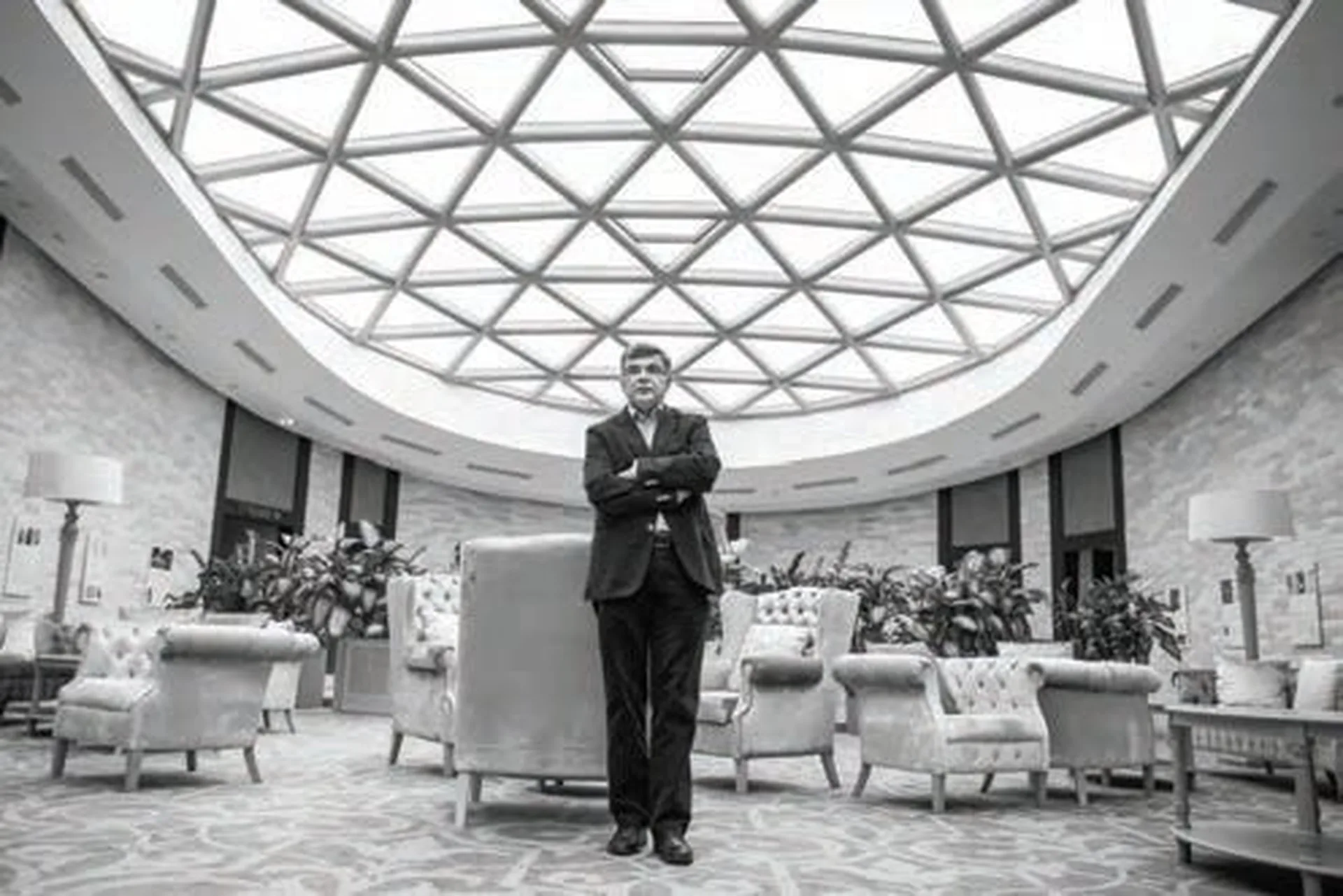
”I am rather a thorough, systematic, rigorous, and precise surgeon. And this helps me a lot. Because of the fact that I am precise, I am also somehow exigent. And this means trouble for my team, my family and my friends. I am very demanding of them and I am always unsatisfied. Sometimes, this annoys them. I torment the people around me very much, but I do not demand more from them than I ask from myself.”