by Miruna Ghițescu
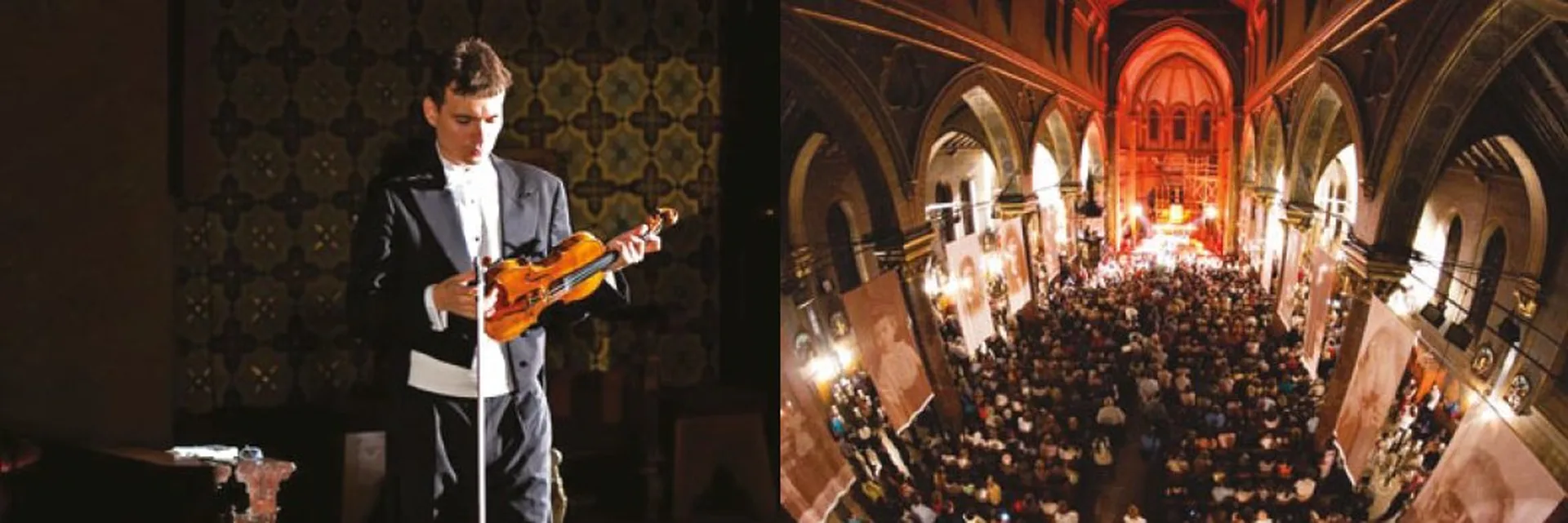
The “Stradivarius” Tour, which was launched in 2008, is a true adventure each year, because violinist Alexandru Tomescu puts forward some musical cycles that we don`t hear very often on the local scenes. He played the 24 Caprices by Paganini, the Sonatas for solo violin by Ysaÿe, the Sonatas and Partitas for solo violin by Bach, and during the last two years, together with his friend Eduard Kunz, he has offered to the public the Sonatas for violin and piano by Prokofiev (2014) and by Enescu (2015).
A few months after playing these pieces in the tour, Alexandru Tomescu recorded the Sonatas by Ysaÿe, but he didn’t try to use any editing in order to preserve the lively tone of the concert audition. Sound engineer Jakob Händel has given a helping hand, as always, for obtaining some excellent results.
The Six Sonatas for solo violin by Ysaÿe, the most important cycle dedicated to the solo violin since Paganini`s caprices, were written in 1923, after the Belgian composer had listened to violinist Joseph Szigeti performing the Sonatas for solo violin by Bach and decided to compose some sort of a replica to the Bach`s cycle, one that combines the technical evolution of the violin performance with the musical elements of the beginning of the 20th century.
The sonatas were written for his violinist friends Joseph Szigeti, Jacques Thibaud, George Enescu, Mathieu Crickboom and Manuel Quiroga, and in each and every one there are clues regarding the addressee: the sonata written for Spanish violinist Manuel Quiroga has the style of a habanera, the one written for Fritz Kreisler has some Viennese salon musical elements and so on.
In performing all these sonatas that require an extraordinary virtuosity, Alexandru Tomescu is not interested in revealing the spectacular side of the cycle, he doesn`t go with the flow of speed, on the contrary he seems rather tempted to convey to the public the architectonical equilibrium of the whole, the savant and subtle harmonies of this post-romantic music.
The second sonata, maybe the most spectacular one, which also provides the album’s title, is a hallucinating journey into the past, where Bach`s presence can be identified at each step thanks to the quotes picked up from his works (for example, the first notes of the sonata are taken from the Partita in mi major). The four movements of the sonata are telling a long ago story and have symbolical names – Obsession, Melancholy, The Dance of Shades and The Angers –, and the medieval theme Dies irae appears as a fantasy, as it was taken out from a nightmare.
Likewise, we are looking forward to Alexandru Tomescu performing in the years to come some other complete works: from Beethoven`s sonatas to the ones of Béla Bartók.