
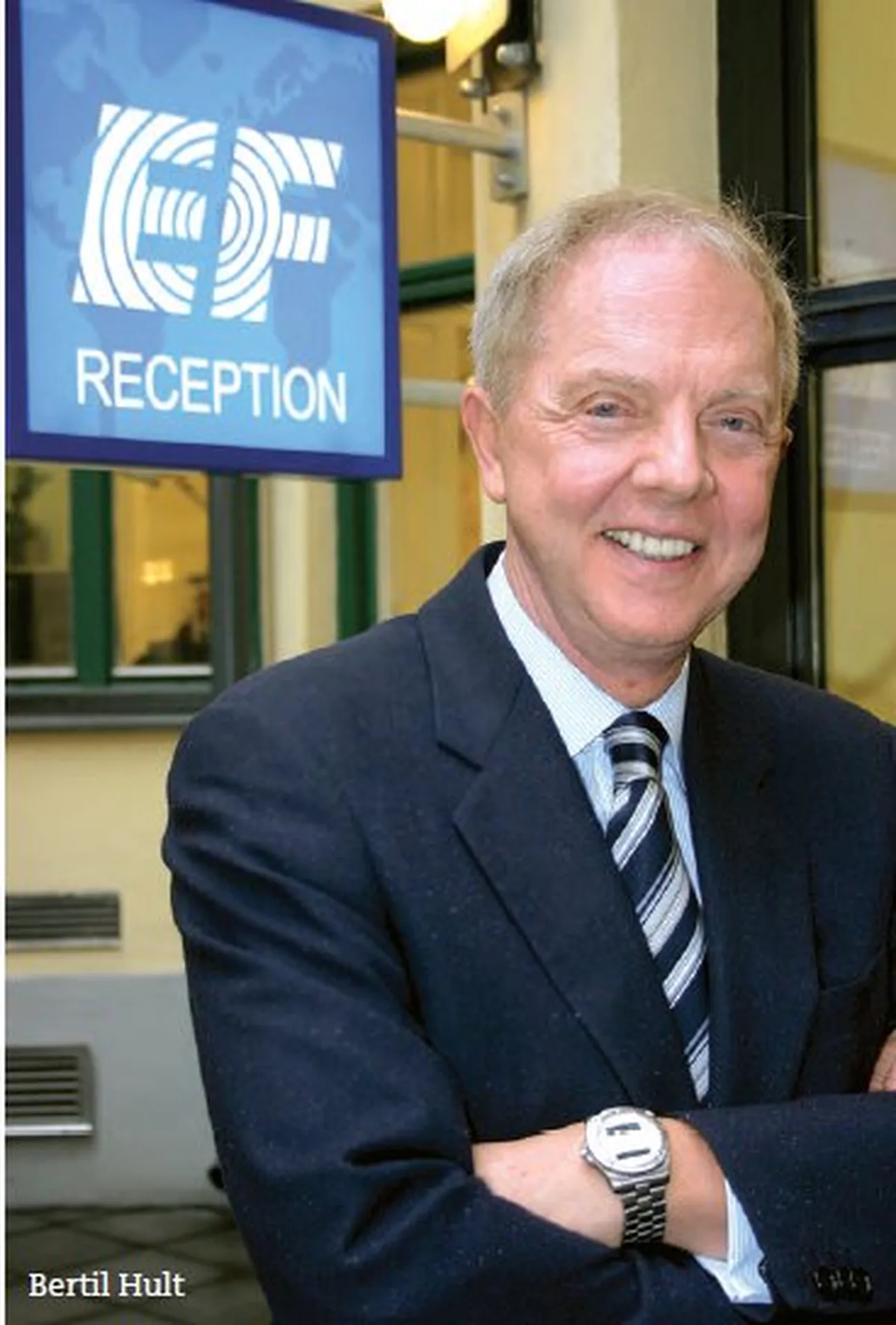
by Bogdan Munteanu
Ever since Henry Ford or Andrew Carnegie, in the late 19th century, to Richard Branson, Bill Gates, Steve Jobs and Mark Zuckerberg, in our days, school dropouts have never been a rarity among the world’s richest people. Also, it rarely surprises us to witness many of them endowing universities or education foundations later on in their lives, long after getting very rich.
However, Bertil Hult, born in 1941 in Stockholm, began his rise to fortune precisely by investing in… learning – which was the hardest thing he could do as a child. A dyslexic, little Bertil faced difficulties with reading and writing. The boy was disappointed with himself, especially for his apparent inability to learn English.

Believing a semiliterate like him wouldn’t achieve much in life, few of those around him were surprised to hear that he dropped out of high school after one year. Nevertheless, the teenager wasn’t planning to waste his time.
Hult started to work as an errand boy for a Swedish bank, and he was so good at his job that his employers sent him to work in London. In no more than six months, he found himself able to speak fluent English. He picked words and phrases from daily interactions with people, without opening a book or attending any course.
Living in London made him understand that real-world experiences within a foreign culture are a wonderful chance for effortless learning, but it would take a few more years to realize how they could be turned into a business opportunity.
A business perspective on ‘cultural immersion’
Hult returned to Sweden, eventually finished high school and entered Lund University, only to drop out again after one year. This time he left the public education system for good and with a clear idea about what he wanted to do in life. In the basement of his dormitory in the university campus, young Bertil made his first business plan: he would organise learning trips to Britain for young Swedes wishing to learn English.
It was 1965, a time when language travels were not unknown to Swedes, but the first most studied foreign language in Sweden was French. Having become an ‘anglophone,’ the young entrepreneur believed that there was a better business potential in learning English. Thus, he invested all his savings – 5,000 Swedish kronor, equal to some $700 in the mid 1960s – in a start-up named EF Education First (EF) which was initially no more than a tour operator.
The customers were not the usual tourists affording to spend their yearly savings on having a good time, but young and almost empty-pocketed students. Instead of a typical holiday, Hult’s clients were offered a ‘cultural immersion,’ with the purpose of acquiring language skills. To keep costs as low as possible, the future billionaire wasn’t keen on offering the most comfortable accommodation and relied on what he considered to be ‘underutilised resources.’ For instance, he hired teachers willing to make extra money during summer holidays, rented church halls as classrooms and, where no other cheap options were available, English lessons were held in rolling buses. When a trip was not fully booked, he would cram two groups in a bus.
Still, few clients found reasons to complain, as long as the out-of-the-classroom teaching method worked very well. In a couple of years after launching EF, Hult had customers from all over Europe. In 1971, he moved to Germany. In 1972, he opened an office in Japan. By 1983, he began sending Americans on ‘language travels’ to Paris and Rome.

Half a century of entrepreneurial success
In 2015, EF celebrates half a century of continuous entrepreneurial success. Hult prides himself with the fact that he has never taken money from external investors, though his company developed from a basement start-up into a global education provider. Today, EF employs around 37,000 people in 500 offices and schools located in 54 countries.
As the world shifts towards a knowledge economy, education is big business, yet most of EF’s rivals appear to be only ‘second best.’ Hult’s firm will provide English courses to one million people ahead of the 2016 Rio Olympic Games, after it did the same for the 2014 Sochi Olympics, the 2008 Beijing Olympics and the 1988 Seul Olympics. By 2010, Englishtown (EF’s online division) had already provided language training services to over 15 million internet users.
Teaching English is still the core business, but part of EF are 15 subsidiaries and affiliate non-profits, among which Hult International Business School (HIBS). With seven campuses in five countries, HIBS has more graduating students every year (2,000) than any other similar institution in the world.
Based in Shanghai, EF Learning Labs is a research institute on the future of education which publishes the annual EF English Proficiency Index (EPI) – the world’s most comprehensive study ranking English skills by country. Sweden often comes first, followed, in an order slightly varying over the years, by Denmark, The Netherlands, Finland and Norway.
A visionaire philantropist
According to the EPI, there is a direct link between the English skills of a nation and the economic performance of the country. This matches Hult’s credo, expressed in The Boston Globe in 2013: “Free trade and education, you have to have that for a prosperous society. It’s sort of the most basic form of free trade: the trade of ideas, the trade of culture and language.”
Married to the same woman since 1974, the billionaire is now semi-retired. He is the chairman of EF, while three of his eldest sons hold various executive positions. His fourth son works as a film director in Stockholm.
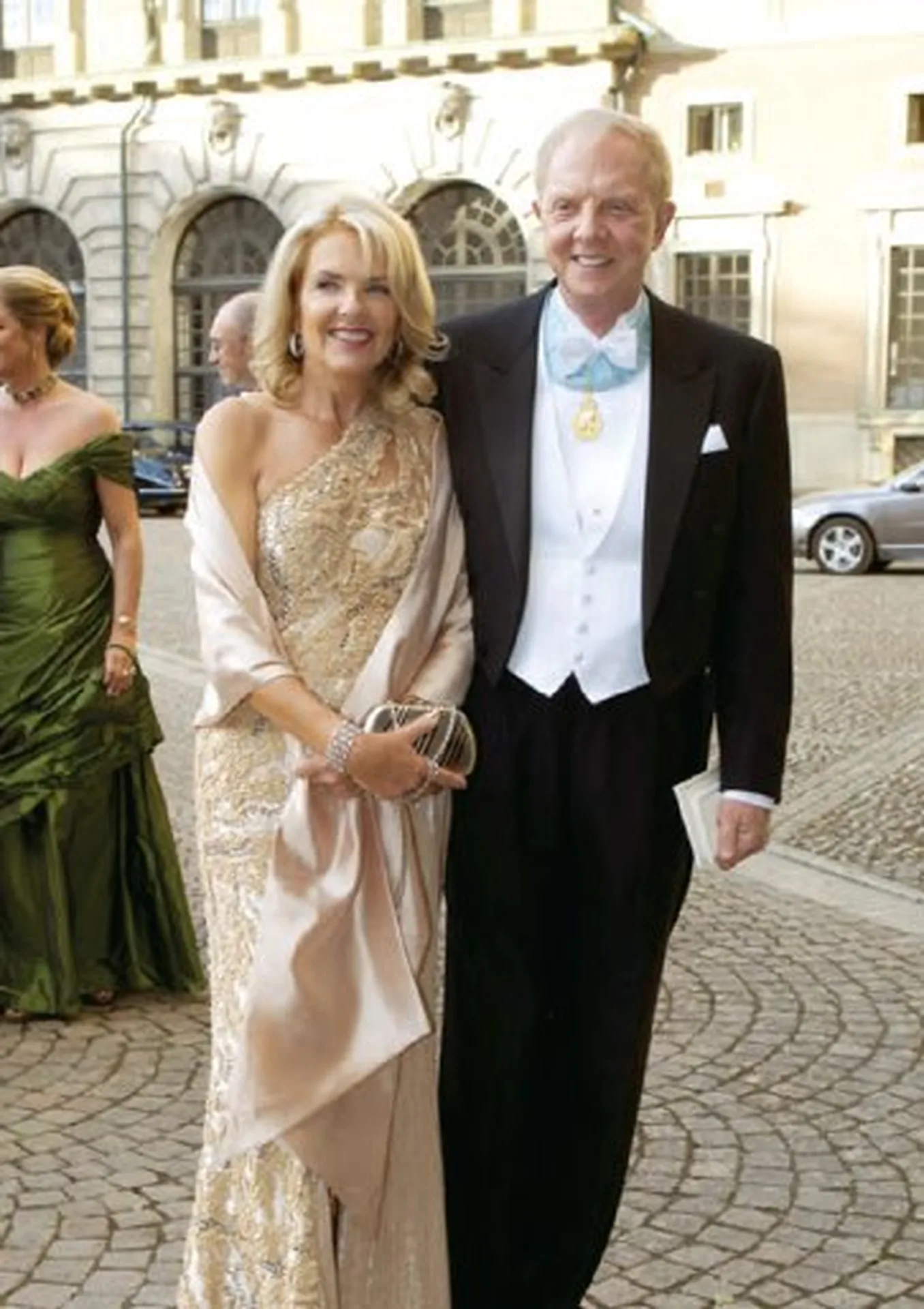
As a philantropist, he is still very active. Every year, a Hult Prize of $1 million is awarded to the winners of the largest business school student competition. The prize goes to those submitting the most feasible solutions to alleviate poverty and hunger. Hult also chairs a Swiss foundation dedicated to the prevention of drug abuse, a non-profit supporting dyslexia research in Sweden and a global NGO working to rebuild schools in countries affected by conflicts and natural disasters.
Although he now lives in Lucerne (Switzerland), the billionaire has never severed his ties to Sweden. Since 2003, he has been offering an annual prize to Swedish schools for the support given to their dyslexic pupils. His compatriots voted him the ‘International Swede of the Year’ (2006). In 2010, the Crown Princess Victoria and her husband Daniel accepted Hult’s offer to spend their honeymoon on his luxury yacht. The boat took them to French Polynesia, away from the scrutiny of tabloid media.
In 2014, Hult was named a Laureate by the World Entrepreneurship Forum. The award recognizes “exceptional entrepreneurs for their impact on society and their capacity to change the world”, but falls short of disclosing anything about his leadership style. Given his discrete nature, his employees know few things about him: he is a rather demanding boss, favouring open spaces, clean desks and hard work. However, he is likeable, because the EF’s human resources policy is based on encouraging managers to hire people that they like and think could fit in their teams.
One of his sons recalled a piece of advice from his father that could at least partly explain EF’s bewildering success: “Never hire a man whom you can’t see becoming your best friend, and never hire a woman that you couldn’t see yourself marrying.”