by Bogdan Munteanu
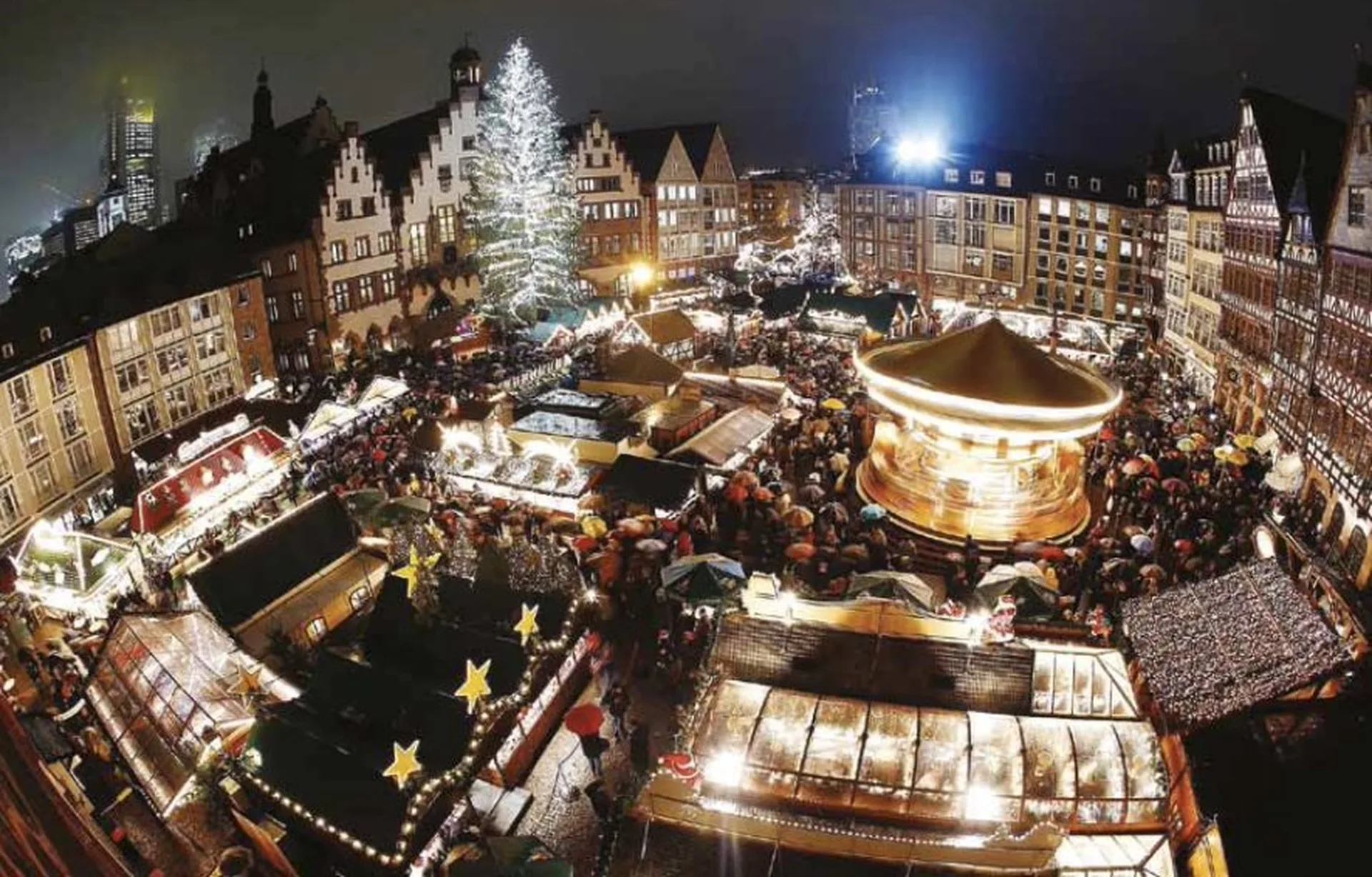
Ginger bread, boiled wine, hot sausages, local artisans displaying their crafts, choirs singing carols and many colourful candles. Not only plagues spread rapidly by the end of the Middle Ages, but also initiatives meant to bring people together and offer them a reason to enjoy themselves. This was the case with various carnivals (usually organised in late winter, before the Great Leant), but also with Christmas markets.
Soon after the first ‘krippenmarkt’ was allowed to take place in the city of Vienna, in 1294, by Albert I of Habsburg, Duke of Austria and King of Germany, these month-long events spread across Europe. They would become a tradition in Munich (since 1310), and by the end of the 14th century they are mentioned in historical records all across the Germanic states, in Austria and Switzerland, but also in England and the west of France.
Today, they are present in almost all European capitals and big cities, even if this tradition had never existed there. Without pretending that any such list could be exhaustive or objective, we invite you to read about the first seven best – acording to various polls and articles published in recent years – Christmas markets in Europe.
Cologne, Germany
November 23 – December 23
Over 4 milliom people per season visit the city’s seven different markets, each renowned for a certain specific trait. The best known is the Alter Markt around the Cathedral – where some of the most refined candles, tree decorations and handmade lacework can be bought. Also popular, especially among children and wooden toys enthusiats, is St Nick’s village on Rudolfplatz, while other markets are more appreciated by locals who know that the best warm dishes can be served there.
Vienna, Austria
November 24 – December 24
In spite of hosting a total of 10 markets, Vienna’s best remains the one held in the Rathausplatz, in front of the neo-Gothic City Hall. Tourists must take time to walk among more than 150 stalls where artisans sell very small wooden houses, puppets, heart-shaped gingerbread, leather clothes and wollen hats. Anyone looking for more refined presents to bring to someone dear should visit the Spittelberg market, near the Museum Quarter, where hand blown glass, silverware and ceramics are sold.
Strasbourg, France
November 27 – December 31
Known locally as the Christkindelsmärik and held near the Cathedral, the Christmas market dates back to 1570. Today, there is no single market, but a complex of 11 little winter villages spread throughout the entire Old City which is decorated with garlands, stars, hearts and many little lights. A ‘must buy’ – followed, optionally, by hanging on a Christmas tree before eating – is a sort of Alsacian biscuit, the ‘bredele’ that comes in countless shapes and flavours, such as hazelnut, orange, cinnamon, walnut, coconut or praline.
Bruges, Belgium
November 20 – January 3
For over a month, the Market Square and Simon Stevin Square are covered with merrily decorated stalls where visitors can buy handmade jewellry, wooden toys or wollen scarves, but none of these is as popular as chocolate. There are many types of chocolate available, but, at this time of the year, Sinterklaas (Saint Nicholas) figures are omnipresent. Those who ate enough chocolate can taste honey waffle biscuits and, no matter how cold winters happen to be, local beers are still in demand.
Prague, the Czech Republic
November 28 – January 6
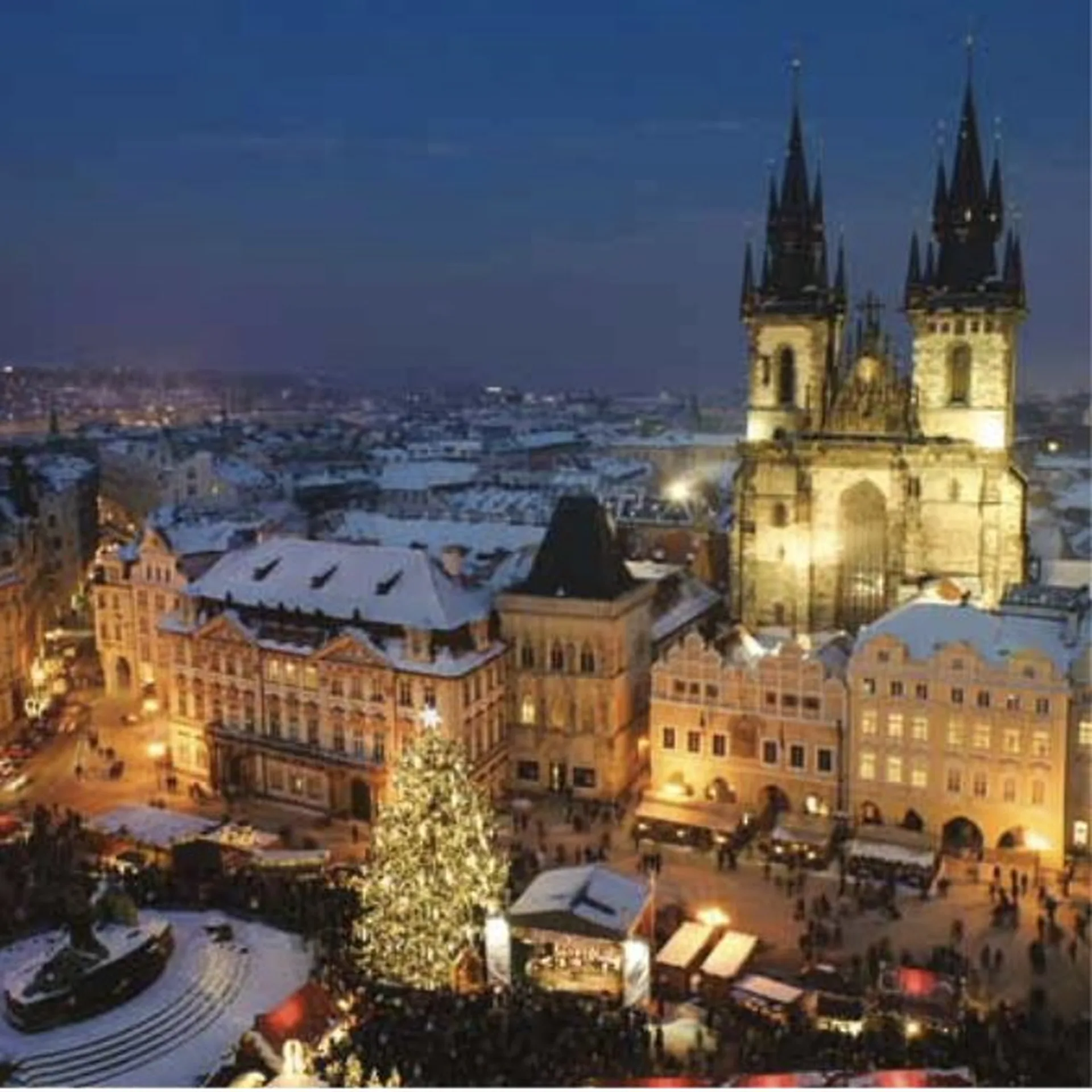
While The Old Town square hosts a stage-set Nativity scene, a huge Christmas tree and daily performances of folk bands and choirs, the nearby Wenceslas Square is full of stalls. They tempt tourists with wooden carven objects, Bohemian crystals, jewellry and traditional straw and maize decorations. Evening concerts in the city’s churches are attended by many people, who then walk through the streets trying local dishes: ‘klobasa’ (a type of sausage) and ‘tredlnik’ (sugar-coated pastry).
Vilnius, Lithuania
November 29 – January 11
Adorned with millions of light bulbs, the city’s 326.5-meter high Television Tower turns into a Christmas tree and the Cathedral Square becomes a huge village of huts and barracks covered with fir tree branches. Local artisans sell wollen slippers, hats and gloves, pottery candle holders, which would make great gifts to take home, while the offer of season food is abundant. Anything you taste should be accompanied by a glass of mulled wine and a local dessert – ‘raguolis’ (poppy seed cake).
Sibiu, Romania
November 20 – December 26
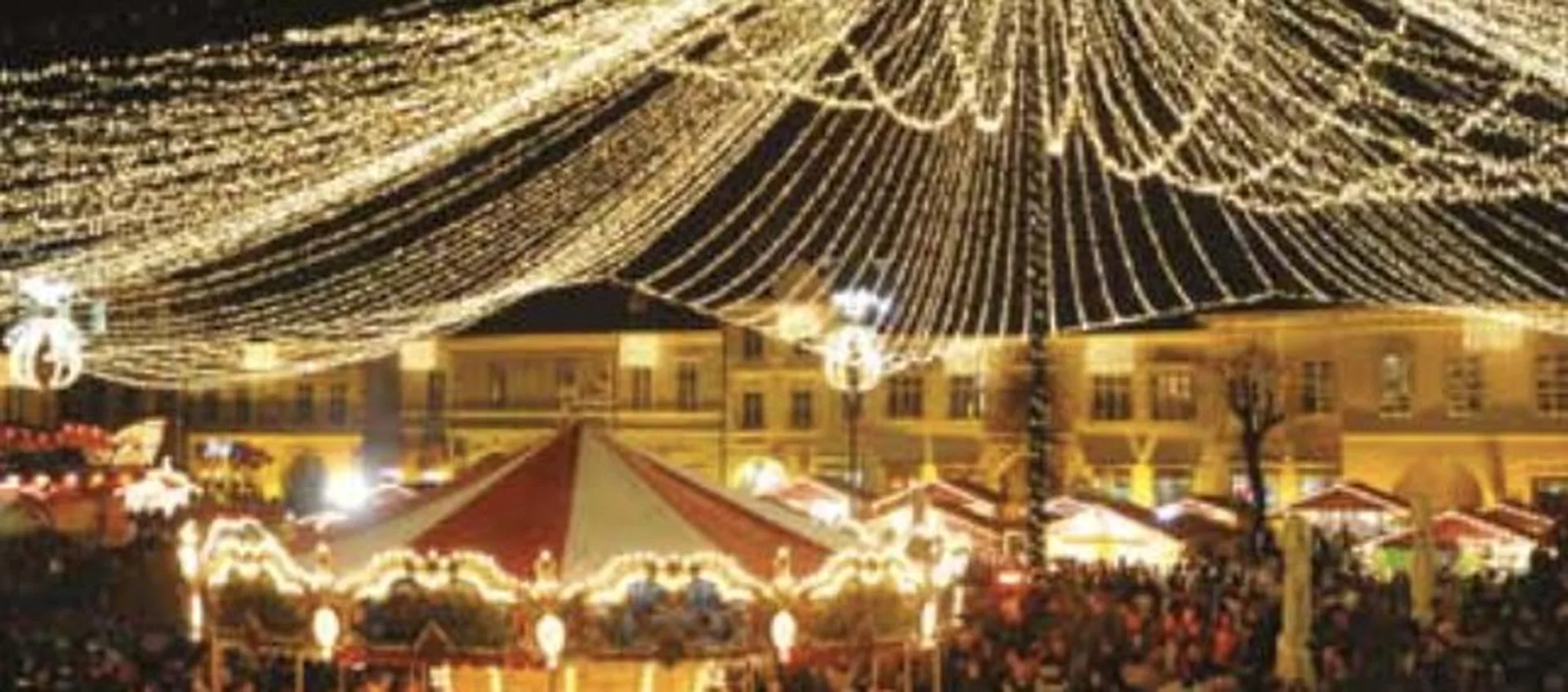
Since the year it held the title of European Cultural Capital (2007) a Christmas market has been hosted by Sibiu, drawing tens of thousands of visitors. They come both for admiring the snow-clad roofs of the renovated city center, for the more than 65 wooden huts in the central square or for the daily concerts of folk, jazz, funk, soul and pop music. Children are thrilled to take part in various workshops learning how to bake bread and biscuits or to decorate candles.