by Adrian Majuru
The joys of winter had a different tone than what we experience today. At the outskirts of the cities and in the villages buried in snow or in its absence, buried in layers of mud with deep puddles, winter holidays passed quickly, with the same daily routine of the year. The children who have their own rhythm anyway, felt time differently from the adults and they had their joys, eagerly awaiting: caroling on Christmas Eve and the first day of the New Year and the winter games on the vast and empty planes. If we get over the first circle of urban demography and enter the semi - peripheral neighborhoods of merchants, traders and pubic servants starting with the 1900 a more nuanced landscape is revealed. Here and there appeared Christmas trees and the gifts got a sense of color and content. There were carols sung by choirs made of these people who ventured away from home visiting relatives and friends.
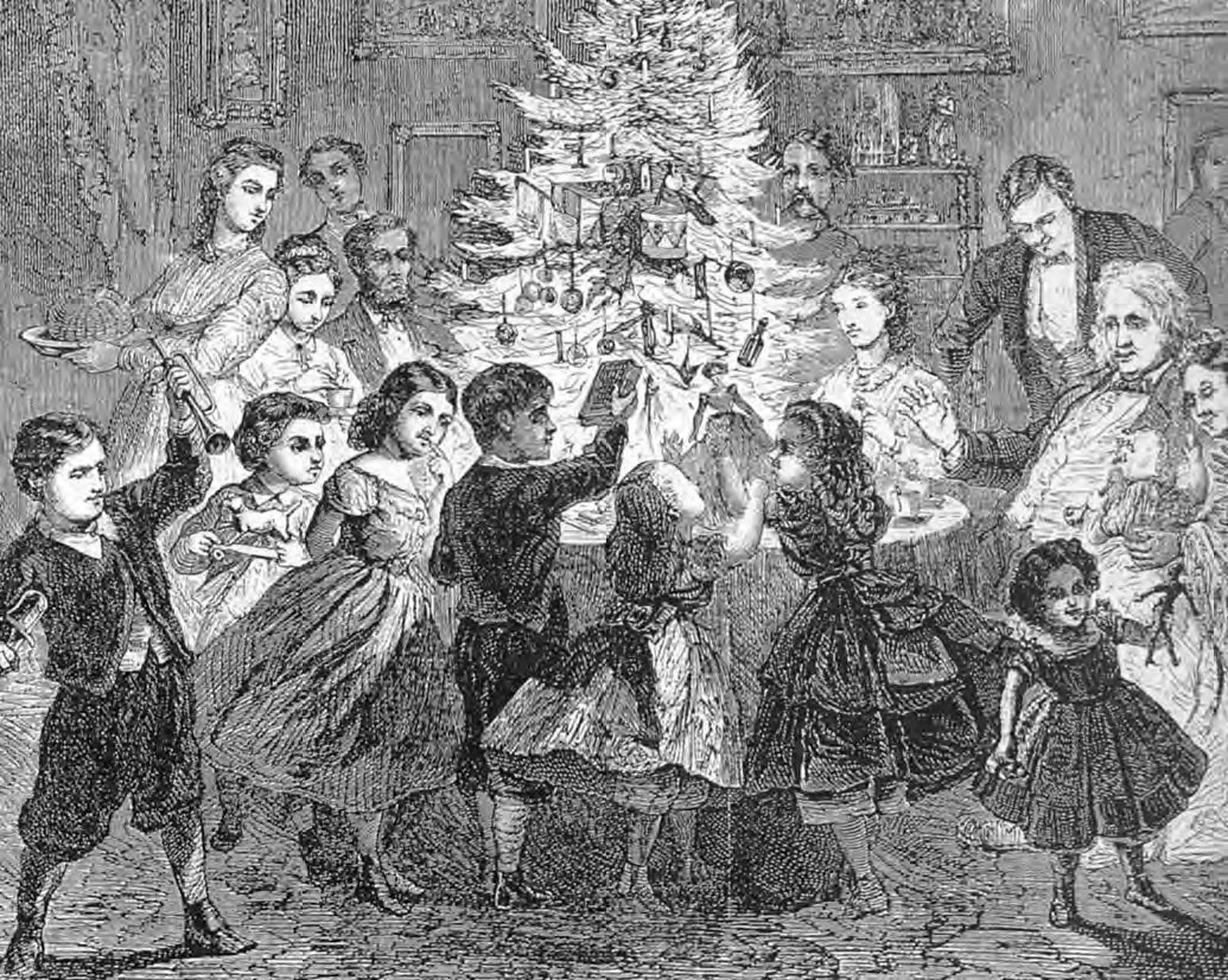
Starting with 1900 a more nuanced landscape is revealed. Here and there appeared Christmas trees and the gifts got a sense of color and content.
Further in the center of big cities, on the boulevards and streets newly modernized, light and cheerfulness shone in almost every home. These were the places where the bands of carolers from the slums never came; it was the space of the cosmopolitan elite, the official city claiming its preciosity. The Christmas was celebrated in restaurants, lounges or in the musical theaters rented long ago. The outfits were carefully chosen months before.
Starting with 1900 a more nuanced landscape is revealed. Here and there appeared Christmas trees and the gifts got a sense of color and content.
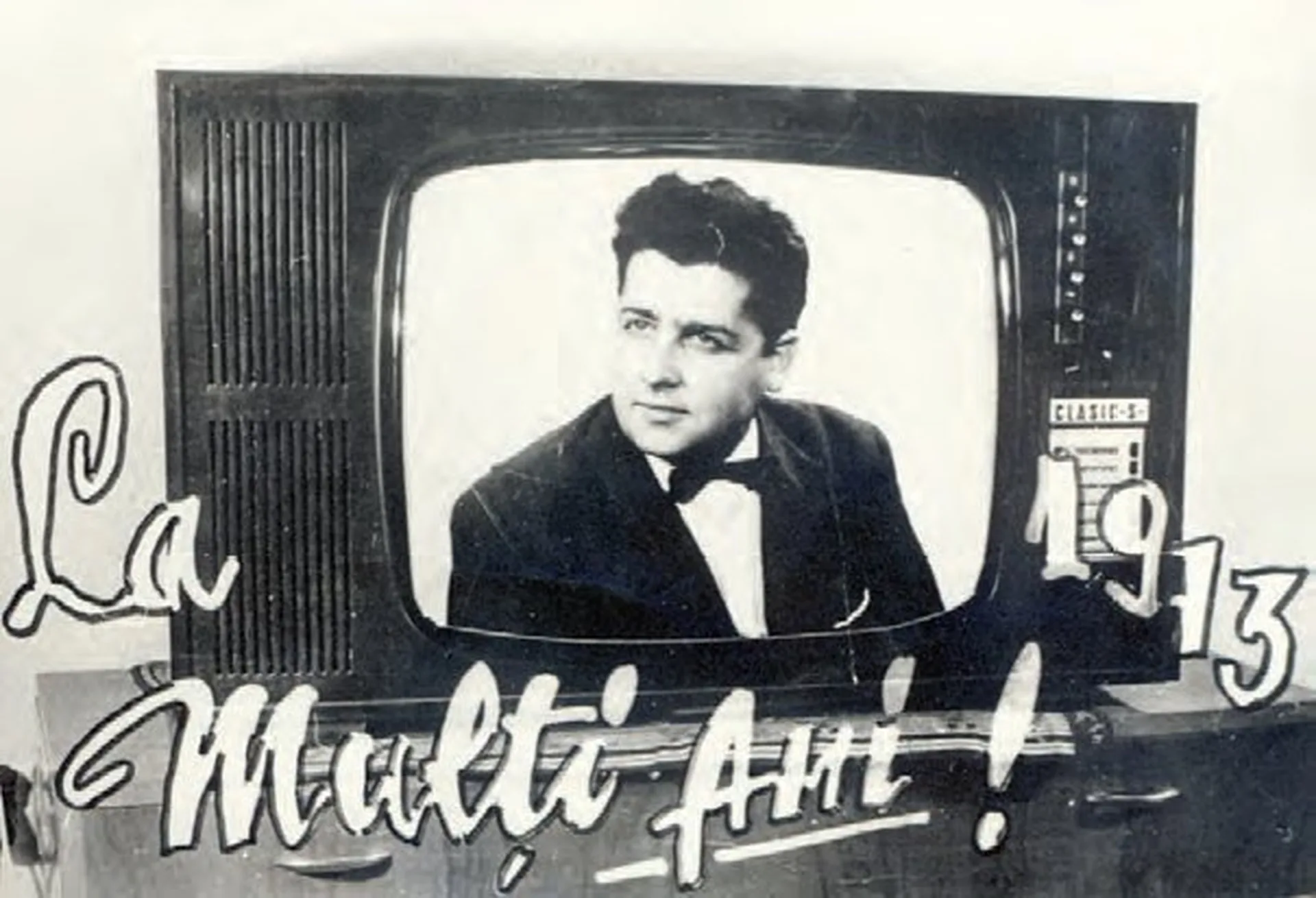
The communist years that followed wiped out Saint Nicholas and Santa Claus. The latter was replaced by a cultural substitute, unnamed for a while and then called Moş Gerilă. Santa Claus had metamorphosed - as shown in Naţiunea newspaper in December 1948 – in a robust proletarian, running around the outskirts of a frozen city with the constitution of the new Socialist Republic of Romania in his left hand. And while running in the middle of the night, the accessories of the outfit of the old Santa Claus were taken by the wind: the bearded mask , the traditional red hat and red coat leaving out to be see a bust unveiled in steel winter frost . This clearly shows the changes in the people’s houses and hearts. The situation calmed down in the 60’s and Moş Gerilă replaced the constitution he carried with a bag full of toys, leaving the constitution for another occasion. But there were also other changes for the better: from the 70s Christmas trees became a joy in almost every house and gifts extended to the adults, as a recovery of an untraceable époque.
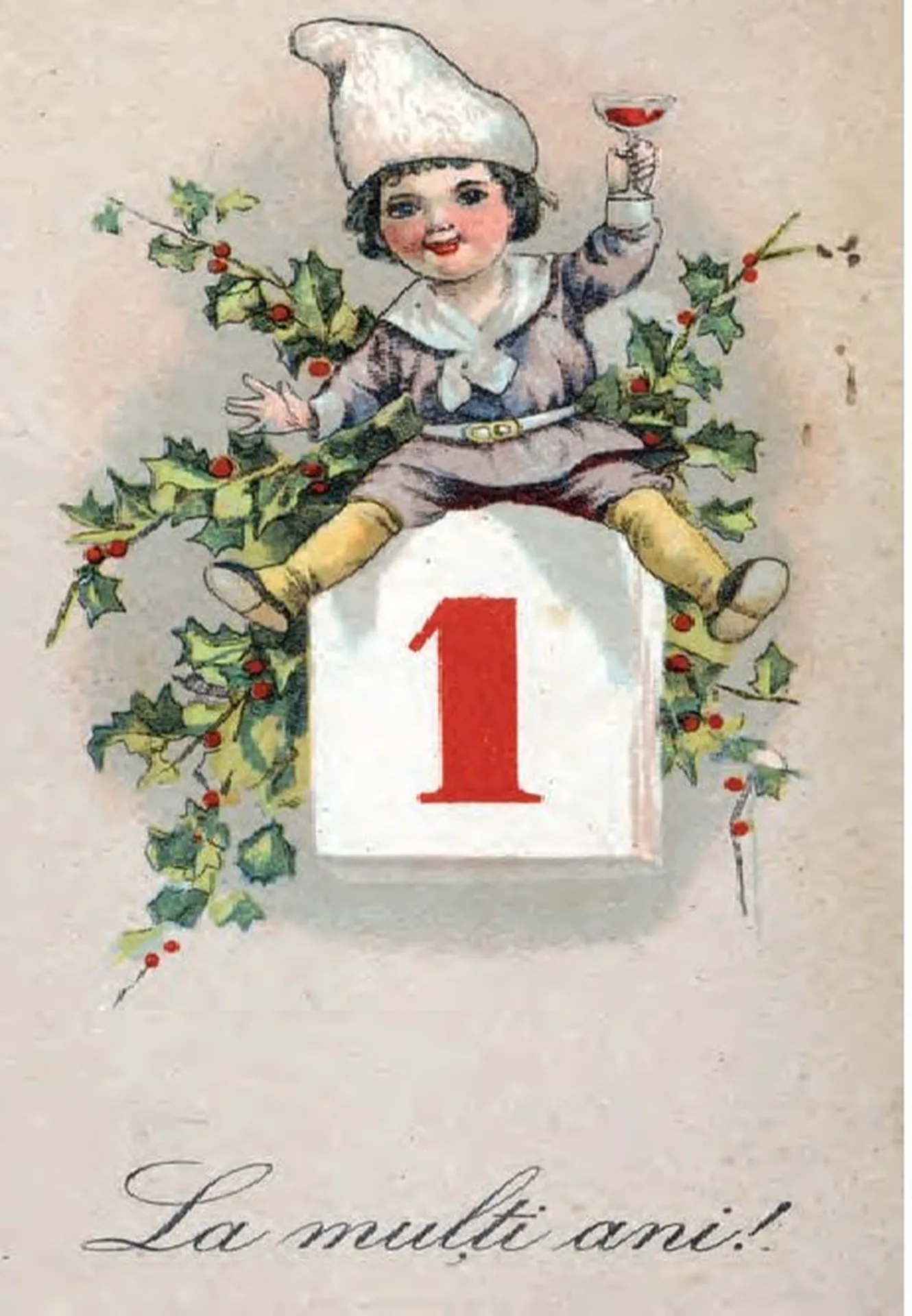
If there is a threshold that we want to pass serene and happy every time, that threshold is „The New Year”. And this is because there is a very old tradition saying that how serene and happy we pass this threshold, we shall also live in the year to come. Today we are familiar with the madness December shopping and the time which seems to have no patience. But how was it a hundred years ago? Or in the mid-twentieth century? We have the story of a child who remembers that „it was a real frenzy for us, a frenzy that continued during the war. We went out caroling on Christmas Eve and in the first day of the New Year.”
On the New Year’s day it was customary for a godfather to gather all his godchildren to him and entertain everyone with music and dances. The godchildren brought cake and different gifts and the godfather offered a great meal. After midnight, the children had to carol starting with godfathers and continuing with all other guests.
The celebration of the New Year was a relatively late discovery by the ordinary people. The aristocracy started celebrating New Year in the mid of XIX century. Then, at the beginning of the XX century the middle class joined and after World War I, the custom lowered to the masses
In the mid of nineteenth century the New Year was marked by the 6th of January Ball at Șuţu, Ştirbey, Ghica or Grădişteanu Palaces. In time, however, the New Year celebration as we know it today eliminated the ball which disappeared completely after 1916.
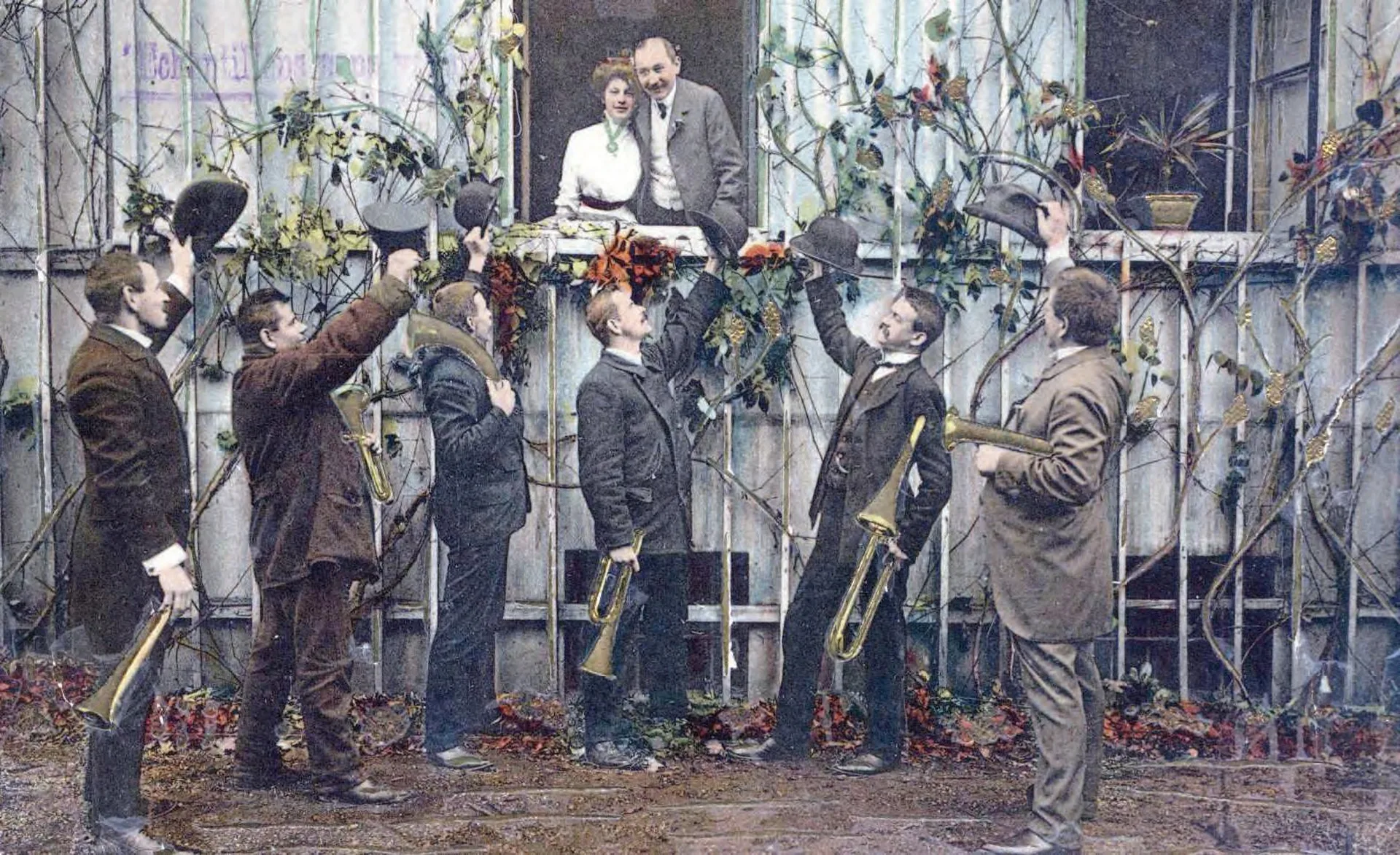
On the eve of the year it was the custom for each child to receive warm clothes, boots, pants, a coat and a suit. But, they were also offered mechanical toys: tanks, planes, trucks and trains that moved on rails. Girls received dolls, swings with dolls, wooden stoves with all sorts of pans, dwarfs and lead soldiers ... it was a great joy . A joy that is not lived today because of the madness of shopping. Everything used to happen peacefully in the family or with the loved ones and rarely in a restaurant for fun, reserved in time for the the New Year. The custom was to offer surprises, like sending your loved ones small gifts or musicians at the residence or paying visits without being announced.
The experience of the New Year was lived in various ways depending on the social stage and destiny. However it was a very appropriate occasion for socializing and fun for everybody. The slums discovered the New Year - paradoxically - in the communist time, when the lucky ones enjoyed the dances hosted on this occasion by the Military House or the old Royal Palace. Most of them spent the New Year at the cultural center or on an improvised dance floor in a canteen room. Many of the newly established plants and factories had a cultural center - or “popular Athenaeums” – where the most talented workers imitated trendy songs to the delight of their peers raised by trade unions to spend together the passage of the year. This custom became very popular but disappeared at the end of the 70s when Nicolae Ceausescu decided that the music should concentrate on the victory of the communism and his regime and created the festival “Cântarea României”. Since then, the improvised and talented workers’ orchestras became trivial and boring artists.
The beauty of the end of the year was rolled into a bizarre clandestinity in the early 80’s, very similar to the 50’s. There were loads of unwanted burdens because the communist regime forced people to work on the last day of the year and the second shift often lost the moment of joy of the transition between years. I remember how I run in the night of the 31st December 1988 from the factory I worked in, to get home in time with guests waiting for me at home.
Regardless of the times, the shortcomings or achievements, the passage of years has remained a moment of joy, a sense of ease and detachment that cannot be discharged in history, even by the most unthinkable hindrances. In recent years, Christmas and the New Year have recovered their historic status for the younger generations; something lost 50 years ago.