by Petruș Costea
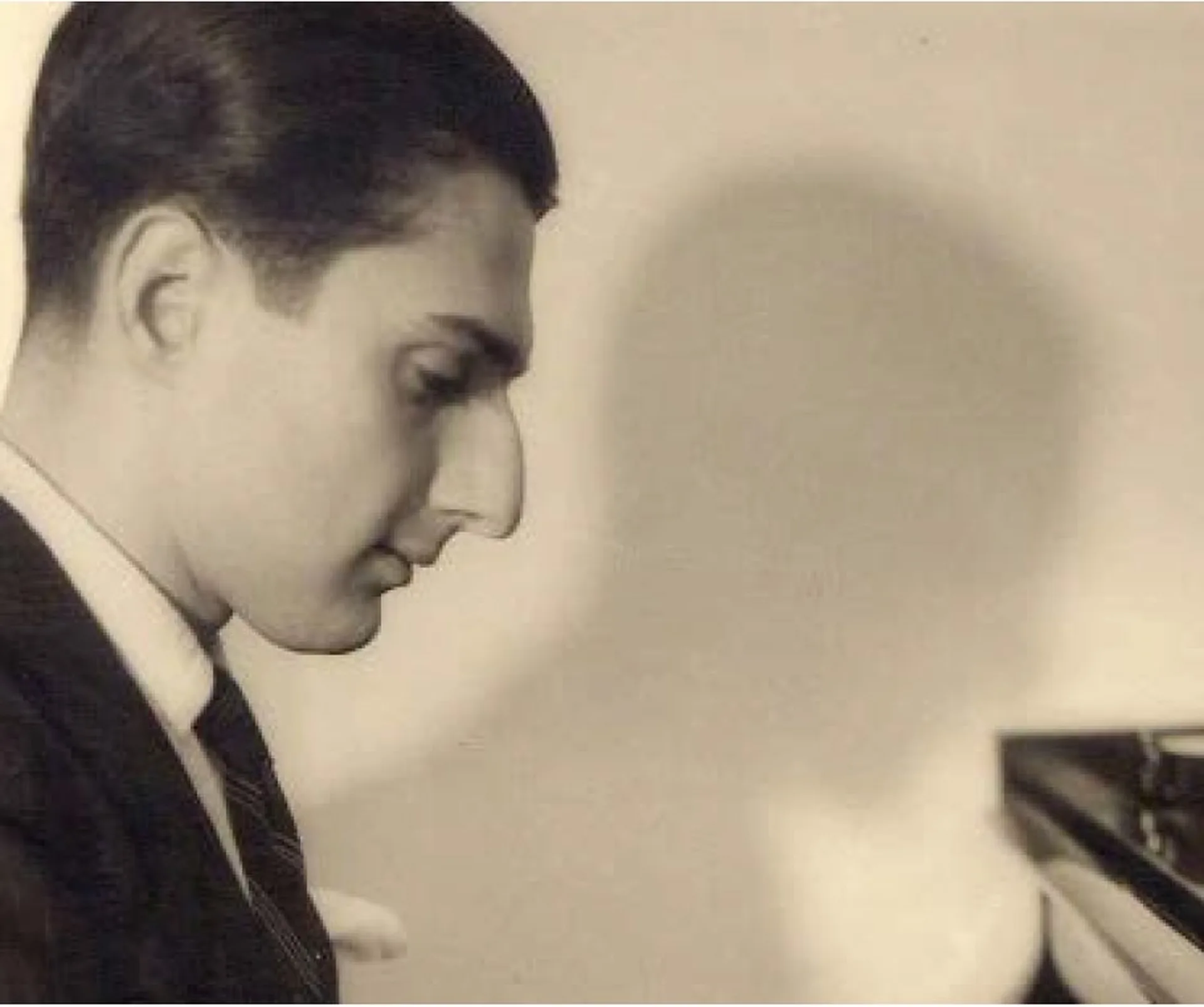
Dinu Lipatti`s life seems to have been dominated by peace and good luck since the very beginning. He was born into a wealthy family who loved music – his father had studied violin with Carl Flesch in Bucharest and with Pablo de Sarasate in Paris – but he was suffering from an illness since his early years. He had kyphoscoliosis and he was unable to attend school because of this. He was home schooled by a teacher who helped him pass his exams at the end of the year. This disease stopped his growing and his height remained average. The educational scenario repeated itself later: private teachers would come to the Lipatti family exotic villa, located on Lascăr Catargiu street. His father convinced Mihail Jora to handle the eight year old child`s musical education and after three years the famous professor Florica Musicescu joined in. Using her rather unothodox methods, she made Lipatti a pianist who was ready to work until exhaustion for perfect result. Lipatti had a pianistic affiliation before his collaboration with Mrs. Musicescu, but she demanded him not to be fooled because great music and genuine playing doesn`t rely on the romantic sensitivity of the time: before going on the scene everything must be analyzed, thought through, weighed and crafted to the most unperceivable details. Muzicescu is the one who taught him the secrets for discovering his own style playing the piano. There is a Lipatti sound, one that is clear, bright, wide (to hear the wideness of this sound we should listen one more time to the recordings of London 1947, in the huge Abbey Road Studios), and easy to identify – the same way there is a Cortot, Backhaus, Friedman, Michelangeli or, closer to us, Radu Lupu sound.
The young man with a pale and serene face, a lively but shy look, was getting more and more concerts throughout Europe. In 1993 he had met Madeleine Cantacuzino, and fell irremediably in love with her despite the fact that she was married. In 1943 they ran in Switzerland and they were able to get married in 1949. In 1941, right in the middle of war, he left together with George Georgescu and the Philharmonics Orchestra in a tour throughout the countries occupied by Germans – up to Wien and Berlin -, and in 1942 he came back to play in the exact same cities. In 1943 he was in Geneva, in a neutral country, thus escaping the madness of the war; just a few months later, his diseases broke out.
He was 26 years old and had to cancel his concerts. He was appointed professor at the Geneva Conservatory, yet he only stayed 5 years there, up to 1949 when he had to give up because of the leukemia. He had prepared study material for the Conservatory`s virtuosity class and started to apply the things he had learnt in Bucharest and Paris.
Lipatti`s method to study a play- as he described it in an interview given the year before his death – initially excluded any contact with the piano. First of all, the entire piano score was read, analyzed and learnt and a few months later, when everything was clarified in the musician`s mind, he would sit at the piano to transpose the work into sound. Some pianists „decipher” a play at the piano and everything makes sense since the first reading, others learn a sonata in one night and present it the next day. Lipatti`s approach, who was obsessed with his piano, was to sit for days just to refine the color of a sound (an invisible detail for other people) and made every recorded note seem definitive and almost inhumanly perfect.
He had recorded just a few plays. One with some Brahms waltzes, together with Nadia Boulanger, during his student years in Paris, after that a few records in London for Columbia – a Bach coral, Scarlatti, Liszt, Concert for piano by Grieg, Concert by Schumann, Barcarola, Sonata in si minor by Chopin, for which he has received the Charles Cross Academy prize (back then the most prestigious recording award). Due to his illness, the plans to record many albums vanished. He wanted to record Concert by Ceaikovski, Sonata „Waldstein” by Beethoven, Symphinic studies by Schumann, but none of these actually happened. Yet, the planets aligned and in July 1950, Walter Legge, Columbia`s artistic director, came back with cars full of equipment from the Prades, in the Pyrenees where he had recorded the first Bach Festival, led by Pablo Casals. For two weeks, in the Radio Geneva studios, Lipatti had recorded relentlessly, aware that these are the last moments of energy before his great departure. He had recorded Bach (the first part and a few corals), Mozart (Sonata in la minor) and waltzes by Chopin. He had no idea these recordings would become the fetish of many music lovers.
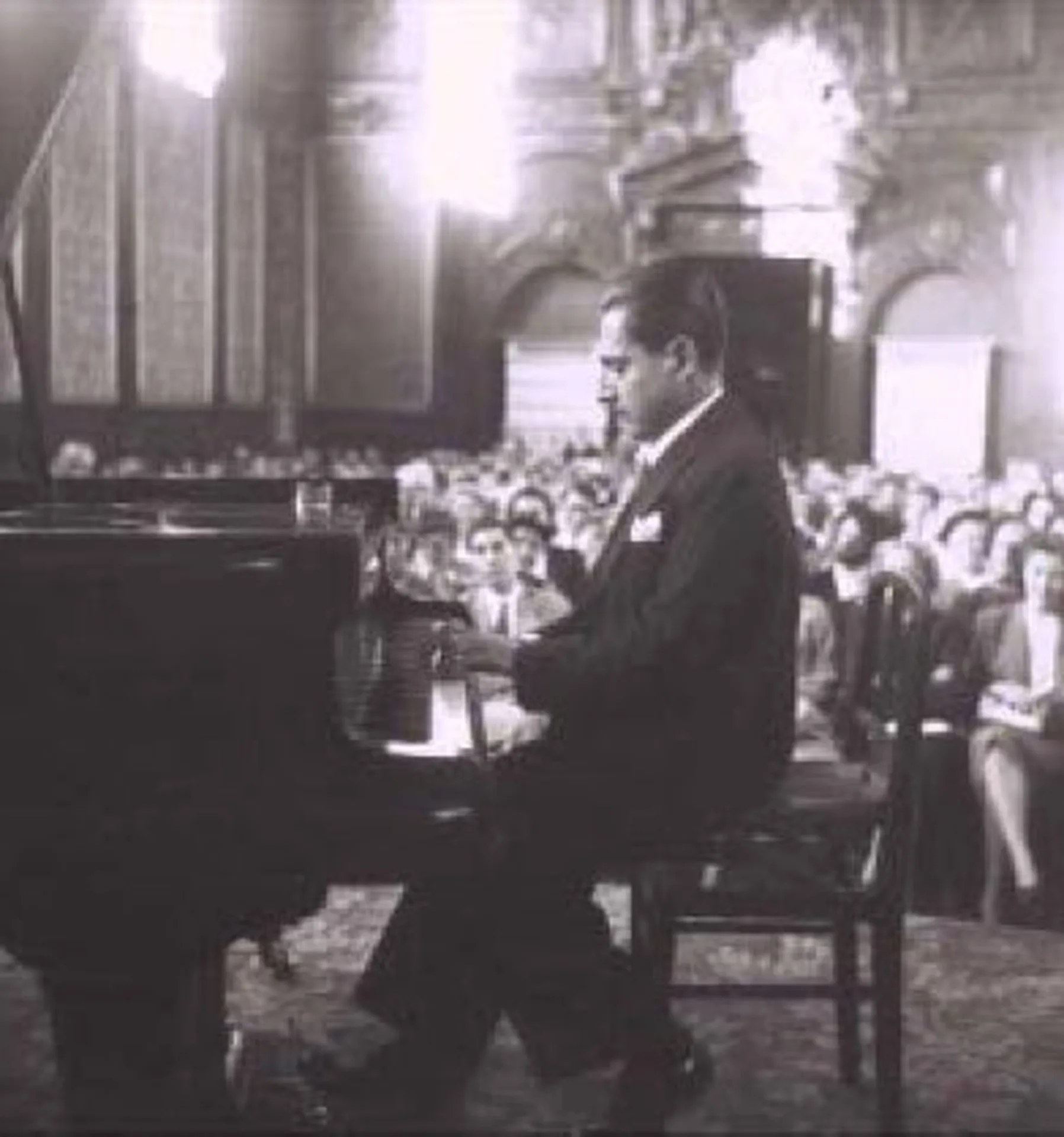
In September 1950, he insisted to have a recital at the Besançon Festival. Part of the program: Mozart, Schubert and 14 waltzes by Chopin, but he wasn`t able to play the last waltz. He left the scene and came back after a few minutes but he didn`t play Copin`s waltz, but Bach`s coral Jesus bleibet meine Freude – a play he would also give as the first encore. Lipatti never used tricks, never tried to offer virtuosity proves or to seduce the public; he had always played simply or rather he seemed simple and natural. „There is nothing sadder than a styled and intellectualized music, only a little decency and lots of sensitivity is needed”, said Lipatti, revealing the truth about music.
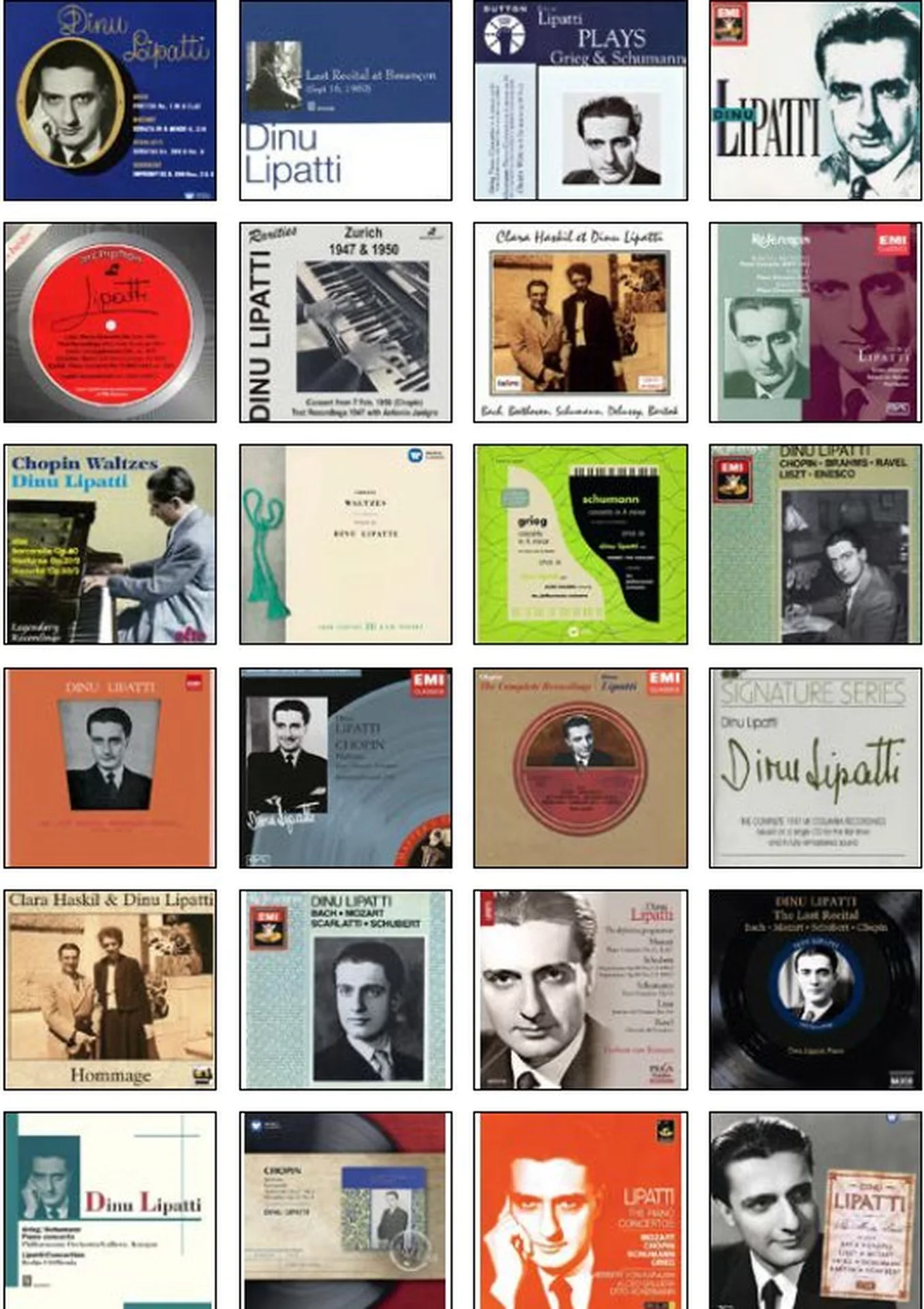
After his disappearance a strange thing happened. Colombia label, that later became EMI, issued his records in huge amounts and these records remain in the catalogue up to the present time. Shortly after the pianist`s death, the record with the last recital was issued and, a few years later, the live recordings: Concert by Schumann and Concert in do major by Mozart (certainly, one of the most famous recordings of the last century), Concert in re minor by Bach. A tape with Chopin`s first record was discovered, but 10 years later the specialists proved that it was in fact a fake and that the pianist was not Dinu Lipatti, but Halina Czerny- Stefańska. After a small scandal, the genuine recording was issued. Thanks to the Canadian musicologist Mark Ainley (a man whose musical culture, perseverance and abilities are almost unimaginable) who had discovered Lipatti in his teen years, the strayed recordings have showed up in the EMI archives, personal archives or radio archives, many of them in just one copy. Mark Ainley has published since the beginning of the 90s another 3 CDs with Lipatti records and, on his centenary, which is about to come, shall publish another 15 unprecedented minutes discovered after many years of searching. In the lipattian hagiography, Mark Ainley (who has two fascinating blogs: dinulipatti.com and thepianofiles.com) is, beyond any doubt, the most important name and we hope he will discover some other live recordings that were mysteriously misplaced after the death of Madeleine Lipatti. Once the new remaster techniques were invented, the numerous record labels – from Opus Kura, APR, Naxos to Archiphon, Pristine, Praga Digitals and Dutton –, together with the most famous sound engineer (to mention at least Ward Marston, Michael Dutton, Mark Obert-Thorn, Andrew Rose or Heiko Reisen), have published the recordings of the Romanian pianist, and the legend of this musician who died at the age of 33 continues to enchant music players through some sort of sad and bright silence.
With the occasion of the centenary celebration of the most important Romanian pianist, a team lead by Monica Isăcescu together with her boundless enthusiasm and supported by the Minister of Culture has launched a website in the memory of Dinu Lipatti (dinulipatti.org). The intention of the website is to build up the richest collection of data, recordings, photos and studies linked to the great musician.