You are often described as the best known Slovenian contemporary writer. How do you relate to this description?
When one is at the beginning of his career, this sort of statements are definitely much enjoyable and there is a true desire to be considered an important writer. But once you become an appreciated writer, this status feels a bit heavy on your shoulders. Once you are famous, everyone asks all sorts of questions and expects you to provide only wise answers, problem solving answers.
Not to mention the fact that everyone expects that your next book is even better than your previous one, something that is not always possible. In fact, every time you start writing, you are at the point you were at the start. A good thing about this is that they start translating your work into several languages and you become known in other parts of the world.
Many writers desire to become famous, but few actually do. What does success mean for an author?
If you start by thinking what do to in order to become a known writer, it is a sure thing you shall not become successful. This is not something you should care about, but you should dedicate yourself to writing heart and soul, you should be passionate and captivated by the things you write about. Otherwise, success shall not come to you; yet, being dedicated to writing does not guarantee success either. There are two types of literary success. One represents a quality literature that can be defined as a work of art – deep, complex and targeting a more informed public. But there is always commercial literature success, written by those who accommodate a public who doesn`t want to handle complex matters. And within this category, the competition is fierce among writers.
Fortunately, we have also the blessed situation when a quality writer enjoys a large public, for example Gabriel García Márquez, Jorge Luis Borges, Umberto Eco. From what I have heard, Mircea Cărtărescu is a writer that the Romanian public loves a lot. Regarding me, when I published the novel “I saw her that night” in France, it received the Award for the best foreign book in 2004, and up to now, it sold 15.000 copies.
Back in the days, there wasn’t any social movement without a writer being in the first line. Do you believe that social involvement is a writer`s duty?
It is clear that the role of the involved writers during the last years of the 20th century is no longer the same as today, in our free society. But, if we speak of the involvement of the writer in the life of the city, this is not something that received attention only during the last years of communism, but has its origins in the French Enlightenment.
The writer, the one who approaches ethical matters in his works, becomes involved in the life of the society. I cannot deny that my social commitment was very strong and resulted in a large series of articles and essays. Now, looking back, it seems that I have invested too much time and energy in this activity. Maybe it would have been wiser to invest more into literature.
Communism used to promise a perfect society. Doesn’t the European Union do the same with their promise of prosperity? Especially here, in Eastern Europe, we are so far away from what we are promised.
That is a very interesting question, because we must remember that we, the people of Eastern Europe, during the socialist times, believed that, when socialism would evolve into communism, there will be an abundance of milk and honey. Afterwards, when communism crashed and we faced many problems, the song changed just a very tiny bit. Now we are promised that capitalist society is the ideal one, the one that shall rid us of all our problems and shall provide a miraculous existence. It turned out that things are not really like that. In this new society, the most obvious and surprising fact for some people is that each person must take care of himself. Some people have taken care of their own lives more than they thought of the public good.
My generation had always dreamt of democracy, but we woke up in capitalism. While we were dreaming about democracy, we would have never imagined that it comes together with greed and with a fierce struggle to make money and positions in order to ensure exclusive individual prosperity to the wealthy and powerful people. We were talking about a democratic society and we had the illusion that this means foremost the freedom of expression and several political parties. It turned out that living in a democratic society does not mean just the things we were dreaming about, but flagrant inequities and heavy social problems – linked to the unemployment and health system. And, in this society the state must take responsibility.
We often hear things like “it used to be better during Ceaușescu”, or “it used to be better during Tito”, in the case of the former Yugoslavian states. What would you say to these people?
I think these statements are absolutely ridiculous. First of all, it is not at all true that back then people were living better or there weren`t any social inequities. Back then, only those who belonged to the unique party were doing better. On the other hand, saying that the regime was providing equity to all citizens is a statement that lacks reasoning. If we are to think of the fact that there was no freedom to travel, that you were not allowed to have a passport at home, that the borders had mines ready to explode anytime and barb wire fences, and so on...
I think that nowadays, many young people who knock at closed doors tend to become nostalgic of the old days when social protection seemed to have been better than today. The transition from socialism to capitalism brought along several problems. But, a society that truly cares for the public good and the welfare of the citizens cannot be discovered by looking back, because if we look there we find dictatorship, crimes, and all sorts of constraints that often turned into savage acts.
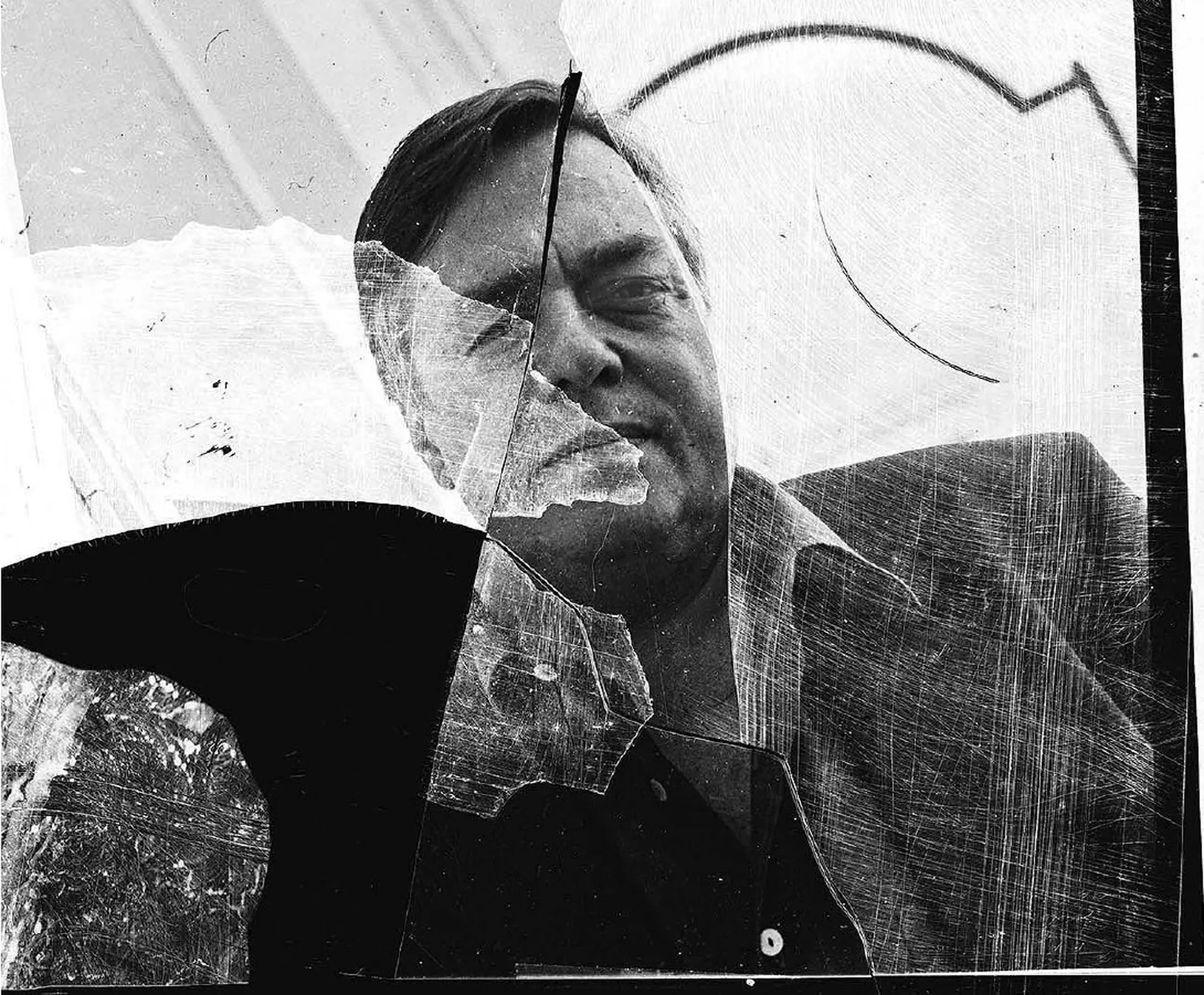
FOTO: markolipus.com
Can there be a better society?
Our mentality must go forward, towards finding a new social contract that ensures the emergence of a society where social justice, prosperity and the welfare of each person become real concerns.
If, during this search, people shall look to the communist ideals and shall try to transpose some of them into reality, this might be a good thing. If we observe the last years of the communist times, there are no sustainable solutions there. At European level, it is possible to find a new social structure that is beneficial for all citizens, a new type of social state that shall not suffocate freedom of expression and individual initiative.
You are rather an optimist. Europe has left behind two world wars and the former Yugoslavian wars. Do you believe we live in a safer world, are there any guarantees that these absurd times shall not come back anymore?
I belong to a generation that was absolutely sure that there will be no war ever again. Although I was born four years after the Second World War, we had the impression that it took place a few centuries ago. Nevertheless, we were to face later some bloody conflicts in Croatia, Bosnia and Kosovo; not so much in Slovenia, where the war lasted only for ten days.
Last year, I was discussing with a local journalist at an international conference in Ukraine. I told him I have a hunch that the things we had lived at the beginning of the `90s might repeat themselves in Ukraine. He told me “Not to worry, the situations shall be resolved once we recover economically. There is no risk now that things develop the way they did in the former Yugoslavia”. What do we see one year after this discussion? 6.000 people died in Ukraine, and several cities and villages destroyed. Many times I believe that we do not learn anything from history or that, rather than learning how to live, we learn how to die.
I remain an optimist, because this is the only thing that we have in the end. After each European fall, we stand back on our feet again and we start building whatever was destroyed.
Is there an essential quality that the Slovenians have, one that is worth of being known by the entire world?
I shall make reference to these two legends. One says that, when God made the world, he had divided all the beauties of the world up to the point that there were only a few left and He gave them all to Slovenia: mountains, rivers, seaside… That is why, the Slovenians are considered hard working people, often displaying solidarity and ready at all times to do something with their own capabilities. There are proud to belong to Europe, but they are also proud of their traditions.
There is another legend. A man sits on the wayside on a rock and he cries. God passes by and asks him: “Why are you crying?” And the man bursts into tears even stronger. “I am Slovenian! That is my problem”. Hearing this, God starts to cry too and tells him: “Oh, in this case, not even I can help you…” and continues with His way.
The Slovenian soul has two sides. The second shows less solidarity, less pride. It has to do with the mentality of the man who thinks that being Slovenian means always being jealous on those who live better. I believe that the truth about Slovenian is somewhere in the middle of the two legends…