by Alice-Claudia Gherman | Photo: Ebru Bolat Facebook archive
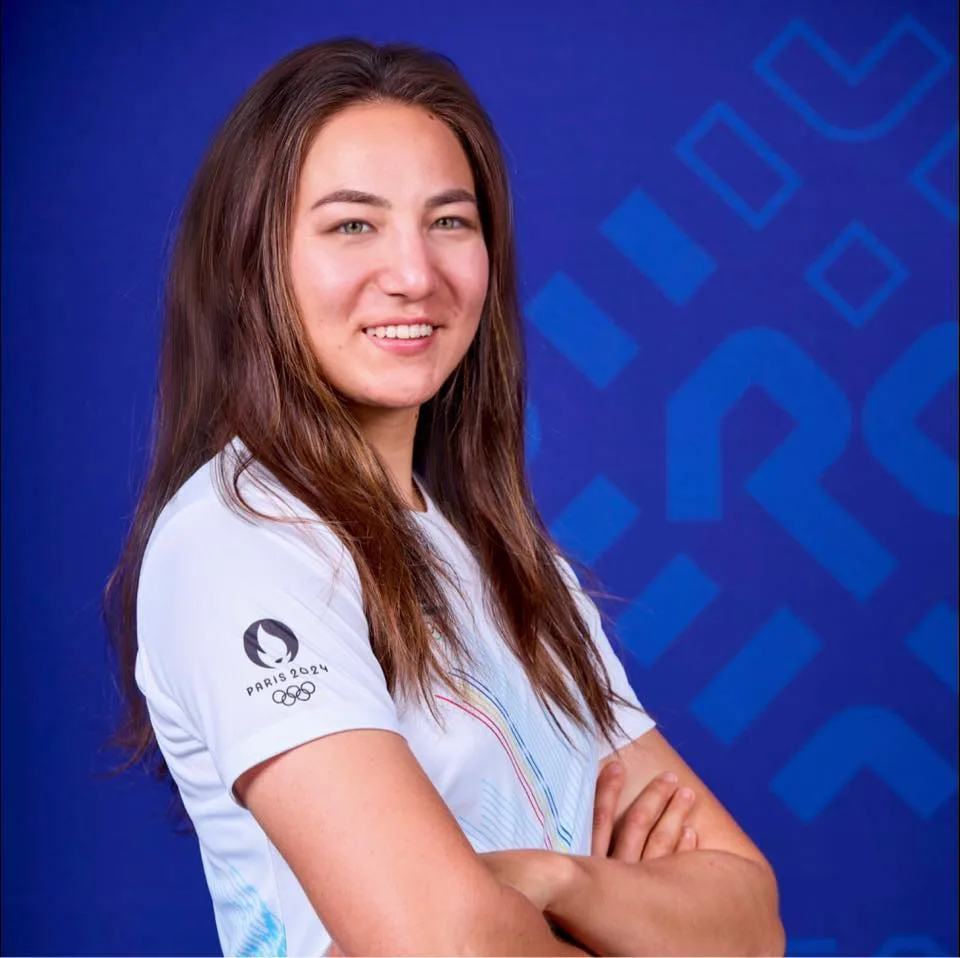
Beautiful, intelligent, and remarkably grounded in both life and sport, Ebru Bolat – 26 years old – is an increasingly visible presence in international yachting. Graduate of Arts University Bournemouth, majoring in Animation Production, UK, Ebru is a complex and well-rounded athlete, balancing elite sport with solid education and creativity, while combining modesty with determination.
Yachting – a love that started at the age of eight
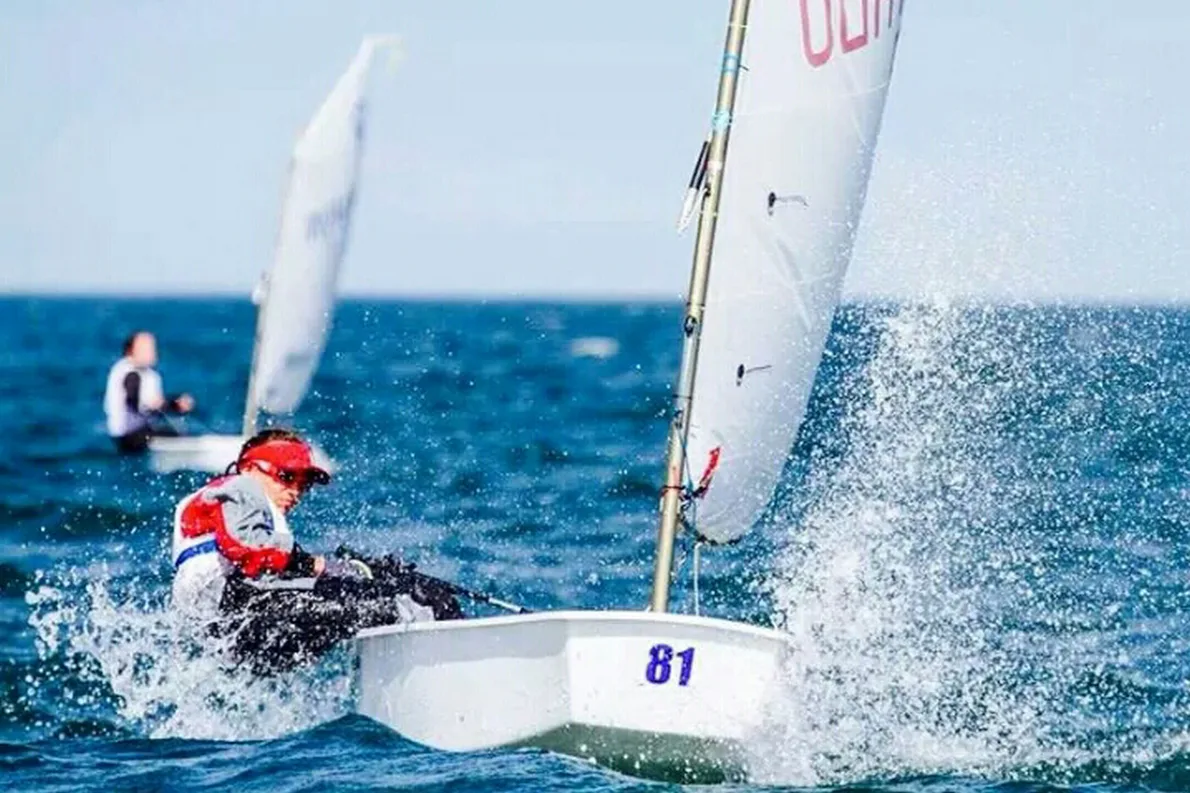
The love story between Ebru Bolat and yachting , or rather sailing (meaning the sport that uses sailing boats, or sailboats, as Ebru explains) began when she was only eight years old: “I had heard about this sport from my father, because he had studied it and obtained his sailing licence. He was also part of a crew that won the Romanian Cup and was very passionate about sailing. At the beginning of the summer of 2008 — when I was eight, my father took me and my older brother, Tarkan, to a competition on the Black Sea, in Mangalia.
At that time, next to the big boats, there were also some small boats for children our age, eight to ten years old, sailing. We were watching those children — we already knew something about sailing from our father — and their coach noticed that we were looking with great interest. He came over and asked us if we wanted to try it ourselves.
I got into a boat with a girl who already knew how to handle it, my brother got into another one with a sporty kid, and it was an unforgettable experience. Especially since my brother’s boat capsized and mine didn’t … but we couldn’t really laugh at him too much,” she says, smiling.
“We had a lot of fun that day, and afterwards the coach came to my father and asked him if he would allow us to start training in this sport. My dad agreed, and we were very excited. That summer, we began sailing courses. We were born in Constanța, but our parents had moved to Bucharest, while our grandparents lived in Agigea, so it was perfect for us to attend the summer sailing school on Lake Sutghiol. We would take the bus to Mamaia every day,” Ebru recalls.
The man who shaped her life as an athlete was her first coach in Mangalia, Dumitru Micu, who sadly passed away.
“If he hadn’t come to my father and asked whether we wanted to try sailing, my career would probably be very different today. That small gesture changed my life. With Mr. Micu, I began my initiation into sailing, at a time when this sport was still little known in Romania.
As the years went by, I started to win almost everything that could be won in Romania, but I realised that internationally we were practically non-existent. We didn’t really count. I had become national champion, but I placed second to last at the European Championships! I was aware that even if I won nationally, I didn’t truly feel like a champion, because I knew the truth — compared to European or world-class athletes, I simply wasn’t good enough yet.”
“The costs in this sport are high (yachting) - you need high-performance, quality equipment. The boat is extremely important for gliding on the water; you can’t compete effectively with an old one. ”
“First school, then sport!”
Wanting to raise her own standards, Ebru wanted more and the first people who supported her were her parents. While her brother Tarkan gave up professional sailing (even though he also became a national champion and practices privately), because he couldn’t find a suitable teammate and focused on a career in another field, Ebru decided to continue.
Alongside sport, she never gave up on school. “At first, I wanted to drop out of school and dedicate myself entirely to sport, but my parents said no: first school, then sport. That was the only way they would allow me into competitions. If I got an A, it was still considered a problem, so I used to take my homework with me, study on the road, on the plane, on the train, and I never missed any exams or assignments. At first, the teachers weren’t happy that I kept missing classes because of training, but then they realised that I was studying, learning and getting good grades and after that, no one had any objections,” Ebru says.
Trained at the Romanian Royal Yacht Club and licensed through the Bucharest Student Sports Association, Ebru also trained on Lake Herăstrău. She reminds parents who want to introduce their children to sailing that there are at least ten water sports clubs in Romania, three of which are located in Bucharest.
Yachting – an expensive sport, but one that teaches you to be strong
Today, Ebru Bolat’s coach is the Portuguese Gonzalo Javier Pereira de Carvalho — Xavi, as he is known, whom she met at the beginning of 2023. They started with a few test training sessions to assess her level and how he could help her, and now she trains with Xavi.
“The costs in this sport are high — you need high-performance, quality equipment. The boat is extremely important for gliding on the water; you can’t compete effectively with an old one. Having a training partner helps, because you can share the costs, which makes it easier for both of you. For a while, I trained with a girl from Cyprus — she excelled in light wind conditions, while I performed better in strong winds, so we complemented and supported each other. We also shared the costs of the coach and training sessions, but we each competed for our own country. In other words, we were training partners but competitors in competitions. Of course, we argued sometimes — we’re girls! (laughs) — but overall, we were friends. After the Paris camp, we stopped training together,” says Ebru.
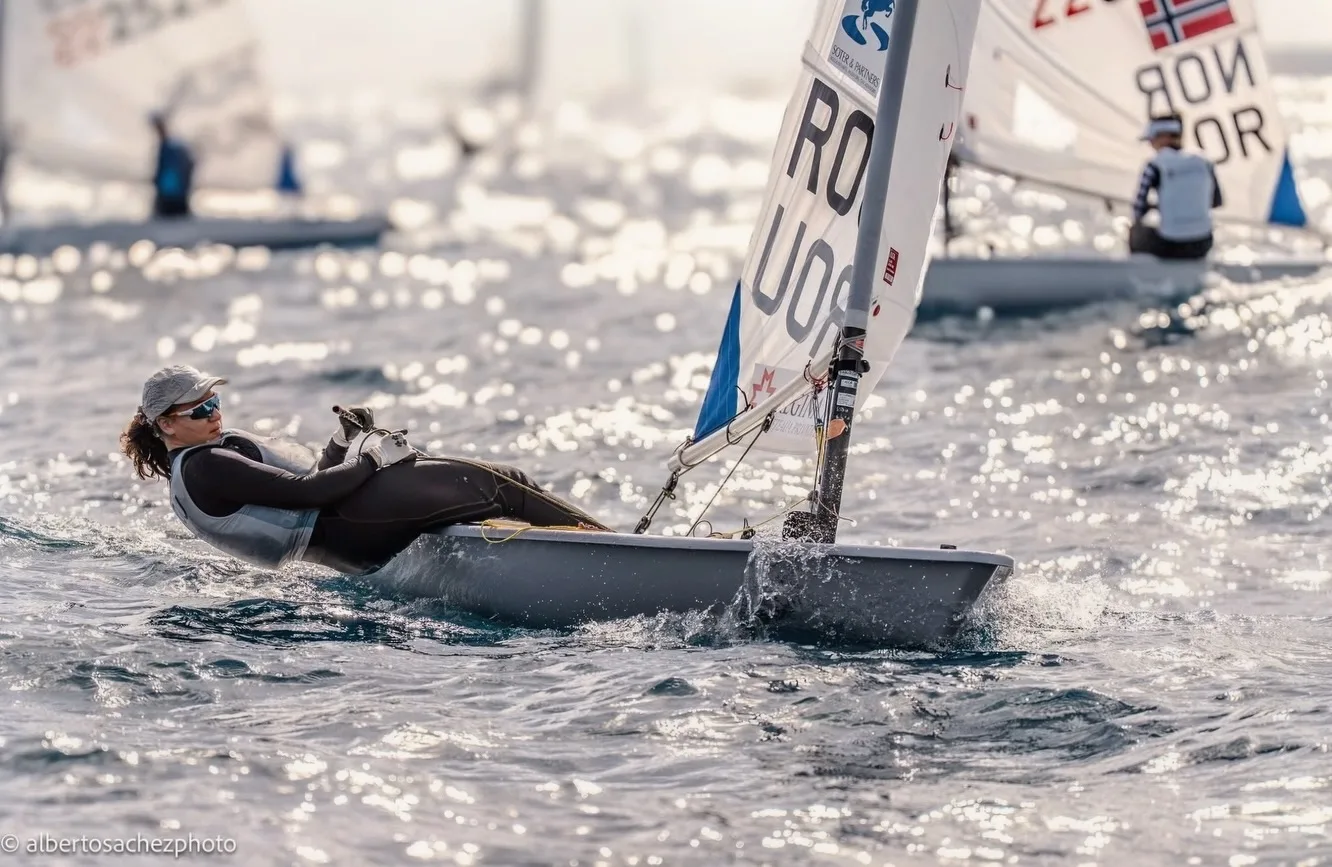
Being a sport in which you compete alone, sailing taught Ebru to be strong both mentally and physically. “I think that’s what you learn from this sport. Being alone at sea, no one comes to help you and everything depends on you and how you handle the situation. You have to find solutions yourself, take initiative at the right time and solve problems. And problems appear all the time. All sports give you life lessons, but this is one where you have to manage high-pressure situations on your own. You don’t have time to get angry or victimize yourself. The more you focus on being upset, the more your opponents get ahead of you. So you have to become a kind of robot, constantly looking for the solution in your ‘program’. From the age of 13 or 14, I started working with a sports psychologist and doing mental training. I always focus on my goals and how they can help me solve the problem.”
“Joy should come from what you do, not from the results!”
Until the age of eight, Ebru Bolat had a childhood like any other child. Then, she says, everything changed. But it was her own choice. Her parents never pressured her to pursue performance at all costs.
“My parents told me: if you want to quit this sport tomorrow, you can quit; we love you just the same. But you have to be honest with us and with yourself: understand why you want to quit. Don’t quit just because it’s hard; and if you don’t like it, understand why you don’t like it.” “In other words, they encouraged me to see whether I didn’t like the activity itself or whether the problem was simply that I wasn’t getting results. Because if only results keep you in a sport, then it’s better to quit. But if you enjoy being at sea and the activity itself, then that’s something different.”
“Results are something we can’t always control. And if only results make you happy, then that’s not right. Results shouldn’t define happiness — happiness should come from what you do. I also learned that from the sports psychology books I read. You can’t always be in first place; sometimes you come last. Results fluctuate, but joy must come from the process.” From this perspective, Ebru admits that she did not have an ordinary childhood or adolescence.
“For me, there was no private life, so to speak. I didn’t have many friends and for a long time I wasn’t in a relationship. Any relationship requires time and emotional investment, and I told myself that if a relationship didn’t work out, that would mean wasted time. Whereas if I went to training and then to competitions, I was following my dream and that was what truly mattered to me.”
The athlete’s training camps take up about three weeks of every month — she has to train at sea and on the ocean, because that is where competitions take place, which means constant travel. When she returns home, she continues with maintenance training and takes care of her annual medical check-ups, visits to the nutritionist, psychologist, and so on.
How different is a sailing athlete from a performance athlete in a regular sport? “There are differences. In our case, races last between 30 and 50 minutes. For a sprinter, for example, the effort lasts only a few seconds, so in our case the effort is much longer. A sprinter has only one race per day, while we can have up to three races per day during a championship, and this can go on for an entire week. In their case, championships usually last two or three days.”
“So the effort on our side is double, if not triple. The work itself is similar, because they also train intensely for those few seconds that make the difference. But in our case, the races are harder physically and mentally, and we have to recover from one day to the next. In sailing, consistency is rewarded. If you don’t do well in one race, maybe you’ll do better in the next — you get a second chance.”
Ebru is supported by a small team, as Romania does not have a large women’s sailing structure, and the allocated budget is modest compared to other countries. While major teams — such as France — benefit from a water coach, fitness coach, physiotherapist, psychologist, team manager and administrative staff, in Ebru’s case, besides her coach, psychologist and nutritionist, most of the additional work — especially administrative tasks — is handled by Ebru herself.
This, of course, takes time away from her training, and sometimes even from her recovery.
“Training is like adding bricks to a building, one by one, until the structure is complete and you’re finally ready for competition,” the athlete concludes.
The 2024 Olympic Champion was 36 years old, the silver medalist was 33, and the bronze medalist was 29. Ebru is 26 and still has all the time in the world to reach the top of the global rankings.
In sports, it’s all or nothing
How difficult is it to move from junior to senior level? “If you don’t get results as a junior, it’s very difficult to make the transition to seniors, and the entire burden falls on the parents. And many parents simply can’t afford to invest that much. There are many talented children in Romania, but they first have to perform at junior level in order for the state to support them.”
“Sport is not very well paid, and many parents send their children into sport at a very young age mainly for health reasons, because physical activity is important during growth. Then most of them drop out. Somehow, everything revolves around medals. When you don’t get medals, you are practically unemployed. If we don’t win, we can’t live off sport.”
“Maybe that’s why so many give up on performance sport — because it’s a long and difficult road, it requires patience and money, and you can fail a hundred times before you succeed once. And yes, children give up, and their parents guide them towards careers in IT, medicine or something else more stable. In sport, the principle is all or nothing.”
This year, Ebru Bolat will compete in the European Championships in Croatia in May, and in the World Championships in September, in Ireland, Dun Laoghaire.