By Monica Crânganu
When playing the film of history and seeing the yacht`s today image – the perfect luxury product -, the transformation of the ships from the last centuries` main mean of transport and commercial support to the object of high exclusivist sophistication seems at least unusual. And yet, looking even more in the past, we can observe a slight irony of history; we find testimoniesof the fact that the pharaohs were crossing the Nile in wooden artistically crafted ships, true works of art, assembled without any nails or metallic parts. This prerogative of the royals was preserved for many centuries. In our times, ships used to be the most popular mean of commerce and transport, maritime trade was especially done by the Dutch people, some of the oldest and best skilled yacht producers up to this day.
The contemporary phrase “luxury yachts” was assimilated at the beginning of the 20th century, when the wealthy people started building large private yachts for their personal leisure. Therefore, the term started being used and remained like this also in the specialized journals of the time. The first engine driven luxury yachts were Jemima F. III (34 meters) -owned by Charles Henry Fletcher - the largest in the world in 1908, Cox & King, Christina O belonging to Aristotle Onassis or Savarona, launched in 1931 and currently Turkey`s presidential yacht.
Having sails or engine, the number of large yachts has increasingly grown starting with the 1990s, and more and more models over 65 m are standing out among other luxury ships. A yacht of this size usually has four decks above the floating line and one or two underneath. Often they have a landing platform for helicopters. Besides the owner`s bedroom, the yacht has guest cabins, which include almost all the time one or more “VIP apartments” and many other additional facilities in comparison with the smallerships: Jacuzzi, sauna, gyms, beauty parlors, - also for massage and other treatments - a medical center, clubs, cinema, pool, playgrounds, library and other such relax areas, with public and private spaces.
How is such a ship born?
Yachts are always reflecting the personality of their owners, but they also reflect the trends. At the beginning, the billionaires would rather have exotic wood furniture and rare leathers; later on the trend of the 20th century was having official dining halls, reception rooms with mahogany paneling and chairs with lavish tapestry. The tycoons of the ‘90s often fancied marble and onyx. The nowadays yacht owners are very active individuals, with various interests; therefore the new luxury ships reflect this iconic lifestyle. They prefer the versatility and the interactivity of the formal, intelligent and ecological materials. The shipbuilding industry respects a high level of safe and quality norms; therefore, all the materials used in the process of building and decoration posses special features, intended to resist in unusual weather conditions. The building of a yacht requires an efficient production, advanced technology and innovation. Such a luxurious ship must transcend trends and seasons and should bring joy, safety, comfort and inspiration to those who love to sail. The marine engineering studios together with architects, designers, lighting specialists are competing to come up with more and more extravagant ideas and are pushing the technology performances to unimaginable limits. From the smallest yachts, coquette and sophisticated, to the veritable floating islands, these extravagant creations stimulate the competition and the egos of the tycoons, producing incomes of millions and billions of dollars. Currently, the yachting market counts approximately 700 ships to be sold and a few other hundred models in the process of design. The average length of the luxury yachts is 40-50 m, but after 2009 this length is in a continuous growth, therefore there are ships over 150 m.
Beyond the huge manufacture costs, the yachts also consume impressive budgets for maintenance and management purposes, costs that can go up to 20% of the ship`s value. Such a ship demands highly qualified staff, enormous quantities of fuel, docking and permanent maintenance costs. The most expensive anchorages can be found in the Italian resorts of Porto Cervo (Sardinia), Portofino (Liguria), Capri, but also the famous harbors located in the South of France, Monaco, St. Tropez and Cannes, where the prices go over 2.000 euro/night for a ship of approximately 70 m. The costs are dramatically changed during famous events and high season periods, and the anchorages should be reserved many months ahead.
The most performing yachts nowadays
To briefly shape up the heights climbed by the eccentric tycoons who own luxury ships worth hundreds of billions of dollars here are just a few of their unusual performances: Tropical Island Paradise or Streets of Monaco (1 billion dollars worth, according to some evaluations) are two yachts created by a British company following the idea of a floating island and reproduce with a high accuracy all the elements of an exotic island: small houses, luxuriant vegetation, pools and waterfalls.
In the top of the most expensive and stately private luxury ships we find Azzam (180 meters), about which we don`t have many details; the rumors say that it belongs to the sheik of Abu Dhabi and the interior design is inspired by the French style Empire. Azzam uncrowns the famous yacht Eclipse (162.6 meters) owned by the Russian tycoon Roman Abramovich. Managed by a crew of 70 members, Eclipse has its own defense system that is able to detect intruders and all photographic and filming devices by blocking the images they are capturing, thanks to a special lighting system. The ship has 24 guest rooms, two heliports and a private submarine, and also the largest pool ever built in a yacht (16 meters); the base of this pool can rise and transform into a dance floor.
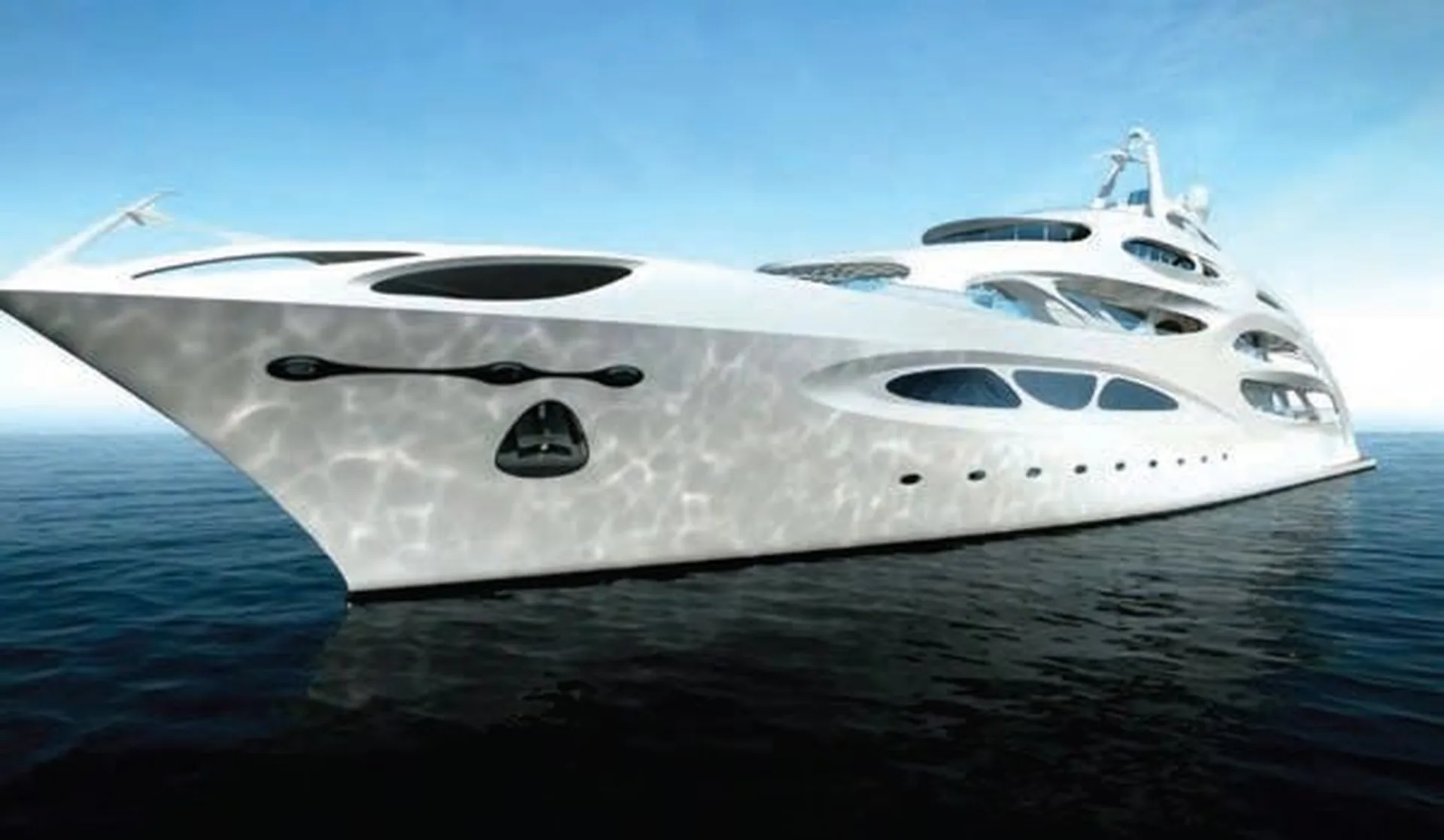
The imagination of the creators goes even further… Just for the sake of pointing out that the world of the wealthy doesn`t have any limits, it is sufficient to take a look at one of the latest projects, Admiral Force X 145, possibly the most expensive yacht in the world – more than 1 billion dollars. An ultra luxurious ship, with an extravagant design and many impressive chandeliers made of crystal, sculptures, marble pavements, two pools and heliports and several fitness gyms, spas, lounge areas, a garage and two cinemas. Large window-fitted spaces and a big circular glass-made stairs that connects the decks; the vast central bedroom is surrounded by a Zen garden and is lighted naturally by golden windows panes that imitate the form of space orbits. Of course, neither imagination nor power stop here… The sky is the limit!
Antalis, by Baglietto
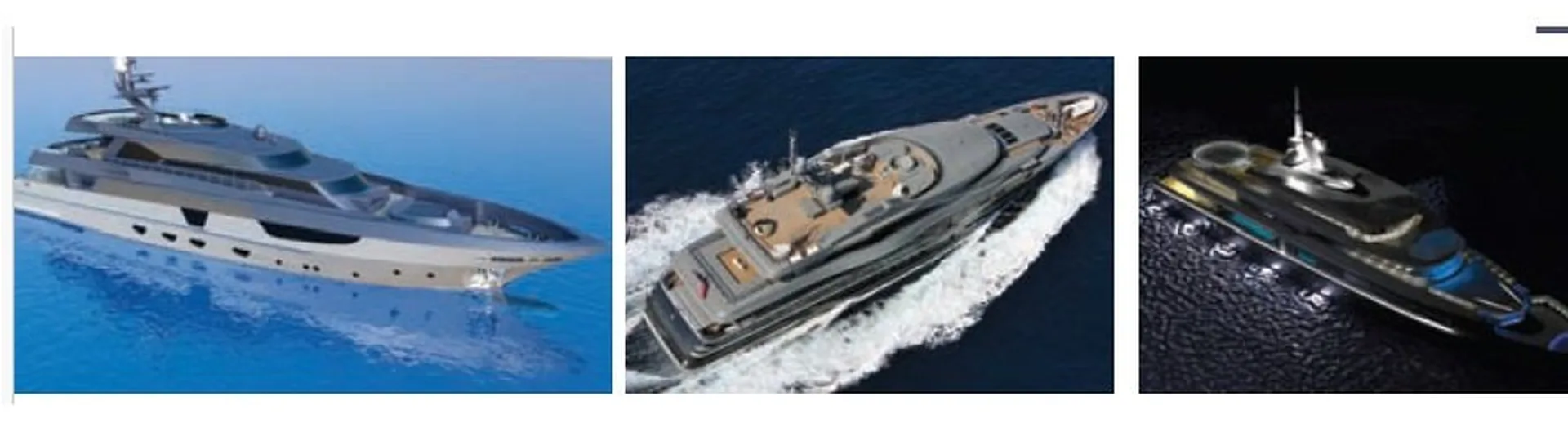
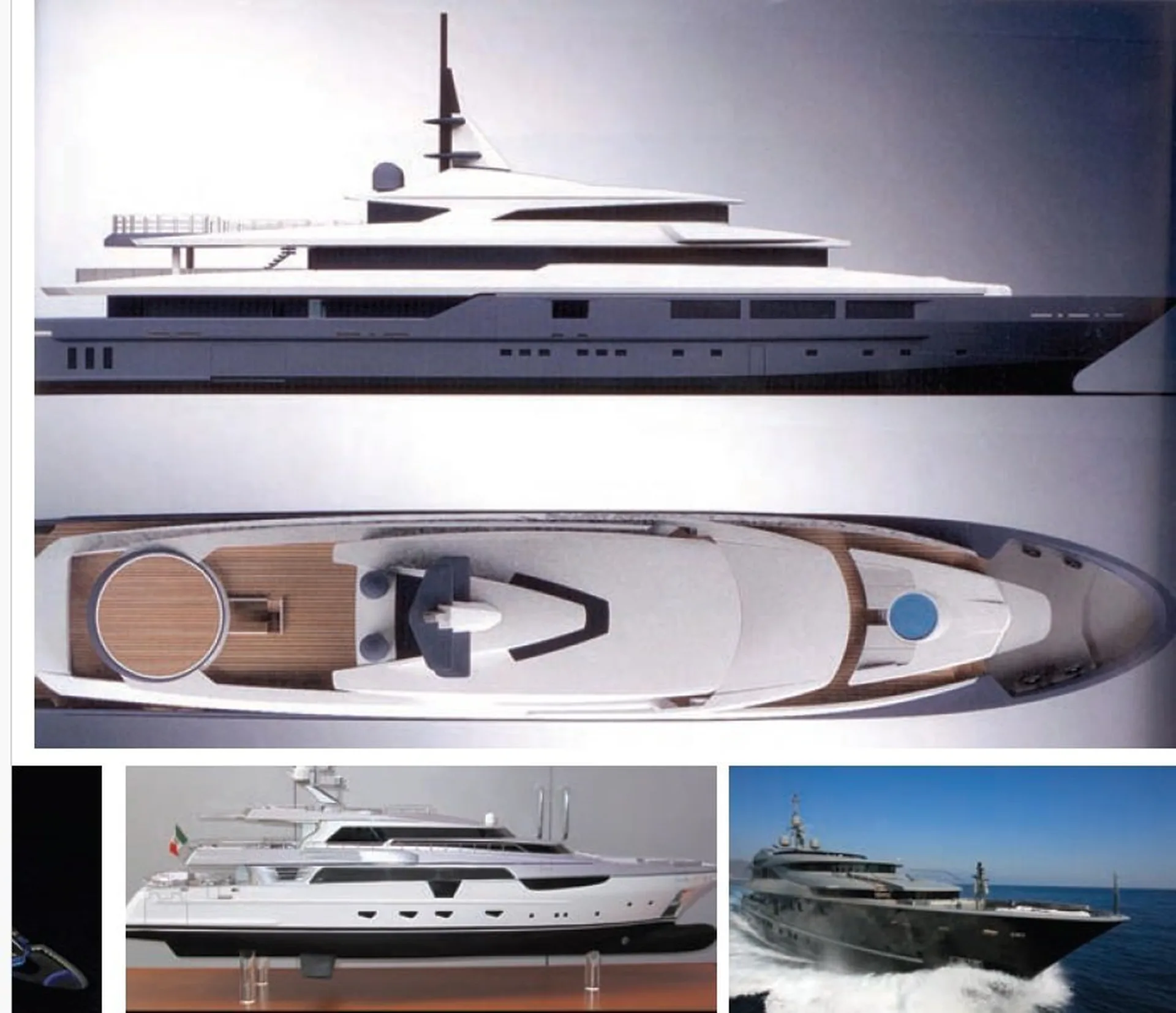
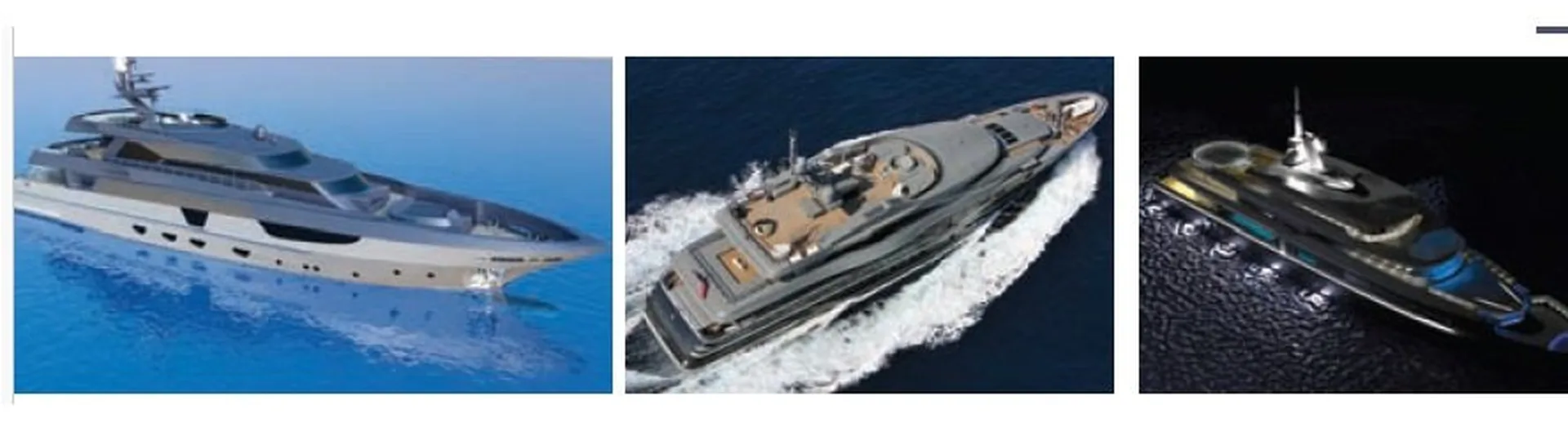
Antalis is yet another testament to the over 150 years of experience of the Italian manufacturer Baglietto. The yacht was designed and built with the utmost care for safety and comfort, in close collaboration with the nautical engineers of the Arnaboldi studio. Beyond the elegant exterior silhouette, the designers from Giugiaro Architettura also conceived the lighting project and the outdoor furniture. The interior is made in a modern minimalist style, combining a series of diverse materials, such as leather, teak, marble, aluminum and Barrisol stretch ceilings.
Sea Force One, by Amiral
The spectacular image and particularity of this yacht is the lighting work of architect Massimo Marzorati, which creates a show in itself only through the games and effects of colored lights. Each area is different in decor from the other, expressing diversity, but being united by the general characteristics of the boat: luxury, comfort, elegance and entertainment. Soft fabrics, leather floors and flexible ceilings describe a colorful atmosphere, versatile at night and warm during the day.
Tankoa S65-12, by Tankoa Yachts
The 65-meter yacht combines design with technology on the interior. Giugiaro Architettura creates an evolved luxury concept, which means bioarchitecture, ecology, harmony between technology and matter. On board the ship, innovative materials are found, which reproduce natural, but also scenographic effects. The interior staircase is no longer just an element that makes the transition, but becomes a decorative, refined one, along with precious finishes, glass that gives the impression of lightness and back-lit materials that form plays of light and volume.