by Bogdan Munteanu
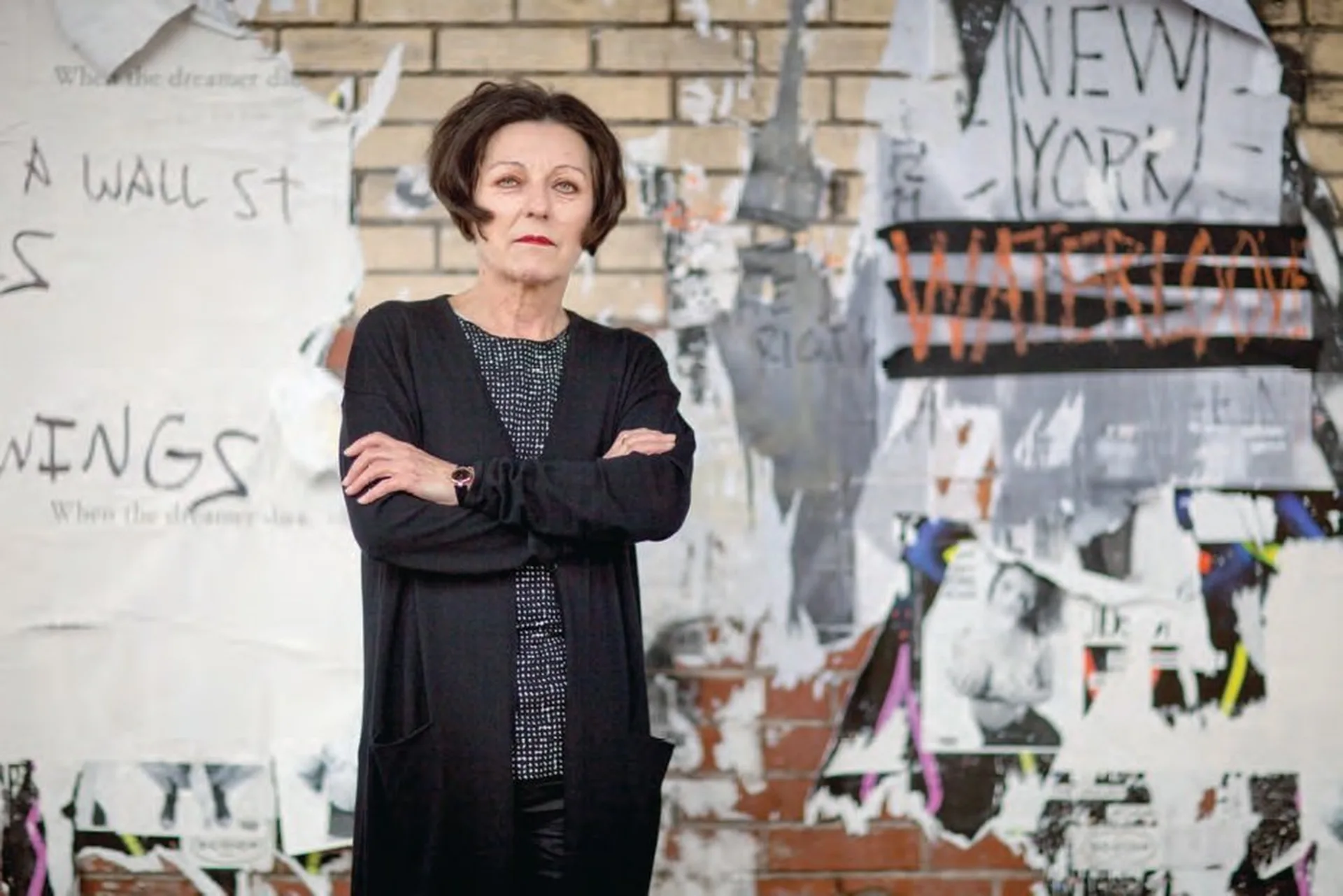
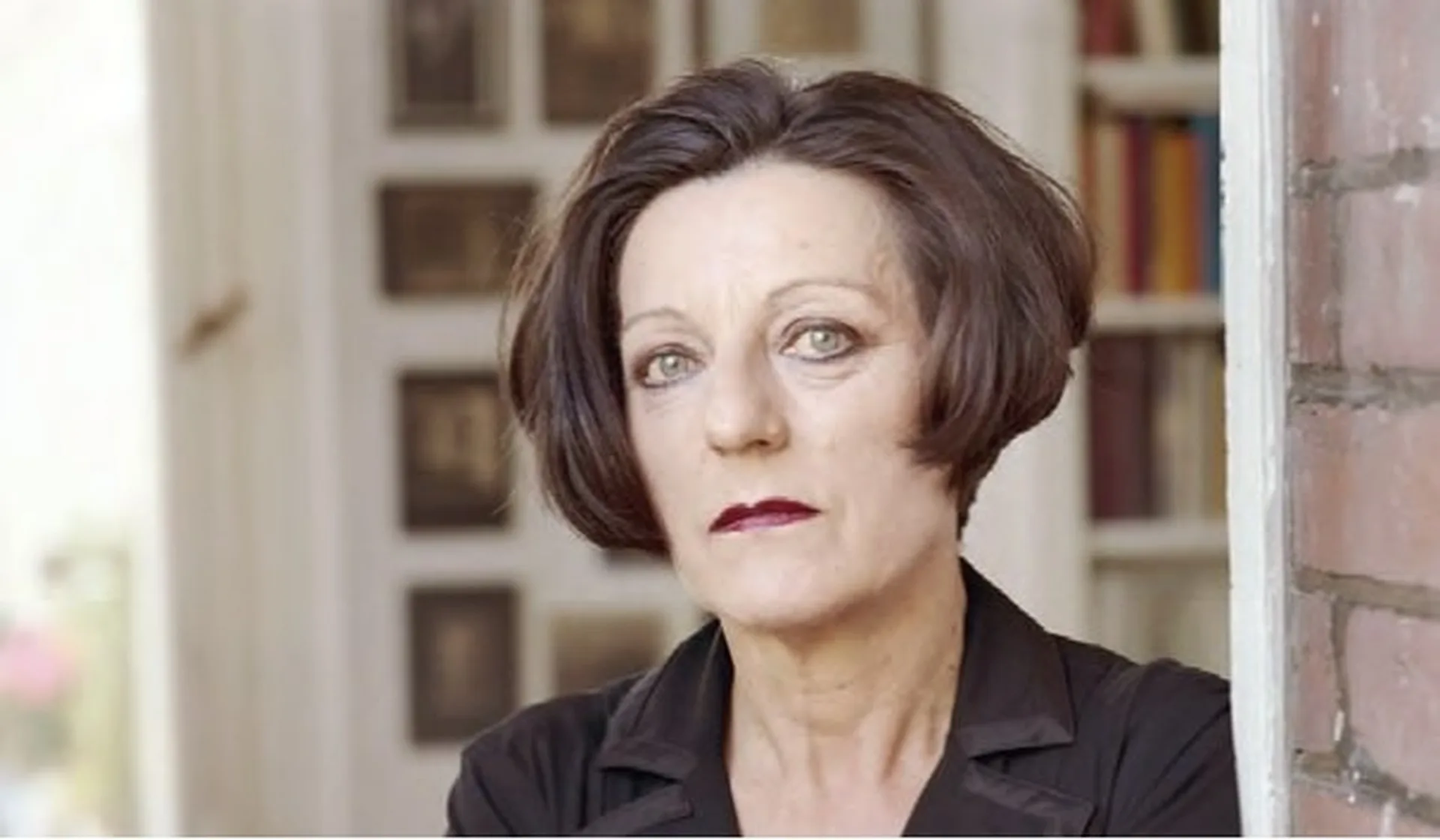
Describing her simply as “the winner of the Nobel Prize for Literature in 2009” is a phrase that doesn’t quite fit Herta Müller’s biography. Her life was rather a chain of bitter losses: she lost the right to a job befitting her studies; the chance to live normally, without the fear of being followed and even killed; the possibility to publish her (uncensored) books in the country of birth; and, like all emigrants, she lost her country, although she found a new home in Germany.
Harassed by the Romanian secret police (Securitate), she would refuse herself the thought of giving birth to a child in a realm of future-less insanity as Communist Romania had become in the 1980s. As a child, she struggled to understand why the German community she was born into was stigmatized. In her youth – she lived in constant fear. Later on, as a grown-up, she had to adapt to living in a new country. She has never had an easy, comfortable life.
Nor has she ever lived longing for material delights, so that the Nobel’s prize financial dimension (€ 950,000 in 2009) would make her life easier. In our hypermaterialistic times, many people envy ‘winners’. But who would trade their lives for the unenviable first half of Herta’s existence which was full of incertitude, fright, humility?
A life story
Born on August 17, 1953, in the village of Nițchidorf (Nitzkydorf ) Herta Müller is the daughter of Swabian parents, part of a German speaking ethnic group who had been living in Banat (Western Romania) since the early 1700s. By the mid 20th century, this community underwent dramatic changes that would shape Herta’s destiny.
During World War Two, Germans in Romania were either lured by the Nazi offer “to join the Motherland’s armed forces” or compelled to do so, only to be punished indiscriminately by the new Communist regime and the Soviet occupants. When Herta was born, the Communist grip over the country was getting stronger and stronger. Times were hard for everyone, but especially for ethnic Germans accused of collaborating with the Nazi regime. Herta’s grandfather, a hard working farmer and merchant would see his wealth confiscated. Starting with 1945, her mother spent five years in a work camp in present-day Ukraine before she could return to Romania.
As a teenager, Herta questioned her father about his blindness in joining the Waffen-SS and about not seeing the criminal nature of Hitler’s regime. Not long after expressing her inability to understand her father’s attitude, she realized that she was in a similar situation. Would she give in to the same sin as her parent, would she go with the flow, denying that there is anything wrong with the absurdity of Nicolae Ceauşescu’s dictatorship?
No, she decided she couldn’t do it. She would speak up anytime she could, irrespective of consequences. The opportunity to test her resolution appeared soon, sometime between 1973 and 1976, when she studied German and Romanian literature at the University of Timişoara. She befriended members of the Aktionsgruppe Banat, a literary society of young German writers who fought for freedom of speech. The group was dissolved by the Communist authorities in 1975, but Herta couldn’t avoid another encounter with the Securitate four years later.
Because she had rejected the State’s ‘repartition’ to work in a country school over 500 km away from Banat, she took a nerve-wracking job of translating technical specifications in an engineering factory. In 1979, she was approached by a secret police officer requesting her to become an informat. She repeatedly refused the offers to collaborate, so she lost her job.
From then onwards, she had to endure constant harassment from the Securitate, which took the form of permanent surveillance, searches of her apartment and death threats. In 1987, she would be ‘sold’ (that is allowed to emigrate) in exchange of 8,000 Deutsche Marks paid by the German State, as tens of thousands of other ethnic Germans were ‘exported’ by a dictatorship hungry for foreign currency.
Witness bearer of inconvenient truths
What Herta Müller writes about are not likeable topics, but they draw the interest of people who have experienced life in repressive regimes anywhere in the world, from Eastern Europe to South America. “With the concentration of poetry and the frankness of prose, [she] depicts the landscape of the dispossessed” – this is how the Swedish Academy justified their choice of Müller as Nobel Prize winner in 2009.
In the collection of short stories Niederungen (1982), which was censored in Romania, and the novel Drückender Tango (1984) she paints the way of living in a small German-speaking village, where peasants worked in a collective farm. The unflattering image of corruption, intolerance and repression put Herta at odds with the official literary critics of the Communist regime as peasant life in a Socialist country was supposed to be far more idyllic. Even fellow Swabians disliked her, as people from her village reproached her for having turned them into ‘literary characters.’
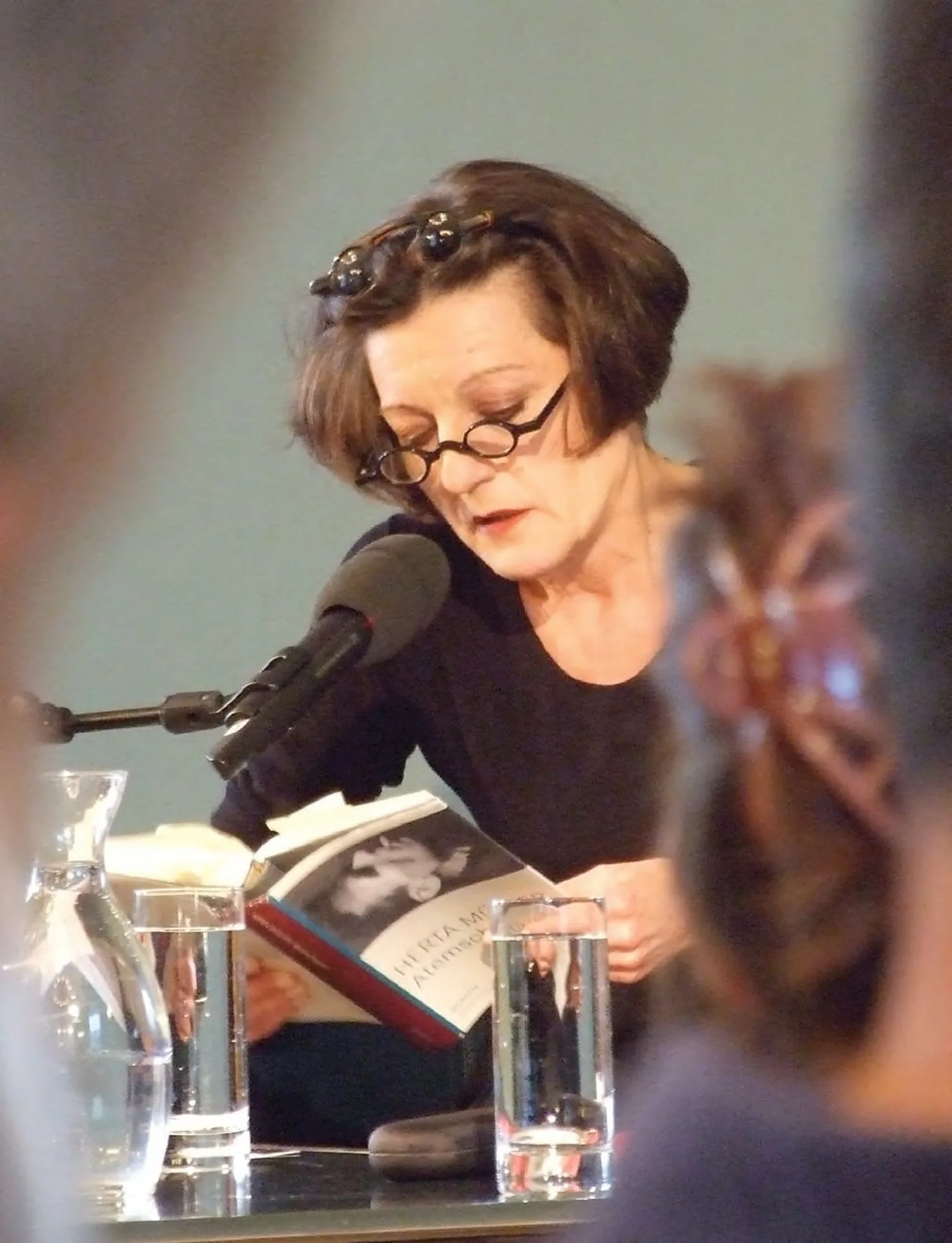
The novel The Land of Green Plums (1996) refers to the death of two friends, in which the author suspects the involment of the Securitate. Although fictional and only partly autobiographical, all her literary works are full of painful truths about life in Communist Romania. But the book that was praised most by the Swedish Academy was her 2009 prose poem The Hunger Angel (Atemschaukel in German, translated as Leagănul respirației in Romanian) about the deportation to the Soviet Union of some 75,000 Transylvanian Germans in 1945.
The book’s main character, Leo Auberg, was inspired by Oskar Pastior, a German from Sibiu deported when he was only 17. Although 26 years older than Herta, they developed a close literary friendship and intended to write the book together. They visited the sites of former camps in Ukraine and talked to many survivors, but Pastior died in 2006.
Since life often beats fiction, in 2010, Herta would be shocked and grieved to find out that even Pastior had signed an agreement with the Securitate. Earlier, she had also discovered that one of the Securitate’s informants who spied on her in the 1980s was one of her best friends of the time. It seems that even two decades after the fall of Communism, Herta Müller still hasn’t paid the entire bitter price that human beings must pay in order to set themselves free from an oppressive past…