by Bogdan Munteanu
None of Slovenia’s top 10 wealthiest people is outrageously and undeservedly rich – like it’s often the case with many nouveaux riches in most former Communist countries from Eastern Europe. Their combined wealth would only make up half of what Melania Knauss, the currrent Slovenian wife of billionaire Donald Trump, could inherit upon her husband’s death.
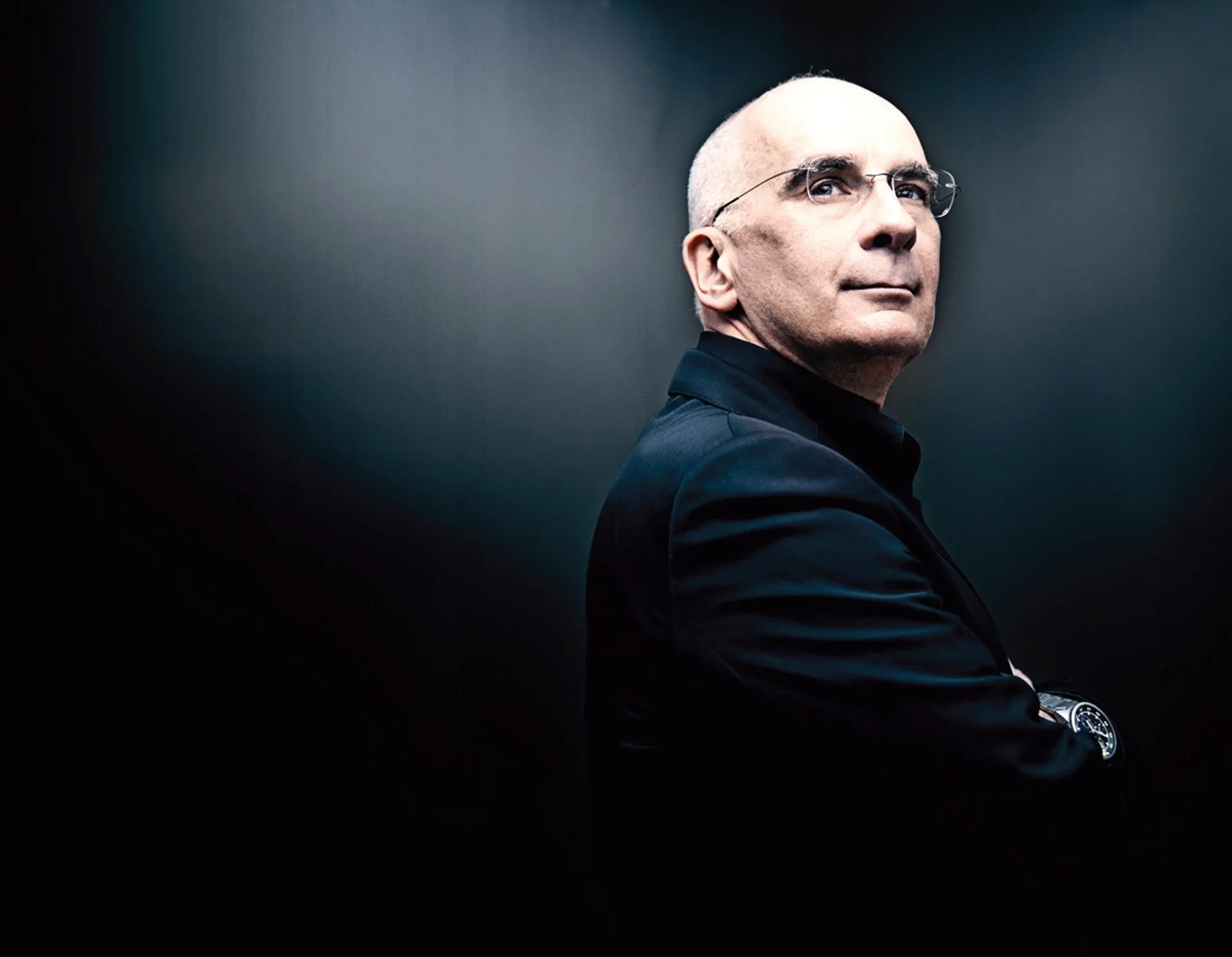
If there were a common thread to be traced in the lives of Slovenia’s richest, that would be a sort of ‘raw entrepreneurship.’ They started from scratch, had some brilliant ideas, and – thanks to sound business intuition and determination – they eventually made it to the top. This is how Igor Akrapovič did it.
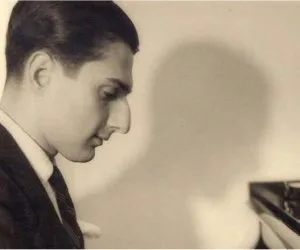
Some 25 years ago, not even he could have imagined that one day he would be worth some €100 million and be known as the 6-7th richest Slovene. He just wanted to make a decent living after two decades (1970- 1990) of glory in his sports career. Although he was Yugoslavia’s most renowned motorcycling racer, he was no one in business.
But that was no particular disadvantage. In a time when Communism was crumbling, no one else knew how to run a business; nor whether a hobby could end up helping someone earn a living.
Succeeding where others kept failing
To Igor Akrapovič that seemed a reasonable thing to do. What else did he know to do apart from delicately tuning engines in order to achieve optimum power and sound? During his racing years, he had learned how technical problems could be fixed and engines be improved. On the other hand, he had became aware of an insurmountable issue that motorcyclists stumbled upon: they couldn’t find high-quality exhaust systems.
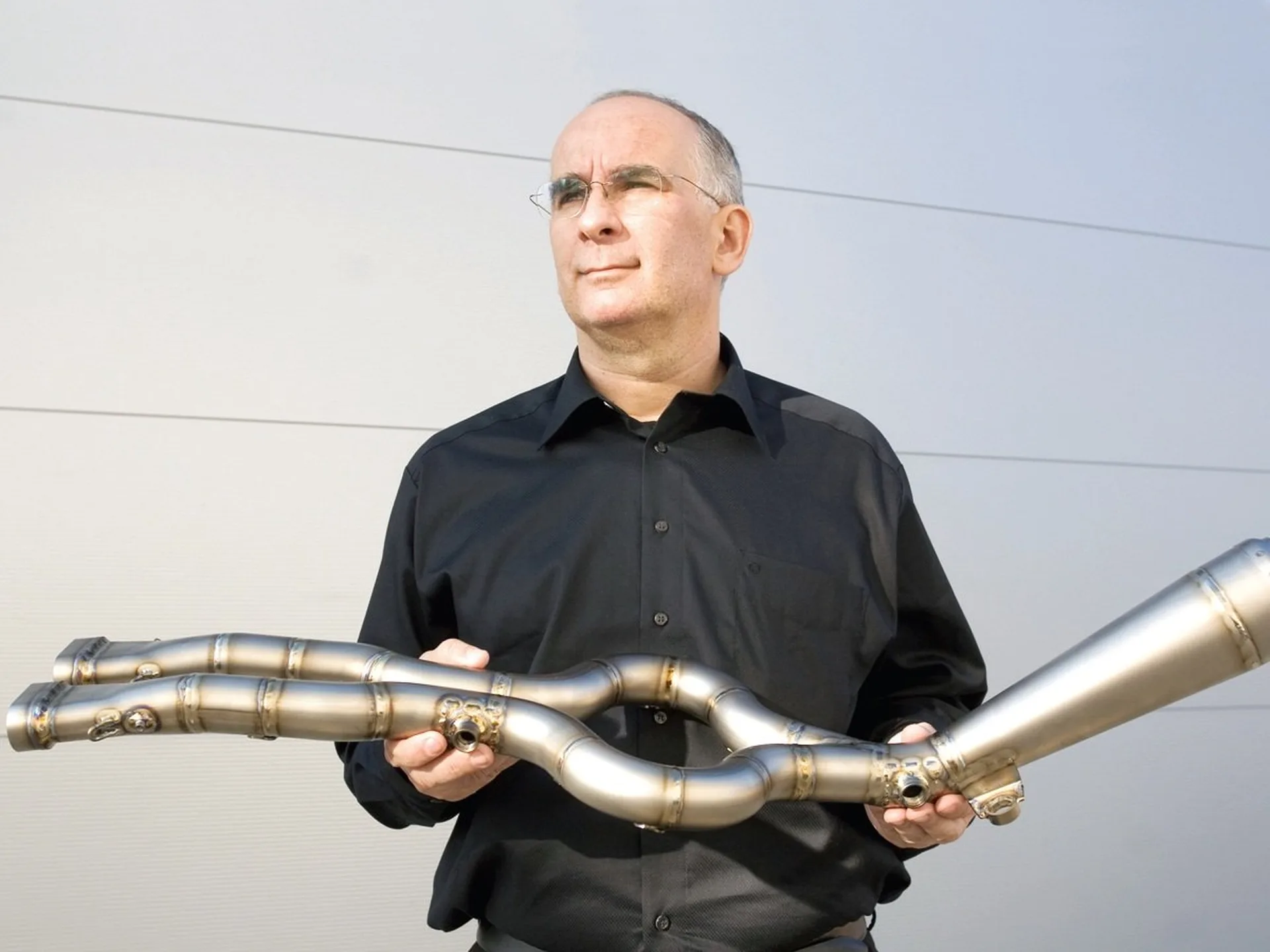
Exhaust pipe walls manufactured in Socialist countries were too thick. Their Western-made equivalents – somewhat thinner, but far from the ideal Igor yearned for – were too expensive. This made the former racing champion start working on some systems of his own, as he knew too well that the performance of an engine is significantly dependant on the quality of the exhaust system.
Short of financial capital and lacking essential machinery, Akrapovič could at least count on five similarly enthusiastic work partners. In just a couple of years, it became clear that he was as good at designing and building exhaust systems as he had been at racing.
In 1993, he invited Kawasaki Deutschland to test his race exhaust system. Much to their surprise, they discovered an incipient ‘technical revolution’ emerging in a 450 square meter house converted into a workshop. It was just the beginning of a ‘pilgrimage’ to the little town of Ivančna Gorica (45 km south of Ljubljana), that would eventually be made by all famous motorcycle makers among which Aprilia, BMW, Ducati, Honda,Yamaha, Suzuki…
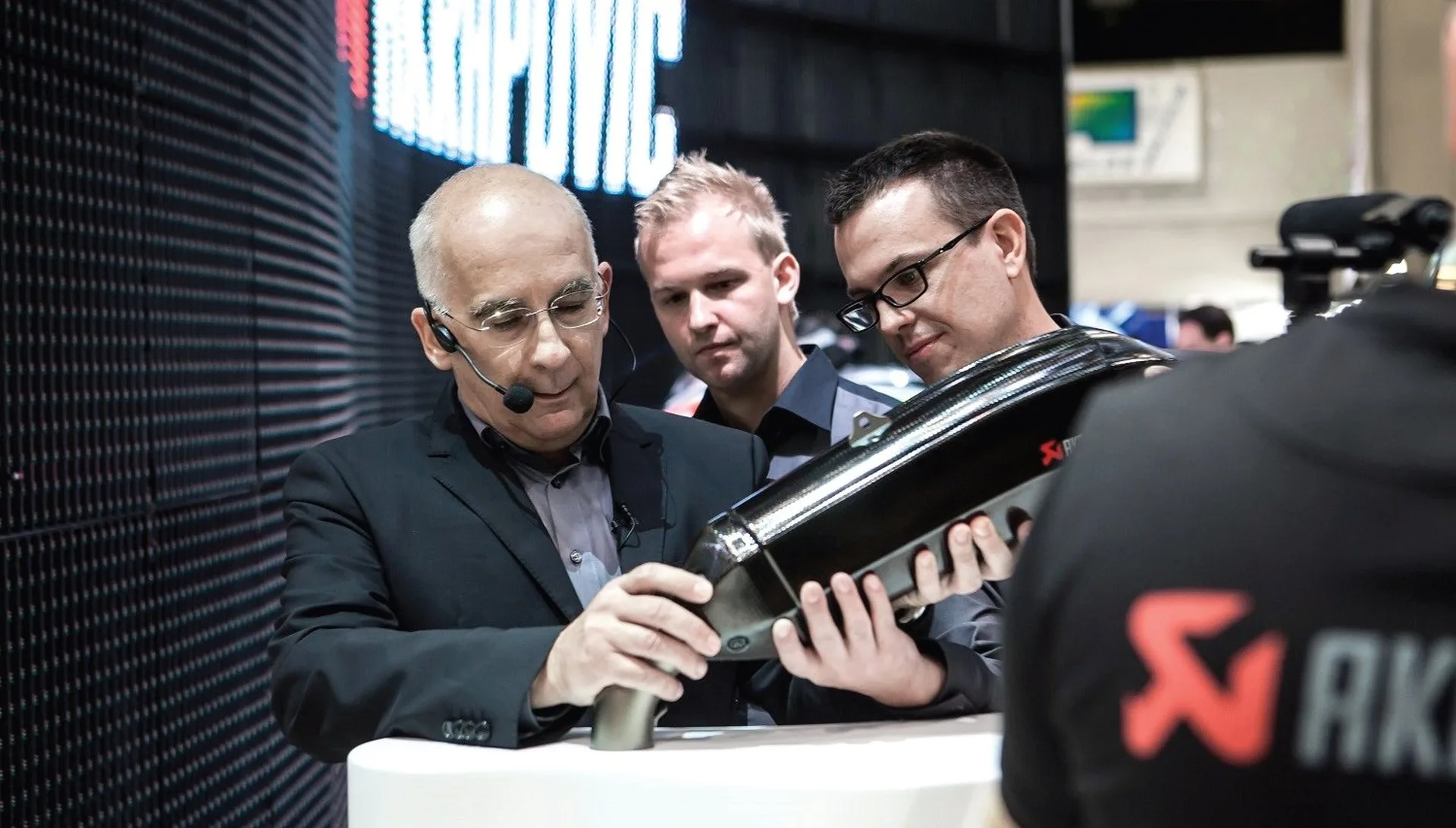
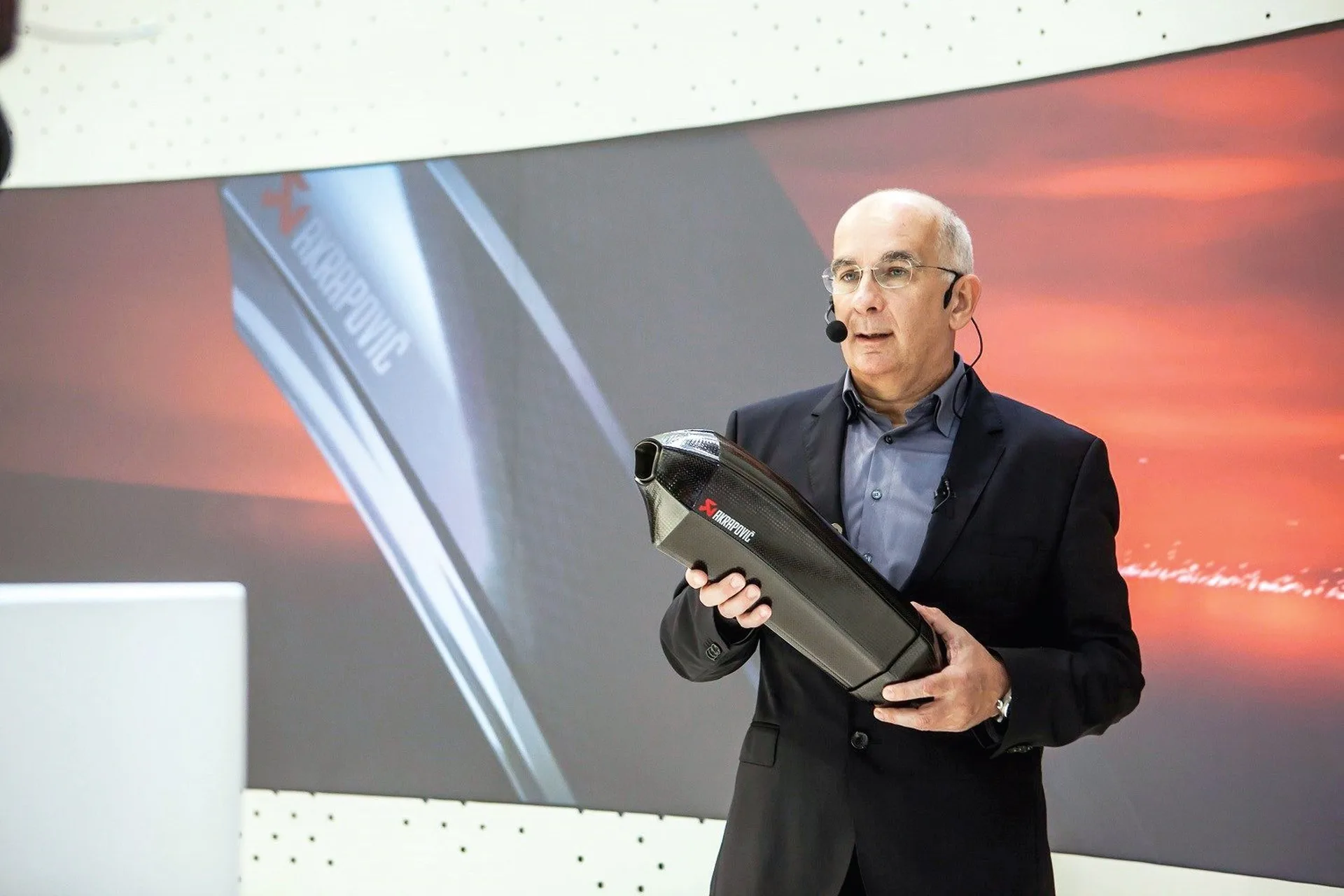
Igor would gather a team of like-minded technical experts and they would carefully listen to the demands of these fastidious clients. By replacing steel with titanium and carbon fibre, by perfecting every product as if it were an art sculpture, and by putting prototypes to ruthless tests, the little Slovenian company would gradually carve its way to world fame.
After the first victory of a biker riding a motorcycle equipped with Akrapovič’s exhaust system (1997), sales exploded in Germany. By 2014, Akrapovič’s craftsmanship had been certified by winning at least 80 championships in all possible car and motorcycle competitions. Outside the motorcycling world, the company is now a treasured supplier of Porsche and Audi.
Turning a Slovenian surname into a global brand
Such a steadily growing interest for high-performance exhaust systems required moving the production to a proper factory of 3,000 sqm (1999) and then to its more than fourfold expansion to 13,000 sqm (2010). Designed by Igor’s wife, one of Slovenia’s top architects, the factory created the premises for the company’s world domination of this niche market. As of 2015, close to three quarters of all top-quality exhaust systems sold in the world are made in Ivančna Gorica.
Yet the road to fame hasn’t been hassle free. Pressured to give up the firm’s original name, Skorpion, by Ford Motor Company’s lawyers – who argued that the name was prone to be confused with their Scorpio sedan – Igor turned his surname into a global brand. It wasn’t hard to do so, since the word ‘akrapovič’ means ‘scorpion’ in turkish.
In 2010, the Slovenian scorpion took a symbolic revenge. As Ford was struggling to repay the $5.9-billion governmental bail-out, Akrapovič was opening a subsidiary in California. But problems emerged from all sides, not just from the envious automotive industry.
Throughout the 1990s, as Yugoslavia was falling apart, managing the relation with suppliers was a constant mess. At one point, Akrapovič had to deal with 50 different importers. Slovenia’s accession to the EU (2004) simplified some things, but brought other constraints, such as the need to fulfill European emission standards. Also, functioning in a EU country adds other concerns: the rising cost of the workforce, the permanent quest for highly skilled workers, or the tax burden.
“The pay for people who have completed higher education is burdened with a 60% tax,” Igor Akrapovič once complained in Sinfo, a Slovenian government magazine. He’s not afraid to speak his mind: “There is an over-sized state administration weighing down those who are creating new value.” Also, he bemoans the fact that, because of Slovenia’s progressive tax system, “it is the hardworking and the capable who are taxed, not the rich.”
Nevertheless, none of these obstacles ever discouraged Akrapovič. A resilient entrepreneur, he has never considered moving production elsewhere or transferring his wealth to a tax haven. On the contrary, he has been investing tens of millions of euros in research & development, purchasing the latest production equipment and paying for the training of his employees.
The jolly scorpion who still enjoys his hobby
When thinking about a predatory arthropod like a scorpion, most people imagine a ‘stingy’ creature, but that would be the opposite of Igor Akrapovič. On numerous occasions he cheerfully declared himself “lucky to have made a hobby that I loved so much into a job”. Having now retired from managing the company – but still working all day long on devising even better exhaust systems – he’s still concerned with making his employees feel equally lucky that they work for him.
Their wages are up to 100% above the average pay in Slovenia. The company struggles to hire the best and to offer them unequalled working conditions. Though educated only to the level of technological high school, Igor describes himself as a ‘self-educated’ man who reads a lot, shows interest in many things, has innovative ideas that he dares to put into practice and, above all, keeps on learning by doing, that is by tinkering with engines.
This is the kind of people he likes to be surrounded with, part of a big family of motorsport enthusiasts, and he can’t imagine Akrapovič’s success without them. “In order to run a successful business, hard work is necessary, as is constant investment in the company and honest working relations with the people”, he believes.
Unassuming, Igor doesn’t see anything special about himself: “Anyone in Slovenia can be an entrepreneur. The problem is that not everyone is prepared to put in 14 hours of work a day while taking professional and personal chances. At one time, for instance, I had to mortgage all of my property. The fact is that entrepreneurship brings a great deal of risk with it.”
„Anyone in Slovenia can be an entrepreneur. The problem is that not everyone is prepared to put in 14 hours of work a day while taking professional and personal chances. At one time, for instance, I had to mortgage all of my properties. The fact is that entrepreneurship brings a great deal of risk with it.“
„Anyone in Slovenia can be an entrepreneur. The problem is that not everyone is prepared to put in 14 hours of work a day while taking professional and personal chances. At one time, for instance, I had to mortgage all of my properties. The fact is that entrepreneurship brings a great deal of risk with it.“