by Ciprian Plăiașu
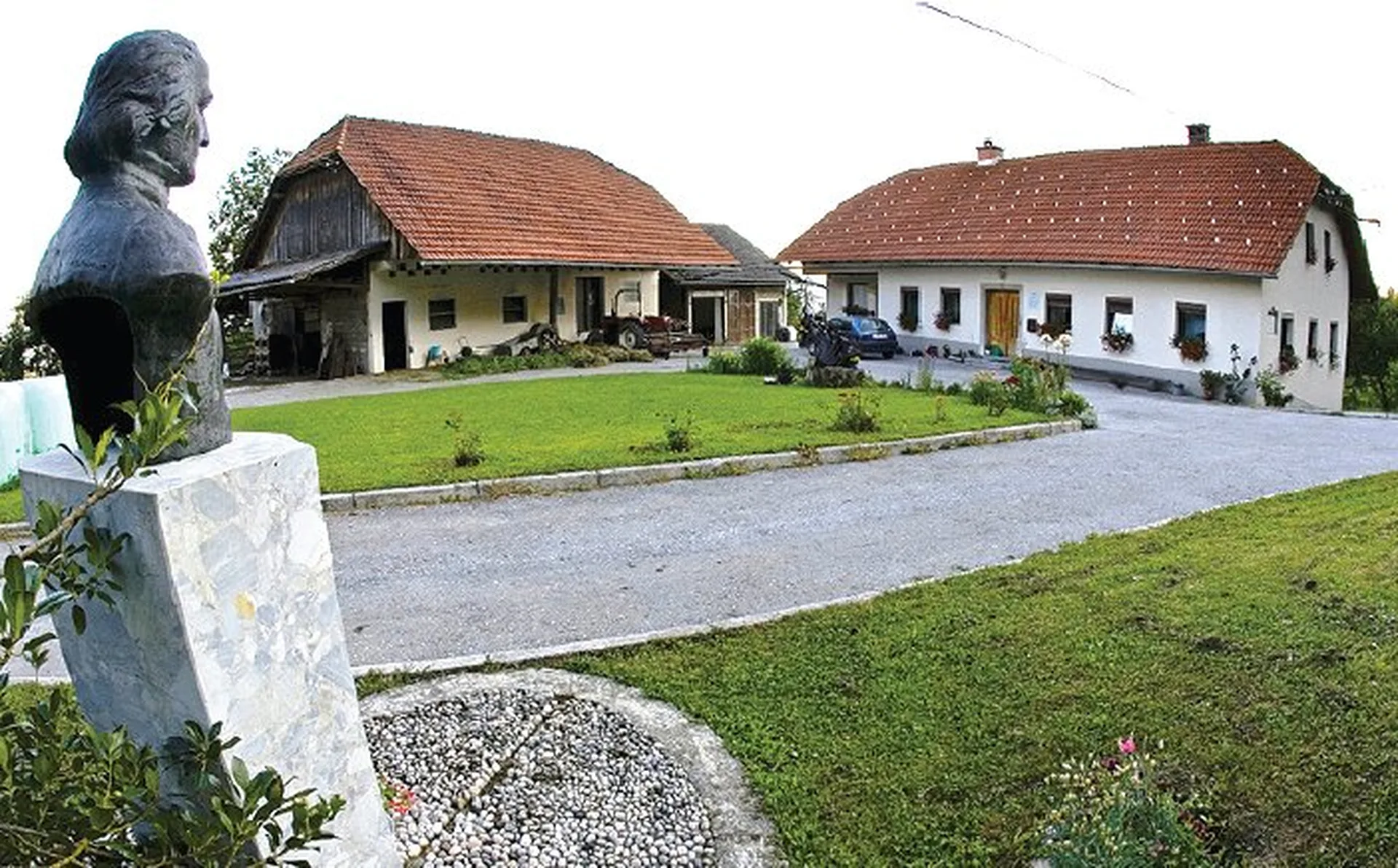
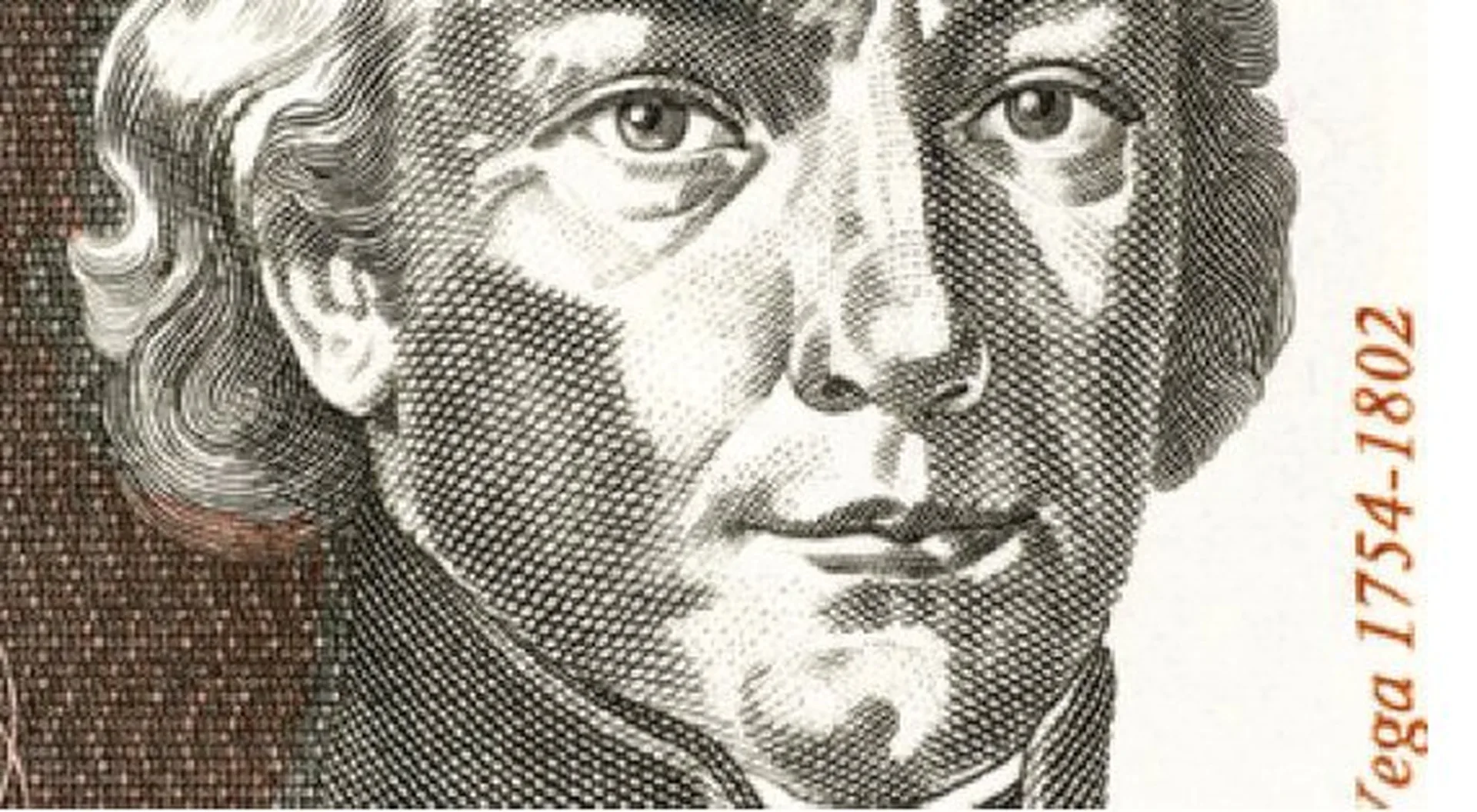
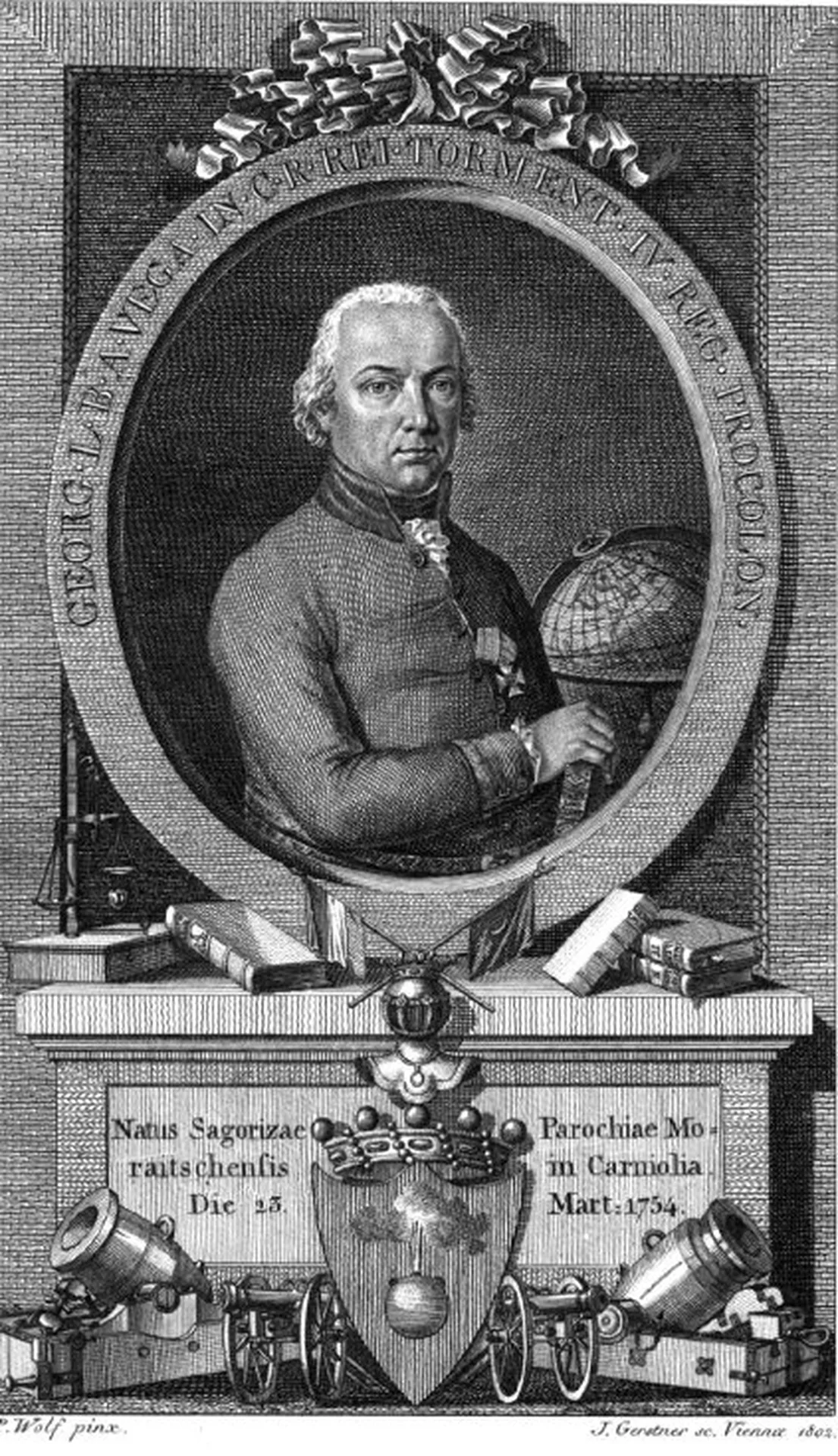
Baron Jurij Bartolomej Vega was born on the 23rd of March 1754, being a simple farmer`s son in a small village East of Ljubljana, within a national minority – this was the status of the Slovenians at that time within the Habsburg Empire. Jurij was part of a large family and his parents had kept him in school for a just short period of time. He started his studies in Moravče and right from the beginning his teachers observed he had a genius for exact sciences. Yet, in 1767 he had to take his life into his own hands. His mother, left all alone, didn`t want to keep him in school anymore and Jurij, a teenager at that time, had decided to join the gymnasium at the Jesuit School. When Pope Clement XIV disbanded the school, his teacher recommended him to continue the studies at the Ljubljana High School, which he did. In 1775 he was already a navigation engineer and one of the brightest in his job. A list with the question he received at his final exam, tentamen philosophicum, was preserved and can be seen today at the Math Library in Ljubljana. The subjects cover a large area of fields: logics, algebra, metaphysics, geometry, trigonometry, geodesy, stereometry, the geometry of curves, ballistics, general and special physics.
The years spent in the Army of the Habsburg Empire
Jurij Vega realized that he was unable to go very far with his job, so a few years later, he followed his passion for math and decided to voluntarily join the imperial army to be able to teach at the Artillery School in Wien. This is the point when he renounced his original name Veha and started signing by Vega.
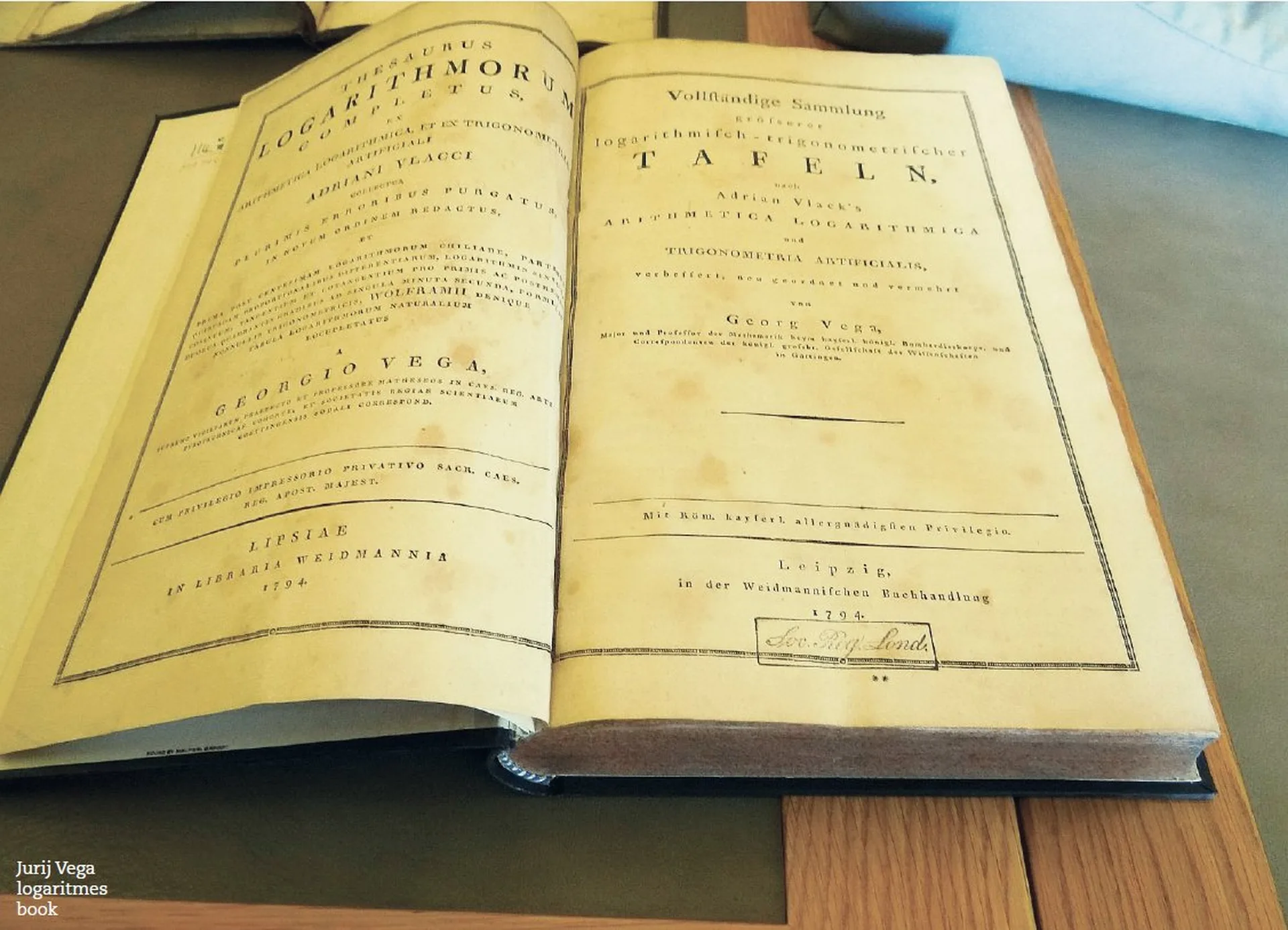
After his first year of teaching he was already promoted a sub-lieutenant. He was a talented teacher and writer who had a great ability for mathematical calculations. He soon realized that teaching math was difficult because there were no good manuals available at that time. This is why he started writing. His first math book was published right that year, in 1782 and was called Vorlesungen über die Mathematik (Math teachings). Up to his death in 1802, four more volumes of this book were to be published. Before the publishing of the second volume, Jurij Vega has also published the first book of logarithms tables: Logarithmische, trigonometrische, und andere zum Gebrauche der Mathematik eingerichtete Tafeln und Formeln (1783). These logarithms books made the Slovenian mathematician famous until the emergence of the computer.
He was calculating logarithms with cannon balls pinging over his head
In 1787, Jurij Vega married young Josefa Swoboda, the daughter of a Czech nobleman. He continued to be preoccupied with math, with the publishing of various works and with the teaching of exact sciences. The next year we find him on the battlefield during the war between the Habsburg Empire and the Ottomans. He participated under the command of field marshal Ernst Gideon von Laudon (1717–1790) at the Belgrade siege. The cannon lead by Jurij Vega had an important contribution in the conquest of this fortress controlled by the Ottoman Empire. There is a description of him according to which the mathematician was calculating the logarithms and the trajectory of his cannons with balls pinging over his head.
His remarkable calculating ability brought him a world record: the calculation of π with 143 decimals – 126 out of them being accurate. Nevertheless, his record lasted more than 50 years. He continued to publish all sorts of math works, logarithms tables and also he served the imperial army on the battlefield. Between the years 1793 – 1797, he had participated in several confrontations between the armies of the European coalition and the French revolutionaries, under the command of General Dagobert- Sigismond de Wurmser (1724–1797): Fort Louis, Mannheim, Mainz, Wiesbaden, Kehl and Dietz. In the 1795 Mannheim battle he was responsible for introducing a new type of cannon that had a range much bigger than that of all the other models used back then.
In this same period of time he had also published the Thesaurus logarithmorum completus, one of his table books that remained a reference in the history of this subject.
1800 is one of his most difficult years. His wife died suddenly and after a few weeks his daughter Maria Theresa passed away too. Left with the two boys, the empress granted him the imperial baron title.
The strange death of a great scholar
His death was suspicious and mysterious. On the 17th of September 1802, he was declared missing in mission. A few days later his body was found in the Danube waters, at Nussdorf, near Wien. The official cause of death was accidental, but there were suspicions that he either committed suicide, or that he was murdered. The best known theory is the one implying that he was killed by a miller man while he was negotiating the buying of a horse. Unfortunately this presumption was not verified, yet it is said that, one year later, the compass engraved with the letters J.V. was fond in the mill.
The Slovenian mathematician`s particular contributions were recognized also during his time – he was a member of the Berlin Academy, of the Prague and Erfurt Academy, but also afterwards. For example, the asteroid 14966, discovered in 1997, was named Jurig Vega, to honor this great mathematician. Yet, in the era of speed and computers, when we can calculate thousands of decimals for π, it is a shame not to remember a man who has built his destiny in all honesty and glory, and who can represent a model of passion and tenacity for any of us.