by George Păunescu
Sharing means caring. This is a simple phrase that is circulating in the contemporary world; some people may have heard of it, some people haven`t. We share certain things with others by our choice, while other things, due to their nature, we are constrained to share.
There are some things that we don`t even care about. One of the things that we share with other people without caring too much is the light of the sun. There may be some exceptions – people who pretend that the sun is shining only for themselves -, but the fact that we all share the light of the sun is generally accepted. Yet, this obvious communion doesn’t makes us completely responsible, doesn`t push us to care enough, if not about us as a society, at least about the natural resources that we are enjoying so carefree.
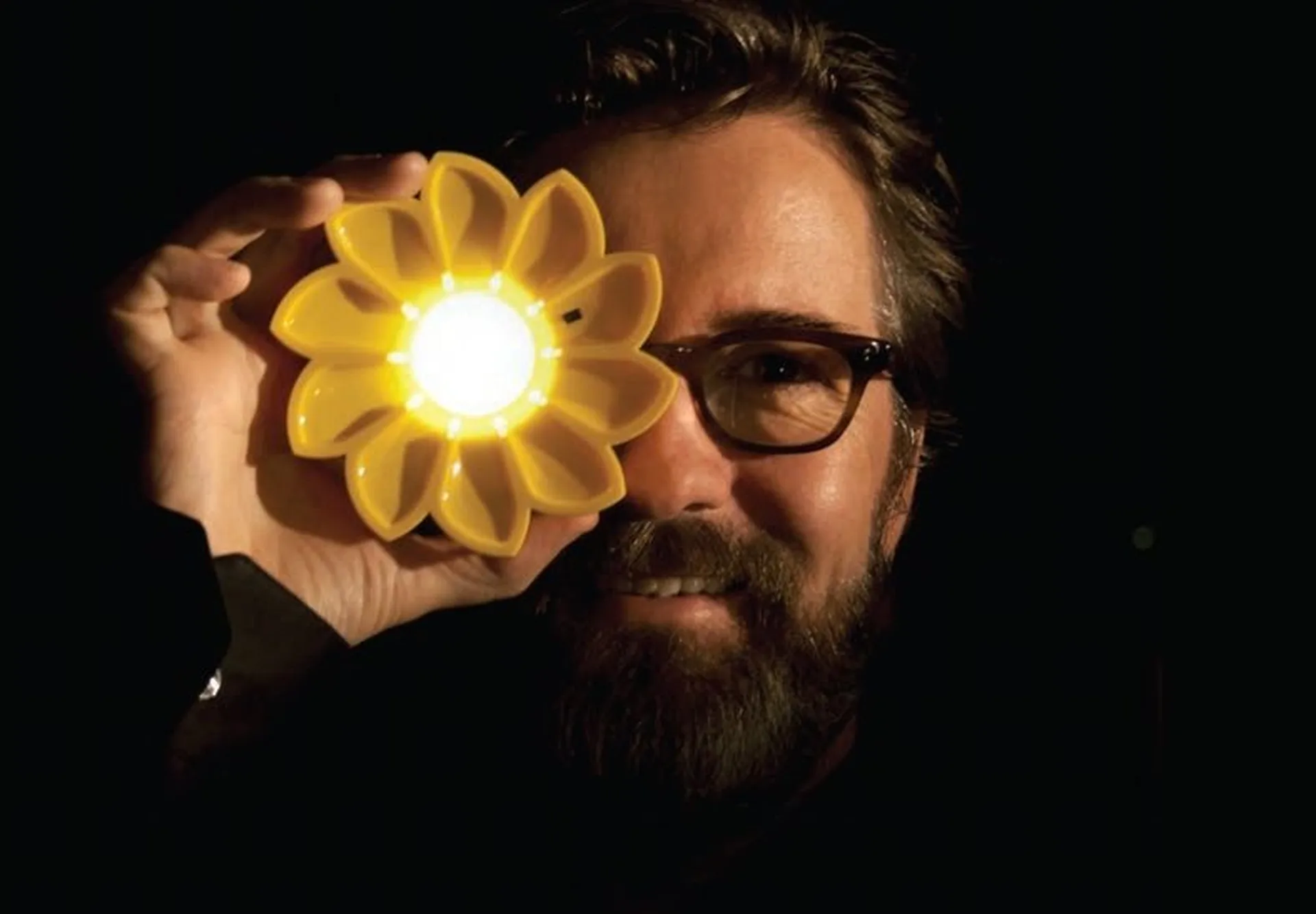
The work of artist Olafur Eliasson comes as a help in this awareness gaining process. Little Sun is a work that has emerged as collaboration between an artist – Olafur – and an engineer – Frederik Ottesen – who shared each other’s knowledge in order to create this solar lamp of just a few centimeters in size. Launched in July 2012, at the Tate Modern Museum in London, Little Sun seems to be following another project that the artist had displayed at the Tate – the installation called The Weather Project.
An artificial sun is diving on the engine hall inside the museum; a hall that is taken over by a fine fog, covering everything with an orange hollow that comes to define this space. The experience of sharing this unusual space with the people who are visiting the exhibition makes us realize what it means to share an environment with other people and it reminds us that every action has an effect on the surrounding environment and onto the others. A simple hand shaken more vigorously can lead to the movement of the fog, thus it affects the environment in which our neighbors are also living in.
The message that Eliasson seems to convey through this installation is We are all in the same boat, and, if we were to take things at a more abstract level, The Weather Project is pushing us to think about the responsibility we have towards the environment in which we live and about the way in which our actions are affecting this environment, together with all the people who are inhabiting it. The climatic changes that arose in the last few years are no longer a secret for anybody, yet it seems that we need experiences like the ones provided by Eliasson`s project to be able to understand these obvious things because we started to care about them too little.
A lamp to inspire thought
Almost ten years later and in the same place, Olafur Eliasson comes back with a similar project, but in a much smaller size (with regards to the actual making), but more extended as an influence to the world outside the museum. Little Sun represents a lamp fueled only by solar energy, in the shape of a stylish sun. It is very much a functional object, mass produced. A design object, at best, but it would be difficult to present it as a work of art.
However, it is an object that was introduced into a very famous museum. What does this lamp have that is so special? We should stop looking at it and focus on the environment in which it sheds its light. Although it has some clear esthetic qualities, it facilitates the thought on the world in which we exist. It talks about unity and about the things we all have in common… The symbolic of the object is quite clear. The sun is one of the elements that belong to everyone, and its light is one of the natural resources that are most handy to humans. Little Sun wishes to make us meditate on the forgotten importance of this wonderful resource. This is where the social project behind the art comes is and completes the work. The solar lamps were designed as a mean to provide a clean, sustainable and accessible source of light in the world`s regions where electric light is missing out. It may seem surprising, but almost 1, 6 billion of the inhabitants of this planet are lacking this utility. For them, lighting objects are considered a luxury.
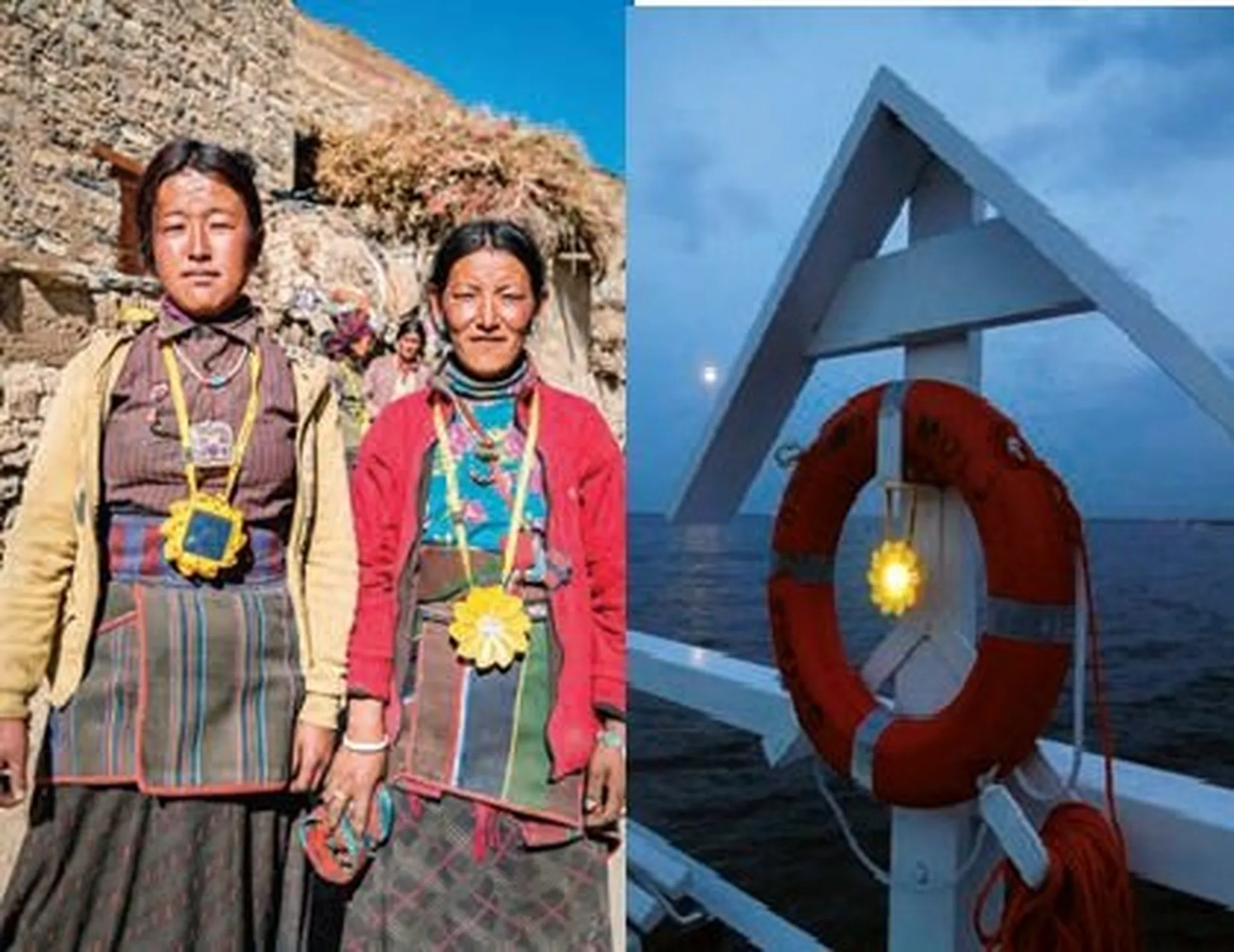
Little Sun represents an accessible source of light for more than 12 countries in Africa. Here, they are using kerosene lamps to produce light and we all know about how toxic that is: spending an evening with this lamp equals to smoking two packs of cigarettes. But the small object is providing accessible light also in other regions from India, China, Japan, or Europe and America. Little Sun is an alternative to these health damaging forms of lighting and it is a project that draws the attention not just on the lack of electricity in many areas around the globe, but also on the effects of the excessive use of energy. Since its launch on the market in 2012, and up to the end of 2015, the result was a reduction of dioxide carbons emissions with more than 20,300 tons. Little Sun sold 170,000 pieces that saved 4, 9 million dollars in the areas lacking on energy.
The approached social business model is as interesting as the rationale of its trade, thanks to the involvement of some local entrepreneurs. The selling price that is a bit higher in the developed countries allows the distribution to some entrepreneurs form Africa, India or China who can sell the lamps to the finals users at an accessible price. The users succeed in replacing the kerosene lamps with a solution that is more ecological and cheaper.
Both a work of art and social activism project
What is Little Sun? A designer`s object? Is it a simple functional object? A conceptual work or the image of a social activism project? Eliasson was interested in finding out how is it possible to take an idea about the world we live in and put it into a work of art that, in its turn, can shape out the world. The starting point of the artist is quite simple. The sun is the common element we all share. With regards to this relation, Olafur doesn`t emphasize the Sun (the work of art), but on “we all” (the public at large). Like on a sunny day in the park, the Sun that made this day possible remains in the back and our focus moves on the surrounding environment. Playing the role of a glass, Little Sun turns the image on the environment that it projects, helping us understand that in this environment the equality of rights is implied. There are people for whom electric light remains unavailable. Realizing some ordinary things leads to overcoming the indifference and to a form of social activism that is beneficial, not only to the individuals, but also to the natural environment.
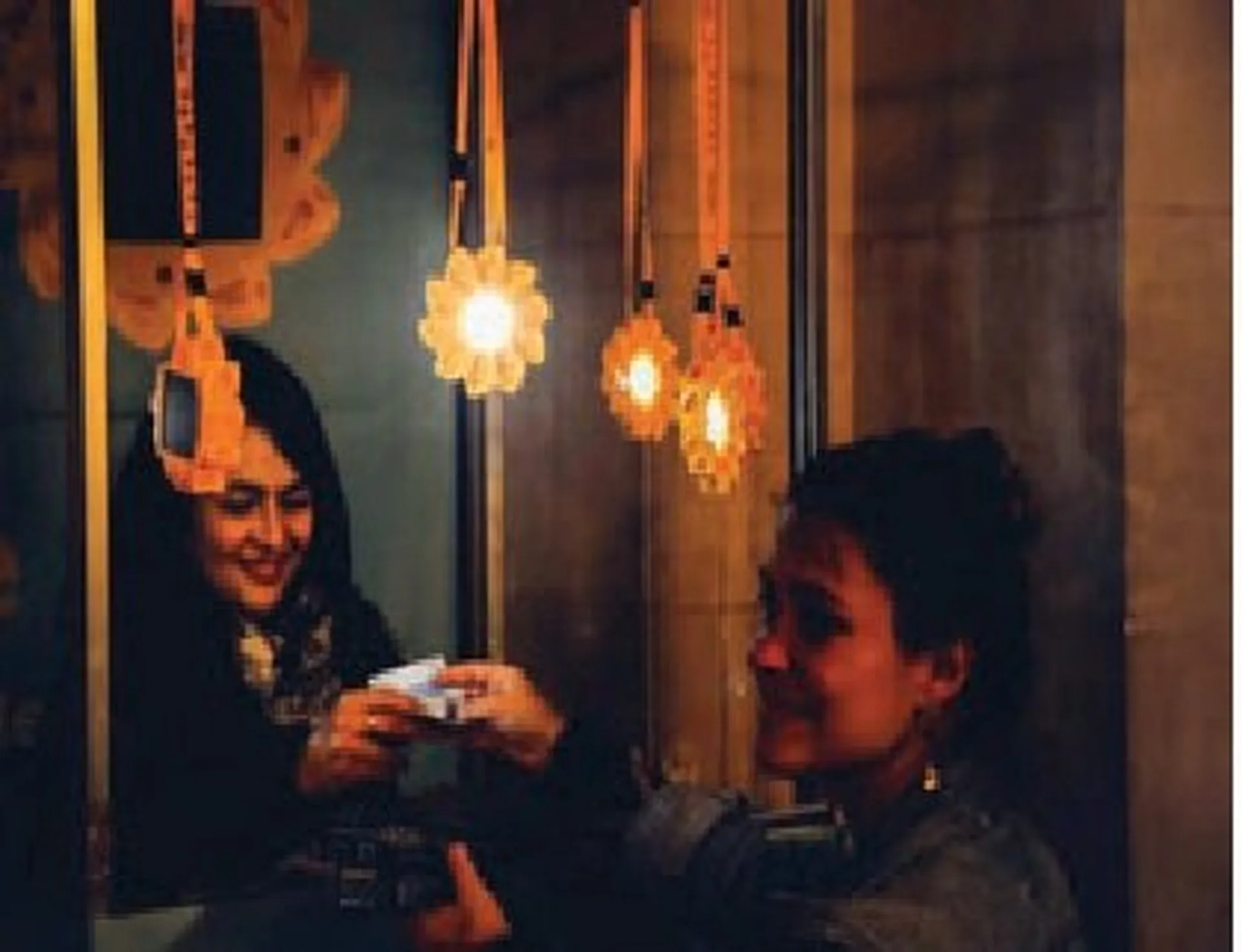
Little Sun doesn`t produce only an abstract light. It has the power of illuminating the world around us in the most concrete way. It is a work of art, if not through a cultural tradition or through the institutional acceptance, but certainly through the perception of the public about it. Olafur loves the ambiguity of this sort of objects that are not necessarily his own creation, but where the public itself plays a role in the process of creation. Eliasson`s lamp presents esthetic traits, but that`s not all it does; it invites the person who owns it to provide artistic features to the environment in which the lamp is being placed. The public completes his creation as a work of art and not just as a functional object. It is a decorative element that can make anyone become a scenographer who is playing with light effects; a substitute of candles for a romantic dinner; a decorative element for the Christmas tree or for the Halloween pumpkin. It is a locket added to the daily outfit.
Since its emergence, Little Sun was present at several public events, playing the main role in these modern pageants of a desecrated world. From the lamps held by children who participate at workshops and learning about the importance of solar energy and its usage, to the gardens full of lamps at the Roppongi Art Night Festival in Japan (2015), to the ceremony of the Sustainia Award (2013), Little Sun incents the public to interact and to perceive it as a work of art. Several photographical clichés have captured the most beautiful images where this small lamp is present, proving one more time its potential to “open the eyes” of the beholder, to see the artistic features of the environment in which he lives.
A poem of visual arts
In fact, Little Sun can be seen as a poem of visual arts. By using one of the best known metaphors that indicates art – the light (without which the space, as we understand it, wouldn`t exist), Little Sun represents a speech on the light`s purpose to create the environment, to shape a space and to bring it to life. The same way light has the capacity to define space, to provide shape and color, the same way the public has the power to change and shape the surrounding environment. Having this ability to change the world they live in, the public resembles to the artist, and the artist defines himself through the ability of publicly strengthening the belief that intervening on the world has a meaning - it can change the world; either in an ecological, social or esthetic meaning. With all of these, Little Sun succeeds in getting closer to the purpose that Eliasson is looking for. It represents a work of art which has an effect in the concrete existence; it shapes the world we live in – the same world we all share, under the same sun.