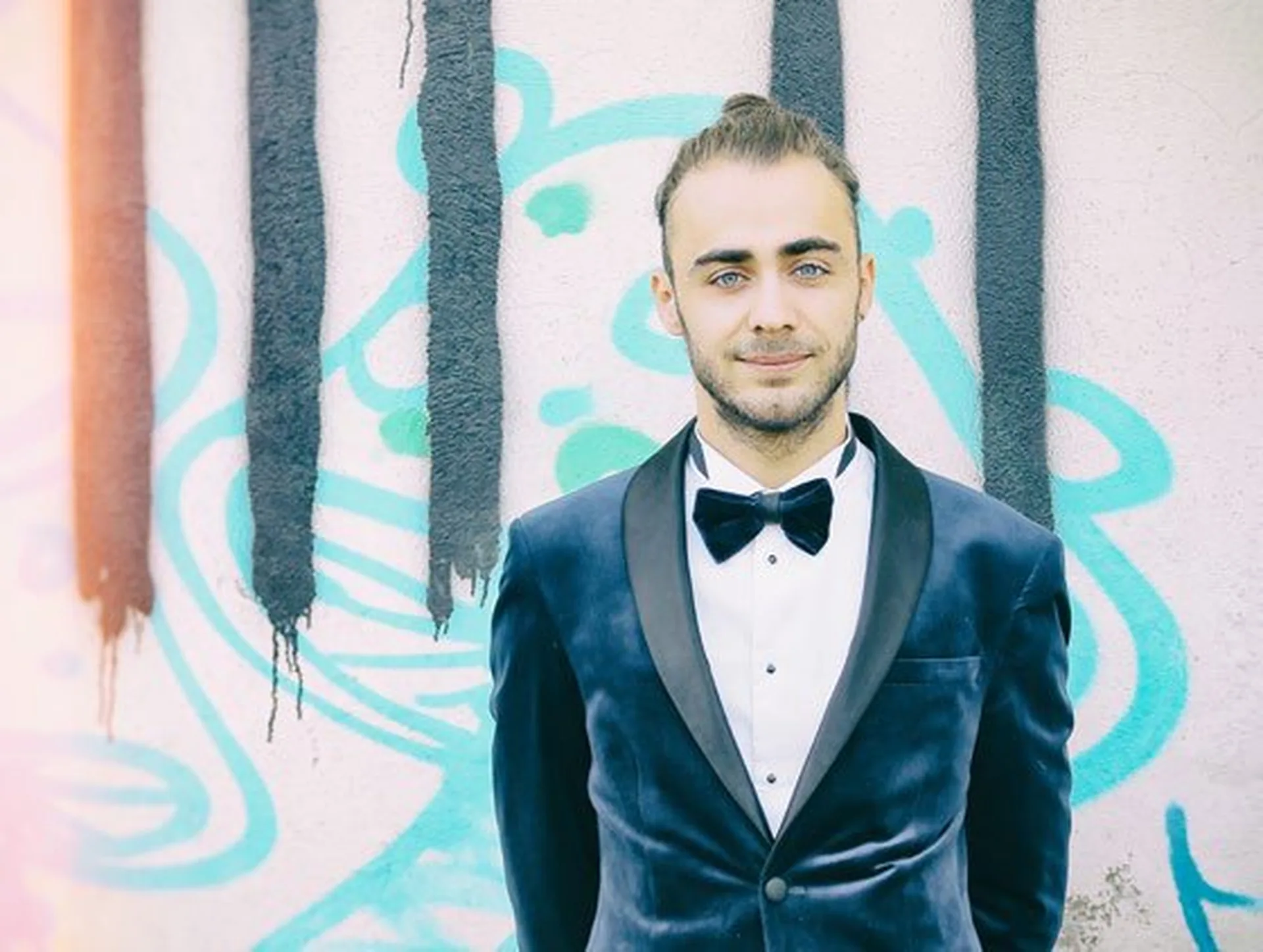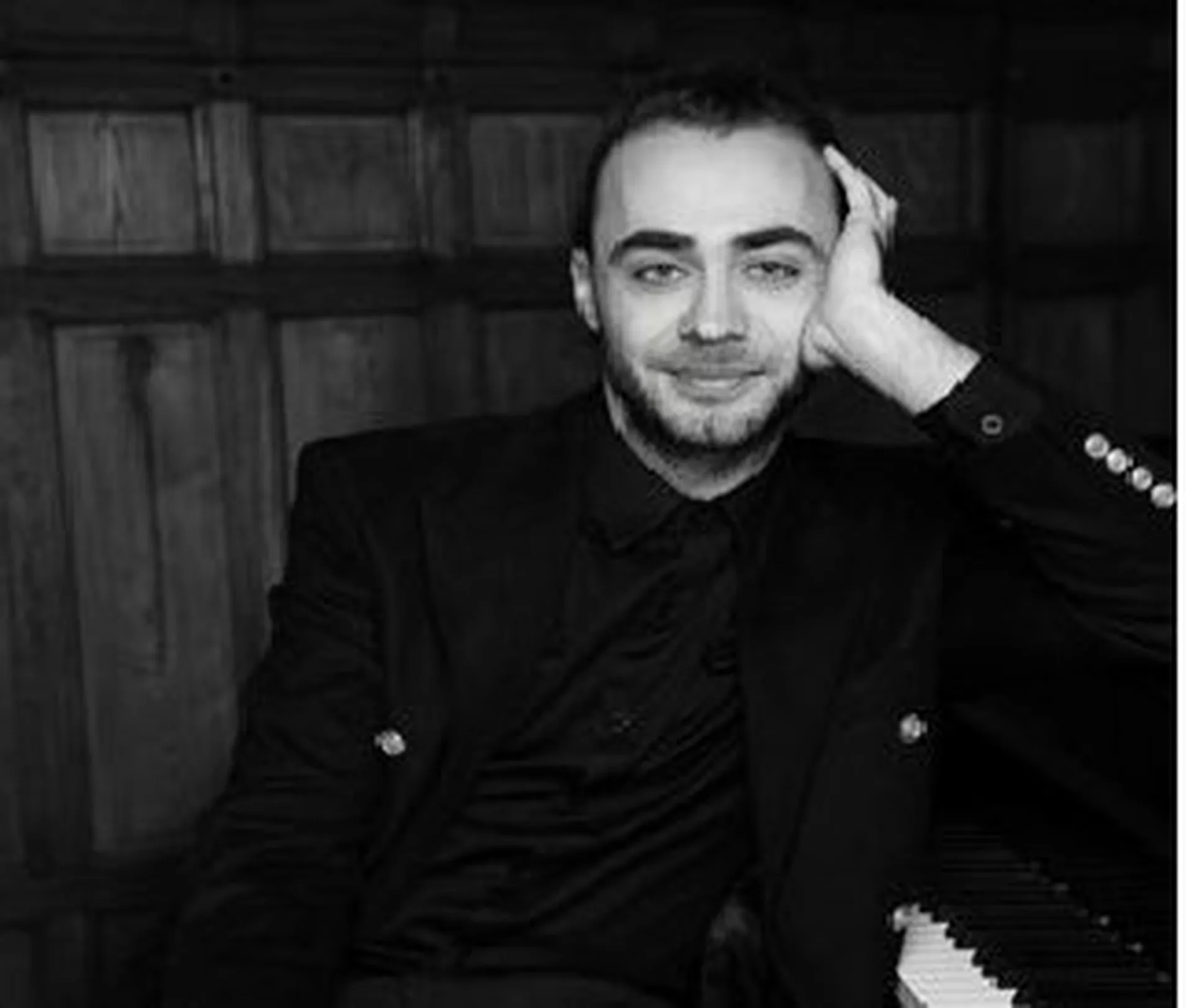
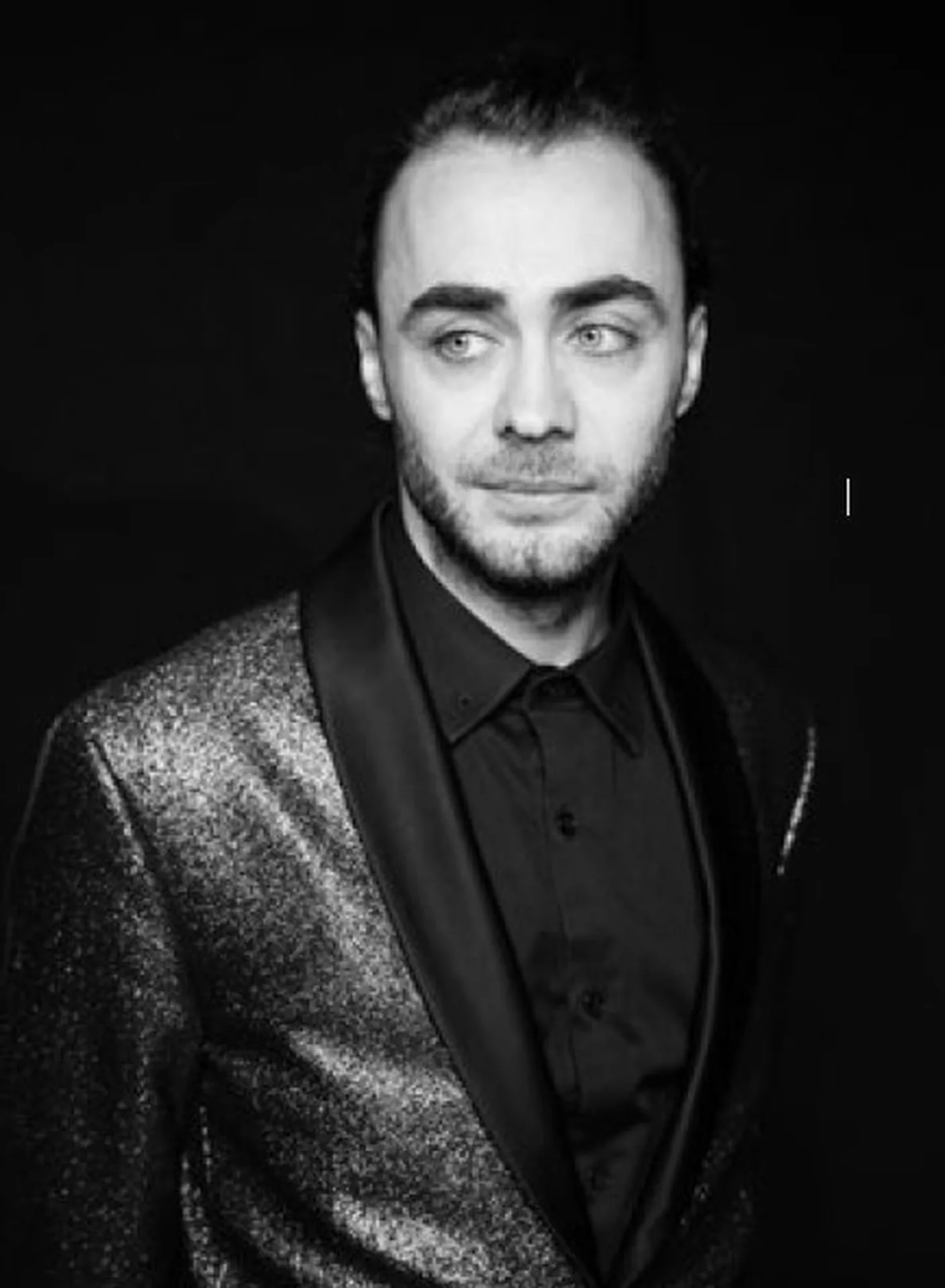
by Petruș Costea, photo by Horia Stan
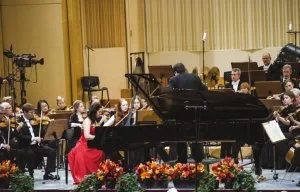
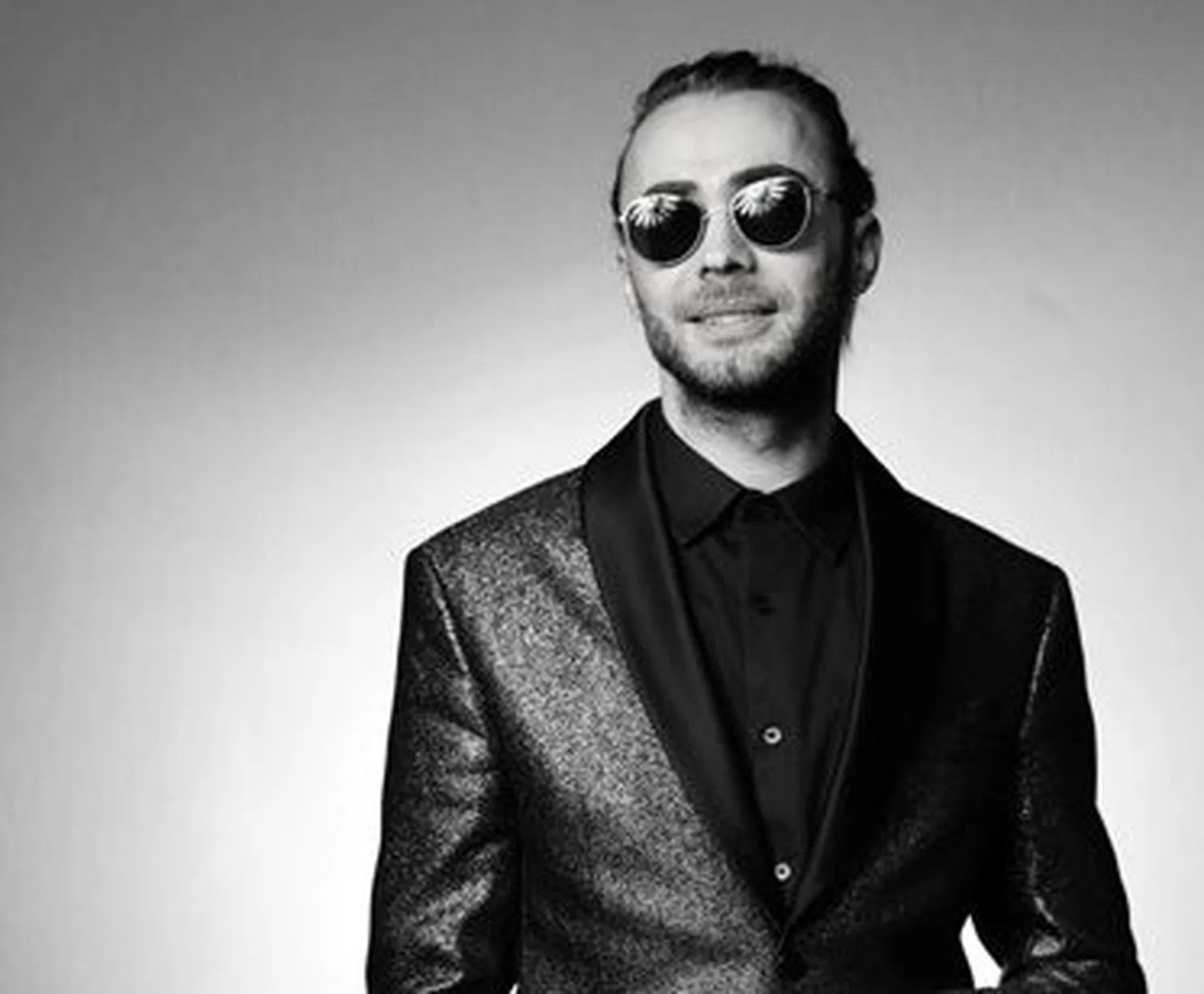
He began taking piano lessons in his hometown at the age of 10, and at the end of high school he obtained a “Constantin Silvestri” scholarship to the renowned “Stewart’s Melville College” in Edinburgh, then he attended the “Royal Conservatoire of Scotland” in Glasgow for six years. After winning the Second Prize and the Audience Award at the “Arthur Rubinstein Competition” in Israel, one of the top five most important piano competitions in the world, he began his international career. His first CD, released in 2020, with music by Prokofiev, Enescu, Debussy and Liszt, was enthusiastically received by both the public and the specialized media, with the well-known French critic Alain Lompech particularly appreciating “A full and luminous sound, immense pianistic poise, sensibility, an originality without overwhelming ego”. Among his most daring and certainly the most interesting projects in the musical life of Romania is the #SHARP festival, the new edition of which will take place in the fall of this year in Bucharest. I met Daniel Ciobanu after the concert he gave in Bucharest, in early May, when he performed Rachmaninoff’s Concerto No. 2 on the stage of the Romanian Athenaeum.
Your life changed completely after you won the 2nd Prize and the Audience Award at the “Arthur Rubinstein Competition” in Israel in 2017, one of the top five most important piano competitions in the world. In previous years, you also won the 1st Prize at the “Morocco Philharmonique” (Casablanca), “UNISA International Piano Competition” (Pretoria) or “BNDES International Piano Competition” (Rio de Janeiro), but your launch on the international stage came with the “Arthur Rubinstein Competition”. How did your life change after this competition? What were the biggest challenges? Apart from the euphoria that gripped you, I imagine there was also a fear.
That 2017 moment in Israel didn’t just change my career; it kind of reconfigured my artistic DNA. Yes, I’d won other competitions, but Rubinstein was the cosmic gatekeeper. I was already becoming a reliable “race horse” then overnight I was finally free and concert halls that had been distant dreams became my workplaces, and “worst” of all – people started listening. Really listening.
The greatest challenge wasn’t the sudden steroid pump on my agenda. It was the struggle to hear my own voice through the noise of expectations and Stan “etiquette”. When you win a major competition, everyone – managers, critics, audiences – projects their fantasy of who you should be. Some want a new Horowitz, others a 21st-century showman. So you enter the hall and immediately suffocate from this heavy air of expectations. For few months I remember that I felt like a ventriloquist’s dummy playing unconsciously other people’s scripts.
Then came the fear – not of failure, but of success on someone else’s terms. The classical world loves its boxes: Are you a Romantic specialist? A contemporary music martyr? A crossover rebel? The Rubinstein competition gave me a platform, but the real freedom came from smashing those categories and learning to be myself outside the competition boxed mentality.
Now when I walk onstage be it at Carnegie Hall, the Enescu Festival or my hometown in Piatra Neamt, I don’t try to carry the Rubinstein medal and I stopped “competing” for the sake of creating my own reality.
You like to be somewhat of an enfant terrible and you always try to challenge the audience. At the 2023 “George Enescu” Festival you played Beethoven’s Concerto No. 4 with your own cadenza, more open to jazz. How free can a pianist be on stage who plays, for example, Mozart, Beethoven, Schumann, Brahms, Rachmaninoff? Isn’t there a risk that all pianists play exactly the same, with nothing to differentiate them, with all the obsession with respect for the score?
The oldie but goldie enfant terrible label – I can hear Friedrich Gulda laughing at this.
In general I do enjoy playing around the boundaries. This allows for that unique chance of unique spontaneous revelations that can only occur during acts of total freedom on stage, after rigorous work at home. But it’s never about shock for shock’s sake. As long as it empowers the music and the artists strongly feels that it emphasizes even more the character and scenography of the score, I see no problem.
That Beethoven cadenza at the Enescu Festival was a deliberate provocation/wake up call of the “classical” crowd of Bucharest, but still one very much rooted in deep respect for this masterpiece of a piano concerto, and still very mild when talking to the well experienced crowd of musicians from the “Cameristi de la Scala” with whom I performed, that found it absolutely coherent and natural. Improvisation was essential to Beethoven’s world and the classical period composers in general. The irony is that our modern obsession with “respecting the score” often strays furthest from historical practice. Composers like Mozart and Beethoven expected interpreters to breathe life into their works, not embalm them like mummies.
The real danger is not individuality, but the industry’s factory settings: competitions rewarding “safe” playing or streaming algorithms favoring homogenized interpretations. The pianists who last – Argerich, Sokolov, Trifonov – are the ones who risk being wrong gloriously and authentically.
There are pianists, both admired and contested, whose freedoms regarding the score are famous. For example, I think of Ivo Pogorelich, Mikhail Pletnev or Gilles Apap. To what extent can an artist “intervene” in the work he is playing?
How free can we be? It’s a tightrope. With Mozart, a wrong ornament feels like a typo in a love letter; with Rachmaninoff, the architecture demands rigor. But within those frameworks, there’s vast space for personality. The risk isn’t just uniformity, but boredom. When every pianist has to play the same Urtext edition and also chooses the same “approved” plot and ideas, we end up with musical mannequins. The score is a map, but we create our own paths. Pletnev bends time like rubber; Fazil Say smudges lines like charcoal (almost literally sometimes). Their “interventions” aren’t vandalism – they’re revelations with which we can agree or not. What matters is that listeners feel stimulated and provoked, as this keeps the process of interpreting the music alive.
Coming back to your interest in jazz. Do you think there is a jazz audience and a classical music audience? Do you think that old-fashioned music lovers, if we can call them that, find jazz a minor genre? Why? Where did this perception come from?
The divide between jazz and classical audiences is more artificial than real – a relic of 20th-century cultural gatekeeping. Yes, there are still old school classical crowds who dismiss jazz as “minor”, but that perception stems from snobbery, not substance. Jazz was born in suburbs; classical music in church pews. One was deemed “low,” the other “holy”. Yet Bach improvised crazy fugues like Coltrane shredded intricate scales, and Liszt’s cadenzas swung more flabbergasting than most jazz pianists today.
The “minor” label reeks of old hierarchies. Jazz is America’s classical music – just as sophisticated, just as demanding. The irony is that many classical purists worship Beethoven’s delirious harmonic changes and improvisations but shudder at a jazz riff. Meanwhile, jazz audiences often embrace classical complexity more eagerly than vice versa.
The truth? Boundaries are dissolving. I’ve seen classical audiences in capitoliums of classical culture (like Paris Philharmonie) roaring for Brad Mehldau’s Bach’s reinventions and jazz clubs falling silent for a Debussy prelude. The real “minor” genre is closed-mindedness.
Furthermore, how do you explain, at least in Romania, the very low public interest in contemporary music? Should an artist educate his audience by playing new or rarely performed works?
Romania’s timid appetite for contemporary music stems from three toxic myths: that modern works are “ugly” or academic, that audiences only want familiar classics, and that new music can’t sell tickets. But this is a self-fulfilling prophecy – when orchestras program contemporary pieces as obligatory “vegetables” rather than main courses, of course audiences resist. As artists, we must educate with cunning imagination, not condescension. I use my #SHARP Festival as the Trojan horse in this direction and try to pair organically the classics and contemporary composers, and the truth is that I felt the audience in Bucharest really absorbed the cocktail with no issues. As artists we just need to serve it with passion rather than obligation.
„How free can we be? It’s a tightrope. With Mozart, a wrong ornament feels like a typo in a love letter; with Rachmaninoff, the architecture demands rigor. But within those frameworks, there’s vast space for personality.”
One of your most interesting projects is the #SharpShifts festival, which you started in 2017 at Piatra Neamt (Neamt Music Festival). Last year, at the edition now organized in Bucharest, the five concerts were a great success and I had the impression that your audience already formed a family. You performed in unconventional spaces, you had dancers on stage, you played a lot of jazz, and the scenography was an important part of the show. How did you start this festival? What surprises do you have in store for us in this year’s edition?
As I mentioned earlier on, the #SharpShifts festival or movement, is actually my Trojan Horse and manifesto at the same time. Disguised as a classical music festival, this project is where I allow myself finally to implement my wildest artistic dreams and create parallel universes to the classical scene. After long periods of metabolizing experiences from all over the spectrum of my artistic life, here I’m finally able to bridge them to reality. Of course there are limits, mainly life threatening (we can’t use fire indoors or any psychedelics for the audience, hahaha), that I need to adjust from time to time but in general at least a good half of the core idea is possible to be squeezed on stage.
This year in November there will be a concentrated triptych with three large scaled productions. We will start with the “Addixion” String Ensemble of 20 musicians created by myself and the appointed concertmaster Theodor Andreescu. This chamber ensemble plans to redefine the classical concert experience in general not only musically, transforming it into a voluble space where tradition merges at a very high rate with modernity light design, choreography of musicians, fashion, electronic music and original works by contemporary composers to name a few.
Operating without a conductor, the ensemble embodies a democratic model of artistic creation, where interpretive decisions emerge from collective dialogue through a repertoire choice that speaks first of all to all the musicians involved and that will convince both nostalgic listeners and younger audiences.
Some of the arrangements, like Rachmaninoff Romance op. 6 no. 1 or Enescu Impromptu concertant are custom made for this string ensemble from violin and piano repertoire, to mark the beginning of an exploration which proves that great works of the past can adopt contemporary dialectics without losing their essence.
Some are reinterpreted in a hybrid formula (string orchestra, piano, synthesizers, and violin), like Barber Adagio for Strings or Vivaldi’s Seasons, creating an electrifying dialogue between tradition and experiment.
Isn’t it a risk to take such a classical repertoire into such an experimental area? Especially without losing the more conservative audience?
There will be some strictly contemporary dimensions, blending jazz with classical precision, inspired from works of Keith Jarrett for piano or the pizzicato Samba of the Vision string quartet transforming the Latin pulse into a humorous conversation between strings and piano. A piano concerto in four movements dedicated to myself on the occasion of the birth of the “Addixion” ensemble, by Christoph Croise, a Swiss cellist and composer that will blend classical, techno, jazz and percussive elements in a groovy bouquet of innovations and provocations between the piano and the string ensemble. The only work preserved in its original form is Alfred Schnittke’s Concerto for Piano and Strings, that is for me a radical and surprisingly relevant piece for today’s youth culture, from post-punk to trap. The concerto rejects traditional narrative, opting instead for a fragmented reality where Baroque, Romantic, and Soviet-era quotations collide with harsh dissonances and industrial rhythms. Here I want to emphasise that the reality isn’t packaged in pleasant, socially acceptable forms only; but pain, anxiety, and absurdity will be exposed as they truly are in the world surrounding us.
The following event steps into a world where Bulgakov’s literary masterpiece Master&Margarita explodes into visceral life with a grand collision of theater, contemporary dance, classical piano, and pulsing electronic soundscapes.
With Cristina Gagiu’s visionary direction, the novel’s immortal themes – freedom’s fragile flame, love’s reckless power, the soul’s struggle against crushing systems – become yet another multisensory manifesto. The tormented Master and defiant Margarita materialize before our eyes, their anguish given physical form through razor-sharp contemporary dance choreography that makes inner turmoil even more edgy.
The music will not be just accompaniment but the the architect of reality. The classical masterworks will provide the bones, while my original electronic compositions will breathe dystopian fire into the narrative. When Margarita takes flight, the piano soars with her – until the synthesizers drag us back to Moscow’s grim streets. When Woland’s ball erupts, Baroque quotations shatter into rhythms that wouldn’t be out of place in Berlin’s underground clubs.
This is art that demands participation, not passive consumption. For the generation raised on social media whiplash, it offers something radical: a mirror for their fractured world, and a torch to light the way through it. This will be no ordinary adaptation but an existential awakening staged for our turbulent times.
”This is classical music with its veins opened, speaking directly to a generation that unfortunatelly is already acclimatized to the ideea that connection is just loneliness with better WiFi.”
Your 2024 recital at the Plastic Fund Complex (a “delirious musical sojourn,” as you called it) closed the festival and included Mussorgsky’s Pictures at an Exhibition and a few jazz pieces that were the highlight of the evening. What will you be playing in this year’s recital?
The final cadence of this year’s events will be an intimate piano recital, given by me, entitled “Alone all together.” In the silence between smartphone notifications, in the solitude of crowded cities, the piano becomes the altar of confession. In a way, returning to my roots, I want this recital to be like a sonic meditation on the great tensions of modern existence.
Structured as a musical trilogy, each act represents an essential stage of contemporary consciousness: starting with “Who am I?”, with Debussy’s preludes, Voiles – those shimmering, directionless sails – and Des pas sur la neige, which captures the terrifying beauty of leaving traces in a world that erases them every hour with a simple scroll on social media. Liszt’s Mephisto Waltz becomes the sonic embodiment of late capitalism – seductive, grotesque, inevitable. The piano struggles with the charm and perversion of different social systems or norms, revealing the control mechanisms hidden behind the shimmering surface. Liszt’s Sonata in B minor then becomes a road map from despair to transcendence, in search of the answer to the question “How do we survive all this?” Its cyclical themes prove that even in chaos, patterns emerge. The recital ends with Keith Jarrett’s improvisations that burst forth like a memento mori: creativity is our last unattainable freedom. This is classical music with open veins, which speaks directly to a generation already familiar, unfortunately, with the idea that being connected only means loneliness with better WiFi.
At the beginning of May, you performed Rachmaninov’s Concerto No. 2 with great success on the stage of the Romanian Athenaeum. In the fall, at the “George Enescu” Festival, you will perform Gershwin’s Rhapsody in Blue and Albéniz’s Rhapsody in Spanish in an arrangement for piano and orchestra by George Enescu. What projects do you have in progress or what projects are on your mind at the moment?
The current odyssey I am preparing consists of a small tour in Israel with a recital program and a concert, but also an exotic private evening, in which my music will resonate with the cuisine – combining classical music with Israeli artisanal fusion cuisine. Then I will return to the Royal Philharmonic in London, with conductor Gemma New at the lectern and my specialty in the pan, Prokofiev's Piano Concerto No. 3, known in folklore as the "Terzo di Muerte". Other more distant projects are to finish the story and visual concepts for my second album, "Vertigo", which I recorded last year with Radio Romania and which is ready for release. And, last but not least, to finally manage to organize a small exhibition, either in Berlin, where I live, or in Romania, with some of my paintings. This idea has been "tormenting" my calendar for almost three years and I am almost certain that a concert held between my paintings and installations, then concluded at the DJ's desk, will be an unforgettable night for everyone. And especially for my inner child!