by Petruș Costea
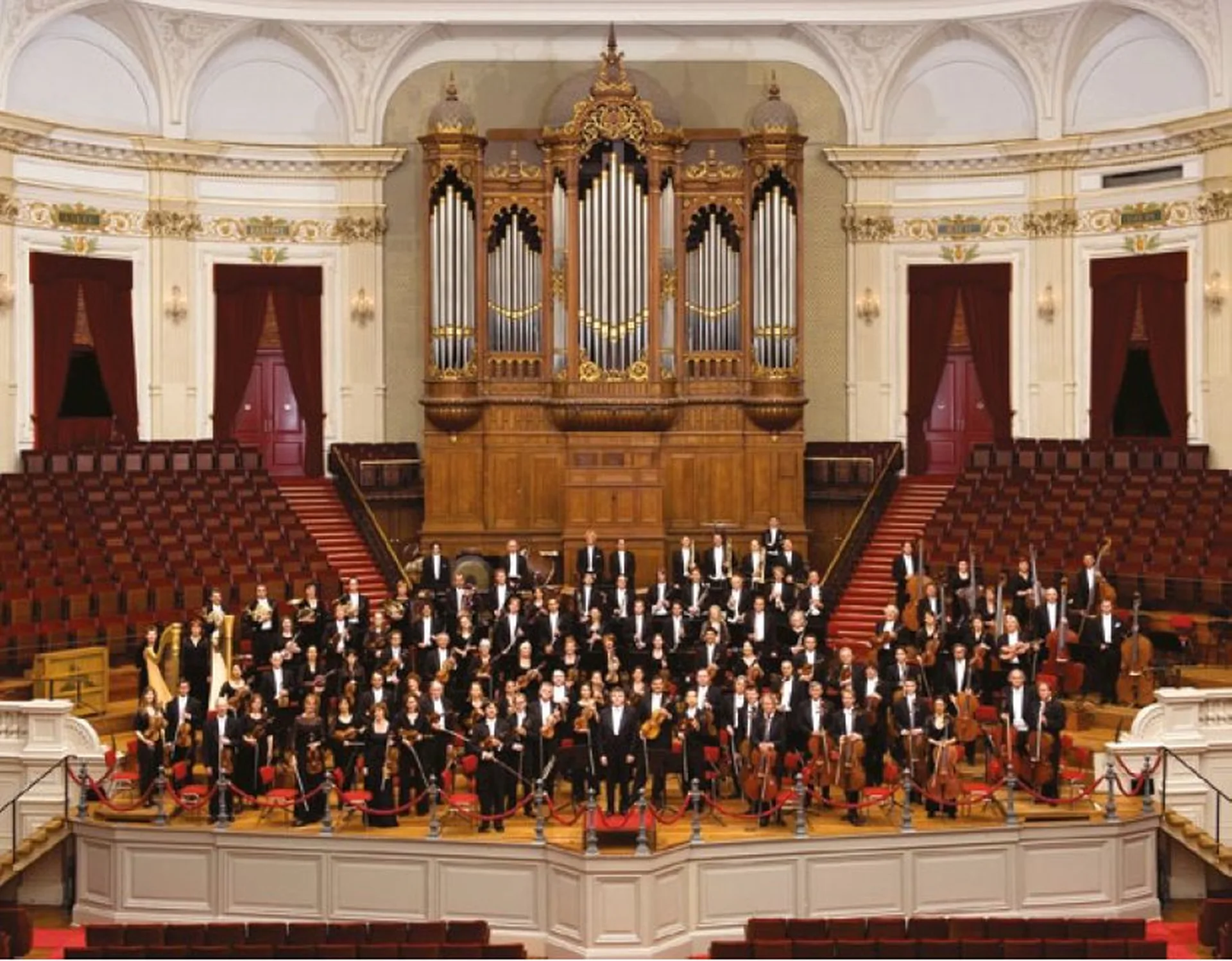
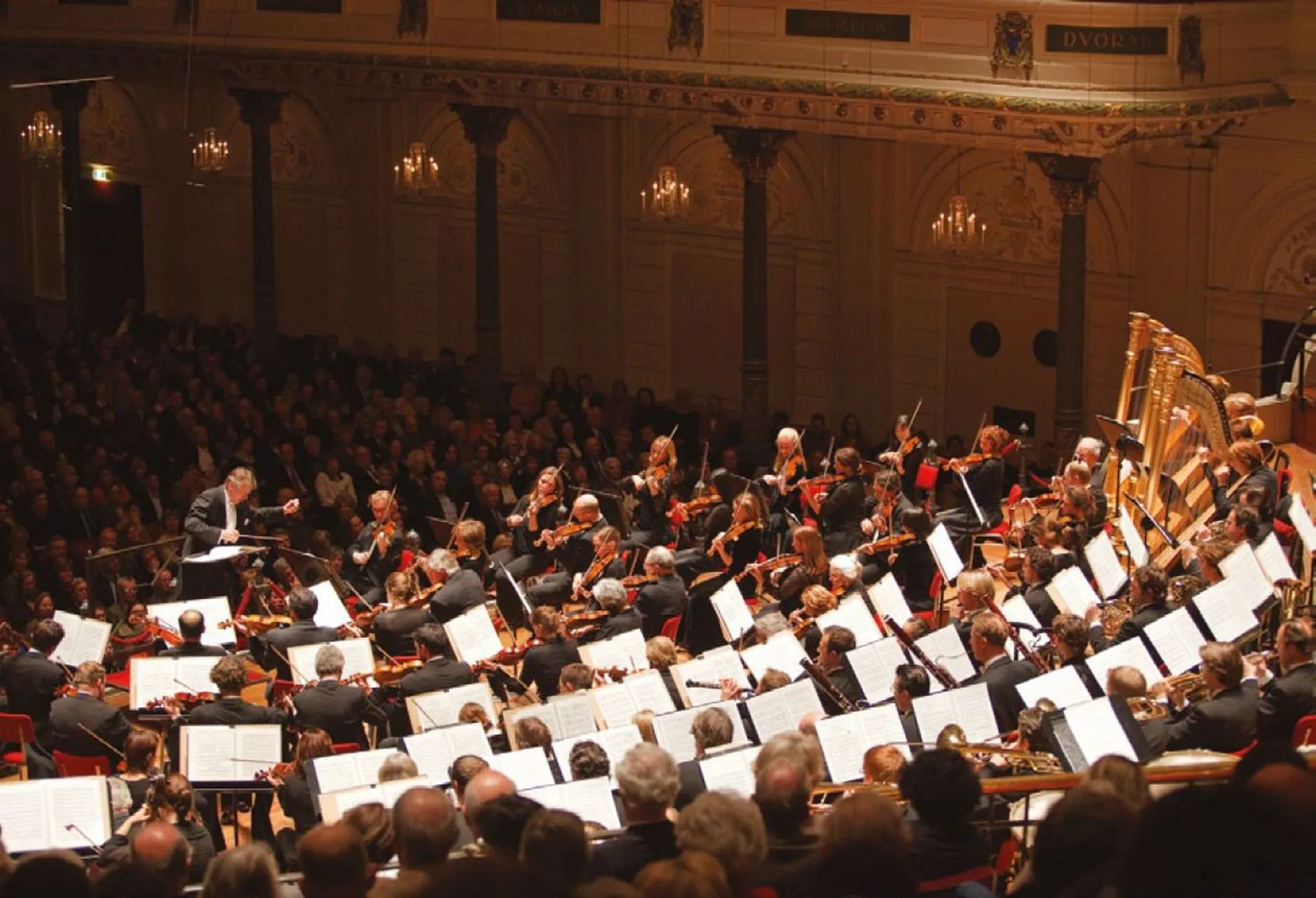
During its 125 years of existence, the orchestra only had six permanent conductors: Willem Kes (1888-1895), Willem Mengelberg (1895-1945), Eduard van Beinum (1945-1959), Bernard Haitink (1961-1988), Riccardo Chailly (1988-2004) and Mariss Jansons (2004-2015).
Let us remember a few data that might explain the way in which this orchestra reached today`s fame. Only seven years after the first concert conducted by Willem Kes, a young man, only 24 years old, is appointed the chief of orchestra – Willem Mengelberg. He will be the permanent conductor for half of century, until the end of the World War II, in 1945. Obsessed by perfection Mengelberg was capable of rehearsing one single measure forteen times, and if one of the orchestra`s musicians was not able to play without any flaw that part, he had to play that fragment in front of the entire orchestra, as a humiliation gesture. The legend says that Mengelberg`s concerts were never announced long time before, because then nobody knew when the rehearsals would finish. He was called the „perfect dictator”, his verbal violences towards the orchestra`s members are famous, but he managed to impose a delighting deep-toned, a collective viruosity never encountered before. Since the beggining of his career he has conducted a lot of contemporary music, from Debussy, Stravinsky to Richard Strauss and Gustav Mahler. He met Mahler in 1902, and in 1904 he conducted Mahler`s IV-th Simphony twice during the same concert, so that the public understands it better.
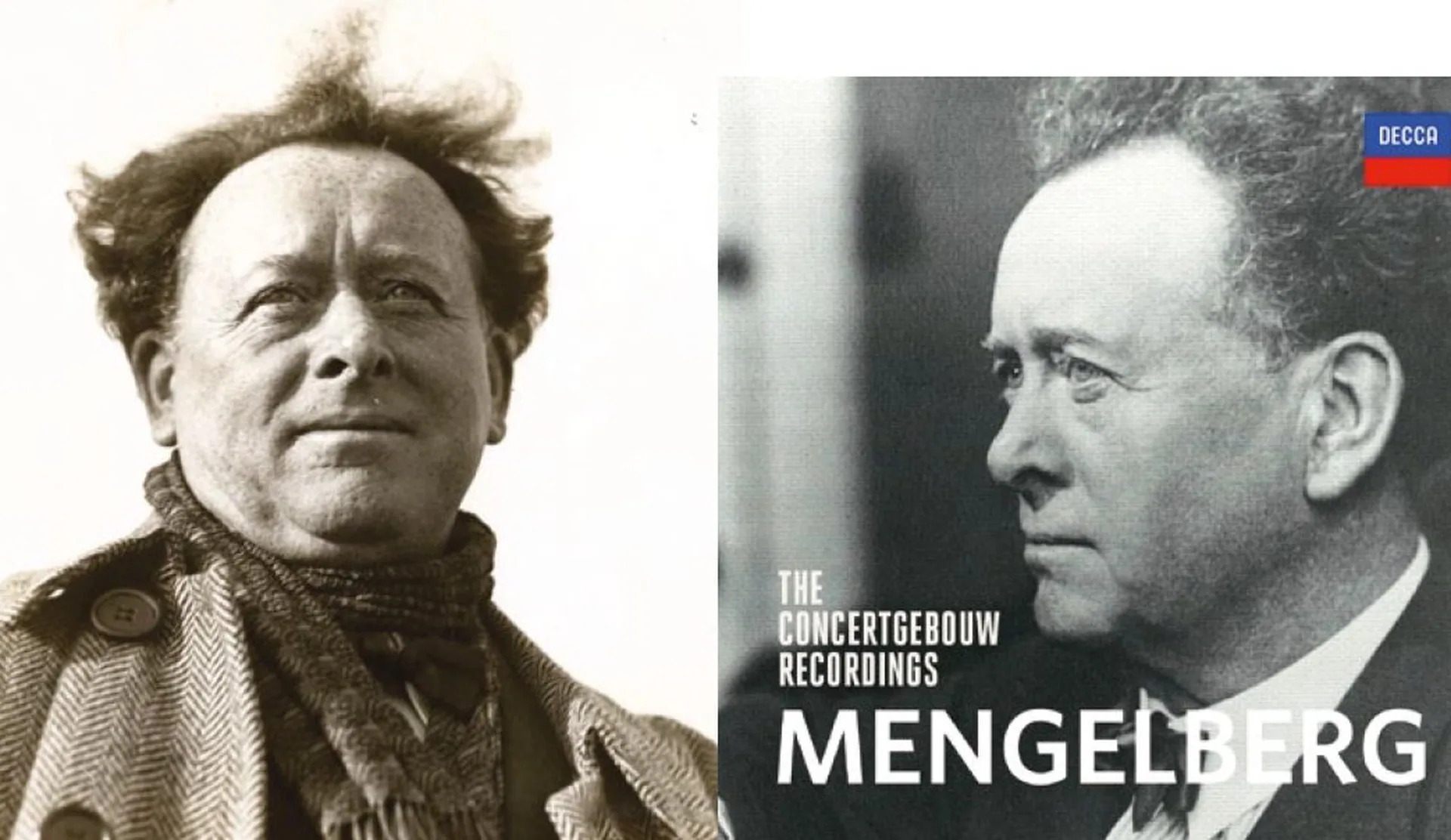
Mengelberg also conducted the 1st, the 4th and the 7th Symphony, Das klagende Lied and Kindertotenlieder, and the composer edited a few symphonies during the rehearsal with Orchestra Concertgebouw, because he was impressed by the hall`s perfect acoustics. In 1920, Mengelberg organized a Mahler Festival, where, the entire creation of the composer is played in nine concerts. The fondness for Mahler`s work has remained as an inheritance for the orchestra and they recorded an integral of the Mahler symphonies with Bernard Haitink, Riccardo Chailly and Mariss Jansons.
Since 1899 and up to the end of his career, he played each year, on Palm Sunday, The St Matthew’s Passion by Johann Sebastian Bach; the 1939 live recording is considered today one of the most emotional interpretation of Bach`s repertoire. Mengelberg has also remained in the Dutch people`s memory for the fact that he took out classical music from Concertgebouw and brought it to the public at large through his concerts on the Olympian Stadium. Analyzing the few video recordings with the Dutch conductor, the critics said that his technique was not quite perfect and that Mengelberg`s look was forcing the orchestra to play in a certain way. The story says that he raised a wine glass when the Netherlands was occupied by the Nazis and his ambiguous relationship with the Germans was ill-fated afterwards. At the end of the war he was forbidden to conduct in the Netherlands for the rest of his life, but after another trial, this sentence was reduced to six years. He went on to live in Switzerland, where he died on the 21st of March 1951, just two months before he would have been allowed to conduct again.
In order to understand the place he occupied by this orchestra (Queen Beatrix added in 1988, one hundred years after its birth, the title „Royal”, therefore the complete name became Royal Concertgebouw Orchestra), music lovers could listen to the pieces recorded under conductor Willem Mengelberg. First of all we can notice a certain unity of the orchestra, in each of its measures. For the cords, Mengelberg would ask a great deal of portamento and, for having a single instrument sound, all musicians were using the same fingers, set up by Mengelberg, and their voices were annotated by the conductor himself; therefore, the interpretations, that seemed so free, so subjective due to the tempo fluctuation, the progressive speeding, were in fact established to the millimeter. Some consider Mengelberg`s recordings impossible to listen to, other place them among the most valuable recordings ever produced. The moving and thrilling expressivity of this perfect orchestra is in fact the element that beats time.