
by Petruș Costea
In all certainty, Romanian music lovers remember the time when, back in the ’90s, the first CDs appeared in our country. The large record labels from West, the ones that really had a saying in the international musical industry, were proposing CDs with some of this century’s most important musicians, from Dinu Lipatti to Maria Callas or Wilhelm Furtwängler. Yet, the prices were unreasonable. For example: in 2000, a professor was able to buy with his salary some five or six CDs produced by EMI or Philips. Timid at first, and faster paced afterwards, a few Romanian record labels were born, trying to support the Electrecord’s efforts to spread out culture. They all had some common elements: decent prices, ugly or very ugly covers, while text that accompanied the CD had (almost mandatory) a few spelling mistakes. Perhaps the beginning was supposed to be that difficult, taking into account the fact that the country was enjoying capitalism for just a short while.
Besides all of these, there were also many Slovenian CDs on the market and they had a very important feature: they were much cheaper than the Romanian ones. Plus, they covered most of the famous classical pieces that any music fan desires to listen to in his own privacy. There were two names which kept on repeating: that of pianist Dubravka Tomšič and conductor Anton Nanut. I believe that each student who was a bit of a music lover and lived in Romania during 1995-2005 had bought, for a small amount of money, and without knowing, some recordings of these two artists. The CDs’ small price and covers – ugly and perfectly kitsch – inspired suspicion in the minds of the pretentious music lovers. If a product has a cheap price, this also means it has a poor quality. Snobbery always pushes people towards buying expensive merchandise, but, not all important artists enjoy the support of big record labels.
For a long time I have also regarded these disks with distrust: they were so cheap, so visually unappealing and they looked like they were made for wholesale trade so I was almost never tempted to buy them. But, I had the opportunity, thanks to a friend who loves music, to listen to an excellent CD with Domenico Scarlatti’s sonatas and I was intrigued. The pianist, Dubravka Tomšič, is a great artist (perhaps one of the most underrated pianists of the 20th century) and I was curious to learn more about her career.
Dubravka Tomšič was born in 1940, at Dubrovnik, in Croatia and was raised in Slovenia. She had her first musical recital when she was 5 years old; after that, she had studied in Ljubljana, and at the age of 12, pianist Claudio Arrau advised her to leave for the United States of America and study at Juilliard School of Music. Her teachers were Katharine Bacon and Alexander Uninsky (who obtained the First Prize at the Chopin Competition in 1932). At the age of 15, she was considered by the Americans the talent of the year and she was set up to perform a concert together with the New York Philharmonics. At 17 years old, she had graduated from Juilliard and played at a recital in New York; Arthur Rubinstein attended the show and he invited her to study with him, believing that she is already a wonderful and perfect pianist. She was in fact the only student of this great piano player. She came back to Slovenia, and at the age of 27 she became a piano teacher at the Music Academy in Ljubljana, being convinced that she has to take care of other talented young people and not solely of her own career. She played on all continents, her tours had a great success; and because her country of origin was a communist one, sometimes the public was reserved at first and only at the end they showed their enthusiasm. At the recital she played at Leningrad, the public was so euphoric that the pianist encored 17 times. She performed more than 4000 concerts and recitals, she has recorded over 90 albums and her repertoire ranges from Bach and Mozart to Beethoven, from Chopin and Brahms to the music of the first half of the 20th century. At a first glance, there is nothing spectacular in her way of playing, she does not intentionally seek tricks to win over the public that craves for show and sensation, but everything is there – from virtuosity to sensibility.
If she would have been born in the West, she would have had the chance of signing a contract with an important record label and of being promoted according to her great talent. In Slovenia she is considered a legend and perhaps the most important Slovenian musician of the last 50 years. Anyhow, the 90 albums she produced still remain and they can be listened to at any time by the music lovers and anyone else interested; all the more as her records can be found in the libraries of Bucharest, but, of course, in bulks because the cheap CDs (costing 1 or 2 Euro) cannot be mixed with the ones produced by the big record labels.
Classical music is all the same: the libraries place in plain sight those products belonging to artists that are promoted by the record labels, artists that sell, who appear in reviews and are known by the great public. In all fairness, we should try and listen solely to the music and not allow ourselves to be fooled by aggressive publicity. Certainly, the surprises could be huge.
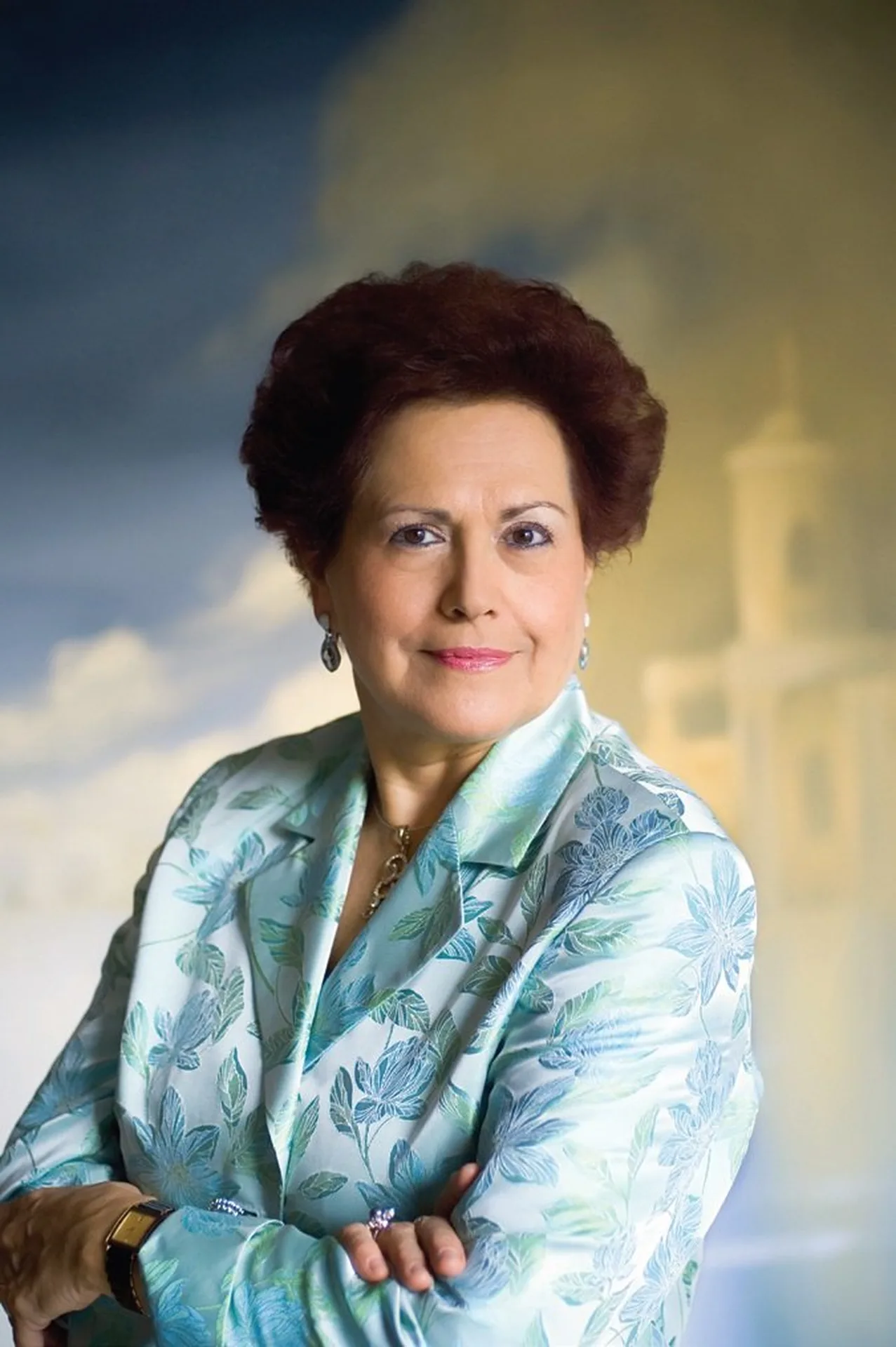
In Slovenia she is considered a legend and perhaps the most important Slovenian musician of the last 50 years. Anyhow, the 90 albums she produced still remain and they can be listened to at any time by the music lovers and anyone else interested.