by Bogdan Mirică
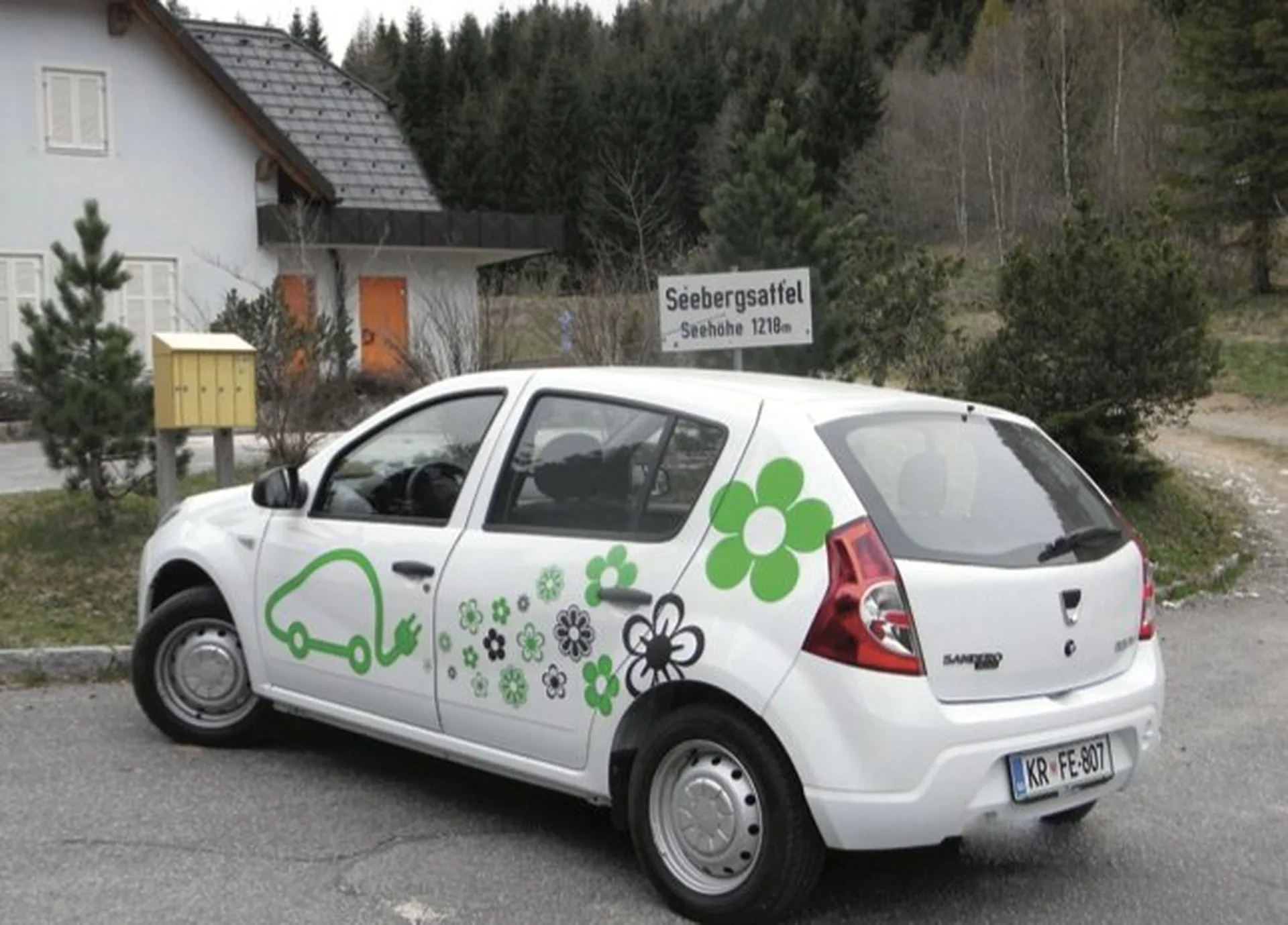
photo: Andrej Pečjak
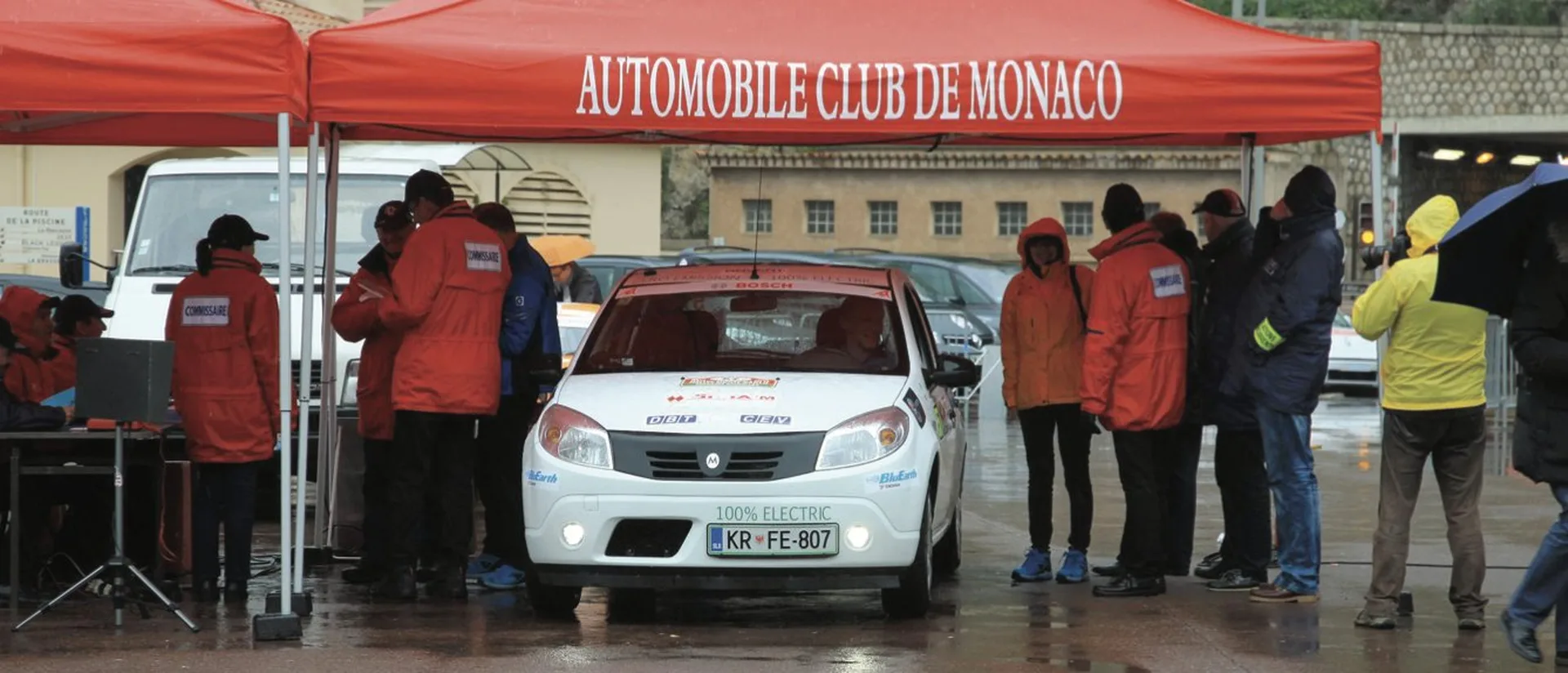
A soundless Sandero and a “dolce far niente” running in the most popular rally competition at the beginning of the year? Nothing more unusual than this. A few hundreds kilometers later, the car provided the most unusual denouement for the Rallye Monte Carlo des Energies Nouvelles – the competition of the alternative propulsion vehicles. After the 3 days of the competition, an electric-driven Dacia Sandero managed to climb up to the first position, outrunning some of the most important names of contemporary ecologists: Toyota Prius, Tesla Roadster or Honda Insight. The Dacia was driven by the Slovenian Andrej Pečjak and his French co-pilot Frederic Mlynarzick. The team has succeeded to achieve an impossible task ahead of the incontestable winner of the last years: Tesla Roadster. A three year old electric Sandero, with almost 50.000 kilometers, all electrical, managed to “steal” the trophy for the world`s first electrical series supercar and walked a triumphant march before the other 83 competitors. Andrej Pečjak, the man behind the project, was rewarded with a trophy from which he sipped the champagne of victory.
In his garage in Podnart, a small village located in the north of Slovenia, at almost 50 kilometers from the capital Ljubljana, Andrej Pečjak has produced several electric cars based on series automobiles. The Slovenian engineer has transplanted electrical engines and batteries onto regular cars, such as Renault Espace, Mazda5 or Smart ForTwo, but also onto some exotic ones such as Mazda RX-8. Among the stars that he transformed is also Dacia Sandero, the model produced by a Romanian company based in Mioveni that succeeded to win over the first European hearts in 2008. This Romanian hatchback became popular due to its accessible price an proved able to transform itself into a successful electric car.
The first prototype of an electric Sandero was born in 2010 – just two years after the standard model had its European debut. The car functioned with a complete electric engine, but, unlike other contemporary vehicles of this sort, it conserved the Romanian model`s 5 gear system. The Lithium- Polymer battery provided energy to the propulsion engine for a distance of approximately 250 – 400 kilometers. That is a daring promise, given the fact that, the electric cars available back then across Europe (Nissan Leaf and Mitsubishi i-MiEV) were barely promising 160 kilometers autonomy. The test represented the traversing of 391 kilometers between Bled, the summer residence of the former Yugoslav president Tito, and Zadar – one of the small but pretty cities along the Coast of Adriatic Sea. To achieve this performance, the car did not exceed 80 km/h.
Nevertheless, the creator of the electric Romanian model claims that the car can reach a maximum of 140 km/h, enough to have a decent drive on the highway. For this situation, a complete charge can provide only 250 kilometers of autonomy.
Sandero is equipped with a quite generous battery package, yet it continues to be a normal car with a total weight just a bit over 1500 kg. In order to have both a revolutionary spirit and one of normality, there is still space for 5 passengers. The only aspect that might scare potential buyers off is its cost, estimated at approximately 40.000 Euro.
But, there is a middle way. Andrej Pečjak has also created a Sandero that owns a more modest battery package, onethat can provide 180 kilometers autonomy.
The test represented the traversing of 391 kilometers between Bled, the summer residence of the former Yugoslav president Tito, and Zadar – one of the small but pretty cities along the Coast of Adriatic Sea. To achieve this performance, the car did not exceed 80 km/h.
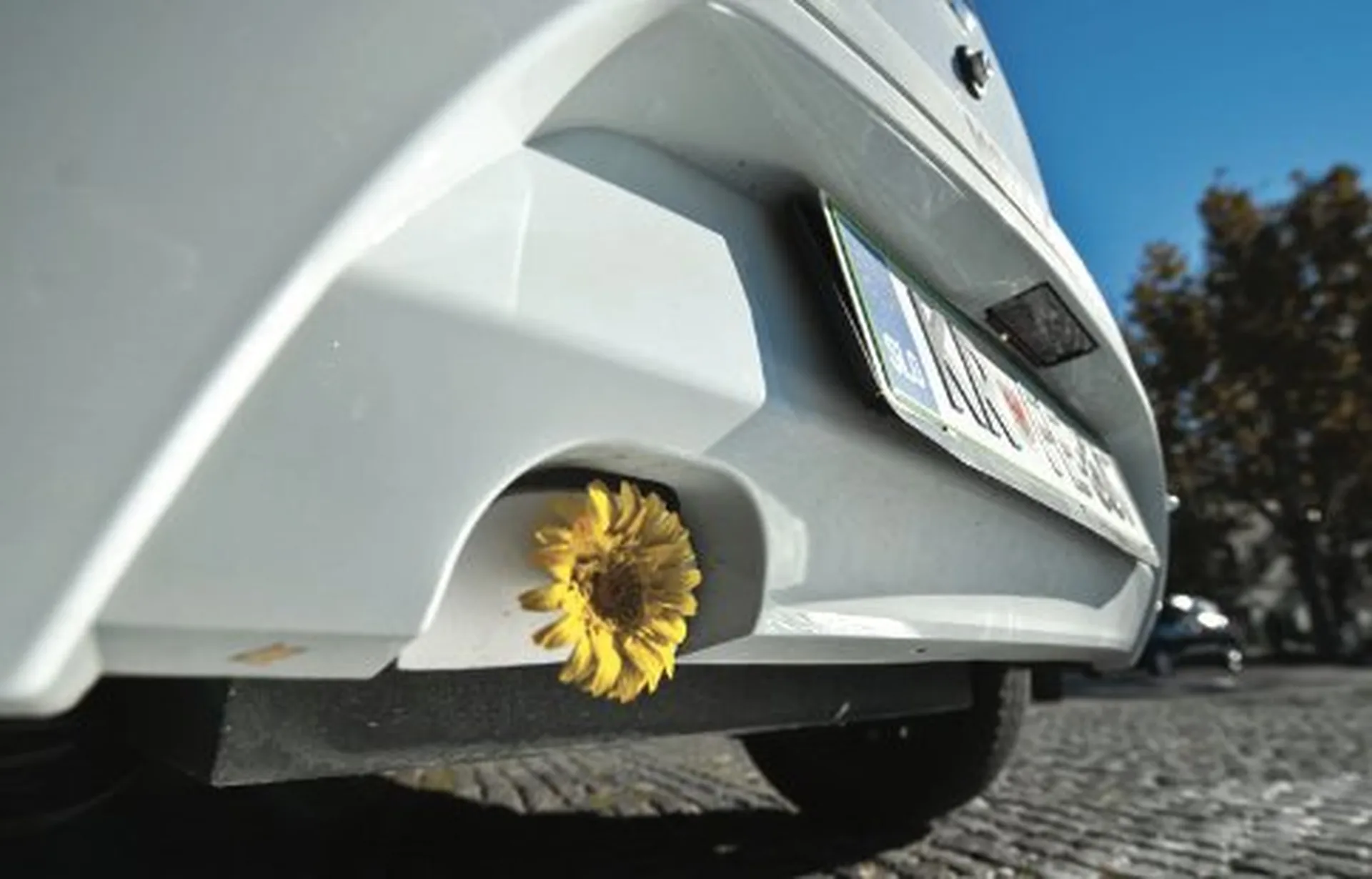
Despite the fat that the winning of the Rallye Monte Carlo des Energies Nouvelles meant a short-lived acknowl- edgement and not at all a contract with one of the big names in the auto industry, Andrej Pečjak continued to believe in the symbiosis between an electric car and a conventional vehicle, and in December 2014 he succeeded to achieve a world record – unrecognized unfortunately by the Guinness World Records. The guinea pig used this time was a Mazda5, a seven-seat family car that was transformed into a five seater after the 500 kg batteries were installed. The Japanese monovolume promised the longest autonomy ever for an electric vehicle, and Andrej Pečjak wanted to prove that. He got behind the wheel in Bled and finished this time in Dubrovnik, after 726 kilometers. The experiment took place in normal traffic conditions and the average speed was approximately 63 km/h.
Therefore, this is the longest distance ever traversed by an electric vehicle with just one charge. A new virtual medal placed near the trophies received at Monte Carlo and a contempt for the performances of the contemporary series electric car.

Andrej Pečjak for The Art of Living:
What is your next project of converting a conventional car into an electric one?
We now have a German partner and we are making research and development for them. Our next car to convert will be Porsche 933; it will be connverted for our partner in order to test new technologies.
Do you appreciate currently any serial electric car that is now on the market?
Not really, they all (except Tesla) have a far too small range. Tesla has good characteristics, but it has some disadvantages:
- is too large for European roads and parking spaces
- is too expensive for most people
- has no European parts, so by buying one Tesla kills at leaast one working place in the EU car industry. As we are all Europeans we should take care of our market.
Why have you chosen a Dacia Sandero car for your electric project and for Monte Carlo Rally?
Dacia Sandero is a great lightweight middle size car. We could fit in enough batteries and we could get good driving characteristics for rallyes and still maintain enough space to use it as family car. I still think it is a great car even though it is not fancy.
When do you estimate that the market will contain only electric vehicles? More specifically, when do you estimate that the era of conventional vehicles, powered by fuel, will end?
It is hard to preditct as it depends on the political environment and the intensity of climate changes and not just the available quantity of oil. For sure this century will be the last «oil century», but how fast the changes will go, nobody knows. We could have major changes in energy use in 10 years but it is also possible that we will insist on fossil fuel as the major power source for the next 30 years. But it will definitely not be more than 30 years.