by Luminița Paul
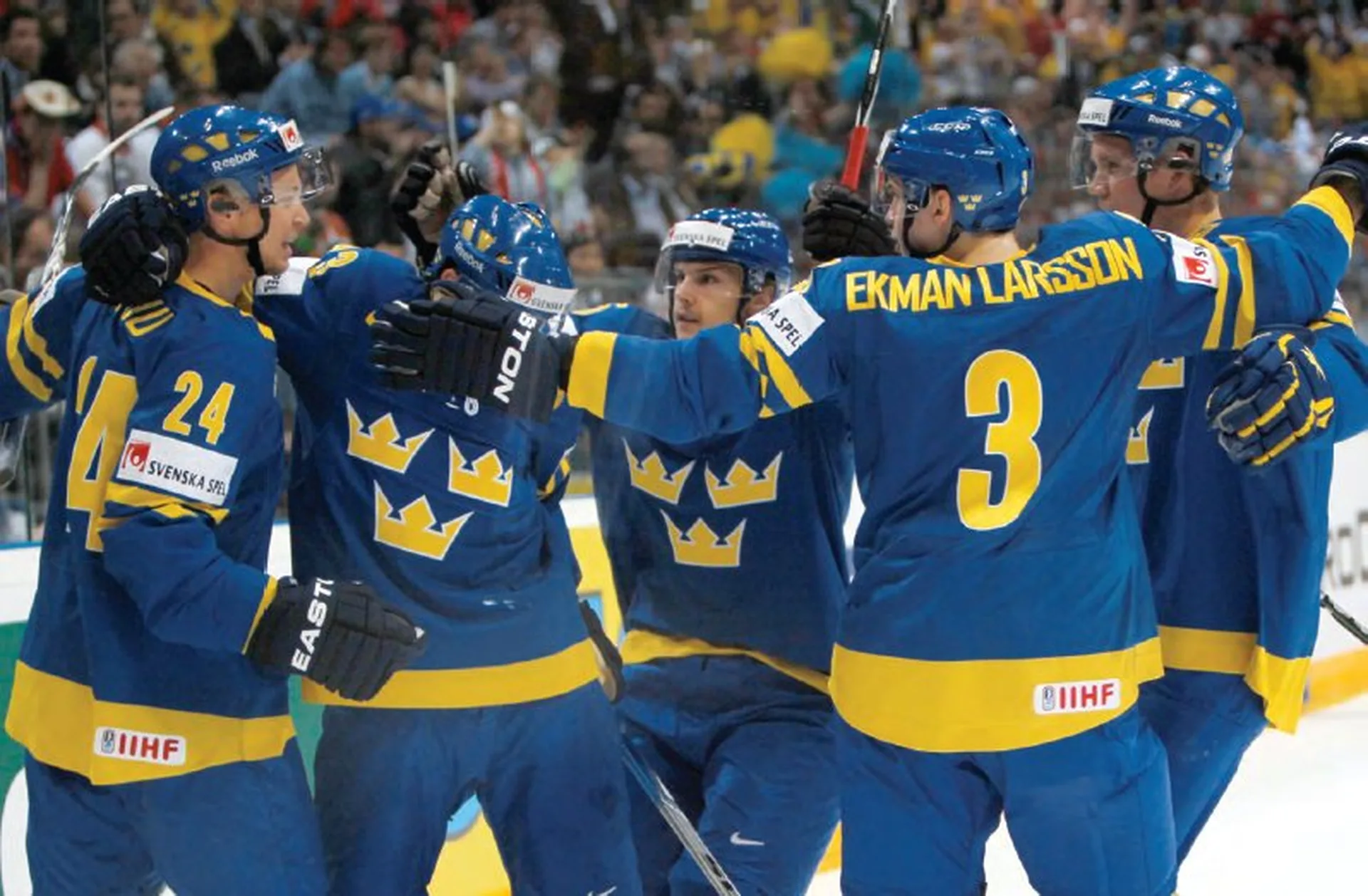
2014 was a silver and bronze year for Sweden`s men national hockey team. Olympic silver and World bronze; traces of disappointment hidden under the yellow-blue t-shirts that proudly wear the three crowns symbol. “Tre Kronor” is the name of the national team, perhaps the most loved team in this Nordic country. It means “Three crowns” – the crowns of the Kingdom of Sweden`s coat of arms. This symbol was first used on the 12th of February 1938, imprinted on the national hockey team equipment, during the World`s Championship in Prague. Since then, the name has become a title covered in prestige.
Sweden is rightfully considered one of the great powers of international hockey, a member of the “Big Seven” group together with Canada, Russia, USA, Czech Republic, Slovakia and Finland. These countries have been sharing the great titles of the Winter Olympic Games and World Championships for decades. The history of this sport goes back to the beginning of the 1920s, in Sweden. Hockey has derived from bandy – the most popular winter sport played in the Scandinavian country - and has become more and more popular, especially after the participation in the first Olympic Games, in Anvers 1920. Back then, there were no winter games; the first edition was organized in 1924, in Chamonix. Sweden was one of the 7 national teams that participated in this first edition and they have not missed almost any final Olympic tournament since then. There have been only two exceptions: the Los Angeles Olympic Games in 1932, a strange edition when only four national teams participated and Innsbruck 1976.
The ’20s opened the way and the first Swedish Championship took place in March 1922 after the set up of the National Association. Over the years the championship was carried out according to various systems and was dominated for shorter or longer periods of time by certain teams – IK Gota in the ‘20-30s, Djugarden in the ‘50-60s, Brynas IF in the ‘70s -, sometimes there were 16 participants, other times there were 10 or 12, but has always produced exceptional players and many of them were offered positions in the North-American NHL Championship that is considered the world`s greatest.
For example, Lars-Goran Nilsson, aged 70 now, was the star of Brynas IF in the 1975-1976 Championship when he had won the title. The lefty scored 53 points in the regular season and other four points in four playoff matches. Despite the show of toughness, consistence and perseverance, he did not make it to the NHL. But Anders Steen from Färjestad did, after scoring 46 points in 36 matches between the years 1979-1980. Despite the fact that his team did not achieve the playoff, Steen obtained a good contract with the Winnipeg Jets, but failed to adapt in America and, after just one season, he came back to Sweden.
Bo Berglund from Djugarden was better off and got transferred to Quebec Nordiques. He played for three years in the North-American Championships NHL and AHL, thus opening a wide and glorious path for many other Swedish players who played there. At the end of the `80s the Swedish League became a precious provider of players for the NHL.
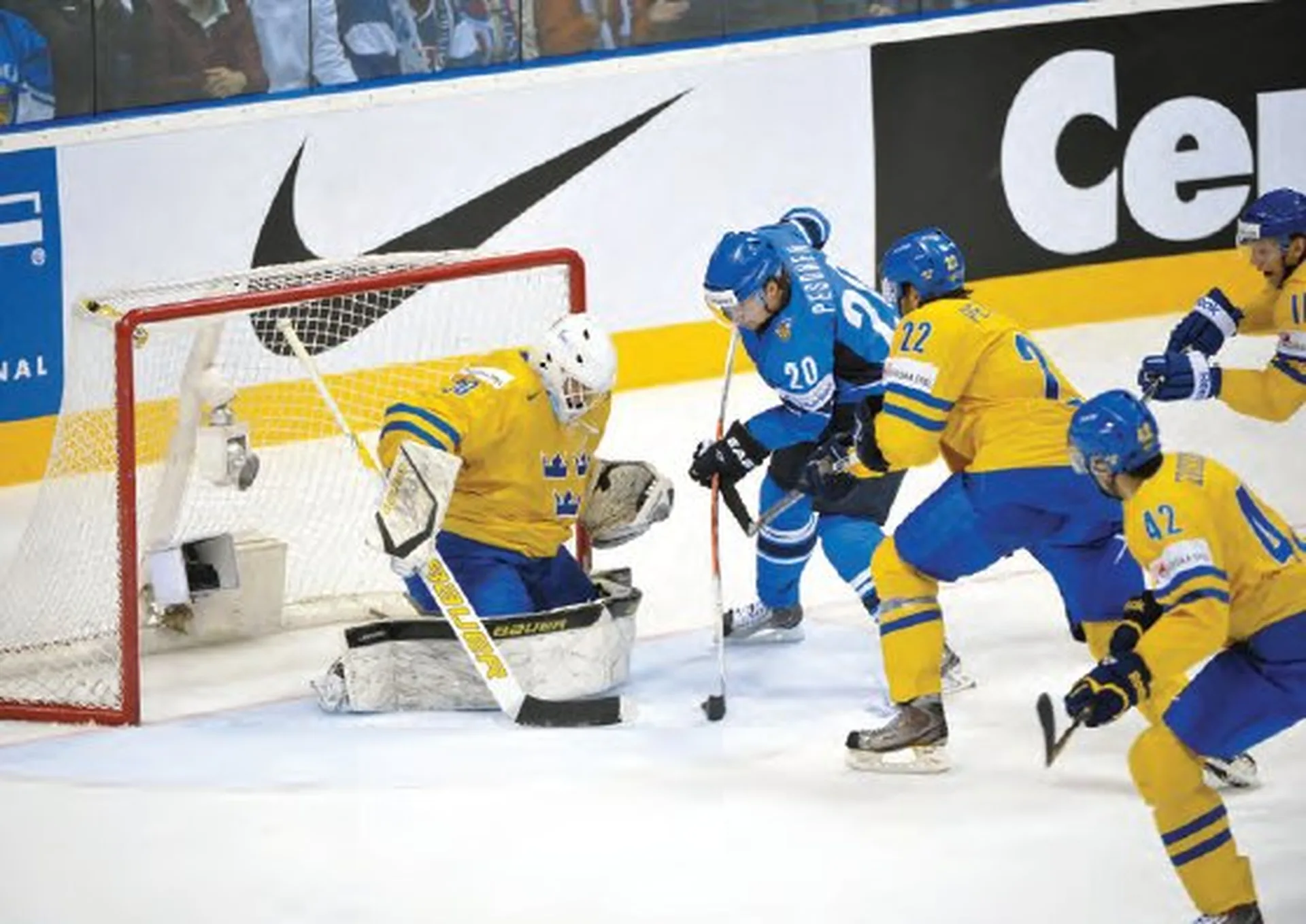
Ten years later, the identical twins Henrik and Daniel Sedin made their debut at Modo Ornkoldsvik. They were about to become two of the most valuable hockey players of all times. In 2000 they moved to Vancouver Canucks and became famous worldwide. They were not the only ones who came from Modo, so did Peter Forsberg, who is considered the most successful Swedish hockey player ever. He was a double Olympic Champion, a double World Champion and twice the winner of the Stanley Cup with the Colorado Avalanche team; he is now 41 years old and a member of the Triple Gold club and the only Swedish player who has won these 3 competitions twice. What does playing for the national team mean for him? “When you are on the ice, wearing the national team t-shirt and the anthem is being played, the feeling is always incredible. You are there and you know you have done the best for your country. You know you have won the golden medal. It is a unique, awesome and impossible to equal feeling”, said Forsberg, thinking of the four major titles he has won for Tre Kroner.
Other Swedish international players make the same honest, transparent and upright speech. “Being able to take part in a small group of people who play and represent their country is truly special. For me it is important to wear the Tre Kronor t-shirt, I am very proud of that, says Gabriel Landesko (age 22, Colorado Avalanche), one of the youngest members of the national team, whose father was also a hockey player.
Lars Nicklas Backstroem, age 27, member of the 2014 Soci team, but also of the NHL Washington Capitals, says: “When you are a boy you dream and can`t wait to play in Sweden`s first league and in the national team. Playing for your country at the Olympic Games is a magical thing, a feeling that is impossible to describe”. But, the Soci Olympic Games meant a double disappointment: Sweden lost the title and he couldn`t play in the final. Because he tested positive for an allergic drug containing pseudoephedrine, the anti-doping regulation did not permit him to play in the final- the most important match. Yet, he received the silver medal after the International Olympic Committee issued a decision on the 14th of March 2014.
Things would have been different playing against Canada with Backstroem? „The final match is also the hardest one of the entire tournament”, explained the legendary Daniel Sedin, one of the golden twins, now aged 34 and still a very strong and valuable player. “We and the Canadians got better from one match to another”. Finally, Canada`s national team won with 3-0, keeping the title they have conquered in 2010, in Vancouver. But the Swedes were the Olympic Champions of the 2006 Torino edition. 6-2 in the quarter finals with Switzerland, 7-3 in the semifinals with the Czechs and 3-2 in the final played against Finland. They have also won the Olympic Games title in Lillehammer 1994. The golden medals won at the World Championships are more numerous, 9 to be more exact - the first one was obtained in 1953, while the most recent in 2013.
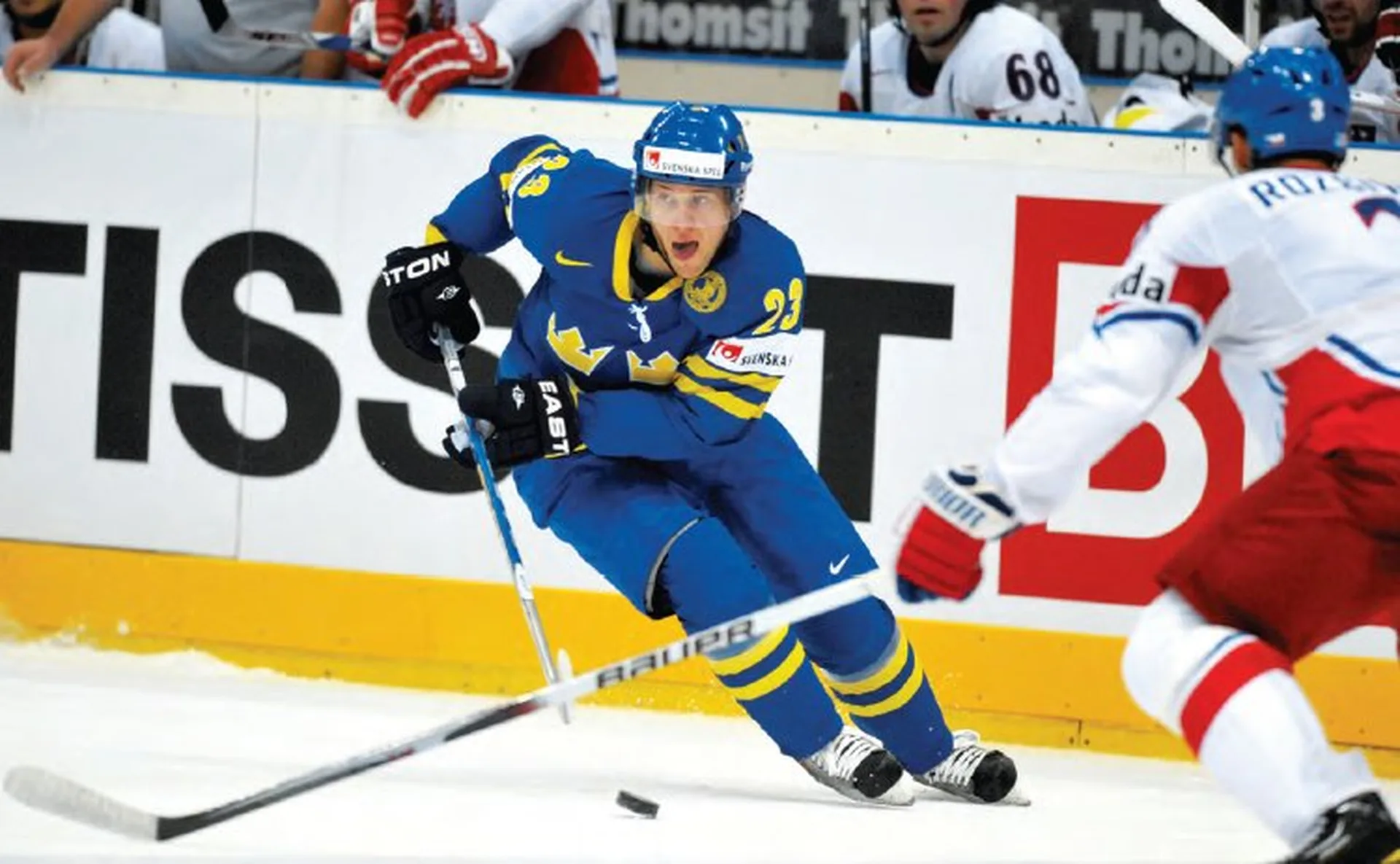
Hockey is still very much loved in Sweden. There isn`t a
child who has not made at least one step on the ice, with his skates on, dreaming
that one day he will wear the yellow-blue t-shirt of Tre Kroner.
The Swedish Hockey League SHL has gathered during the 2013-2014 season a total number of 1.974.388 spectators, an impressing number for a country with a population of 9, 7 millions inhabitants. The average audience per match - 5.983 spectators – was outclassed only by the national football team`s matches. But this is no surprise, as football is considered the king of sports. Yet, in Sweden, sometimes it is uncrowned by hockey. Especially when the Tre Kroner players come back from the Olympic Games and from the World Championships with precious medals around their necks.
SWEDEN`S NATIONAL TEAM RECORD
Olympic Games
2 golden medals (1994, 2006)
3 silver medals (1928, 1964, and 2014)
4 bronze medals (1952, 1980, 1984, and 1988)
World Championships
9 golden medals (1953, 1957, 1962, 1987, 1991, 1992, 1998, 2006, 2013)
17 silver medals (1947, 1951, 1963, 1967, 1969, 1970, 1973, 1977, 1981, 1986, 1990, 1993, 1995, 1997, 2003, 2004, and 2011)
16 bronze medals (1954, 1958, 1965, 1971, 1972, 1974, 1975, 1976, 1979, 1994, 1999, 2001, 2002, 2009, 2010, and 2014)