by Monica Crânganu
There are just a few cases in history when the urban plan of a city was thought by only one architect who had designed and built within a few decades new areas inside the existent city by respecting all the rules – such is the case of Ljubljana, Slovenia`s capital. It is impossible to speak about the identity of Slovenian architecture without mentioning the architect Jože Plečnik (1872 - 1957). His work goes beyond the borders of his home country as he made a name for himself in Austria (Vienna) and Czech Republic (Prague) as well. He had studied in Vienna and quickly became a very courageous and creative architect; he approached the historical architecture with his own formal language, providing value to the symbols and highlighting the ethics and the sense of history. The Castle of Prague is Plečnik`s first monumental work; it took him 15 years to finish it and it made him known worldwide. When he was around 50 years old, he came back to his home city, Ljubljana and, through his activities, become a militant for the social importance of architecture and the architect`s role.
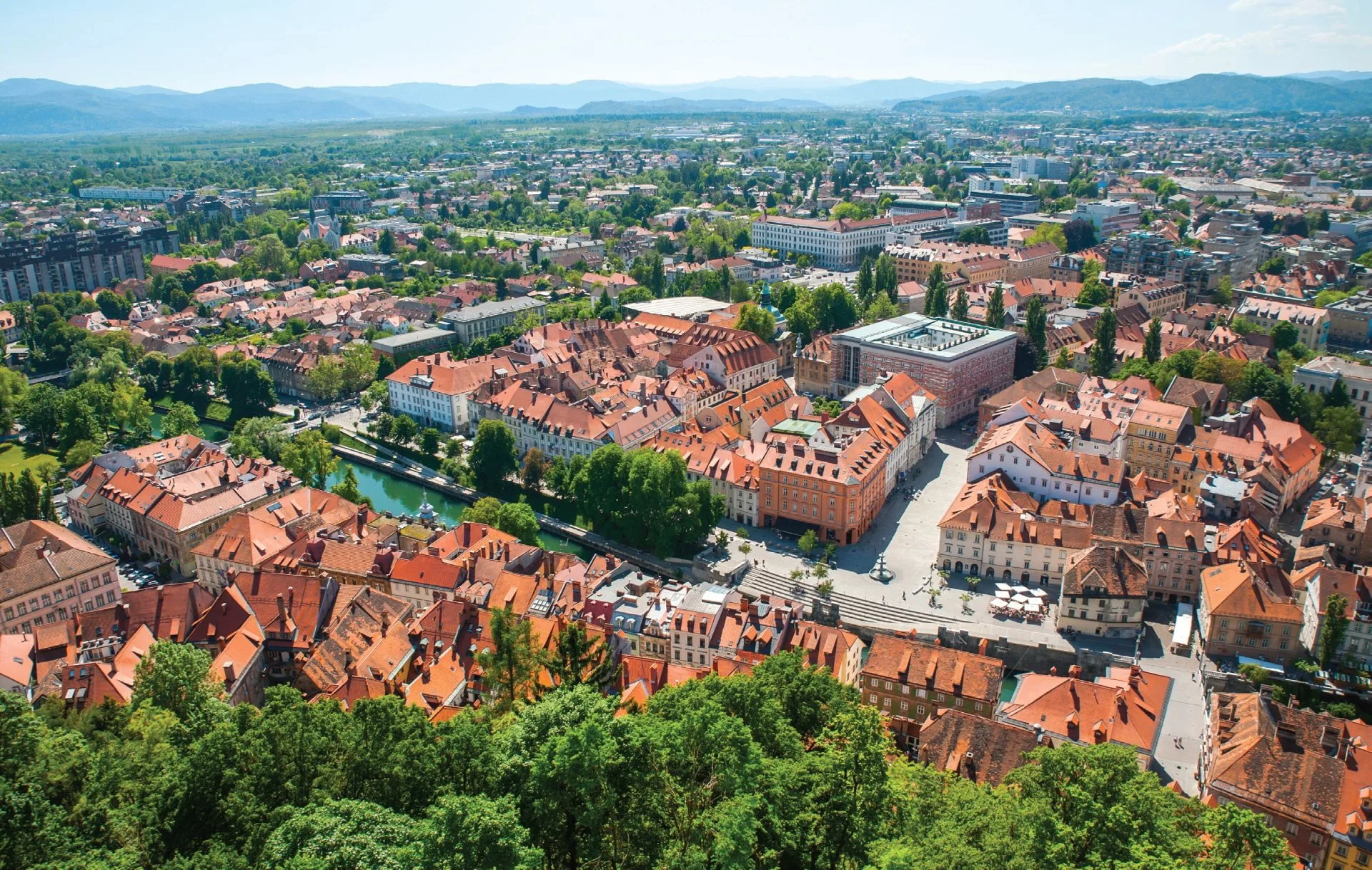
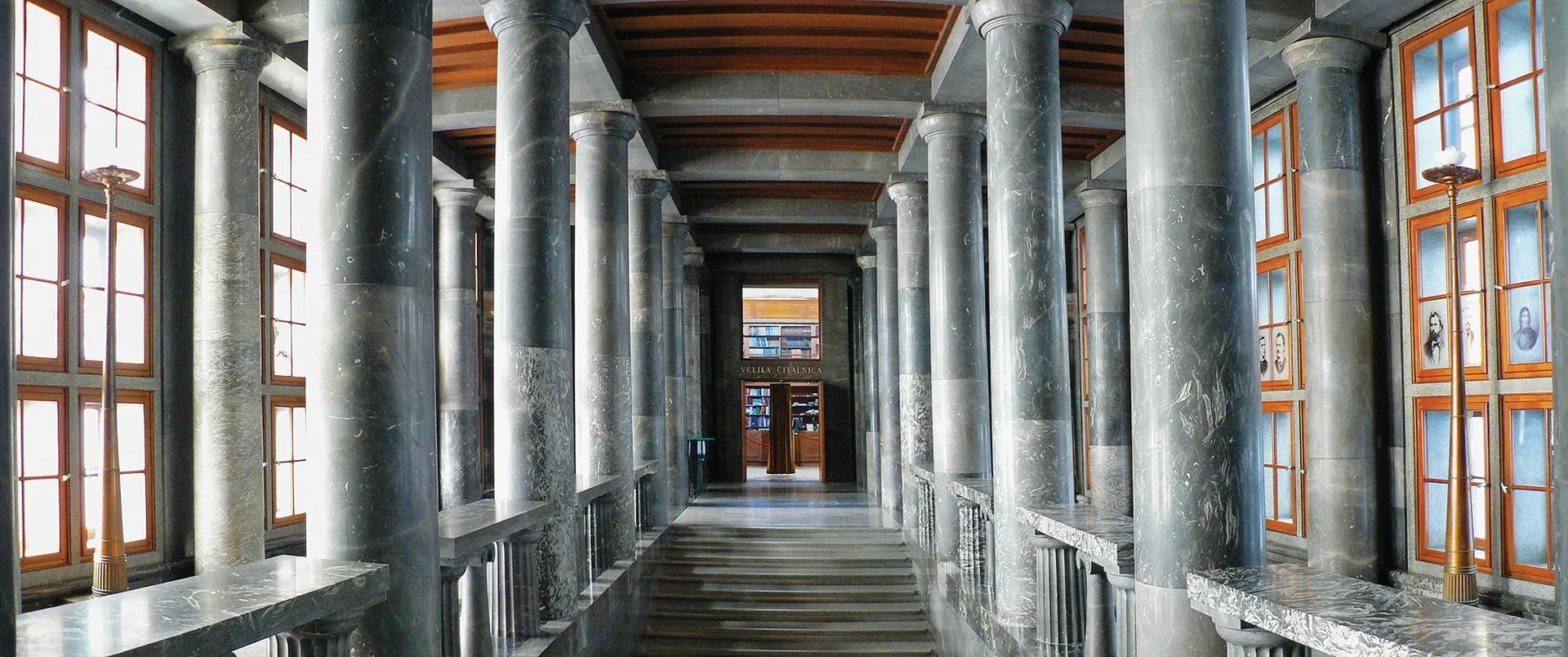
Jože Plečnik is the main responsible for today`s urban arrangement of Ljubljana; he started working for this project immediately after the First World War, as part of a pioneering action. The way in which he shaped up the identity of the Slovenian capital is often compared to the role that Gaudi had played in Barcelona. Along the Ljubljanica river that flows through the city and its beautiful colonnades, the architect had created a series of new buildings, some monumental constructions, some small squares (like the Congress Square), parks (Tivoli, Zvezda) and the three central bridges. Among the constructions that became emblems of the Slovenian capital, we mention the National and University Library, the Church of Saint Francis from Šiška, the Church of Saint Michael in Barje, the Baraga Seminar, the Stadium and Žale necropolis.
The plan of a future 120 m high Parliament Tower was one of Plečnik`s most daring and unachieved project, although it became a symbol placed on the 10 eurocents coin.
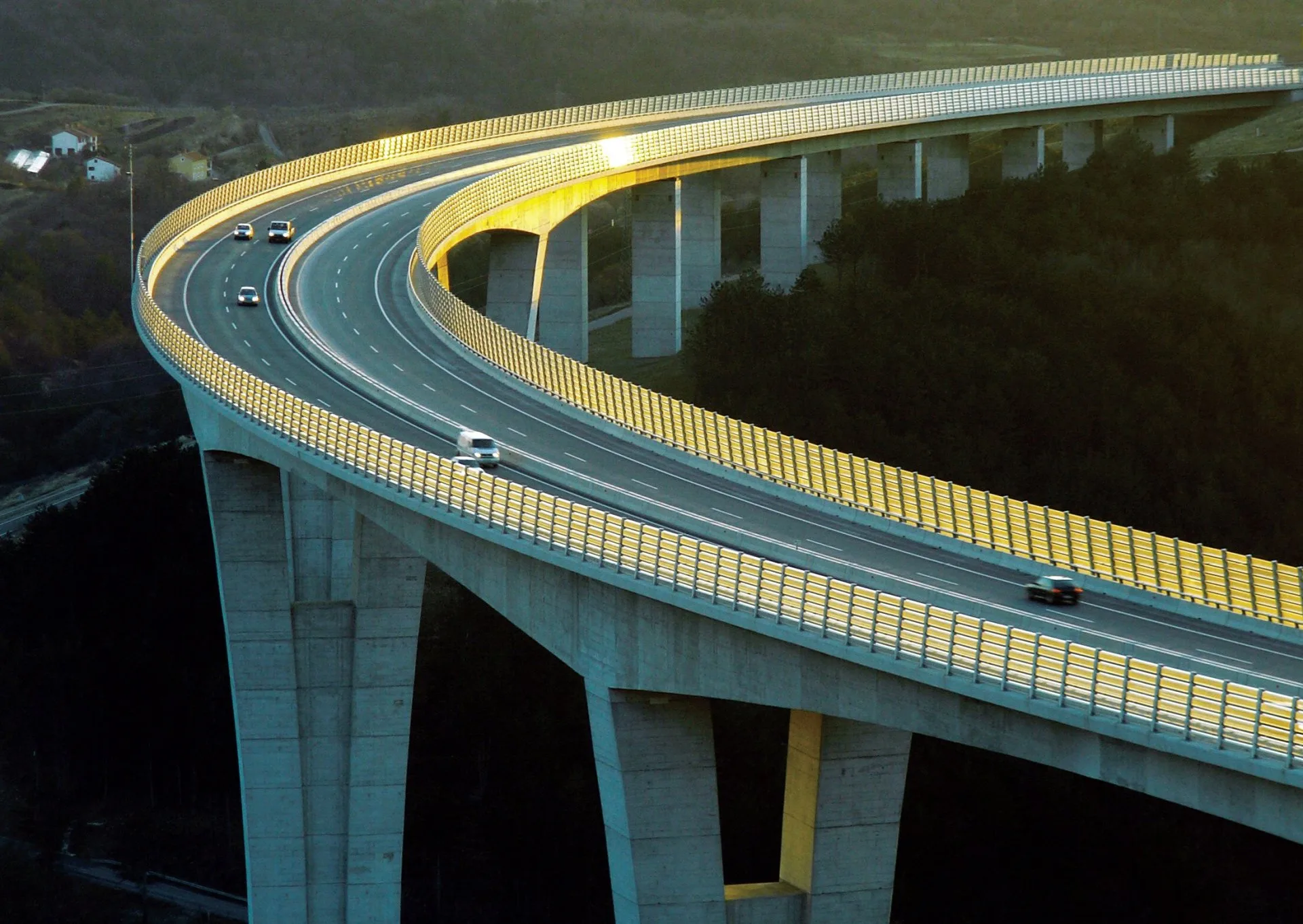
Modernism continues making statements and giving birth to examples of creativity, thus proving that Slovenia is in full cultural and technological bloom. Using Plecnik`s porches, the Central Square of Novo Mesto makes a contemporary reinterpretation of the classical architecture elements.
The house of Jože Plečnik in Trnovo, in Ljubljana, has been the home of the Architecture and Design Museum, a place that brought together the main exhibitions of architecture, graphic and industrial design, urbanism and photography. Since 1992, the museum was moved to the Fužina Castle, one of the few buildings that, despite its numerous restorations, has preserved its renaissance features, typical for the time when it was built (the first half of the 16th century).
Among the contemporary design exhibitions, hosted by Architecture and Design Museum the one organized in the memory of Niko Kralj (1921 – 2013) – The Unknown Famous Designer – displays documents, sketches, photographs and prototypes of the famous industrial designer and represents an important part of the Slovenian cultural identity. He designed the Rex armchair, the Lupina chair, the modular furniture system Futura, Savinja, Javor, Konstrukta; and also the Mosquito chair created in 1953, but being produced only in 2012, due to its complex manufacturing process.
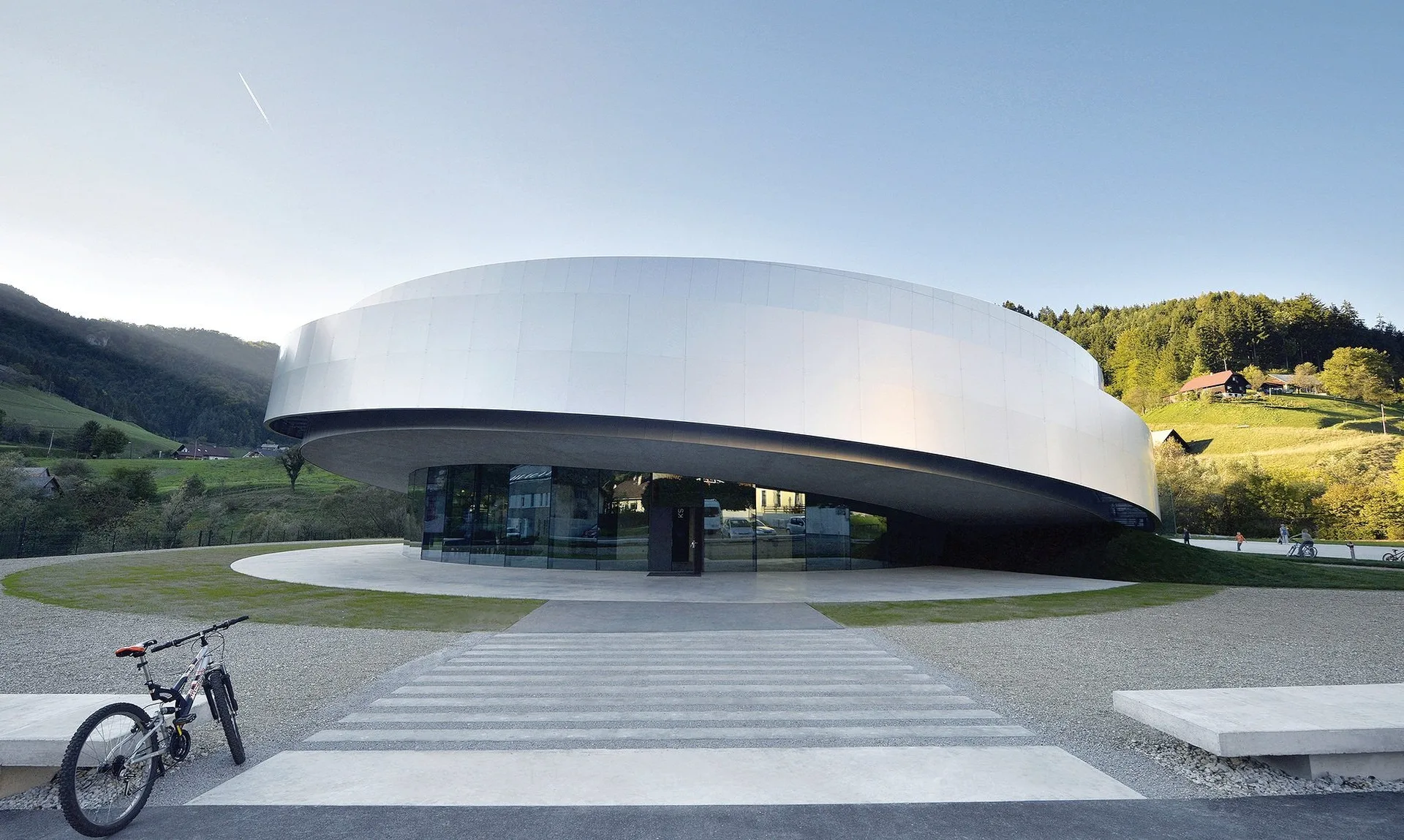
The most eloquent proof of a harmonious liaison between the past and present values is represented by the European Cultural Center of Spatial Technologies (KSEVT), opened in 2012 in Vitanje, as an homage brought to the first Slovenian space theoretician Herman Potočnik Noordung. The magical place bordered by the neo-classical Church of the Holy Mother, the gothic Church of Saint Peter and the former Episcopal Manor House, culminates with the fascinating futuristic 2500 m² building that has replaced the old Cultural House. The spectacular creation was the result of the work of some representative contemporary architects: Bevk Perovic Arhitekti, Dekleva Gregorič Arhitekti, Ofis Arhitekti and Sadar – Vuga Architects. Its profound symbolical identity founded its inspiration in Potočnik`s sketches and designs of the first geo-stationary space station, as drawn and described in his book, back in 1928. The impressive monolithic concrete building is made of two cylindrical parts that relate in such a way one with the other that create an impression of levitation and rotation. Beyond the intrinsic value of the building, the KSEVT is a concept based on multiculturalism and interdisciplinary research, and it became a space where artists, scientists and philosophers meet and discuss. The place also hosts an important library.
Modernism continues making statements and giving birth to examples of creativity, thus proving that Slovenia is in full cultural and technological bloom. Using Plečnik`s porches, the Central Square of Novo Mesto (designed by Enota architecture studio) makes a contemporary reinterpretation of the classical architecture elements. This short X-ray of the Slovenian architectural landscape is far too brief to contain the richness and the variety of all artistic styles and expressions. By regarding only a few of the projects accomplished by some of the most active Slovenian contemporary architects, including the authors of the Cultural House, we realize that the path opened by Jože Plečnik is merely a part of what they can provide through creativity and science.
Architecture must be observed for a long time in order to be capable of understanding it. Here is only a part of Slovenia’s representative constructions which set the current trends: http://www.e-architect.co.uk/slovenian-architecture.