by Diana Ursan
Adrian Ghenie is one of these few. The Romanian artist was born in 1977, in Baia Mare and had a quick rise up the ladder of success – in just a few years he went through the phases of acknowledgement and assertion. After his first personal exhibit in 2006, he has collaborated with some important international galleries: since 2008 with Tim Van Laere Antwerp and Nolan Judin Berlin and afterwards with the famous Pace Gallery, London and New York. In 2009 the prestigious German printing house Hatje Kantz had published his first monograph paper; his works can be found in the contemporary art museums Georges Pompidou, Hammer Museum LA, SF MoMA and S.M.A.K. from Ghent, and in essential private collections, such as François Pinault`s. Recently, he recorded his second auctioned sale over 1 million pounds – for the work called Duchamp’s Funeral I, thus certifying the stability of his quota.
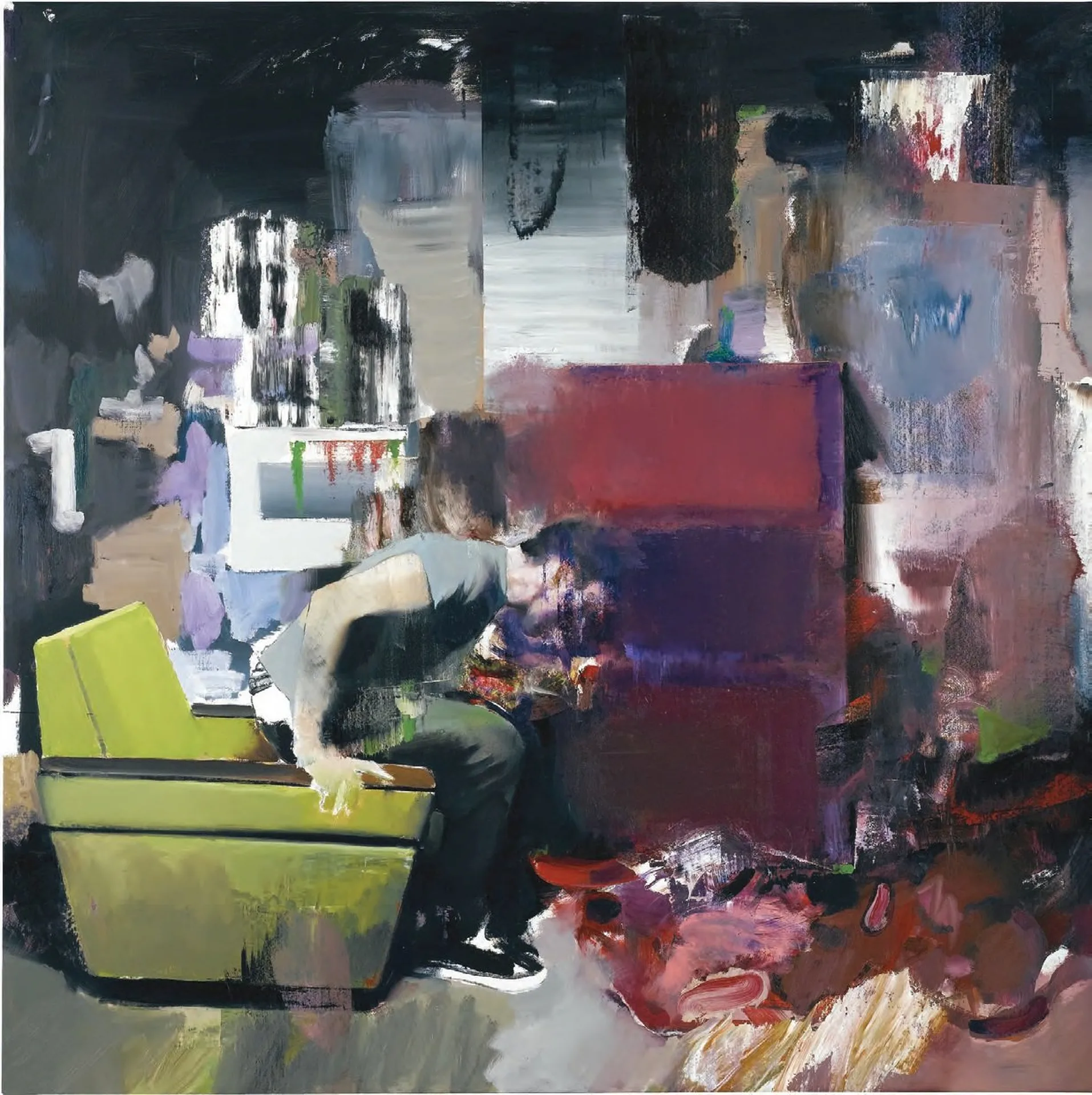
The Romanian public had a first contact with Ghenie`s paintings in 2006, in Cluj, and in 2009 in Bucharest – at the MNAC, when he hosted his first personal exhibition in a museum; yet, the auction record set on the 30th of June 2014 placed him into the local consciousness. His work The Fake Rothko obtained 1.426.500 pounds (1.778.422 euro) at Sotheby’s and reverberated in the national media as an immutable proof of his valuable art; this event has been generating an avalanche of titles – more or less inspired – that bring together the artist’s sum, youth and Brâncuși`s example.
Ghenie`s success is real and not at all easy. Based on the well known story of failing and trying over and over again, it can be appreciated in the context that formed a true artistic center around the “Cluj School”. Ghenie wasn`t the only one who - after being educated in the stark post-1989 environment and having a first immigration attempt to Vienna at the beginning of the 2000s - was unable to integrate and became aware of the major differences between western and local contemporary art. Ghenie, together with some other Romanian artist in similar situations, as Mihai Pop, started Plan B in 2005 - a gallery meant to act as an alternative to the state artistic sector and as a platform for collaboration, creation and exhibition. Although, in market terms, his results are most impressing, the fact that he made a name for himself is no exception. It also coincided with the rise of a generation of artists launched at Cluj and Plan B divergent artists, such as Ciprian Mureșan, Victor Man, Șerban Savu, Mircea Suciu, Marius Bercea and others.
The circles of artistic consideration and consecration are like waves generated by content, talent and work that disperse themselves in the desirable environment. Ghenie understands the game and the means of the artistic scene and knows that contemporary art has a long and consistent history behind it. Thus, he is using it consciously. Beyond the economical value and the logics of the right context, his artistic, conceptual and esthetical bonds strike out.
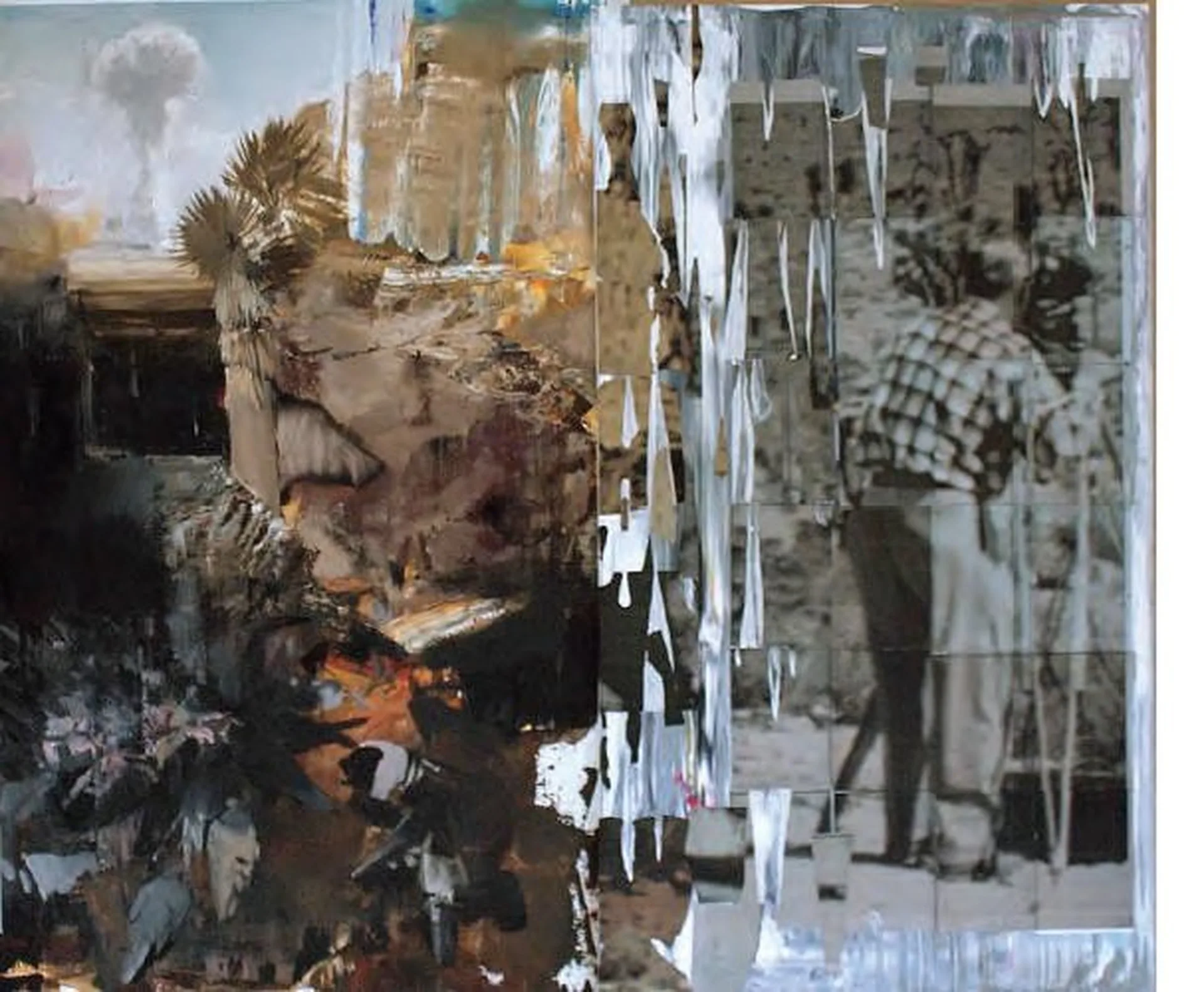
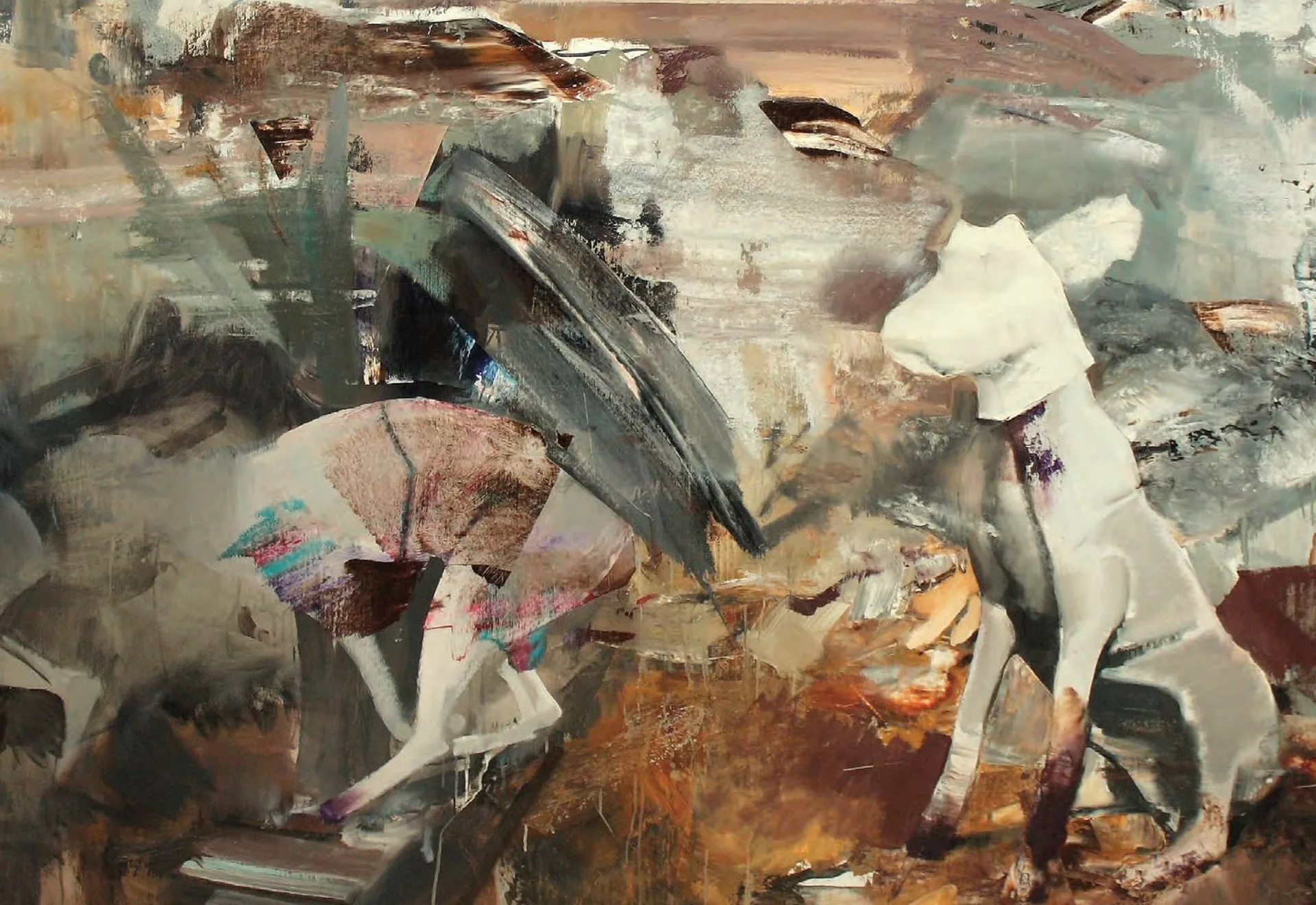
Adrian Ghenie's works convey complex messages, inscribed in a palimpsest of peeled, scratched, flayed color. On the textured surfaces of his canvases, with splashes, drops and tactile touches, cultural, historical and personal references intertwine...
Adrian Ghenie`s works convey some complex messages part of a manuscript page that is scraped, scratched and grazed. The textured surfaces of his paintings blend in cultural, historical and personal references, with splashes, drops and touches, in a reinterpretation of the pictorial genres - the portrait, the interior scenes. This applies for example to the Pie Fights series started in 2008, the sinister personalities of the 20th century - Hitler, Dr. Mengele, Hermann Göring, the Ceaușescu couple, the attraction and the temptation exerted by art`s history models – such as Rothko, in The Fake Rothko, or Van Gogh, Rembrandt, Francis Bacon.
Besides all these, the status of the painting represents another central coordination of his creation. The painting had been declared death countless times by the 20th-21st centuries` vanguards and neo-vanguards, yet it refuses to resign. Innovating artists like Adrian Ghenie are reconfirming every time its eternal potential of conveying contemporary ideas and emotions. The artist carries a timeless dialogue with the disparagers of the painting through the Dada and Duchamp references that he integrates and combats in his works. Duchamp’s Funeral functions as a sort of poetic art, as an expression of the painting`s longevity and relevance.
Ghenie`s art cannot be subscribed to a certain category or style – similar with the art of Francis Bacon, with whom he was often compared to – and creates haunting images, both strange and familiar at the same time. The visual sequences take over, seduce and swallow the viewer in a parallel cinematographic reality. In fact, the artist acknowledges his inspirational sources and the appetite for film noir or David Lynch.
Adrian Ghenie has a special relationship with history and has chosen to live in Berlin, a traumatized city where the traces of the past are visible and left out in the open, making it impossible to forget – as he shows in his most recent exhibition Berlin Noir, hosted by the Galerie Judin. However, the artist did not abandon his own history and has been actively contributing to create contexts that favor local contemporary art: he opened the Plan B Gallery in 2005 and was involved in the set up of the artistic center Fabrica de Pensule (The Brush Factory) in 2009, in Cluj. This is somehow anachronistic for an artist who does not work with brushes, but with stencils and palette knives.
Adrian Ghenie has a special relationship with history and chose to settle in Berlin, a traumatic city where traces of the past are visible and left in plain sight, making forgetting impossible – as his most recent exhibition at Galerie Judin, Berlin Noir, shows.