by Ana Maria Bodeanu
You grew up in a small town in Romania, with little exposure to the visual arts. How did your relationship with art begin?
I was born in Onești, a small industrial town, and my early contact with art was almost nonexistent. Still, I remember something from primary school: we had an art teacher named Ghiță Mocanu, a beloved local painter who tragically died – struck by a train while painting, or so I remember. After his death, the school was renamed in his honour. In the art room, there were drawings on the wall – children dancing in a circle – and those images stayed with me. They gave me a sense of peace. The fact that I still remember that room with warmth says a lot.
At the age of 7, I was already drawing cartoon characters and sticking them to my bedroom walls. It was probably a way of creating something personal, in a space where options were few. My parents worked shifts at the local petrochemical plant. Life was simple. I went to school alone, came home alone, fried my own potatoes, did my homework, packed my bag. Looking at my kids now, I’m not sure which approach is better, but I know I was happy – and I want the same for them. We lived in a 50 square meter, two-room apartment. Holidays and birthdays happened around the same extendable table every Romanian kid of my generation knows. Because my sister was 13 years older than me, I eventually had a room of my own. That made me happy too. It might sound more refined to say I saw Picasso’s Science and Charity at age six and was forever changed – but the truth is simpler. It all started like an unfinished message left by someone else. A few drawings. Some graffiti. And then it stopped, as adolescence brought other distractions. Art wasn’t a clear path. Life seemed to be preparing me for a more ordinary future – working at the plant, like my parents. At its peak, that plant had over 30,000 workers. Now, there are only a few hundred. That shift reflects not only economic decay but a generational shift in vision and meaning.
With every milestone, I’ve grown more determined and more faithful to the path I chose.
You’ve experienced a spectacular evolution – from small shows in Romania to major international exhibitions at HOFA Gallery in the UK, and at Art Miami, Art Basel, Contemporary Istanbul, Art21 Shanghai, Frieze Chicago, and Art Central Hong Kong. How did that journey unfold?
In 2010, I was 22. I had left home, lived in Bucharest, and had tried moving to London. Eventually, I returned to Onești. Inspired by books, people and personal clarity, I decided to focus on one thing – art. It was something that brought me joy without feeling like I was doing it for someone else. It wasn’t glamorous at the start. Most successful artists were long dead. But I wasn’t overthinking it. I made a decision and went all in. My first international show was in Sitges, near Barcelona. A gallery invited me to exhibit portraits of Black icons and public figures. Before that, I was showing my work in restaurants or hotel lobbies. That moment pushed me to start mapping every European art fair. In 2017, I exhibited in London for the first time. It made sense – I had friends there, I knew the city, and it was easy to organise. I returned three times that year. Again in 2018. And then again in 2019. Along the way, I built lasting relationships with collectors, dealers, and artists across Europe. Some helped get my work into private shows, niche events, underground salons. I worked with galleries in Belgium and the Netherlands. Then in 2020, a London-based collector introduced me to the creative director of HOFA Gallery. That changed everything. What I thought was the finish line turned out to be the starting point.
Now, looking back, I realize it took ten years to get there. Honestly, I’m not sure I’d have the courage to start again. It’s been beautiful, but never easy. Some days, I truly believe only God carried me through. I said “ten years,” but it’s been fifteen. And the last five were the most intense. With every milestone, I’ve grown more determined and more faithful to the path I chose.
You’ve participated in some of the world’s most important international art fairs, including Art Miami. How do you see the presence of Romanian art on the global contemporary scene?
Indeed, Miami in December – and especially during Art Week – is truly spectacular. I have several important collectors who have also become close friends, and every year it’s a pleasure to explore the entire circuit with them: Art Miami, Art Context, Art Untitled, Art Scope, and of course, the grand finale – Art Basel. On top of that, there are dozens of private events happening in Wynwood or the Design District. I say it’s spectacular because you get the chance to see what’s truly at the top of the art world. And yet, sometimes I feel like time and context aren’t fully aligned – despite the massive crowds. Just to give you an idea: last year, HOFA Gallery tracked over 1.3 million visitors across the fairs where we exhibited, just based on people who passed through and interacted with the works. That’s a staggering number, but it still feels like only a glimpse of what’s possible. As someone who has exhibited in Miami six times now, I’ve always looked around for Romanian galleries – or even Romanian artists represented by foreign galleries – but unfortunately, the presence is minimal. Last year, I found only one gallery from Romania at Art Untitled, based in Timișoara. I don’t know the owner personally, but we share several mutual connections. And of course, I also spotted a single work by Adrian Ghenie, which I had actually seen before, two years earlier in London, at a solo show of his that happened not far from my own third solo exhibition with HOFA.
That being said, I don’t want to draw any harsh conclusions. I fully understand the immense costs and logistical hurdles involved. But for me, it’s always worth it. Showing up and exhibiting there is never in vain. Last year, for example, I made some incredible new connections – from billionaire business owners to high-profile lawyers in Donald Trump’s legal circle, and even some extraordinary gallerists from Palm Beach. These are people deeply connected across the spectrum – from A-list celebrities to fintech pioneers. That’s the kind of network and energy you find in Miami during Art Week. And I’ll keep coming back, not just to exhibit, but to stay connected to that pulse.
So Distortion and Desire is not about scandal. It’s not eroticism. It’s about human contradictions. It’s a visual diary of a place I once witnessed – a place where people revealed their truest, most unspoken selves. I didn’t judge. I didn’t beautify. I just observed. And when the time came, I painted.
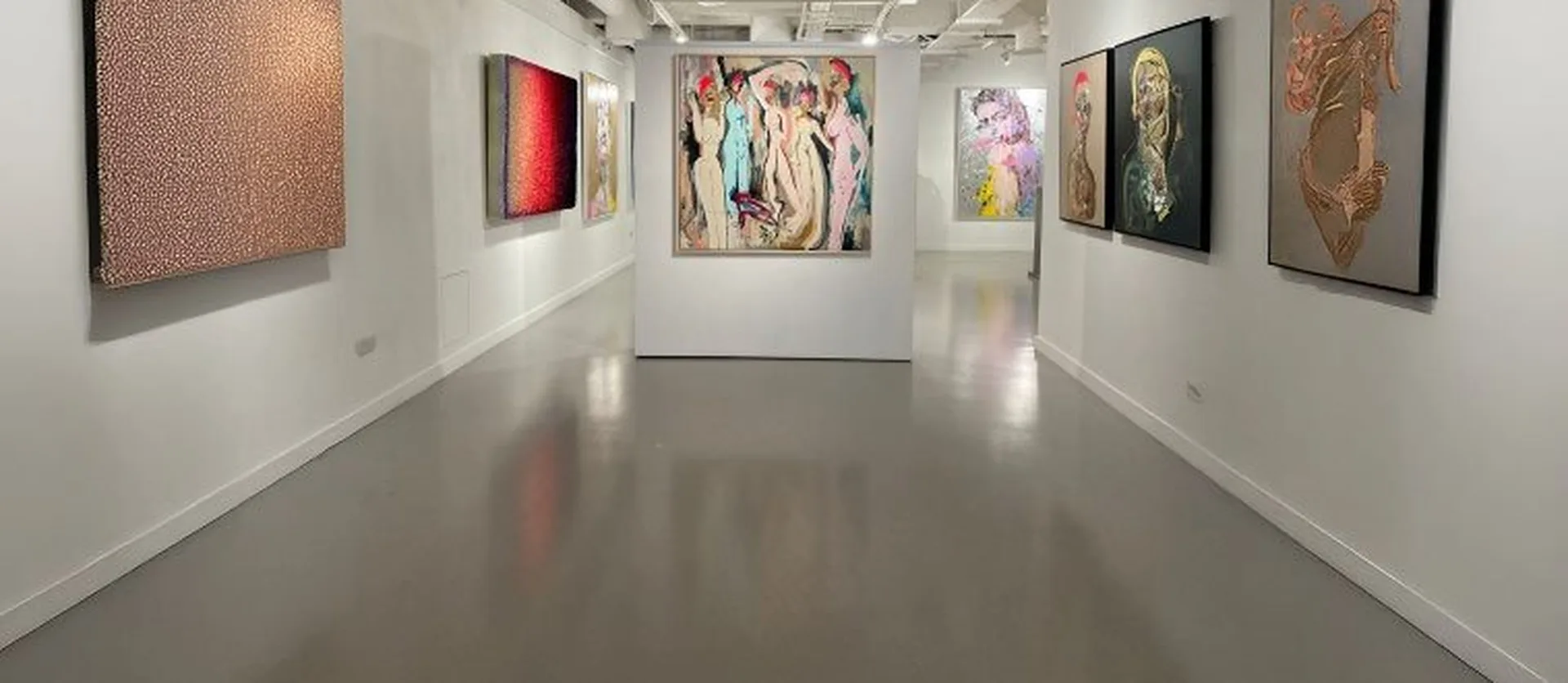
You were recently present at the HOFA x Phillips Digital Art Awards Gala in London – an event that brought together legendary modern masters and pioneering digital creators. How did it feel to exhibit in such a space, and what did you take away from that experience?
My presence at the HOFA x Phillips Digital Art Awards Gala in London marked more than just an exhibition – it became a moment of deep personal and artistic reflection. I’m proud to have shown my work in the same space where pieces by Pablo Picasso, Francis Bacon, Banksy, and Roy Lichtenstein were on view – artists who have shaped the very foundation of modern and contemporary art. For one night, my paintings breathed the same air as theirs.
But what struck me even more was the symbolic nature of the event itself – a kind of passing of the torch to a new generation of visionary digital artists. Among the winners were Maja Petrić, Zachary Lieberman, DeeKay, and the duo Operator (Ania Catherine & Dejha Ti) – creators who are actively redefining what art can mean in the digital age. Their work is not just visual – it’s coded, generative, fluid, and often driven by community and technology rather than tradition. I was moved by the clarity of their purpose and the technical depth behind their aesthetics.
That realisation stirred a quiet tension within me. I felt like I was standing at a threshold – between epochs. As if traditional painting, with all its texture and weight, was slowly stepping back into legacy mode, while digital work was confidently stepping forward to define a new cultural rhythm. The permanence of a Picasso reassures me – his relevance is eternal – but this in-between space also unsettles me. Still, I don’t see this dissonance as a fracture. I see it as a transition. It invites me to realign – to carry forward the emotional, physical, human intensity of painting while remaining open to the forces of innovation and disruption. I don’t want to choose between generations. I want to connect them. I want to be part of the bridge between what art has been and what it is becoming. And perhaps the most meaningful aspect of that evening was having the chance to stay in close contact with Ross Lovegrove – a name that needs no introduction. He is one of the rare minds who truly cannot be defined. The designer of the first Sony Walkman, and a visionary thinker who moves freely between design, technology, biology, and philosophy. I spent most of my time at the event in deep conversation with him, and I am incredibly grateful for that opportunity. It was less about networking and more about transmission – energy, legacy, insight. This night gave me more than recognition – it gave me clarity about where I am, and where I might be heading next.
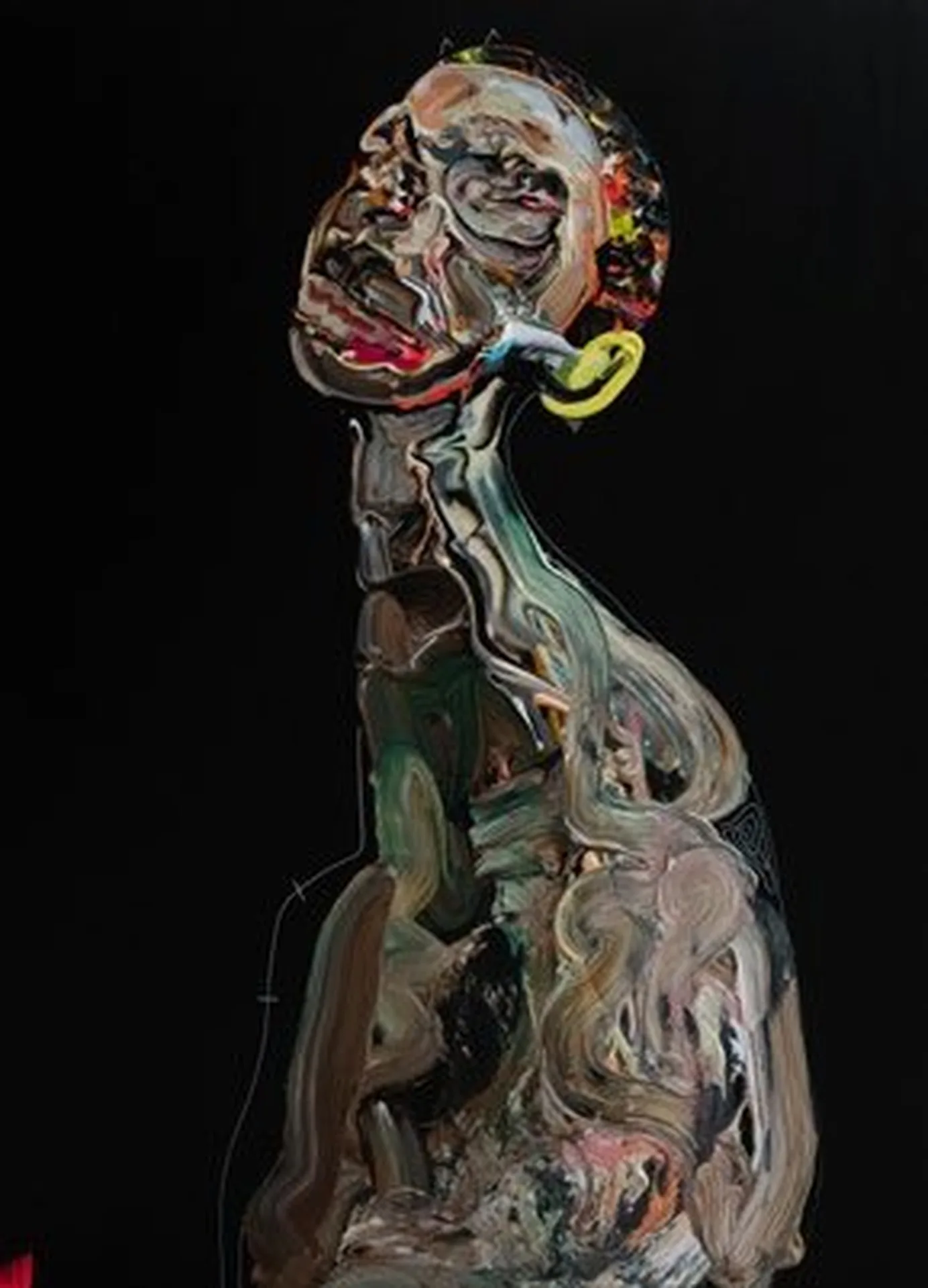
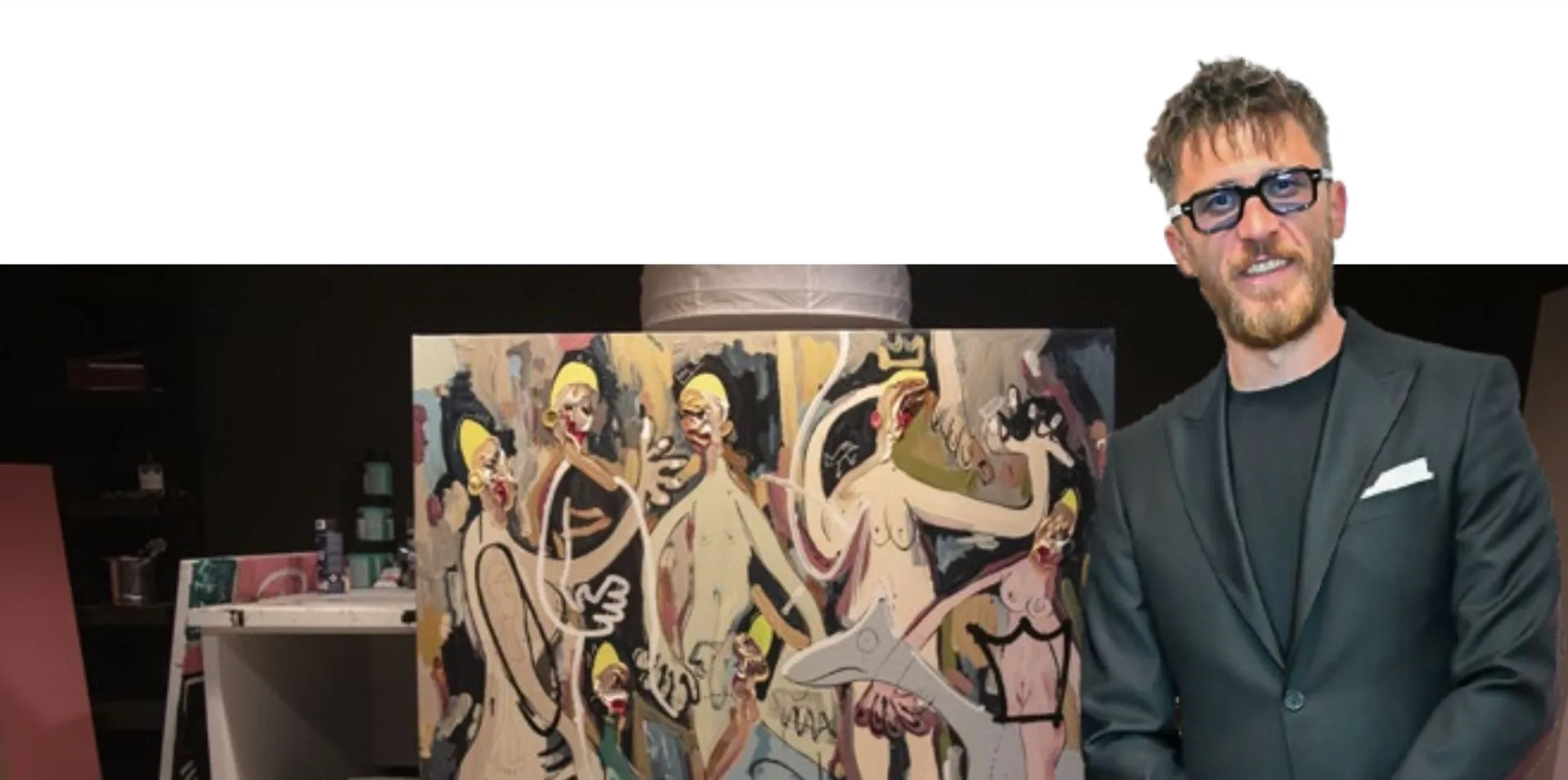
In your four solo exhibitions in London, the Observer series has always been front and center – already a signature of your artistic identity. But in the 2023 show Distortion and Desire, a different type of work stood out. Where did that series come from? What inspired it?
I am glad you noticed that shift – because for me, it was quite meaningful. In fact, although the opening night for Distortion and Desire drew the smallest crowd out of all four solo shows – around 350 people – it generated the most intense reactions. The audience was more eclectic, more unpredictable. And the conversations were different. Those nude pieces were later proposed for several international exhibitions, but surprisingly, some were rejected by curators – not for quality, but for content. That was the first time I truly felt a barrier was being placed in front of me. Not artistic, but cultural. And yes, it was disappointing – not because it stopped the work from reaching new places, but because it reminded me that even now, freedom in art comes with silent conditions. I’ll give you a clear example: one of my most important collectors – the person I know for certain owns the largest number of my works, over 60 pieces from the Observer series – saw this new body of work and immediately contacted the gallery. Eventually, he reached out to me directly, hoping to acquire some of them. Unfortunately, that was no longer possible. And I don’t say that with regret – it just felt like the natural order of things.
Another collector from the U.S. told me he felt embarrassed to ask for those paintings through the gallery, fearing they might be seen as "obscene." A young couple, absolutely obsessed with one of the pieces, said they couldn’t decide whether to take it home because they had young children – and were worried about the kinds of questions it might provoke.
That entire series comes from a different part of me. It began with sketches – free drawings in notebooks – that eventually evolved into large canvases. Most of the imagery was born from a period in my life over 15 years ago, when I was living in Bucharest. I had just ended a long relationship from my teenage years, and I began frequenting brothels or seeing escorts – not out of lust, but out of fascination with the human stories behind them. I was drawn to the lives of those women – their reasons, their circumstances, the way they talked about their clients. Many were students. Some were single mothers. Some had regular jobs. They spoke about their clients like they were just ordinary people – factory workers, delivery drivers, lawyers, doctors. People with seemingly stable daytime lives who came to offload hidden parts of themselves at night. I was shocked, but I was also deeply curious. It made me understand how much each of us carries beneath the surface – unresolved desires, shame, need, chaos.
So Distortion and Desire is not about scandal. It’s not eroticism. It’s about human contradictions. It’s a visual diary of a place I once witnessed – a place where people revealed their truest, most unspoken selves. I didn’t judge. I didn’t beautify. I just observed. And when the time came, I painted.
Has your art changed over time? Where did you start, and where are you now?
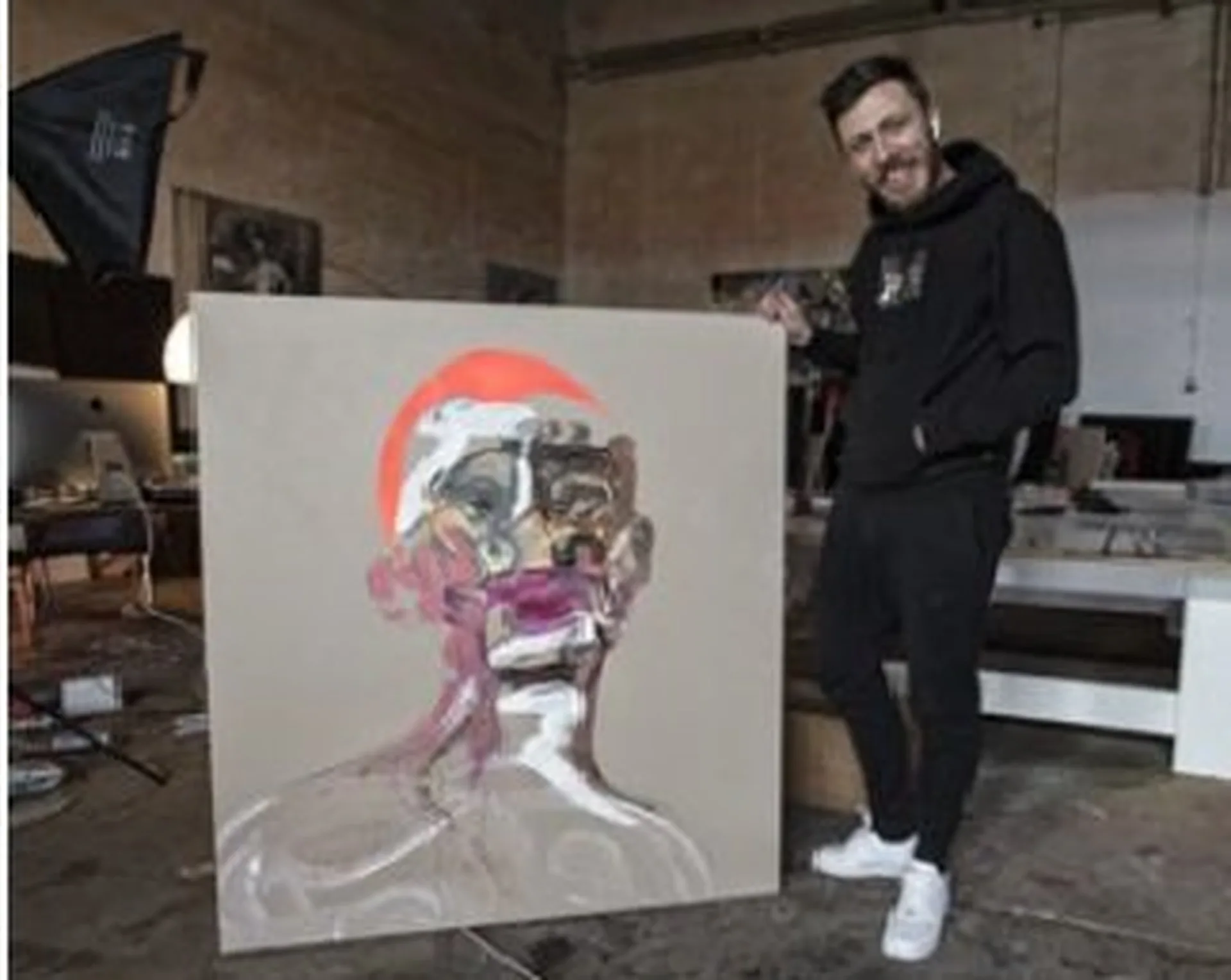
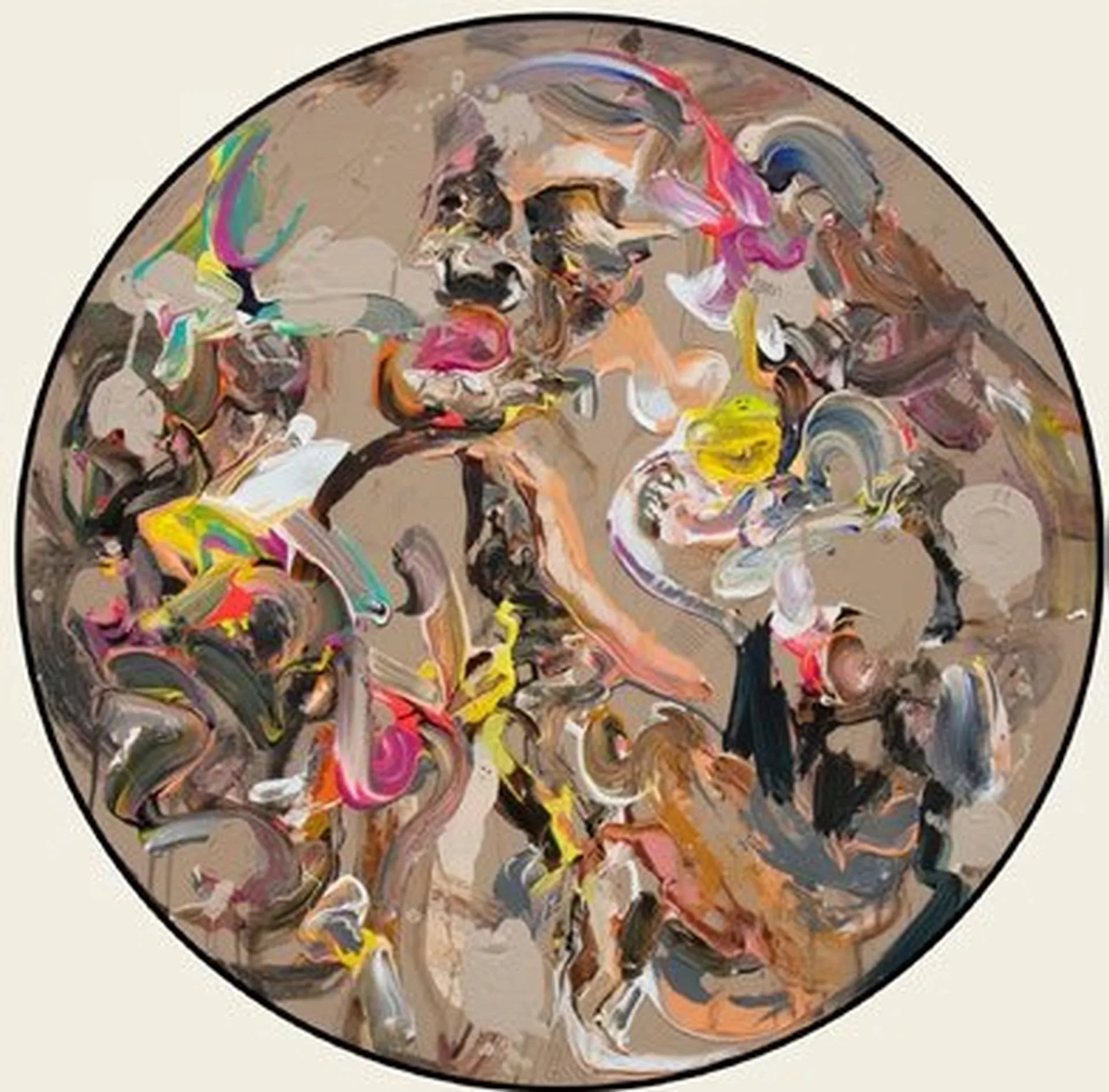
I began with abstract paintings – large and small. Then I studied portraiture, seeking something deeper. The technique fascinated me, but the process became too rigid. I stopped enjoying it. Eventually, I started merging portraiture with abstraction. I wanted to create things that couldn’t be directly compared to anything familiar.
Later, I began limiting my palette, my textures, even my strokes – to build something unmistakably mine. So that when people saw it, they’d say: “That’s a Vladinsky.” It didn’t come overnight. It came from hundreds of trials and studies. I used to fear being copied. Now I know that what I do is nearly impossible to copy – even for myself. I’ve seen artists borrowing elements from the Observer series. I don’t mind. I just ask them to credit me as inspiration – like I do with the artists who shaped me.
There’s no final arrival. Only beginnings. And ways to explore them.
What message do you hope to convey through your work?
I want people to pause. To truly observe. In a world obsessed with speed and achievement, I believe beauty is found in the depth of the journey, not its destination. For me, art is an ongoing dialogue with time. Every painting is a pause, a place to become present. My work isn’t about meeting expectations. It’s about creating space for reflection, emotion, and clarity. There’s no final arrival. Only beginnings. And ways to explore them.
Which artists inspired you at the beginning? And who inspires you now?
At first, I was drawn to Franz Kline’s bold lines, Willem de Kooning’s chaos, and Mark Rothko’s meditative color fields. Their works helped me grasp abstraction when I was just starting out. But over time, I’ve drawn inspiration from the lives of artists as much as their work – how they dealt with failure and resilience. Sometimes, a single line in a book or a song lyric changes your whole perspective. I try to absorb everything. To learn from brilliance, and to avoid predictable traps.
Many artists have admitted to using substances to enhance creativity. What is your take on that?
I have immense respect for what I do, and I believe God has placed in me everything I need to be inspired – without external help. For example, with my most recent painting, I ran out of brushes. So I grabbed a toothbrush and used that until I finished the work. What drug could replace that kind of impulse? When you're connected to your purpose, when your process is honest, you don't need extra help. You just need the courage not to lie to yourself – and to keep going.
Does recognition put pressure on you? Do you feel the need to outdo each exhibition or sell more?
I often feel stuck in the studio, like I can’t leave until I finish what I started. That pressure doesn’t come from others. It comes from within – a deep need to stay loyal to the work. Over the years, I’ve created something nearly every day. At the beginning, my dream was to have a Vladinsky in every home. Not realistic – but it kept me going. In 2020, during my first solo show at HOFA, I felt no pressure. And yet, everything sold in a few days. That moment freed me. Since then, I’ve stopped thinking financially. I just focus on being as honest and expressive as possible.
What do you do when you’re not painting?
Although it may seem like I’m always in the studio, I’ve built a life that revolves around it – my house, my kids, my routine. But when I’m not painting, I love to travel. I find inspiration in architecture, culture, and landscapes. I also have a real passion for cars – design, engineering, mechanics. It’s another kind of creative joy. And of course, I spend time with family and friends. They keep me grounded.
If you could speak to the 7-year-old boy who used to stick cartoon drawings to his bedroom wall, what would you say to him?
I’d say: don’t rush. Don’t be afraid that you don’t know what you’ll become. You don’t need to figure everything out. It’s okay to feel different. It’s okay to be alone sometimes. I’d thank him – for his curiosity, for his courage, for turning paper and tape into the beginning of something bigger. Because that small gesture – that first drawing on the wall – wasn’t small at all. It was everything.
If you could send one painting into space – for another civilisation to understand who we are – what would you send?
I’d send a painting from the Observer series. One with a figure staring blankly into the void, wearing that distinctly human expression – somewhere between restrained panic and a revelation that never quite arrives. Basically, the look someone has when they walk into a room and immediately forget why they came in.
It feels like the most honest choice: if the aliens are empathetic, they’ll recognise we’re a bit lost; if they’re superior, maybe they’ll respect the self-awareness; and if they’re dangerous, perhaps they’ll hesitate before attacking a species capable of making something this bewildering.
It’s the only kind of self-portrait we could send into space that doesn’t come across as showing off.
Looking ahead, what are your next steps? Are there any upcoming exhibitions or projects that feel especially important to you right now?
Well, the closest event on the horizon is Volta Basel, where I’ll be exhibiting once again with HOFA during the second edition of Art Basel this year. I’ll be showing a few new works from the Observer series, but honestly, my mind is already far ahead – deep into preparations for my next solo exhibition, planned for next year in Shanghai. That one is different. I’ve been working intensely on it, and I’ve just completed a selection of 47 small-format paintings under the name: "Trying to Find the One Who Has Stolen My Talent." The collection is also accompanied by a book that includes high-quality images of each work, along with a short story for every single painting.
Originally, we intended to release the book and collection by the end of this year, but I made the decision to slow things down. Not out of hesitation – but out of care. Some things need time. What is already finished is good as it is – but the real question is: what more can still be added? It’s not about perfection. It’s about being fully in tune with the work, with the energy around it, and with what this opportunity represents for me. Shanghai isn’t just another exhibition. It feels like a new layer – an expansion of something deeper I’ve been trying to say for a long time. And I want to make sure it comes out the way I feel it.