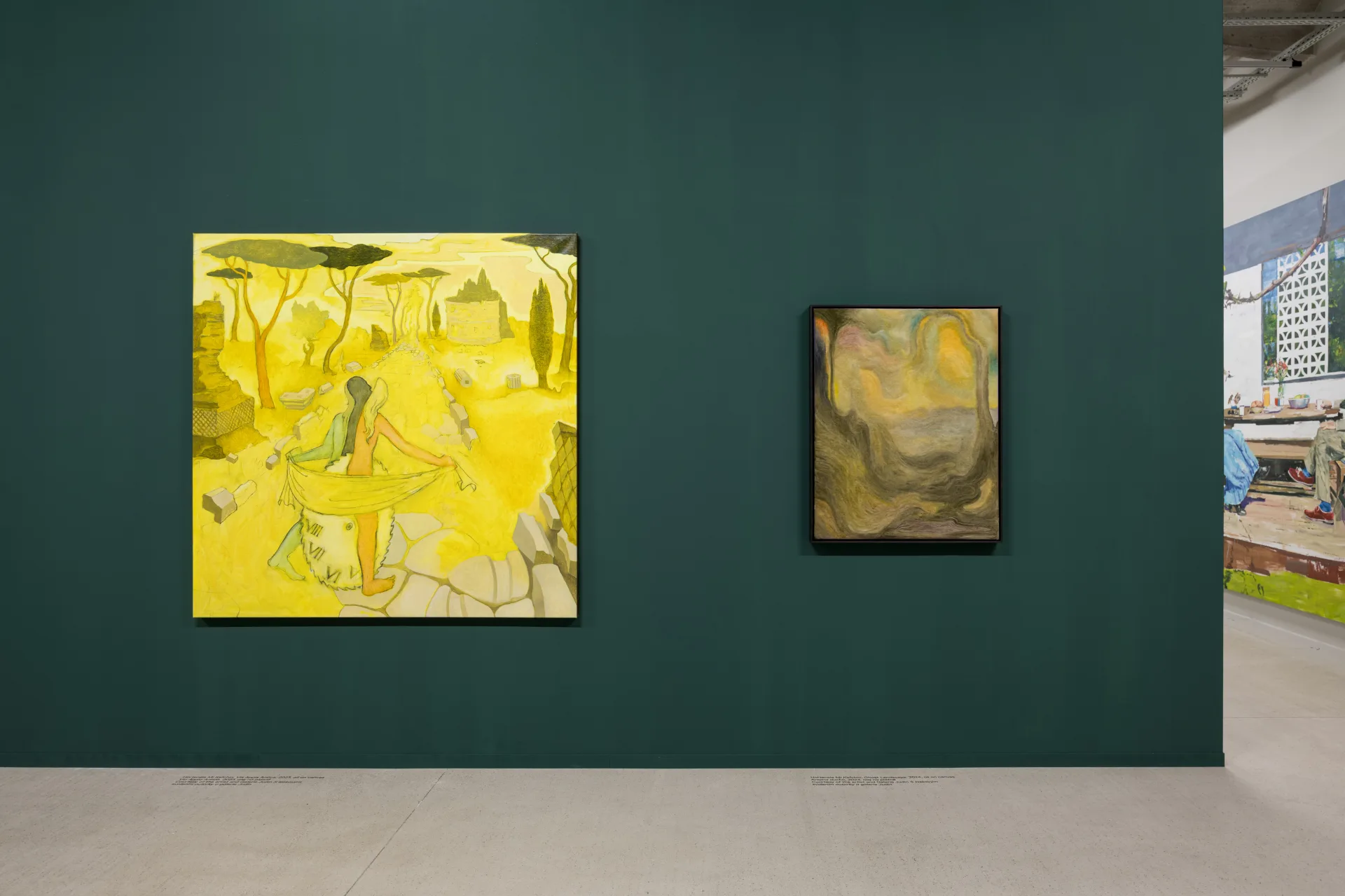
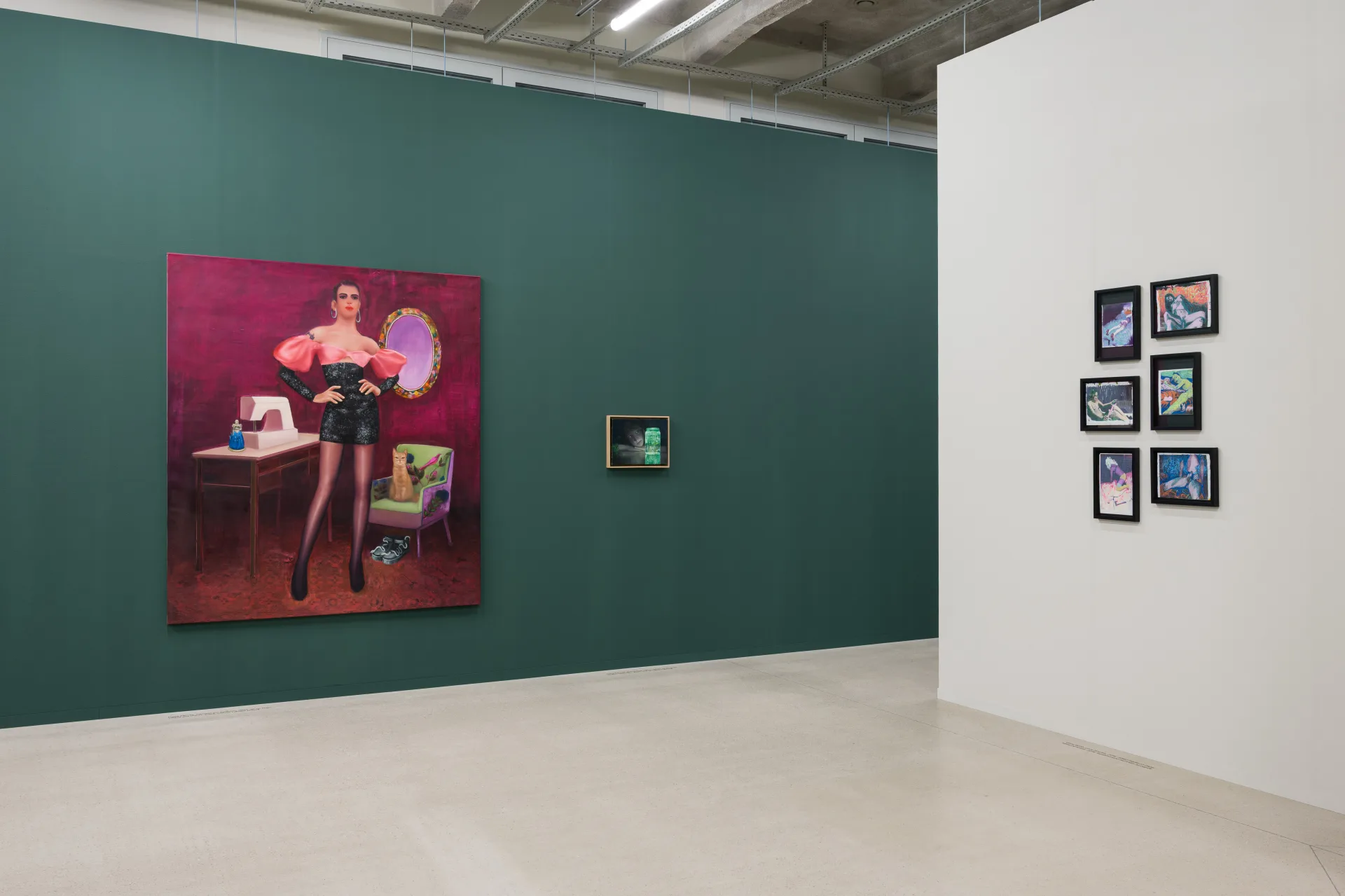
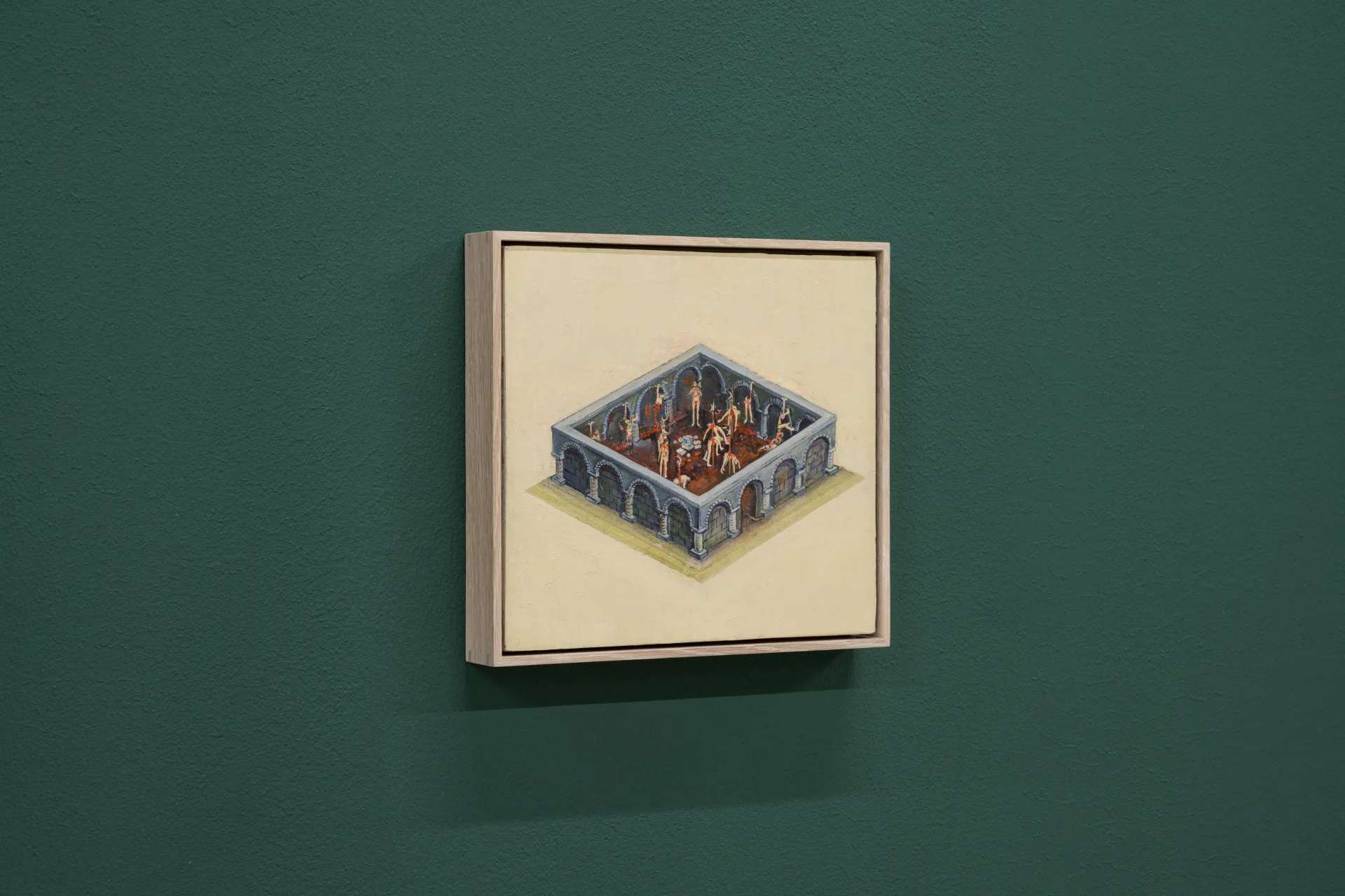
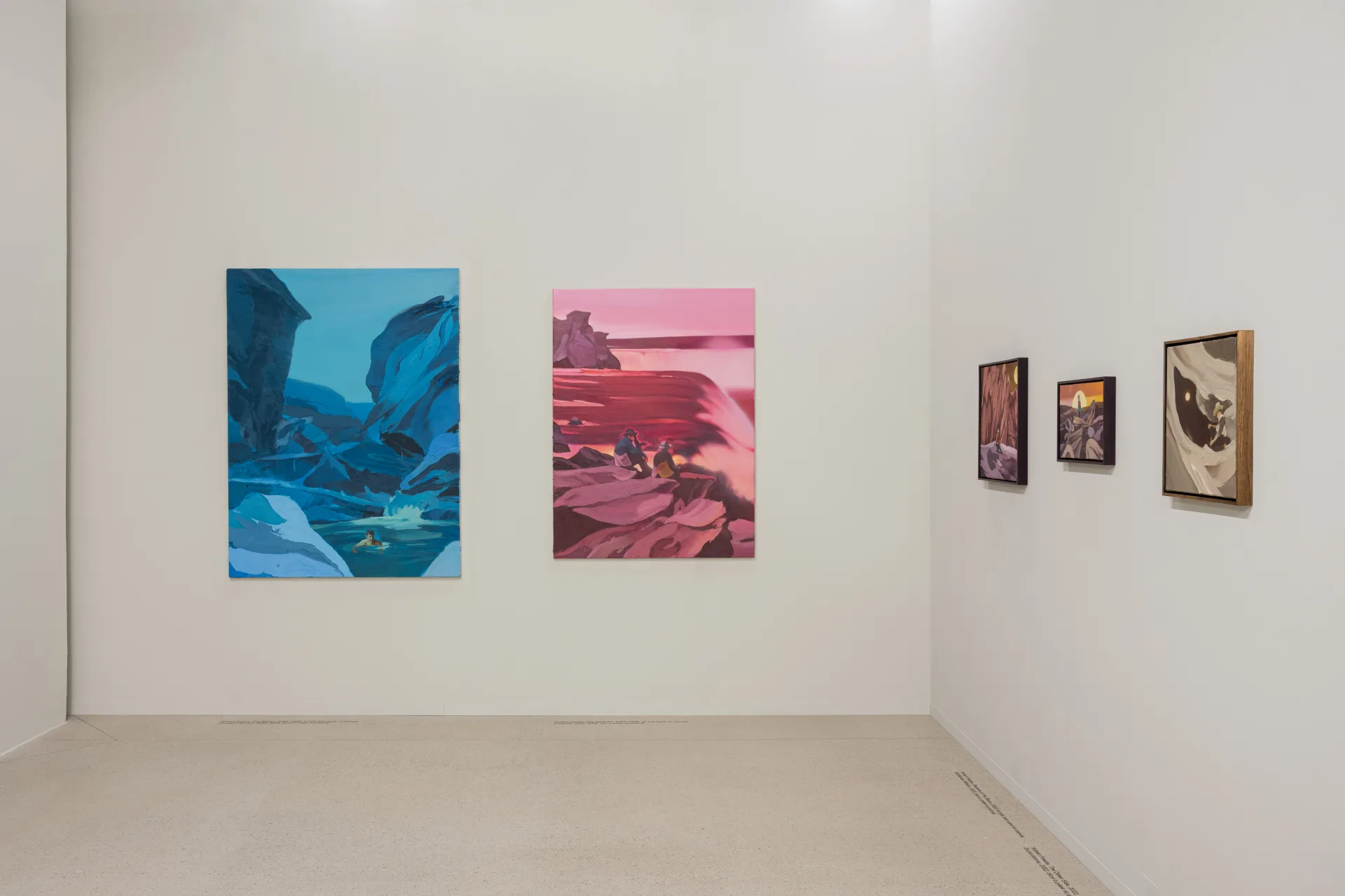
by Ana Meiță, photo from the exhibition
Jane, what initially attracted you to Romanian painters?
This is quite a story! In 2005 I covered the Prague Biennale as an art critic for Art Review magazine. I became connected with the Cluj painters Victor Man and Adrian Ghenie, following the 2005 Prague Biennale where Victor was participating (Adrian was there as his friend, supporting).
I went on to curate the seminal exhibition 'Cluj Connection' for Haunch of Venison, Zurich in 2006. This would never have happened if I hadn't met Victor and Adrian in Prague - it changed everything for my professional development. I became known as an expert on Romanian art, and then linked to art from Central and Eastern Europe - and then over time my curatorial reputation broadened. I think I was fortunate because there really weren't many independent critics and curators from Western Europe or America at the time who understood the strength and vision of the artists from this region and how it would seize the global imagination. It was partly passion on my part, combined with dogged determination born from a frustration with the existing western centric narrative around the dominance of Western art capitals, mixed with good timing and the arrival of a new exciting zeitgeist!
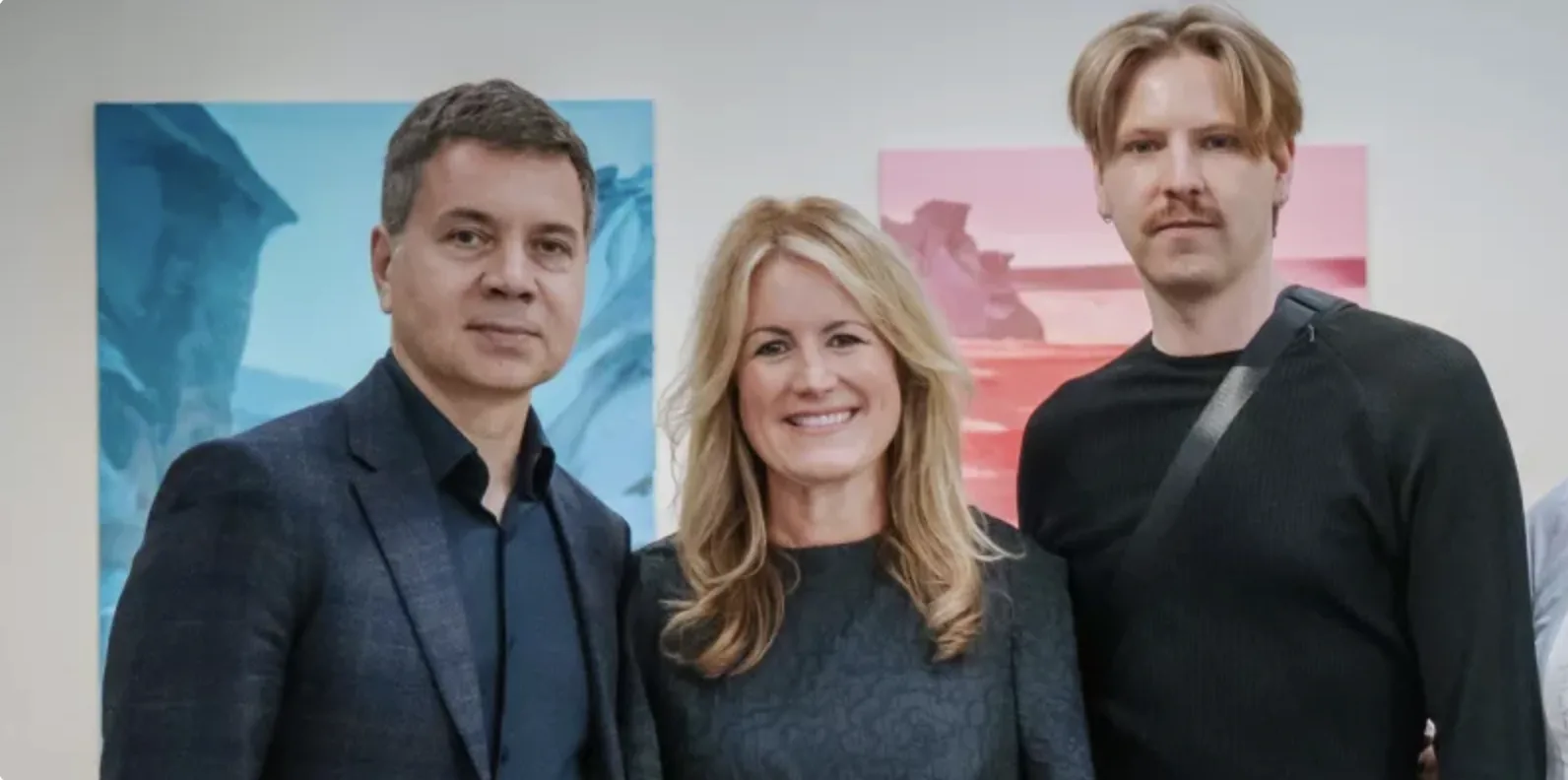
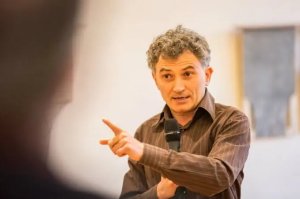
Jane Neal, the curator of the exhibition
You have to remember that as someone who had studied painting in the UK, I was really frustrated because there simply wasn't a great context - or respect - for figurative painting at home at this time. To be recognised or accepted as a figurative painter who had even a chance of connecting with a gallery, you had to have a strong apologetic for your work, be ironic or shocking in some way. No one actually cared about your proficiency or craft - concept was king. Imagine then the joy of discovering artists who actually knew how to paint but were also exploring new ideas as well?!
Remember: there had been this enormous geo political divide in the world: the West wanted to distance itself from anything connected to communism, hence socialist realist painting and then even anything figurative started to be pronounced as 'retrograde' or 'passé' - and artists making these paintings were felt to be creating pastiches of works that would never be as good as formerly made paintings, or seen as bringing anything new to the language of painting. I'm convinced that Freud was only 'allowed' by the Western art establishment because of the psychological intensity of his works.
Collectors and the art market (and then institutions and critics), seeing something 'new' in the painters of Cluj and other art centres like Leipzig, Krakow and Prague. (…) These artists were simply reopening a conversation with painting that had been curtailed by the advent of two world wars and a geo political divide.
Remember too that Western art critics had also been declaring that painting was 'dead' since the arrival of Duchamp's Readymade - and finally remember that cultural theory was not taught in the Eastern Bloc countries - it was felt to be a Western degenerate device designed to corrupt as it was based on post war Western philosophy. Add in propaganda on both sides and you find two distinctly different art contexts that I have come to believe were deliberately engineered to remain like this to support two opposing ideologies and used as propaganda on both sides.
I discovered that there was a third way to move forwards with painting. I believe that the evolution of its re emergence as a dominant and respected medium was actually brought about by a combination of factors but primarily by western collectors and the art market (and then institutions and critics), seeing something 'new' in the painters of Cluj and other art centres like Leipzig, Krakow and Prague (just to name a few examples).
Of course although what they were seeing seemed new to them, even revolutionary, these artists were simply reopening a conversation with painting that had been curtailed by the advent of two world wars and a geo political divide.
Look at figurative painting today and you will find examples of the re awakening of dialogues with Post Impressionism, Symbolism, Surrealism, Expressionism, Cubism, Fauvism - and many more modern movements. Painting wasn't dead - instead like a perpetual Lazarus it was waiting to be re awakened.
How do you find Romanian artists different from let's say other Eastern European ones and then compared to Western European artists? What do they have that's unique in your point of view?
This is a big question. Things have changed a great deal since I was first in Cluj twenty years ago. Time has moved on so artists' preoccupations have also changed.
When I started collaborating back in 2005/6 with Romanian painters, the young artists of the day had grown up under communism and witnessed the transition to capitalism - which wasn't easy and of course had a bearing on their lives and practice - but they also had a lot of hope and were enjoying the new found freedom of being able to travel more easily once Romania became part of the EU.
Today's young generation have new concerns and experiences. Interestingly I find a change in painterly language towards a more magical realism, post Impressionism and expressionism and symbolism - a more direct connection with the modern movements of the early 20th century.
Perhaps this is in part driven by a desire to create new mythical narratives as the world today feels very challenging? I'm not sure. Perhaps it's born from a desire to reconnect with painting from a century ago as the world politics shift back towards dramatic extremes and populist governments.
I think the training at Cluj's University of Art and Design was - and is good, but the atmosphere and the desire to learn and exchange ideas is also key. Going back to the beginning (as in my entry point to discovering Transylvania's artists in 2005), what distinguished Cluj's artists for me was that technically - as aforementioned - Cluj's painters were more proficient than most of their western counterparts. They not only understood their medium and how to harness it, but how to combine it with a self-taught, conceptual approach. The artists had also been taking advantage of the travel opportunities that had suddenly presented themselves post-communism: Erasmus programmes and residencies which were hitherto impossible.
As each artist returned to Cluj after their travels, they shared their knowledge and experiences with their colleagues, thus creating a deeper, wider well of information and insight for them all to draw from. The colliding of two worlds of thought and experience, in a small but concentrated context, produced a spark of energy that quickly caught fire.
Transylvania has always been inspiring for creatives.
The history and geography of the Transylvania region should also be considered as it has surely shaped the lives of its creatives. In today's cartography, Transylvania describes the northwestern province of Romania that borders with Hungary.
However, the region has long been regarded as a cultural heartland by both the Hungarians and Romanians. It is helpful to understand (speaking as an outsider), something of the history of the region and that the province was formerly part of the Austro-Hungarian Empire until 1918, when it was incorporated into Romania (although certain areas were briefly returned to Hungary during WWII).
Transylvania – which as we know translates from Latin into: 'beyond the forest' – makes the region sound poetically far away, even mythical. Perhaps this is partly responsible for why so many diverse peoples from around the world have sought out the province, and how this has led to the region being described as the 'cultural crossroads' of Europe.
As a result, Transylvania has an incredibly rich, diverse heritage, thanks to its succession of pioneering, influential settlers, from the ancient nomadic Persians (known as the Scythians), Dacians, Celts, Romans, Goths, Huns, Gepids, Avars, Pechenegs, Cumans and Slavs, to the Saxons, Ottomans, Hungarians, Habsburgs and Roma – and to its reputation for religious tolerance.
When the Saxons arrived in Transylvania in the 12th century, they established their series of seven walled cities. These fortified towns survive as testament to almost nine centuries of existence for the Saxon (German) community in Southern Transylvania. They have left a cultural and architectural heritage that is absolutely unique in Europe.
Additionally, the Jewish community settled and thrived in Transylvania, along with the Greek Orthodox, Greek Catholic, Roman Catholic, and Non-Conformist Christians. Further back, as aforementioned, numerous tribes also found their way to the region, bringing with them their own specific cultures, food, music and art to weave into the rich, cultural tapestry.
To top it all off, in the final years of the 19th century, Transylvania is immortalised by the Romantic author, Bram Stoker. Borrowing from the region's vampire legends for his iconic gothic tale, Stoker painted a picture for his readers of a mysterious land wreathed in mist and steeped in the supernatural (whether we like this or not as the most famous 'export' associated with the region, the story continues to captivate as numerous film remakes of the story attest).
So I think it is fair to say that based on all this rich evidence, Transylvania has always been inspiring for creatives. Myths and legends do abound, often with strong folkloric traditions linked to nature, religious and cultural practices, but Transylvania's population is also labile and industrious. It is a land of music and art, romance, literature, culture and academia – but also of farming, traditional craftsmanship, mining, and more recently, gastronomy, wine and technology.
The large and lively student populations of Cluj and the nature of cities constructed around tight, easily accessible historical centres, rooted in the café culture of the former Austro-Hungarian Empire, ensure that the exchange and communication of ideas is readily facilitated. I truly believe this helps facilitate creativity and creative exchange.
It is no wonder to me, when you think of it in these terms that Cluj's contemporary painters were first incubated – and then enabled - to go on to become world-renowned, given that they possess such a strong historical heritage and fertile contemporary context; shored up by robust intellectual discussions in artist cafés and bars!
Do you think that Romanian painters are becoming relevant on the global art market today? Have you seen a change over time regarding that subject?
I think the global recognition and success enjoyed by some of the painters from Romania (and notably we have to say Cluj), has helped open the doors for Romanian painters in terms of greater access to the global art market, but as I said earlier, the world has changed dramatically.
Given all that is going on across the globe right now, who can actually say where the balance of power in the world will lie in five years time - maybe cities in China or India will become the new art capitals? The global order is clearly changing.
According to some sources, Adrian Ghenie is a rising star because of you. What did you see in him that no one else initially could?
Adrian Ghenie is more than a rising star, he's one of the world's most successful artists of all time - and whatever happens in the future, he's already achieved unimaginable success in terms of his market, and now - more importantly, he's starting to achieve the institutional recognition he absolutely deserves.
I am not responsible for his success - his work and his mind is! I helped facilitate access to his practice for people who hadn't yet discovered it, and I drummed up support because I believed in him as an artist and anyone who knows me realises very quickly that I am very curious and very persistent!
I felt very strongly from the beginning that Adrian - and his contemporaries - were extraordinary and their story as a group of friends and artists - was also extraordinary - the world just needed to know about them - so I helped with spreading the news by writing, curating shows and talking to people about them and their work. Adrian and his colleagues did the work!
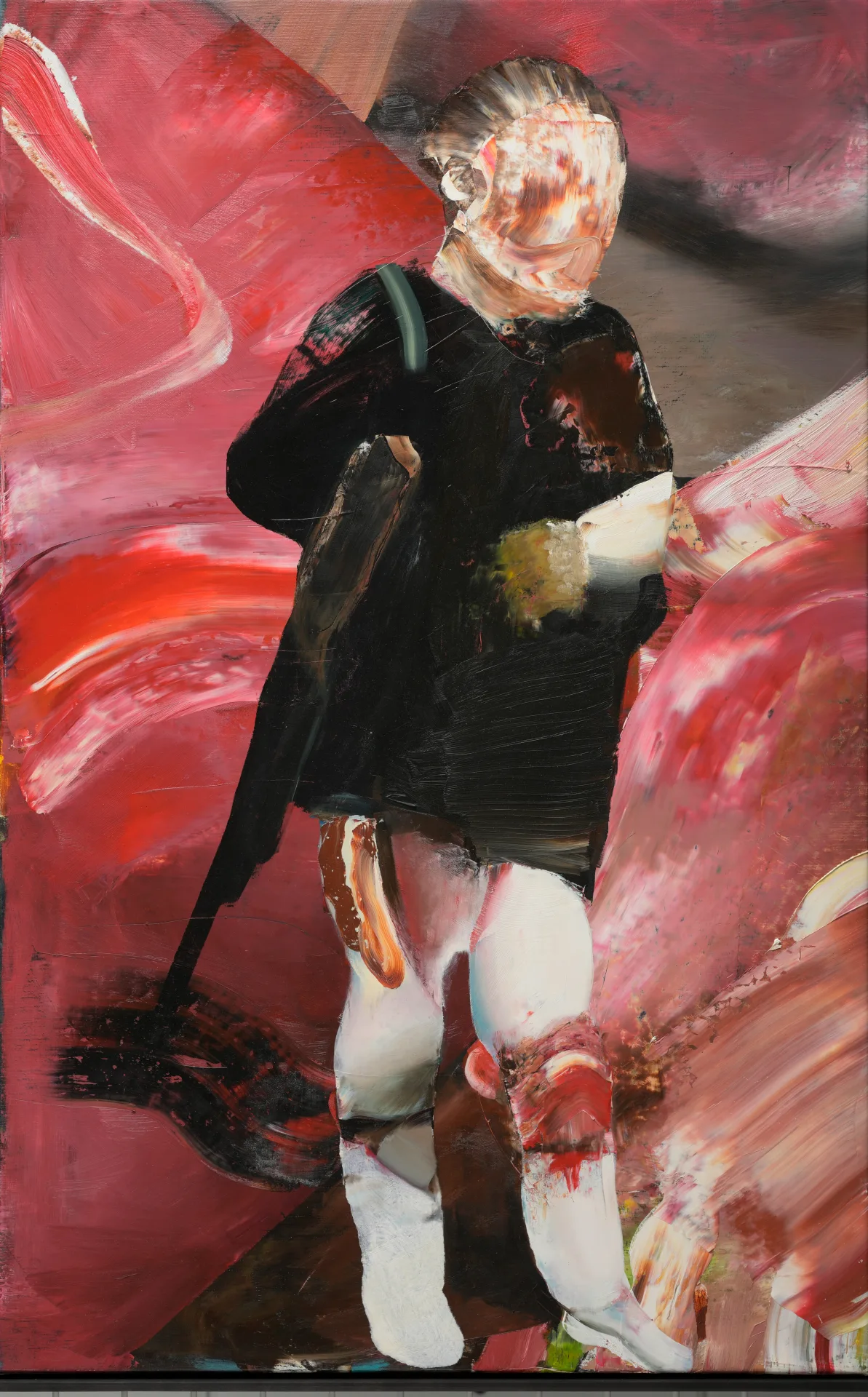
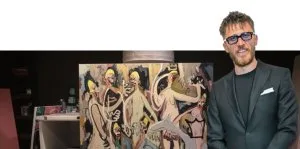
Adrian Ghenie, painting from the exhibition
When choosing the
artists for the current exhibition were you cautious or curious about how
the Czech community would receive them?
I was curious about the reaction to the artists and their work but I know the Czech audience - perhaps above any other European country - has a great respect and love for painting so I was never worried.
You know the wonderful thing about life is that if you stay curious and open, you keep learning and discovering. Isn't that amazing and joyful?!
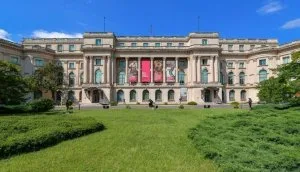
Have you visited the National Art Museum in Bucharest? If yes, did seeing all the varied local artforms bind everything you knew about Eastern European art and history together?
Yes I have visited it. To be honest I haven't thought about things in this way, connected to the museum, but I'm in Bucharest again soon and hopefully I'll have chance to go back.
You know the wonderful thing about life is that if you stay curious and open, you keep learning and discovering. Isn't that amazing and joyful?! I have loved discovering Romania's artists and I'm delighted that I keep finding more talent as the years go by.
This is something I never take for granted and try and remember to be grateful for - and conscious that being part of this story means I've also been able (in a small way), to help enrich people's lives. That's a privilege.