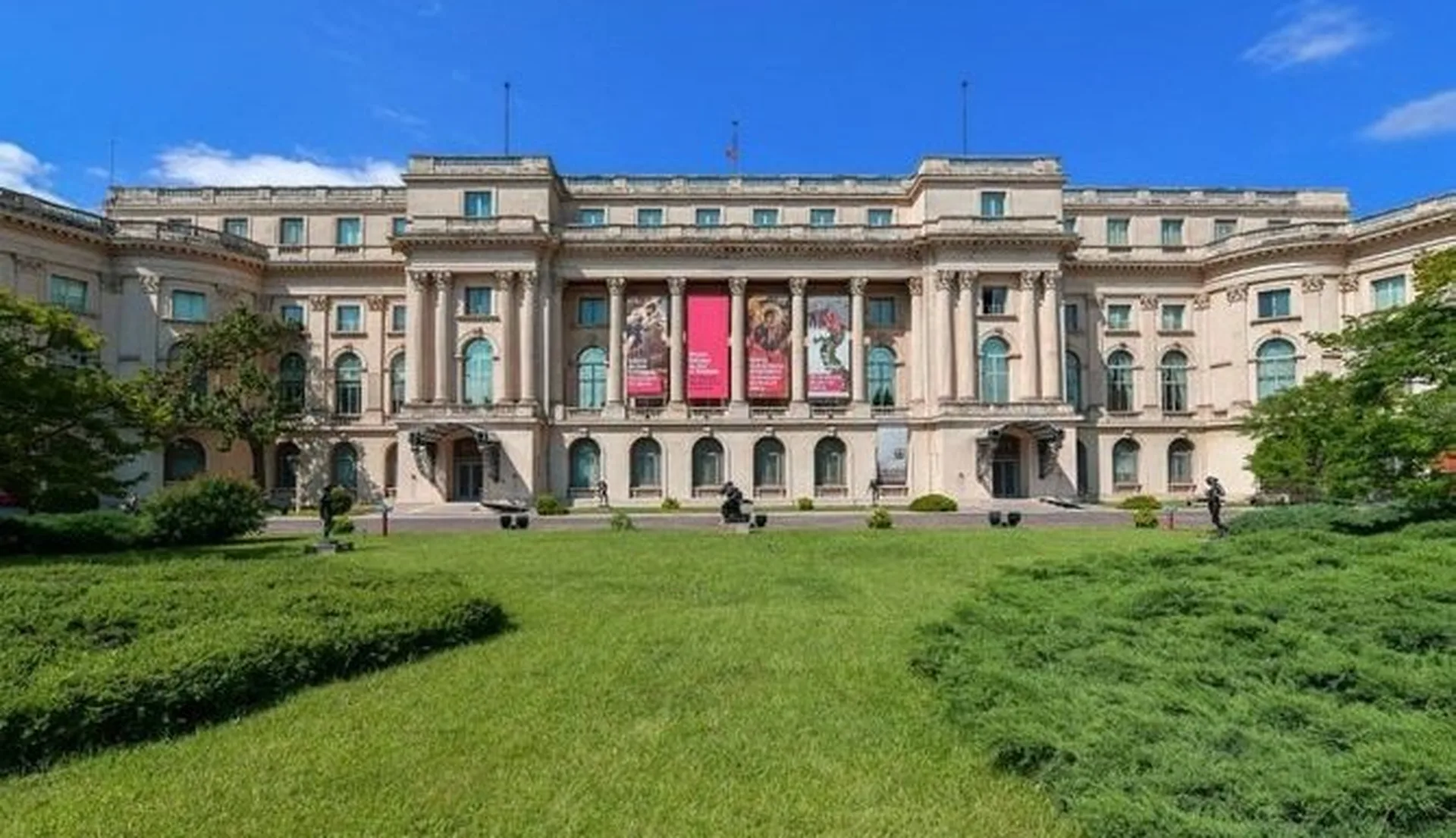
During the Revolution of 1989, the building was affected by fires and destruction, especially on the upper floors and in the central wing. In 2000 the museum was reopened and became the main art museum in Romania, with a patrimony of more than 100,000 works: painting, sculpture, graphics, decorative art.
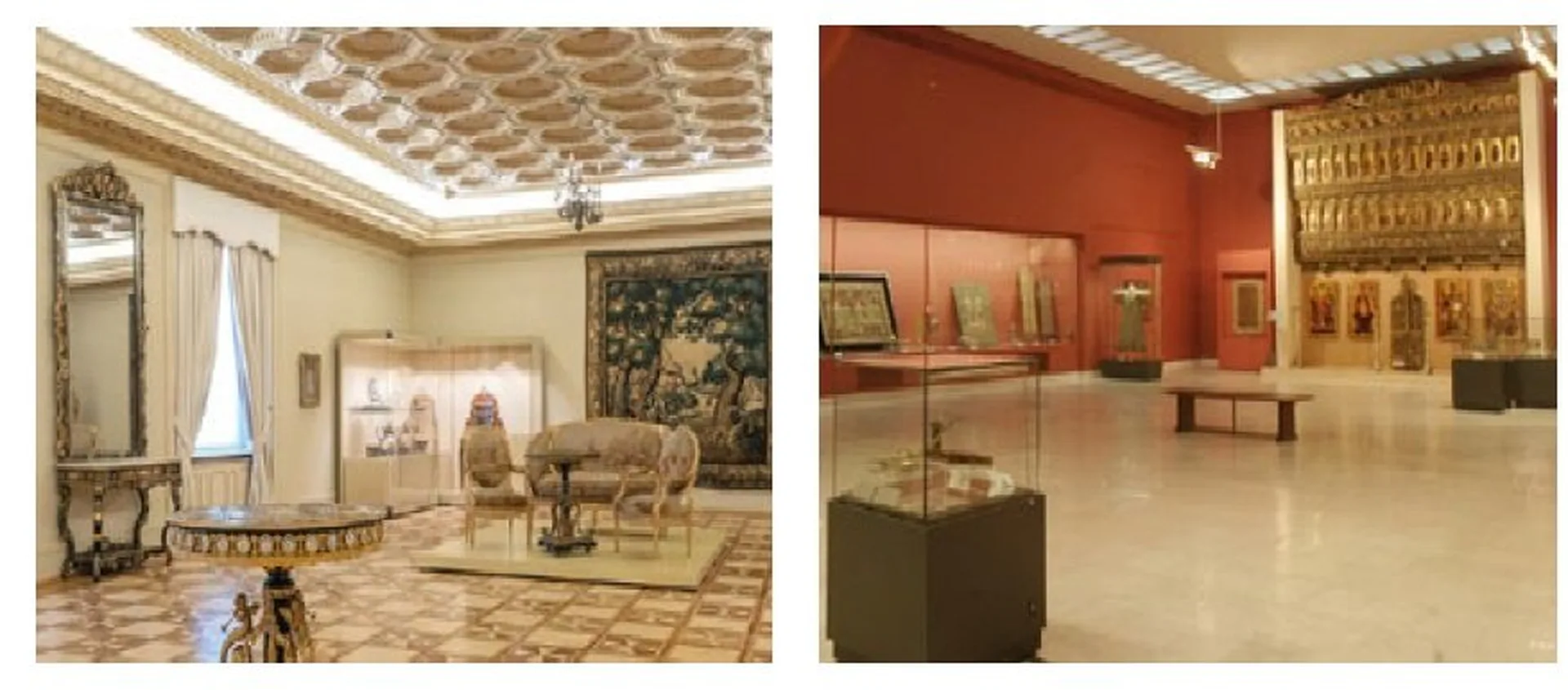
The National Art Museum of Romania is organized in four permanent galleries.
The National Gallery
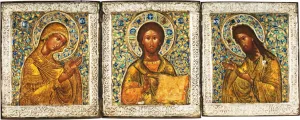
It is the largest and most important collection of Romanian art, structured in the exhibition of Romanian Medieval Art: icons on wood and glass, frescoes, manuscripts, embroideries, church silverware (14th–18th centuries) and in the exhibition of Romanian Modern Art, with painting and sculpture (19th–20th centuries), with works by: Theodor Aman, Nicolae Grigorescu, Ștefan Luchian, Nicolae Tonitza and early works by Constantin Brâncuși.
European Art Gallery
Contains Western art works from the Middle Ages to the 20th century, mostly from the collections of the kings of Romania (Carol I, Ferdinand, Carol II): Italian school – Tintoretto, Bronzino, Alessandro Magnasco, Flemish and Dutch school – Rubens, Rembrandt, Jan van Eyck, French school – Claude Monet, Eugène Delacroix, Spanish school – El Greco.
Decorative Art Gallery
Includes objects of applied and decorative art with pieces from the 16th–19th centuries: tapestries, furniture, porcelain, glass, European goldsmithing.
The Oriental Art Gallery
The collection of Islamic art of the National Art Museum of Romania includes more than 1400 pieces from Turkey, Iran, Morocco, India, Central Asia and dating from the 7th to the 20th centuries. The exhibits reflect the direct historical links between Romania and the Ottoman Empire, providing an eloquent insight into the art of Islam and the history of collecting Oriental art in Romania.