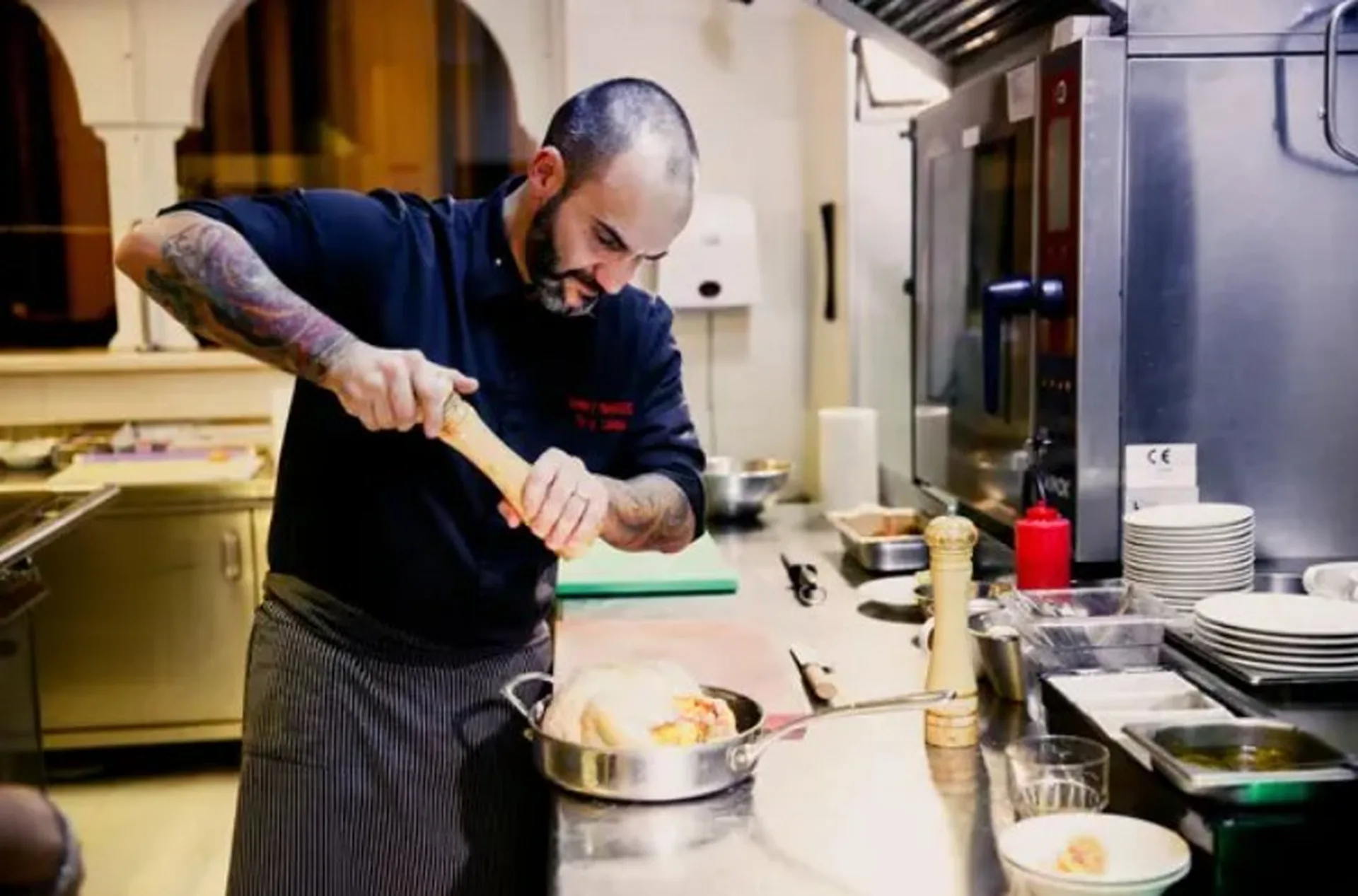
by Bogdan Munteanu
What makes a good chef – the right school or the extensive practice?
For me, the best school is the restaurant. But, when I was 16, I went to a public cooking school, because in France some of them are very good. In the first year we learned both to be a cook and a waiter, and also we learned oenology. Back then we didn’t understand why we had to learn so many things, but later on, when you become a chef, you understand that you need to know everything.
After two years, I took the exam and went to a school to learn catering and confectionery. When I was in Normandy, I was helping one chef. I went to school from Monday to Friday, but when I got out of the bus I took my bike to go help this chef. I was there at 8, finishing at 12. But at the end of the evening I got to sit at the table beside the chef. For me it was like sitting like near Charles de Gaulle.
When I finished the school, I worked for 3-4 months for free in one sweetshop. Then I went in the army for one year. When I returned, my first chef told me: “I am going to Paris to work in a 3-star Michelin restaurant. Will you come with me?” I accepted rightaway.
And how was the new experience in Paris?
It was really hard. Normandy is little, everyone’s nice to you, but Paris is like Bucharest. Everything is like a business. In the restaurant it was harder than in the army. When you’re in the army, you know that is not your job. But our chef in Paris was really hard on us. In a 3-star Michelin restaurant they only accept perfection. You have to push yourself to the limit.
As a chef in such a restaurant, you have to bear a lot of pressure. The owner pushes you because there’s a lot of money and reputation at stake. So, we were starting work at 8:00, but we arrived at 7:00, and left at midnight. We worked day and night. Because of the pressure we lived in, we were always thinking about what we had to do the next day. Sometimes I woke up at 3 or 4 in the night remembering that I forgot to prepare something for the other day, so I would wake up at 6.
When you spend 14-16 hours a day in a restaurant, does it become your lifestyle?
For me, if I don’t cook for 2-3 days, I feel that I am missing something. It is not a sacrifice, it is a choice. You never know if you ever arrive at this level, but when you are here, you are like a Formula 1 pilot, you always have to give your best.
If you want to be good on the long term, you need to have a good life, to practice sports, to clear your mind. Without sport, you are not in shape to resist working 10-12 hours every day. And I want to work at least until I am 60.
How do you keep in shape?
I have a professional trainer, I try to go to the gym 5 times per week, or at least 3 times. I eat good food, because I like to wake up fresh. I like to arrive before other people. I remember when I saw my first chef every morning arriving with a big smile on his face, I was wondering: “How does he do it?” Also, my last chef was always very tough. There was no minute during the day when we could say he has less energy.
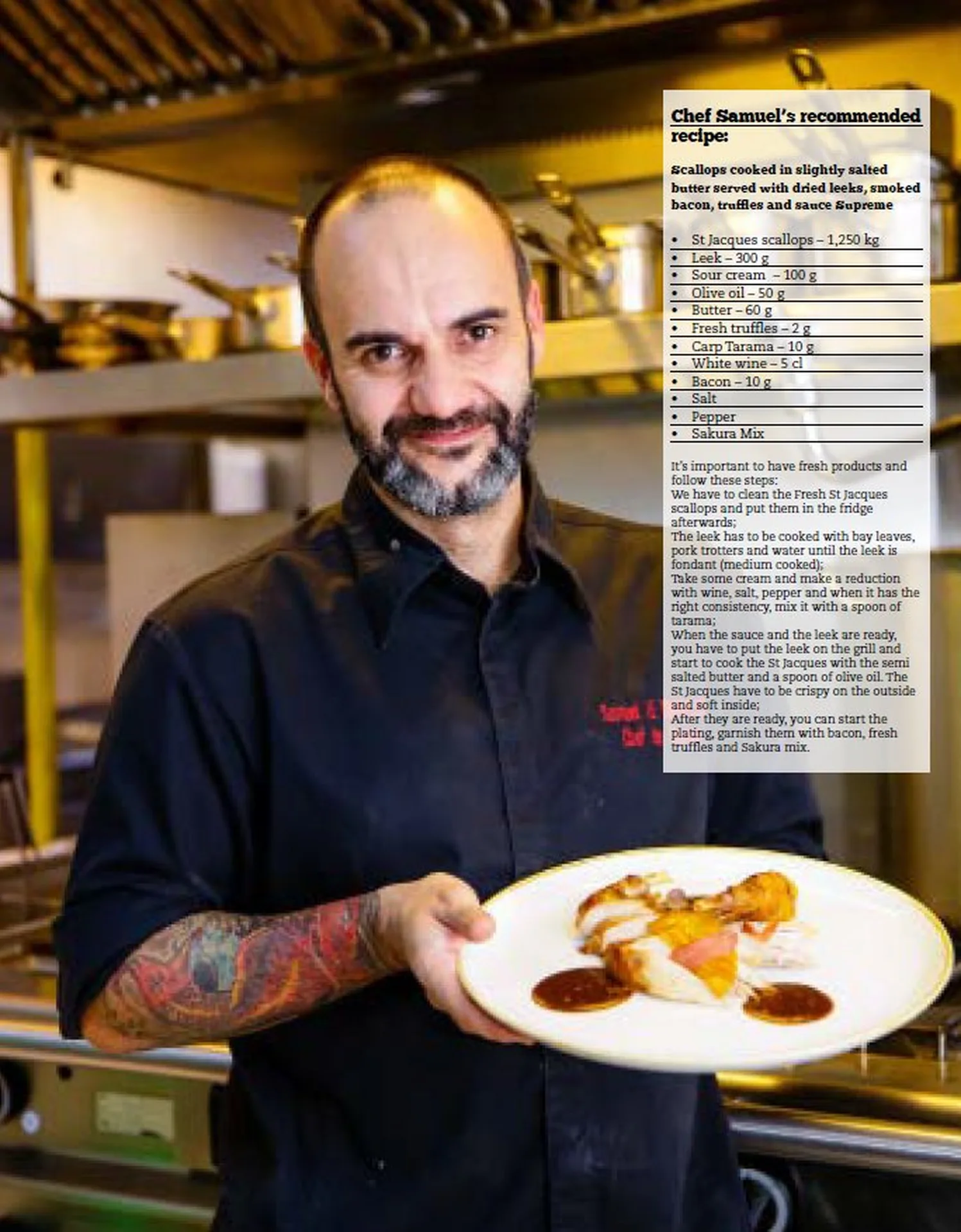
Apart from the workload, what makes a Michelin-starred restaurant so special?
The most important for any chef is to find their way of cooking. Some are better for fish, thers are better for meat or for vegetables. When you find your way, you have to push to the extreme. Only details make the difference. People around you must also understand your way, so you need a good team, but you also depend on suppliers.
You have to get the best vegetables and meat that you can find. When I was working in Paris, we were ordering the vegetables at midnight, and they had to arrive at 7 or 8 o’clock. But if we didn’t like a particular vegetable, the delivery guy was able go back and return even 4-5 times, until we would find the perfect zucchini. And he had to drive 20 kilimeters every time… When people go to eat in such restaurant, they expect the very best; you are not allowed to make any mistake.
But what are the exigences of your Romanian customers today?
In the case of L’Atelier, people expect to have something different. What is nice to witness is that people expect more and more quality, because of the media and of TV shows like “MasterChef.” When I speak with customers, they enjoy the taste more, they are more openminded about everything.
When I arrived in Romania, people weren’t so curious, weren’t ready to try new things. They said they wanted to try something new, but, in the same time, they weren’t actually open to change or to making experiments. Now, people say “Chef, do whatever you want!” I have been working for nine years to arrive here, but, in the meantime, I didn’t change. I did what I like to do, and people began to like it, too.
What’s the specialty of L’Atelier?
I think people come here for the French cuisine. I cook French, but with a taste adapted to what Romanians like. When you learn what people eat, when you eat in Romanian restaurants – and, to be honest, now I eat maybe 95% Romanian food – you learn a lot. I also read about the history of Romania, to find out what people ate and liked. In 1870, or in 1920, wealthy people were eating just like in France. We have to remember this. Then I mix everything I learned. Sometimes it can be difficult, but I’ve been doing it for a long time. So, now I don’t have to think, it comes directly. I know a chef who puts in any dish truffles or caviar… But our job is to do the best of what we’ve got. 90% of the ingredients I cook with come from Romania. If I brought them from abroad, the food would be 20% more expensive.
What did you learn from “MasterChef,“ while being asked to teach others?
Here in Romania we don’t have a lot of cooking schools, so people are trying everything by themselves – either good or bad. What I learned is that you have to explain to people the basics of cooking, and then let them go their way. No one explained to them anything before. If you speak nicely, if you spend time with them, if you cook with them, people start to have respect for you. They listen more and more and you succeed in attracting them. But you need a talent for that. I don’t say that I have it, I still learn a lot.
I know a lot of chefs who wouldn’t share any recipe. I like to give away recipes, because any another chef, using the same ingredients, will not reach the same result as mine. There are people in Romania who can recognize my style.
What would you advise someone trying to become a chef?
First of all, after going to the one or two of the best schools in Romania, you need to go to work with a chef. But that can prove to be very difficult. If we are in the top, we are all a bit crazy. We always push ourselves every day and expect the same from our team. They have to resist to the huge pressure. The best quality is to respect your chef, to always listen to him and to believe in him. Then you have to learn all the time. I still try to travel to learn. Sometimes I go to the UK, some others to Istanbul. Last year I was in Mauritius. Maybe in 6 months I would like to go to Thailand and Malaysia. When one of my friends talked about the food in India, I got the idea that I want to go there. In general, I go to a place because of the food.
My friends always come to me with cooking books from abroad. If you are a chef, you really need to be open-minded. I spend maybe one hour on the internet every day, not necessarily to learn, but to find inspiration.
But isn’t it hard to learn near a chef that may be crazy, as you say, and could yell at you all the time?
My first chef was always screaming at us. If you get slapped, you forget in 5 minutes. But after one year of pressure, if someone keeps telling you that you are not good, you end up believing that you are not good. I prefer to talk to people. Sometimes I scream as well. You have to keep up the pressure, but not at this level. The new generation doesn’t accept what we used to accept. People must understand that they don’t work only for me, they are also working for their future. I prefer to speak like adult to adult. Some people are good for a 3-star Michelin, others are good for a pizzeria. You have to accept this. If you always scream, after 6 month of screaming, people won’t make any difference, they won’t know if you scream for the good or for the bad. It was for us like this 25-30 years ago. But you can’t do that anymore. Then a chef was just cooking and screaming, now a chef has to manage a lot of things that chefs didn’t do before. Also, by the law, you cannot scream.
Do you consider yourself Romanian?
Yes, I’d say I am 75% Romanian. We have everything we need here. In 2 hours you are in the montains, in 2 hours you are at the seaside. The roads may not be so good, but you have beautiful places. Thanks to “MasterChef” we met some incredibly beautiful people all around the country. What I like best is that people have respect for their family lives. Not everywhere in the world people stop working for celebrations, for Easter or Christmas. It’s only business, business, business. Here people know when to stop.
Is there any piece of advice you gould give to someone cooking just for friends?
I have a lot of friends who like to cook, but they are scared that I may say that something is not good. The important part is to remember what your grandmother did. Try to do what you liked when you were a child. Afterwards, you can check for recipes in books or online. You can make mistakes, I still make mistakes, but you learn from mistakes.
Are there things you would still like to try as a chef?
What I would like is to be involved in some association for children, to give them a… good taste. That would be better for everybody. When I speak, I don’t speak just for myself, I would like a better life for everyone. I would like to cook with children, because I am still a big kid. I hope to remain a kid. Life is better like this.