by Ana Maria Bodeanu, photo archive Château Bernon-Bécot in Saint-Émilion
Heritage
Your family has been making wine in Bordeaux for four generations. What is your earliest memory of the vineyard, and what made you realise you wanted to carry on the family tradition?
I am the fourth generation of my family to work in wine, and the fifth generation is already getting ready, even though they are still small. We pass on this heritage naturally, through everyday life, both in the vineyard and in the cellar. There is no single memory that made me choose this profession; I simply grew up surrounded by it. But if I had to pick one image, it would be the harvest: grapes picked by hand, the vats, the aromas in the cellar and, above all, the unique atmosphere it brings. It is the crowning moment of a year of work, shared with family and friends, in an atmosphere you won't find anywhere else. That atmosphere, and this way of life around the vineyard, made me want to carry on the family tradition.
What did you inherit from your father's and grandfather's experience, and what have you deliberately chosen to do differently?
From my father and grandfather I inherited, above all, a passion for the land and a deep attachment to our heritage. And also an appreciation of the privilege of growing grapes here, in the Saint-Émilion region.
What I deliberately chose to do differently at Château Bernon-Bécot was to create more opportunities for people to meet and socialise at the estate, through events such as our gourmet markets and our rosé wine event. This lets us stay in direct contact with our customers and friends, exchange ideas with them, take the time to welcome them and, little by little, build a real community around the estate.
The Craft of Winemaking
If you had to describe the terroir of Saint-Émilion, Bordeaux, using only sensory language and no technical terms, how would you do it?
I would describe it as a place of gentle hills, where you can feel the light, the freshness and the scents of the vines. It is a place where you take time to enjoy life, with fine food and a real sense of well-being. For me, all of this gives our region its soul.
Bordeaux winemaking is often described as a dialogue between tradition and innovation. Where do you draw that line?
For me, tradition is our foundation. It sets us apart, but it shouldn't stop us from evolving. I like to preserve this heritage while staying curious, trying new things and adapting the way we work. Today, wine drinkers are looking for fruitier wines, with more freshness, more lightness and less oak influence. For me, innovation also means adapting to these new expectations while keeping our identity.
How has climate change altered the way you work the land compared with when your father or grandfather ran the estate?
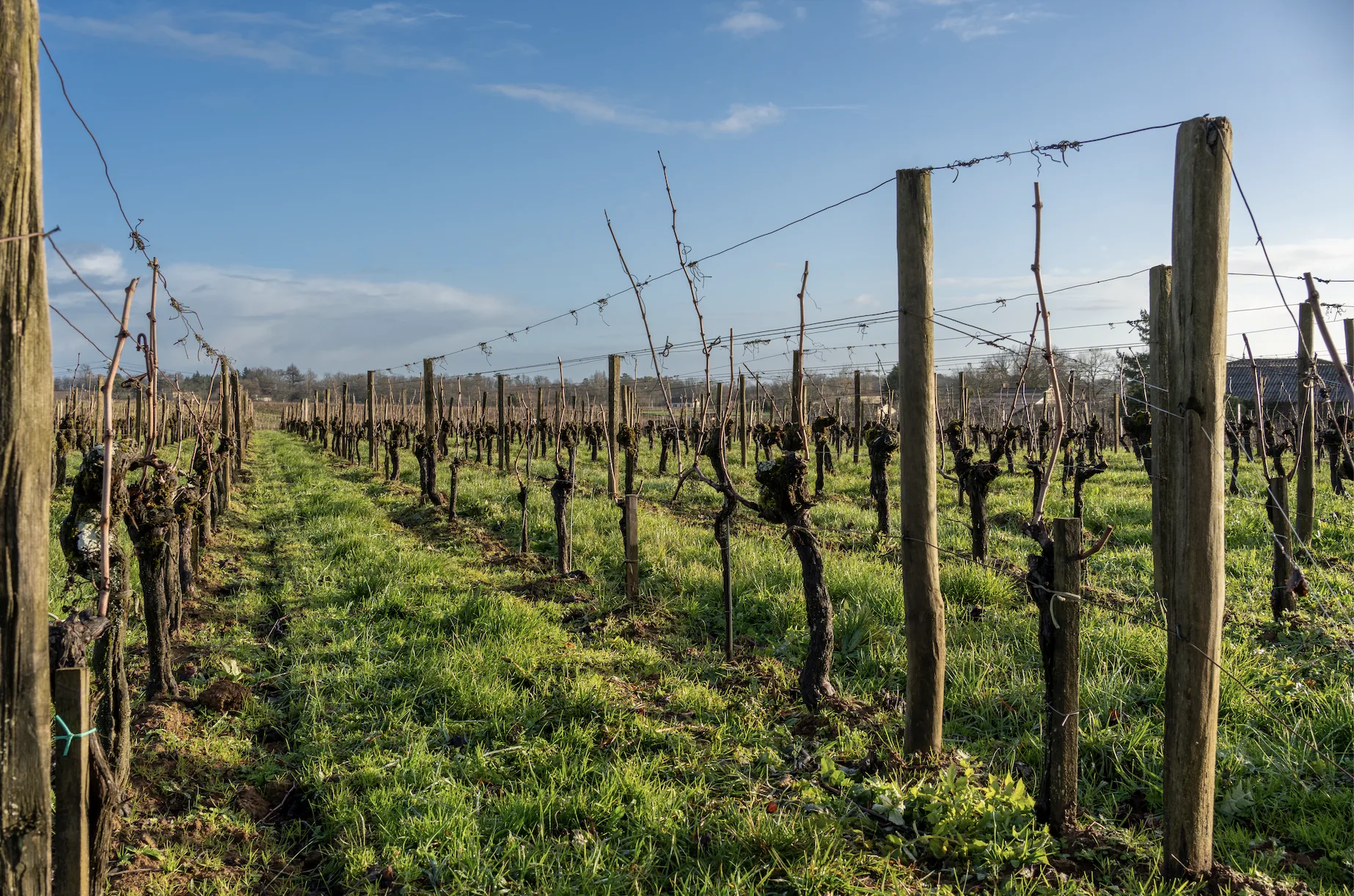
When I learned the trade from my father, certain practices were much more widespread, such as leaf thinning, bunch thinning and more intensive extraction. Today we work with more finesse and leave more room for the vine to express itself naturally. With global warming, we focus even more on protecting our soils, in particular by keeping a cover crop between the rows. Above all, we have learned not to get stuck in particular techniques: every year is different, and we adapt the way we work to each vintage.
„What struck me most was seeing how, from one year to the next, a vineyard can go from an extraordinary harvest to a very difficult situation. It taught me to remain humble before nature and to always be ready to adapt.”
Is there a vintage in your life that taught you the most, whether through triumph or hardship?
Two vintages left a particular mark on me at Château Bernon-Bécot, because they correspond to the first years of our story at the estate. 2016 was my first vintage: an exceptional year, of remarkable quality and an outstanding harvest. Then came 2017, with the frost that was devastating for many estates around us. Our vineyard, being at a higher altitude, escaped the frost. What struck me most was seeing how, from one year to the next, a vineyard can go from an extraordinary harvest to a very difficult situation. It taught me to remain humble before nature and to always be ready to adapt.
What does a “good year” mean to you, beyond technical scores?
Of course, a good year can be one that receives very high scores, and that is always satisfying. But for me, a good year is above all a year of balance between sun and rain. At Château Bernon-Bécot, the 2019 vintage is a very good example, being one of the most complete wines we have produced: ripe fruit, depth and texture, but also freshness and balance.
The Vineyard and the Wines
How many hectares does the estate have, which grape varieties do you grow, and what is special about the terroir of these Saint-Émilion plots?
At Château Bernon-Bécot we currently have 9 hectares of vines, planted mainly with Merlot, which makes up 95%, and 5% Cabernet Franc. Our soils are clay-limestone, of two different types: about 3.5 hectares planted directly on the rock, with very little topsoil, and 5.5 hectares lying above old quarries. Another particularity is our position right at the top of the appellation's plateau. This gives us excellent exposure and naturally well-ventilated land, where water tends to drain away rather than stay in the soil. The land gives the vines enough richness, but also a certain level of competition, which naturally encourages small, concentrated berries. For us, this contributes to wines with depth, fruit and freshness.
How do your wines evolve over time? What should someone expect when opening a bottle from your cellar ten years from now?
Our wines can easily evolve over a good ten years. Although we don't yet have much perspective on very long ageing, the 2015 vintage is still drinking and ageing very well today. My philosophy is to make wines that can be enjoyed relatively young, but that also have the ability to age well.
How would you describe the style or personality of your wines? What makes them recognisable?
Our style comes partly from our choice to use 95% Merlot, whereas blends in the appellation are generally less dominated by this variety. This gives us very refined, elegant and fruity wines, very approachable when young, while keeping real ageing potential. What I particularly love is this combination of finesse, fruit and depth, which gives our wines a personality that is both elegant and approachable.
Which vintage are you proudest of, and which one still challenges or surprises you when you taste it today?
It would be hard for me to pick just one vintage. I am grateful for every vintage we have made at Château Bernon-Bécot, each with its own personality and character. I like being able to offer a different wine depending on people's tastes: a fruitier 2021, a more concentrated 2022, a very balanced 2019, or even 2017, which has a special story because we were lucky enough to harvest while some estates around us barely managed to pick anything because of the frost. This diversity, and our ability to express each year and each plot, is what makes me proudest.
Of course, a vintage from a year when the weather is generous to the vines is always easier to make: everything falls into place and the result is naturally very successful. But making a good wine in a more difficult year takes more skill and experience. And it is in these difficult vintages that you can best understand the terroir, the personality of the winemaker and the quality of the work put in throughout the year.
The Art of Wine and Life
Winemaking is often called an art in itself. What role does wine play in your everyday life, beyond the business of producing it?
I agree: for me, wine is an art in itself, but above all it is a true way of life. It takes up an enormous place in my life, to the point where it is almost like a third child. It is always present in my thoughts, my plans and even my dreams. It is a profession that brings together so many different things: the vineyard, the cellar, the weather, organisation, reflection and, above all, passion. Even when we're on holiday, we always keep an eye on the weather! It is a passion that is truly part of our lives.
What does a meal or gathering with friends and family look like for you?
For me, an ideal moment around the table should stay simple and friendly. What matters most is the people you share that moment with. I like to focus on good food, especially local and regional produce: traditionally prepared meats, local specialities, oysters with a good white wine, duck pie with our red wine, or a good cheese with an older vintage. At the end of the day, you don't need much more: good food, good wine and, above all, the right people around the table, with whom you can keep talking about wine and the vineyard.
Looking to the Future
What do you hope the fifth generation will inherit from you, and what do you hope they will change?
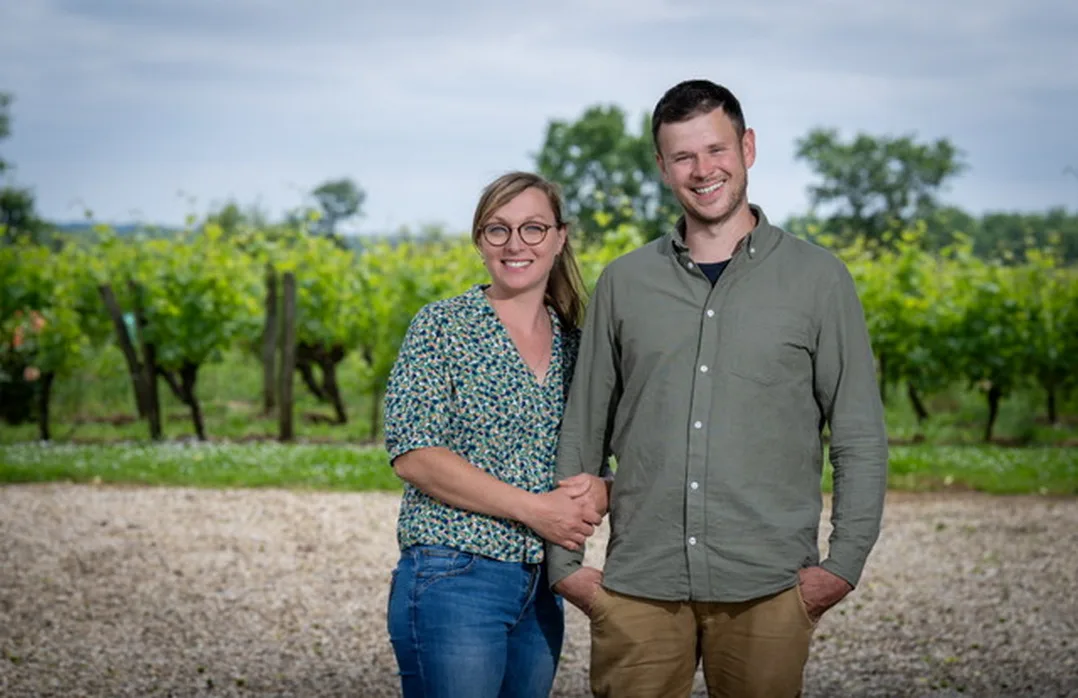
I would like my children to inherit, above all, a sense of diversity and everything that Marlène, my wife, and I will have built together. We want to develop the estate with new grape varieties and a new range of white wines, as well as guest rooms, a garden and a space where we can welcome our customers. I want to pass on to them everything we know about wine, but also everything we have created around it: a loyal clientele, our values and our way of working. And above all, I would like them to be able to evolve all of this at the pace of their own time. What seems right to us today may no longer be relevant tomorrow. It will be their turn to write the next chapter.
If you could give your children just one piece of advice about running this estate, what would it be?
I would tell them to truly love what they do and to be passionate about it. Above all, I want to pass on to them a love of hard work, discipline and the desire to do everything well. For my part, I want to leave them a healthy, well-maintained estate: well-tended vines, solid infrastructure and everything they need to work in good conditions. As my father often says, the goal is to leave them a vineyard that is “ready to use”: from there, it will be their turn to make good wine and write their own story.
In a single sentence: what does Bordeaux mean to you, and what could no other wine region replace?
Bordeaux is where I was born, where I grew up and where I learned this wonderful profession. It is where my whole family lives and where my roots are. And what nothing else could ever replace are the wines of Bordeaux: their identity and that unique signature brought by our great grape varieties, Merlot and Cabernet.
”Above all, I want to pass on to my children a love of hard work, discipline and the desire to do everything well. ”