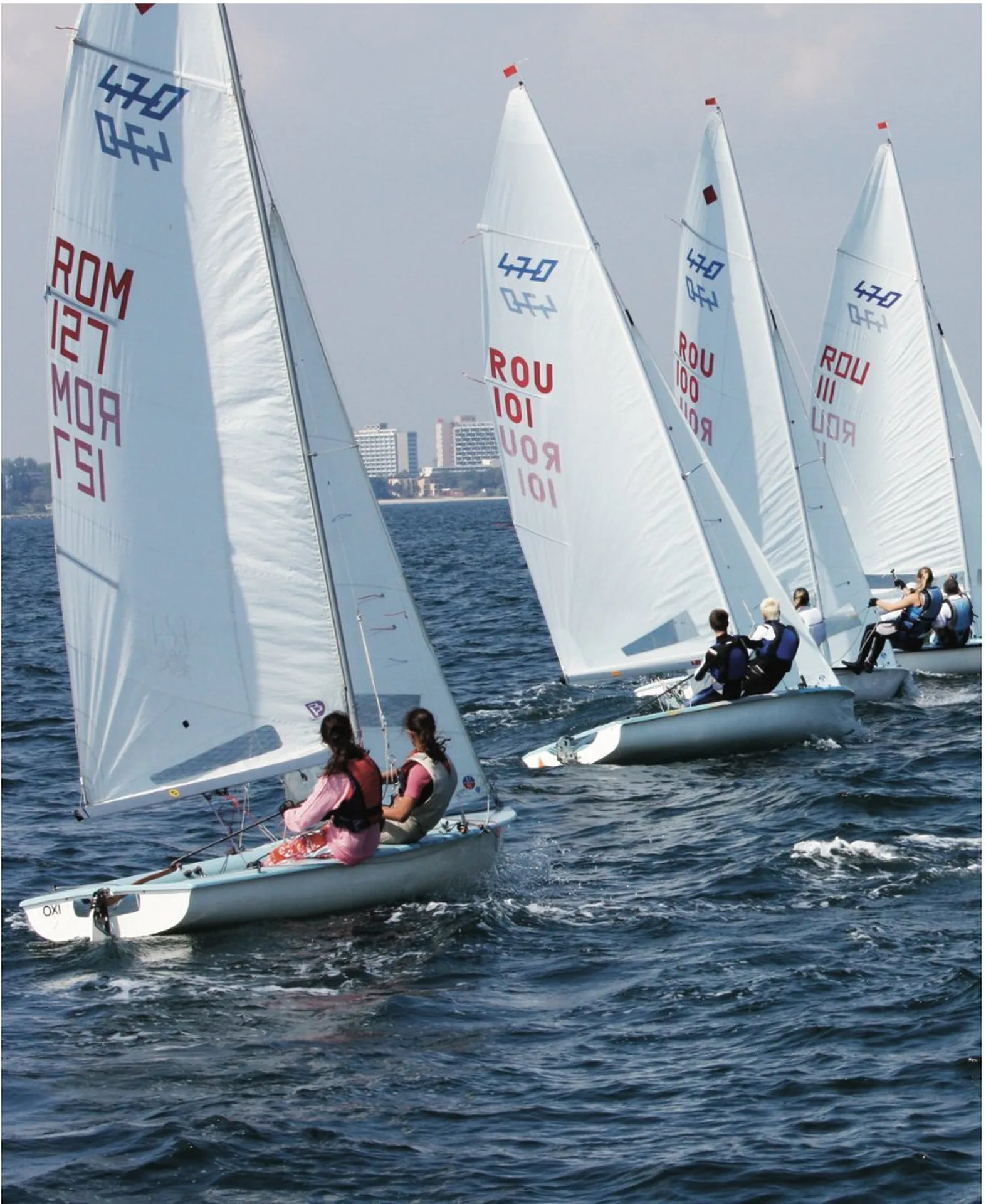
Yachting is my life! With the risk of it sounding like a cliché, this is how things are. I’m thirty-two years old and I have spent two thirds of my time on earth either yachting or thinking about it.
by Iulia Fulicea
I was ten when through a happy turn of events I took up yachting at a club on Lake Herăstrău. I would have never imagined how this simple decision would change my life, starting with the most obvious things like how I would always go to school tanned in March, then to university and then to the office sporting the same tan, and culminating with how yachting completely changed my priorities and the way I managed my time. All with the hope to spend as many hours as possible on the water! So, from that
moment my life revolved around boats. People who do yachting have a very serene look in their eyes when they go about their daily lives, knowing that at some point they will return to the sea and will
be able to detach from their routine.
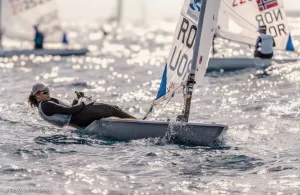
It’s very interesting to watch a person who has a hobby that influences the way they dress, behave or relate to society. It seems that in yachting time almost comes to a stand still while we sail in the same way we take our skiing equipment for a weekend away in the mountains, our helmet, ski glasses and multi-layered clothing for the slope, leaving behind the worries and the office outfit. In yachting, we wear neoprene suits, lycra T-shirts, dry-suit jackets, gloves and rubber boots, we put on the highest protection sunscreen, our lifejackets, and after we prepare our boats, we set sail.
I remember how difficult it used to be for me to explain to someone what kind of sport I practice, what a sailboat looks like and how it sails against the wind. Most people thought I was doing canoeing and some even thought I was doing windsurfing. To go back to my story, it took me a while to get accustomed to the boat, to learn the appropriate terminology, to start communicating using the connoisseurs’ lingo and to begin to understand how a sailboat worked. Only then did the competitions come. The vessels compete on a route marked by floating buoys and the one that goes first around these floating buoys in a predetermined order wins.
One of the reasons I fell hopelessly in love with this sport has to do with how complex it is. Yachting is a combination of physical activity with elements of hydrodynamics, tactics, strategy and weather knowledge, and not least respect for nature. The same sport is practiced by children and adults alike, people of all ages and social backgrounds, all equal on water. One of the fundamental rules of yachting says that each bears alone the responsibility of making the decision to sail or not. This means that from an early age, those who practice yachting are encouraged to analyse their own powers and to make their own decision as to whether they are well-enough prepared for the weather conditions.
The yachting competitions function according to a set of rules that every one has to respect. The purpose of these rules is to ensure the competition is correct and that it respects the principles of fair-play. Each competition has a complaints committee whose judges deal like in a court of law with those who make a mistake. Imagine an 8 year old that has to represent himself, to defend his position and to admit he was wrong.
Another very important trait that this sport teaches you is self-restraint and team work. They say the sea doesn’t forgive, and that is true. Where you’re part of a team, the mental balance of all the team members needs to be maintained. Yachting is not a means of letting off the negative energies accumulated during the week, but a means of rebalancing your energies and resonating with your fellow team members, the boat and the sea. There are, of course, people who behave like they are at a
football game, but this behaviour shows they don’t really understand the philosophy behind this sport.
For me, yachting has always meant competition. The size of the boat, the fact that it fitted one or ten people, these things never mattered. Competing always came first. There are different levels one can compete at, ranging from weekend club regattas for medium level competitors, to Olympic sailing, and ending with ocean crossing and competitions like America’s Cup or the Volvo Ocean Race. I’ve always wanted to get better at, taking in account the amount of time I spend training and the fact that I struggled first because I had to choose between my studies and later my profession as an architect and my passion.
Now, after many years, I understand that yachting is not all about competing. There many ways one can look at yachting and if for me it will always mean competition, there are many more who see it as an adventure; other people see it as a way to relax, while others yet see it as a high class activity that allows them to wear white or stripes and drink champagne on the deck of a luxurious yacht.
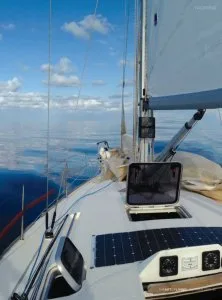
I have friends that each summer go on holiday to Greece or Croatia, hire a yacht and spend their vacation days sailing from one island to the other, sunbathing on the deck and bathing in the translucent sea. Like me, they also do yachting, and even if the hired boat comes with its own skipper, they all enjoy the same feeling of total freedom, visit places they wouldn’t otherwise get the chance to visit, and have a different vacation from those offered on the classic tourist circuit.
When some of these friends come back home, they decide to take classes on how to sail a sailboat, sit the exam and get the permit so that the following holiday, with a little bit of practice, they could give up the services of the professional skipper. Many of these friends take their children when they are six or seven years old to do yachting in a similar club to the one I ended accidentally ended up at twenty years ago. The number of those who have ever sailed a sailboat is slowly increasing and perhaps my children will find it easier to explain what yachting is when they tell their colleagues about the sport their practice.