by Ana Maria Bodeanu
In the 19th century, St. Moritz was primarily known as a summer spa destination, celebrated for its mineral springs. Wealthy visitors and royalty would travel there between May and September to take part in mineral water cures and enjoy the fresh mountain air.
The visionary behind St. Moritz’s transformation and the man who placed it on the world map was Johannes Badrutt.
Born in 1819, Badrutt joined his father’s construction business at the age of 17. His father also owned a small inn called À la Vue du Bernina (the round-gabled building still stands today). In 1855, Badrutt took over the lease of the nearby Faller Inn, which he intended to develop further.
It was this decision that marked the beginning of St. Moritz’s reinvention from a modest summer retreat into the birthplace of winter tourism as a sophisticated, elite experience.
In 1858, Badrutt sold his original inn back to his parents and purchased the nearby Faller Inn for 28,500 Swiss francs. Together with his wife, with whom he had eleven children, he began to modernize the property. It soon became known as the Kulm Hotel St. Moritz, one of the benchmark establishments in the world of luxury hospitality.
Yet Badrutt was dissatisfied by the fact that two-thirds of the hotel stood empty outside the summer season. At the end of one thermal-water season, he challenged several of his wealthy English guests to a wager: if they came to St. Moritz in winter and found it unpleasant or dull, he would offer them free accommodation. He even promised to greet them outdoors in his light clothing, no matter how cold the weather.
If, however, they were satisfied, they would be obliged to promote the experience among their social circles over the following year. These men were highly connected within the aristocracy of the time, including members of royal families and European nobility.
Almost overnight, winter stays at Badrutt’s Kulm Hotel became fashionable. As visitor numbers grew, guests began to seek new forms of entertainment. From around 1870, some adapted transport sleds for daring descents through the narrow, winding streets of St. Moritz — giving rise to bobsleigh. Others preferred a more restrained, Victorian pastime, which led to the development of larger, more controllable sledges: the first individual toboggans.
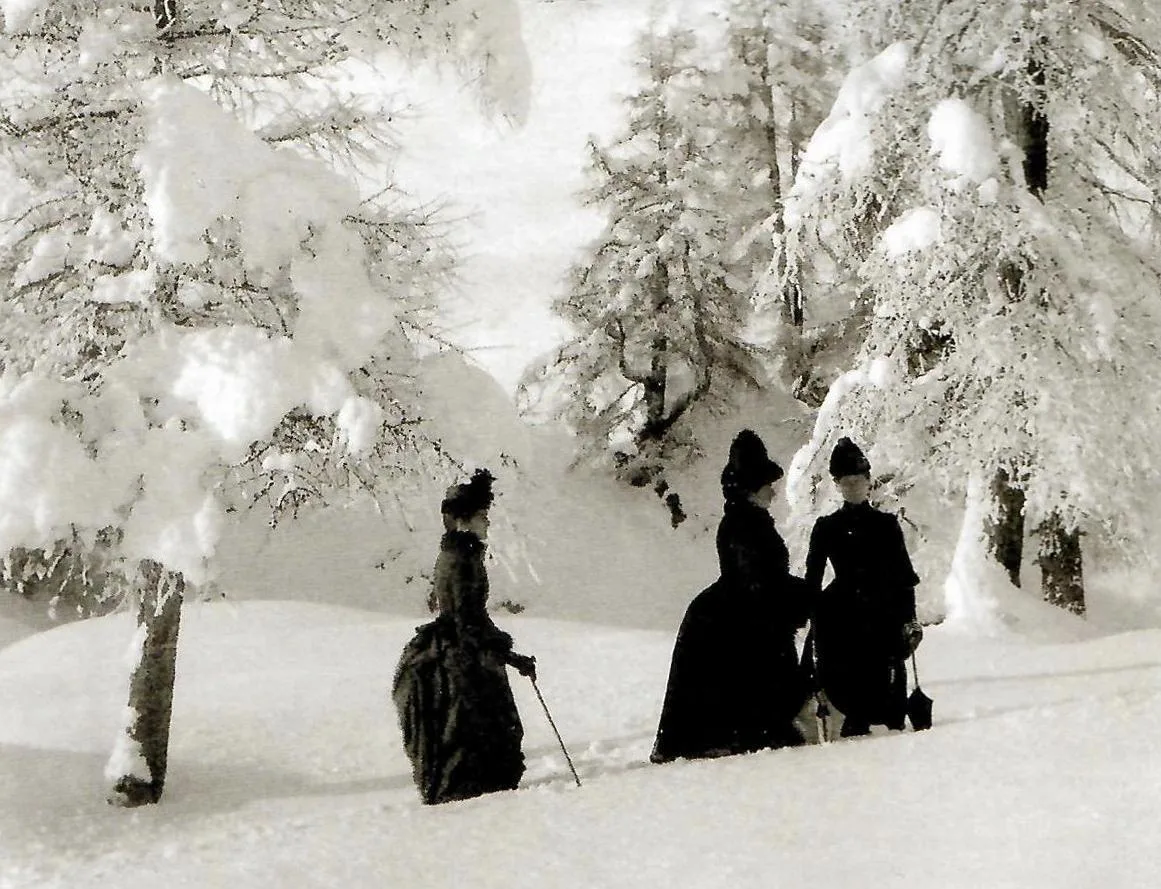
Three ladies with their ”cul de paris” bustle dresses in the snow, photograph bu Elizabeth Main, 1890
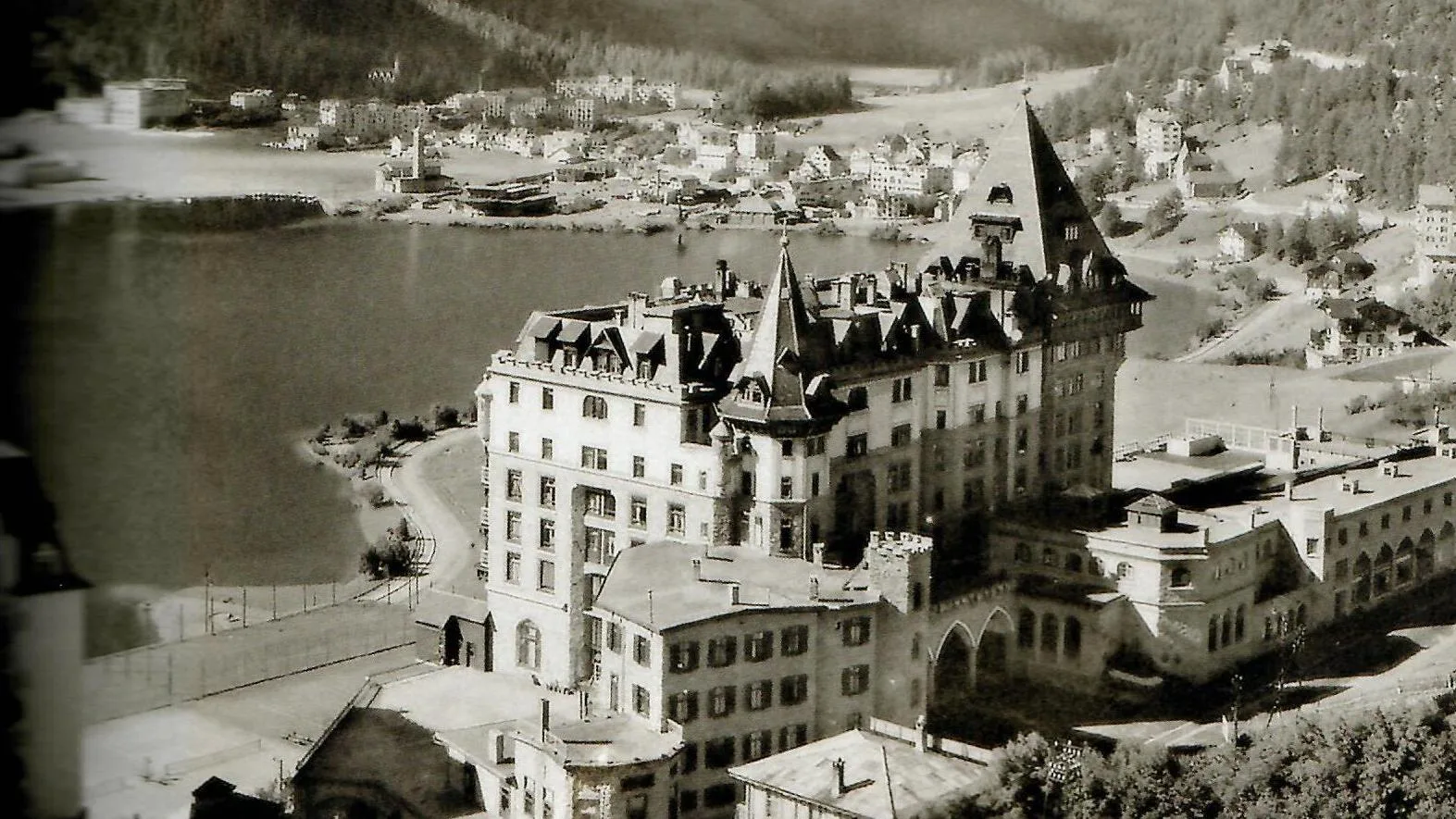
The economic success of this period allowed Badrutt to make strategic investments in local real estate, including the land on which Badrutt’s Palace would later be built. By 1882, he had become the largest landowner in St. Moritz.
He was also a pioneer of technological modernity. After visiting the Exposition Universelle in Paris in 1878, Badrutt introduced Switzerland’s first electric lighting system to St. Moritz. In addition, he was an art collector and a generous patron of the arts.
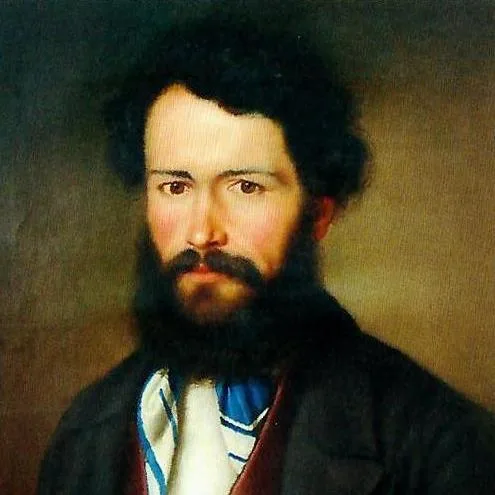
Oil painting ofJohannes Badrutt, 1860
Through these initiatives, Badrutt transformed winter — once considered unsuitable for travel into a season of exclusivity.
The visionary hotelier changed the course of alpine tourism forever. By inviting British guests to discover the Alps in winter, he redefined the season as a symbol of elegance, leisure, and distinction. Thus, the world’s first winter resort was born, and St. Moritz became a landmark of modernity.
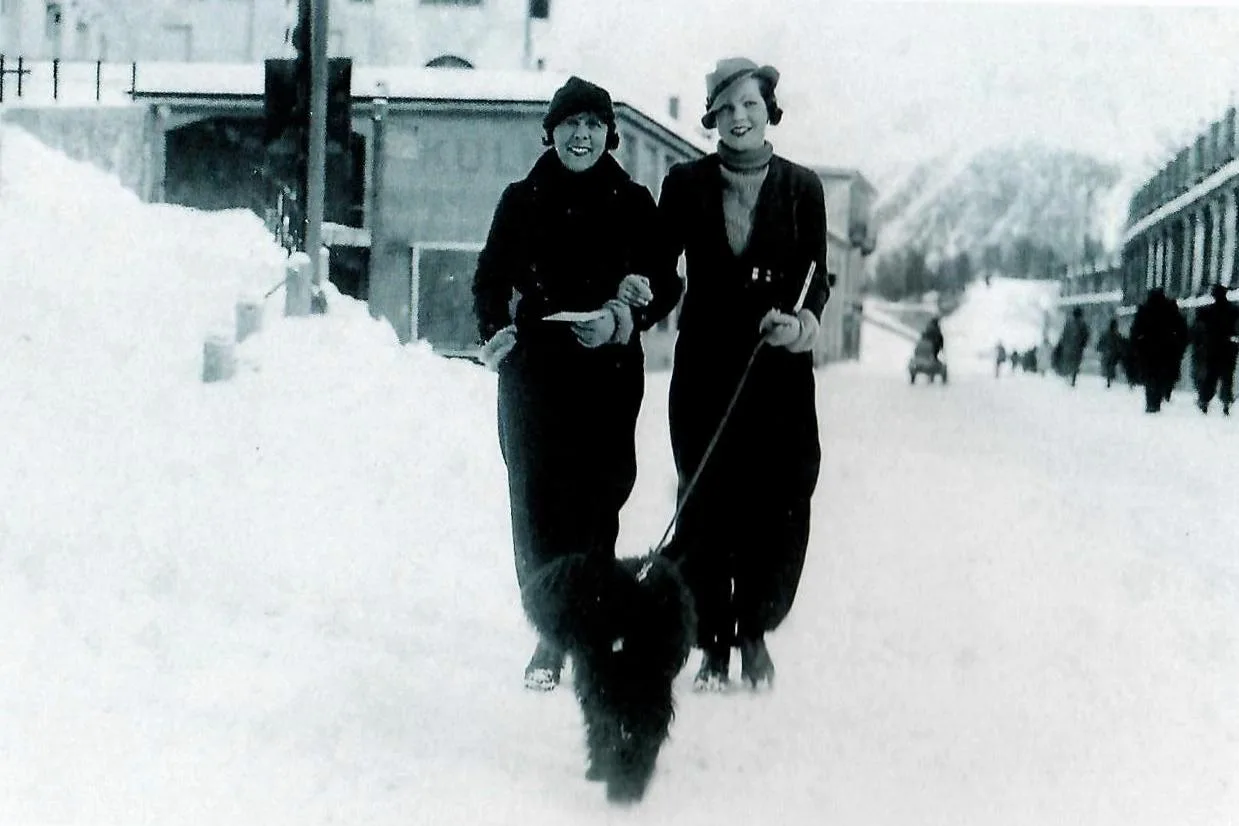
Elise Becher-Urlich (mother) with dana Roda Becher and dog Paul, St. moritz, 1934
At the beginning of the 20th century, the resort further shaped its identity around sophisticated winter sports such as bobsleigh, skating, and skiing. In 1904, the famous natural bobsleigh track was inaugurated, a track that remains unique to this day. At the same time, St. Moritz established itself as a meeting place for European aristocrats, artists, and visionaries, creating a world where athletic performance and social refinement coexisted.
Few resorts have had the honor of hosting the Winter Olympics twice, but St. Moritz is among them — in 1928 and 1948. These milestones cemented the village’s place on the international stage, reinforcing its reputation as a premier destination for winter sports and luxury hospitality.
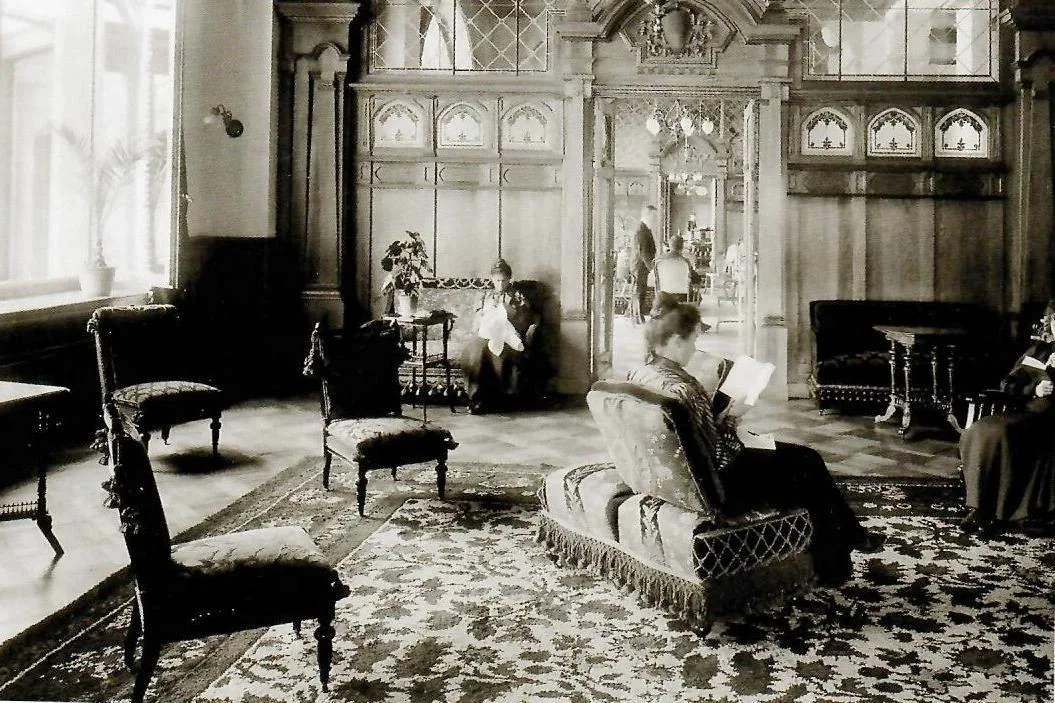
The ”Ladies' Salon” at the Palace Hotel, St. Moritz, after 1900
In the second half of the 20th century, St. Moritz evolved beyond a mere resort: it became a global brand. Its iconic hotels, world-class events, gourmet restaurants, and the constant presence of international elites transformed the village into the ultimate symbol of Alpine exclusivity.
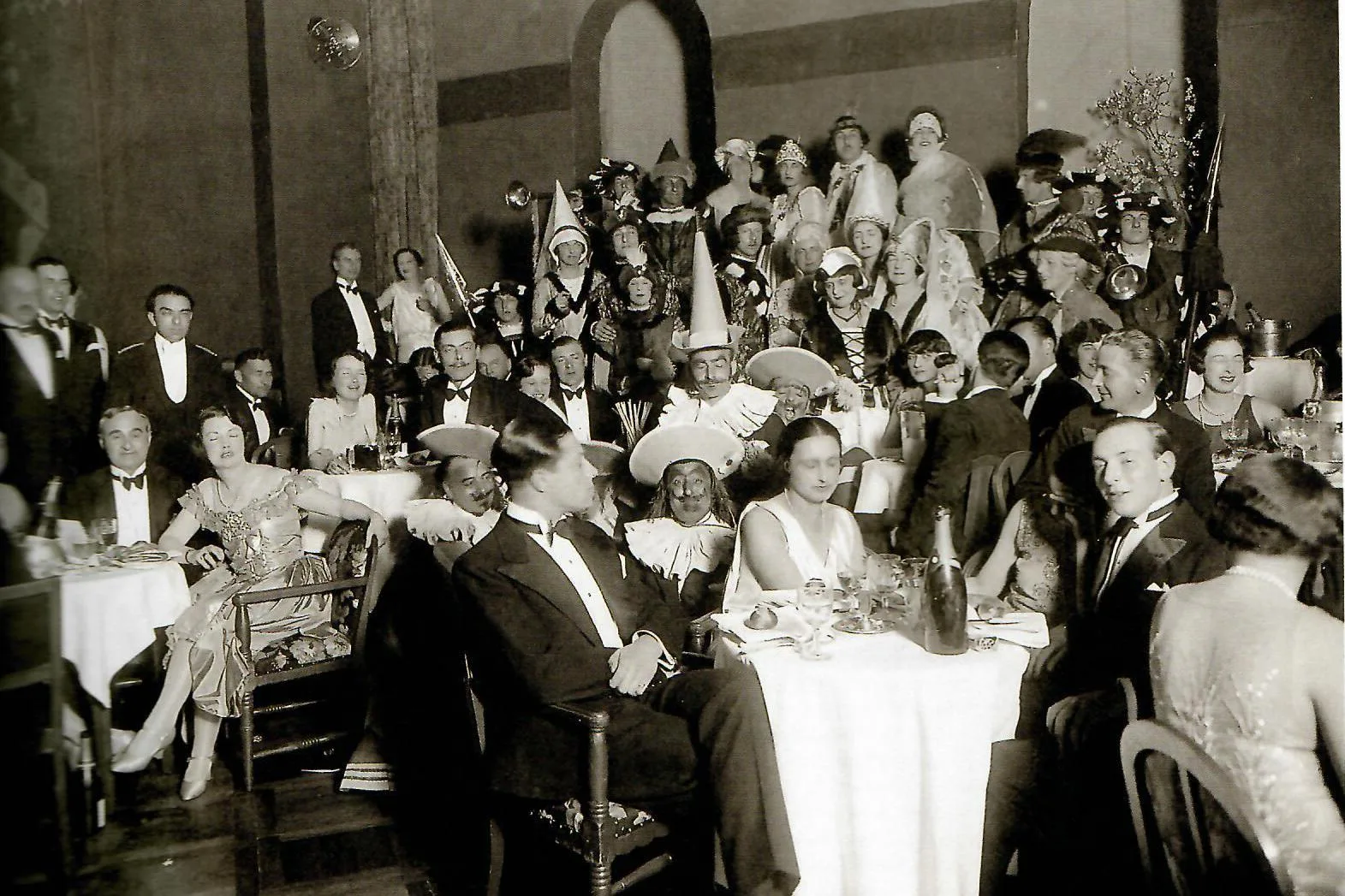
”Soiree Costumee” with a medieval theme, at the Palace Hotel, 1925