by Alice-Claudia Gherman
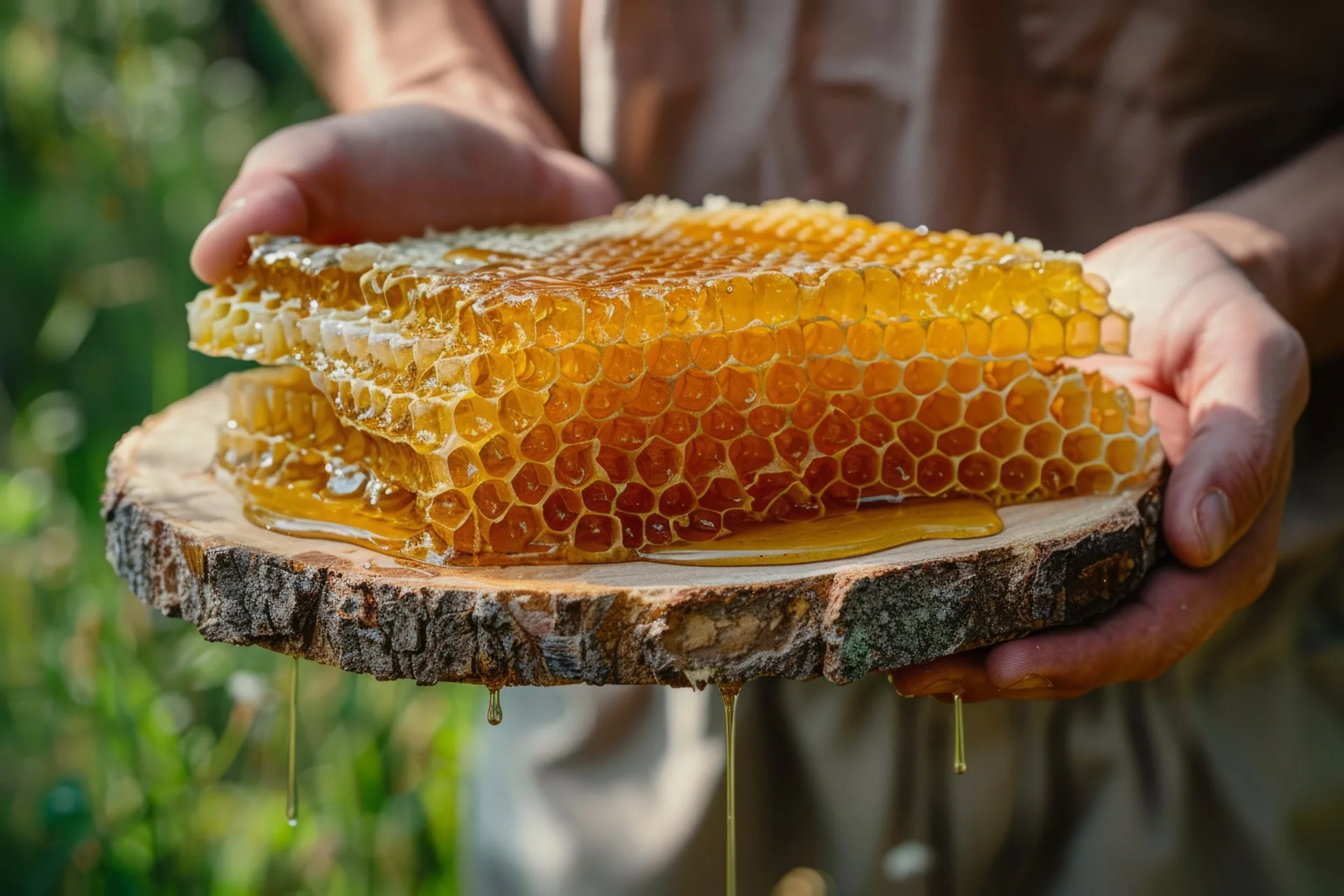
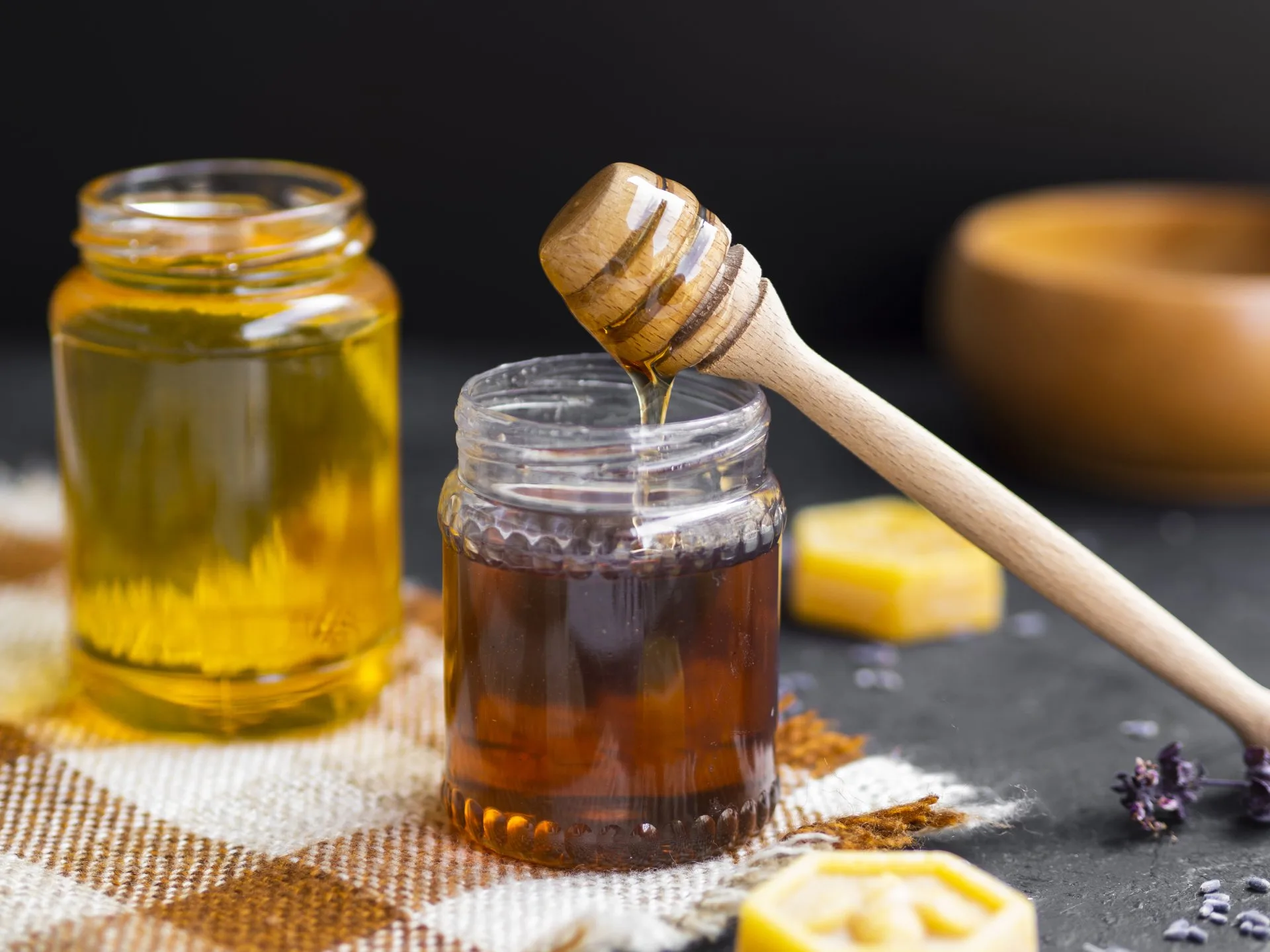
Acacia honey, linden honey, polyflora honey and manna honey (a rare honey, obtained from tree sap – fir, beech – and one of the richest in minerals honey varieties with high therapeutic values), raw pollen, pasture, honeydew, honeycombs and many more/other similar products, all share one name: Herța Bio Apicole.
The story of Herța honey began in Mărginimea Sibiului, born from the desire of a Romanian with respect for nature and quality, who started a family business – Herța Bio Apicole. The one behind it all- Ioan Cosmin Herța. He started as a true one-man show: beekeeper, carpenter, accountant, driver, electrician, economist, IT specialist, and even teacher, all at once, to help the business grow. "This is the definition of true entrepreneurship: earning to do everything yourself, then training people who share the same principles and delegating responsibly, building a real team without compromising quality", says Cosmin Herța. He admits that it hasn't always been easy for him. But then again, easy roads rarely lead anywhere, while the difficult ones make the journey all the more exciting.
The path of Cosmin Herța and Herța Bio Apicole has gone far, achieving international recognition – 2 gold medals at the European Organic Festival 2023 and 2024, and this year a second place at the EU Organic Awards 2025. Three important distinctions that speak for themselves. Add to them the "Chosen Taste" 2024 trophy, for the best organic pollen in Romania, obtained at the local competition organized by Roaliment, and you will have the complete picture.
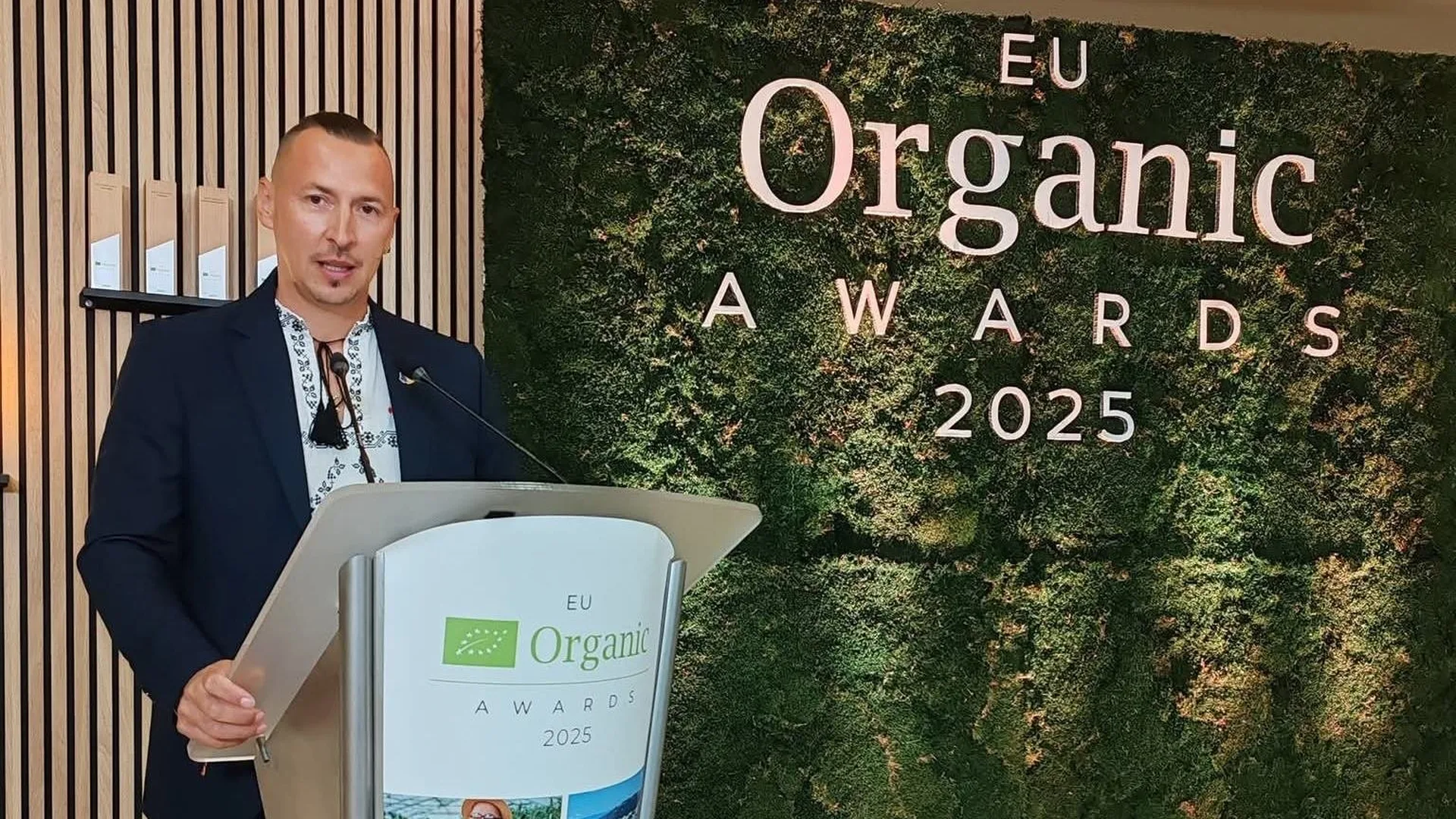
Comsin Herța at EU Organic Awards 2025
Honey is produced without processing or pasteurization
Herța honey is raw, authentic honey, left exactly as the bee creates it in the hive, unheated. "Raw honey is unpasteurized, unfiltered, and unprocessed honey. Not all honey is raw. Much of the honey on the market is heated to remain liquid, but this process destroys the enzymes and therapeutic properties," explains beekeeper Cosmin Herța. He continues: "To produce raw, alive honey, we invested over 100,000 euros in a complete stainless steel technological flow, certified organic, with cold extraction, controlled decantation, and bottling without contact with plastic – a system that an average beekeeper cannot support from selling honey alone."
"We don't feed the bees with sugar, not even in winter, even though this it is not required for the organic certification"
Investing is not easy, but you have to do it, if you want to have a truly organic product. This means: choosing clean areas, applying for certification, using permitted treatments, maintaining strict traceability and investing in education and responsibility. And something else is needed too! The beekeeper must be an honest man who loves his bees "We don't feed the bees with sugar, not even in winter, even though this it is not required for the organic certification". Feeding honey costs 800 lei/bee colony, compared to 50 lei if we fed them with sugar.
We also do not use antibiotics
and chemical treatments, although they are standard methods in conventional
beekeeping. We have carried out natural selection on the Carpathian breed,
keeping only resistant colonies. In addition, we treat the apiary only with
natural acids and Hive Alive (seaweed), a substitute for antibiotics.
"This is how you get “alive” honey, unadulterated and with all active
enzymes. Also, in order to obtain organic certification, bee
colonies must not be fed sugar or treated with antibiotics, and they must be
kept in clean, uncontaminated areas.
Unfortunately, intensive agriculture involves crops sprayed with pesticides, insecticides, fungicides, acaricides, that inevitably reach the nectar and pollen, and from there, the honey itself. It’s no wonder, then, that although we have many beekeepers, only a few are organically certified. To avoid contamination with chemicals and obtain organic honey, the beekeeper must take his hives to the mountain sides and forests far from pollution. "We take the hives to the middle of the forests - to the acacia, linden, and manna - not to the edge of the forest, where the bees would pick rapeseed or sunflower and contaminate the batch," explains the Sibiu beekeeper. Herța Bio Apicole produces only four types of honey, obtained 100% from wild flowers from clean mountain areas.
"Mountain honey is richer in minerals, antioxidants and active compounds due to the wild and unpolluted flora. In the plains there are monocultures and pesticides."
Premium is not a label, but a standard
Therefore, for honey to be of the highest quality, the owner of the hives must be a true lover of nature. Someone who appreciates both the products of the hive, but also its creators - the bees. He should also show great respect for the ultimate recipient of this collective effort called beekeeping, namely the buyer. From this perspective, Cosmin Herța stands out for offering his customers only premium products. "Premium means more than just a label, it it a standard: certifications, analyses, clean areas, professional technology, responsibilities and zero compromises."
How can we avoid fake honey?
Buy exclusively from certified producers. • Check the label and batch number for authenticity. • Look for natural crystallization as a sign of purity. • Ensure traceability to the source. • Be cautious of suspiciously low prices, which may indicate adulteration.