by Alice-Claudia Gherman, photo archive Van Cleef & Arpels
Van Cleef & Arpels: A Marriage Between Two Jewellery Dynasties
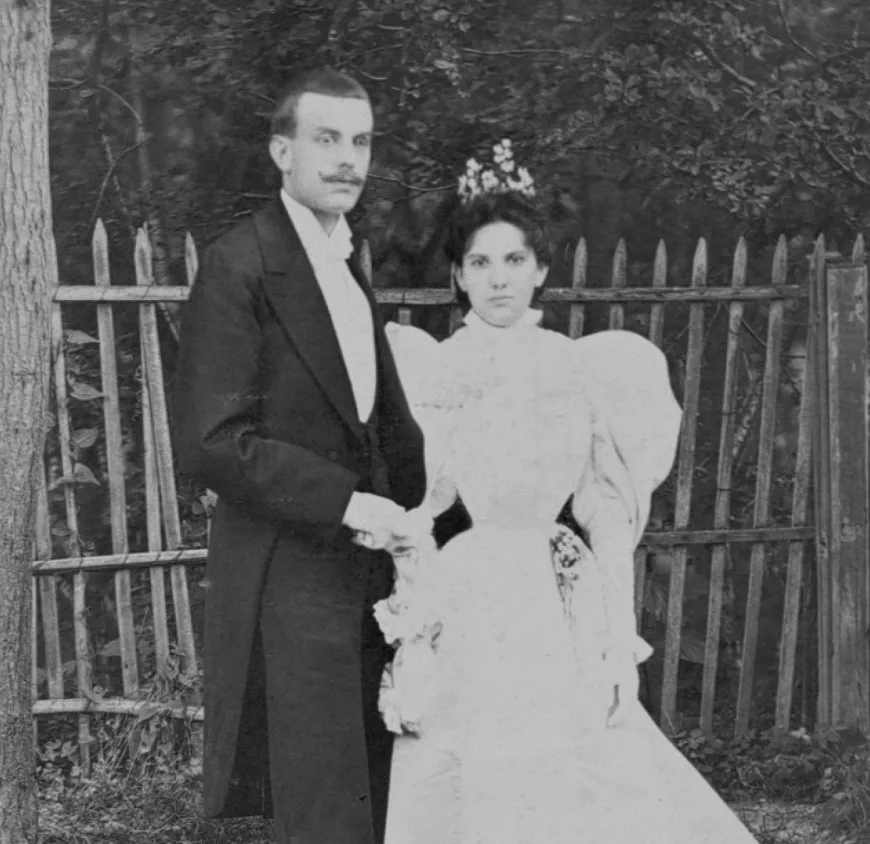
The story of Van Cleef & Arpels begins in Paris - where else could it be? Around 1906, in the City of Light, two young lovers, Estelle Arpels and Alfred Van Cleef, joined their lives in marriage. She came from the Arpels family, which ran a jewellery business in Paris and was renowned for its refined taste and artistic designs. He belonged to the Van Cleef family, specialists in the trade of high-quality diamonds, with important connections in the mining industry and the cutting of precious stones.
It was not merely a romantic union, but a strategic one as well, of course. Soon afterwards, at 22 Place Vendôme, in the heart of Parisian luxury, the Maison Van Cleef & Arpels boutique opened its doors, a location where the House remains to this day.
Each family contributed to the creation of the new Van Cleef & Arpels brand. The artistic vision of the Arpels family intertwined with the technical expertise of the Van Cleef family. The result is the birth of a luxury empire during the height of the Belle Époque (L'Époque Dorée) a house that has preserved its renown, power of fascination, and elegance well into the twenty-first century.
Aristocracy as the Gold Standard of Quality
In its early years, shortly after opening its boutique on Place Vendôme in 1906, Van Cleef & Arpels did not launch “collections” as we know them today. Instead, the House focused on bespoke (sur mesure) commissions for its aristocratic clientele.
It was therefore only natural that its earliest creations consisted of classic luxury jewels - diamond earrings, studs, and necklaces – through which the Van Cleef family undoubtedly set the standard. These creations catered to the opulent and conservative tastes of the aristocracy at the beginning of the twentieth century.
During the same period, assorted jewellery sets - known as parures - were highly fashionable. Comprising a necklace, bracelets, earrings, and often a brooch or tiara, these sets were designed to be worn together. It comes as no surprise, then, that parures featured prominently among Van Cleef & Arpels’ earliest creations. Created especially for official occasions and grand balls, they enjoyed extraordinary success.
This was, however, in the midst of the Belle Époque, a period in which the Art Nouveau movement exerted a powerful influence over numerous artistic and creative fields - and jewellery could hardly remain untouched by it. Thus, during the 1920s and 1930s, the House of Van Cleef & Arpels began creating jewels of deeply poetic design, inspired by nature, flowers, and animals, yet adapted to the modern style that defined the Roaring Twenties.
The jewels created during those years have perfectly united the design skills and artistic vision characteristic of the Arpels family with the Van Cleef family’s technical expertise in the cutting and setting of diamonds.
This family heritage of technical and artistic expertise fostered a culture of “absolute perfection”, passed down from generation to generation. It transformed the business from a simple jewellery boutique into an institution of the decorative arts. From the earliest days of the House to the present, the defining qualities of Van Cleef & Arpels jewellery have remained largely unchanged: materials of the highest purity and exceptional gemstones, over simple precious stones, set in fine-quality gold and silver.
Mother-of-pearl, for instance, is selected for its uniform iridescence, without the natural imperfections accepted by other brands. Many of the pieces are designed to be mobile. Their detail execution is so successful that it can be considered borderline obsessive.
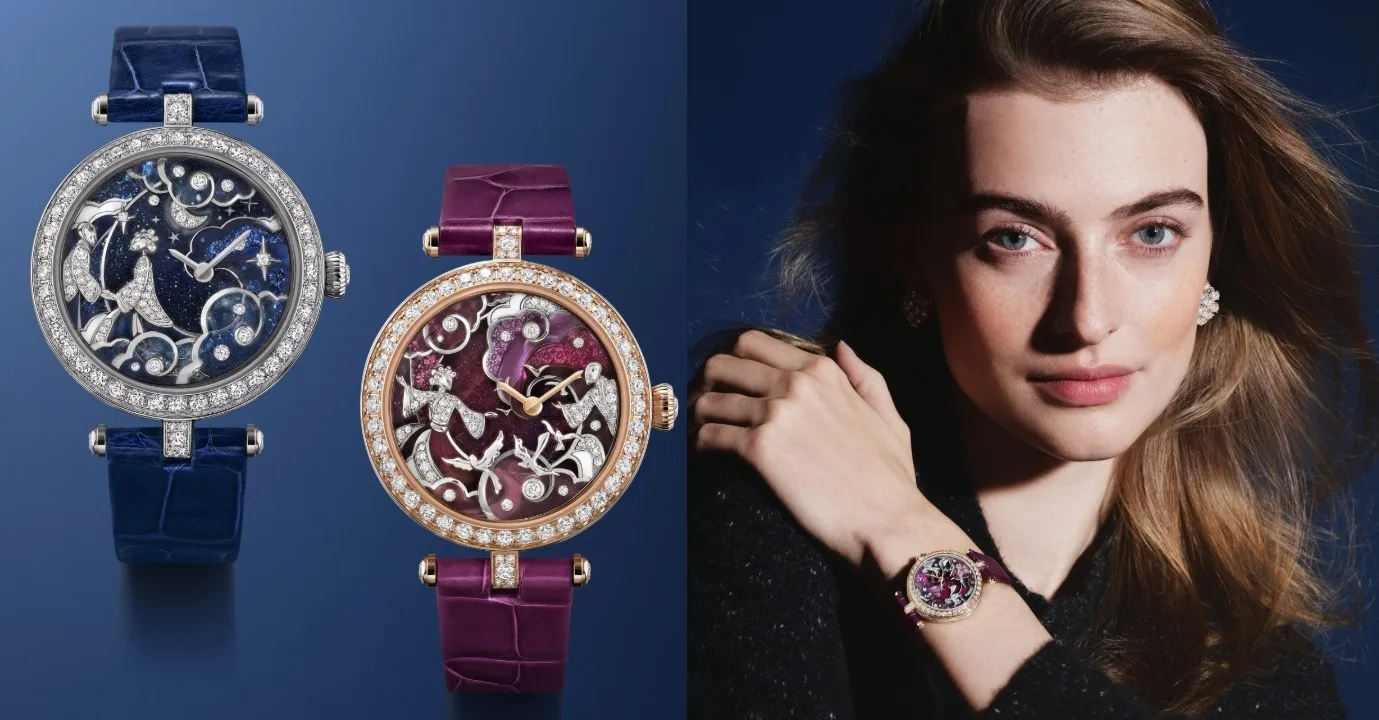
Alongside its traditional jewellery, Van Cleef & Arpels began creating jewellery watches as early as 1906. The first documented models, however, date from around 1918. The most celebrated model in the House’s history is the Cadenas, launched around 1935. Today, Van Cleef & Arpels offers several types of watches, ranging from elegant and relatively discreet designs to timepieces featuring highly sophisticated complications. The official collections include Cadenas, Pierre Arpels, Alhambra, Perlée, Poetic Complications, Extraordinary Dials, and High Jewelry Watches.
Mystery Set: One of the Most Significant Milestones in the History of Jewellery
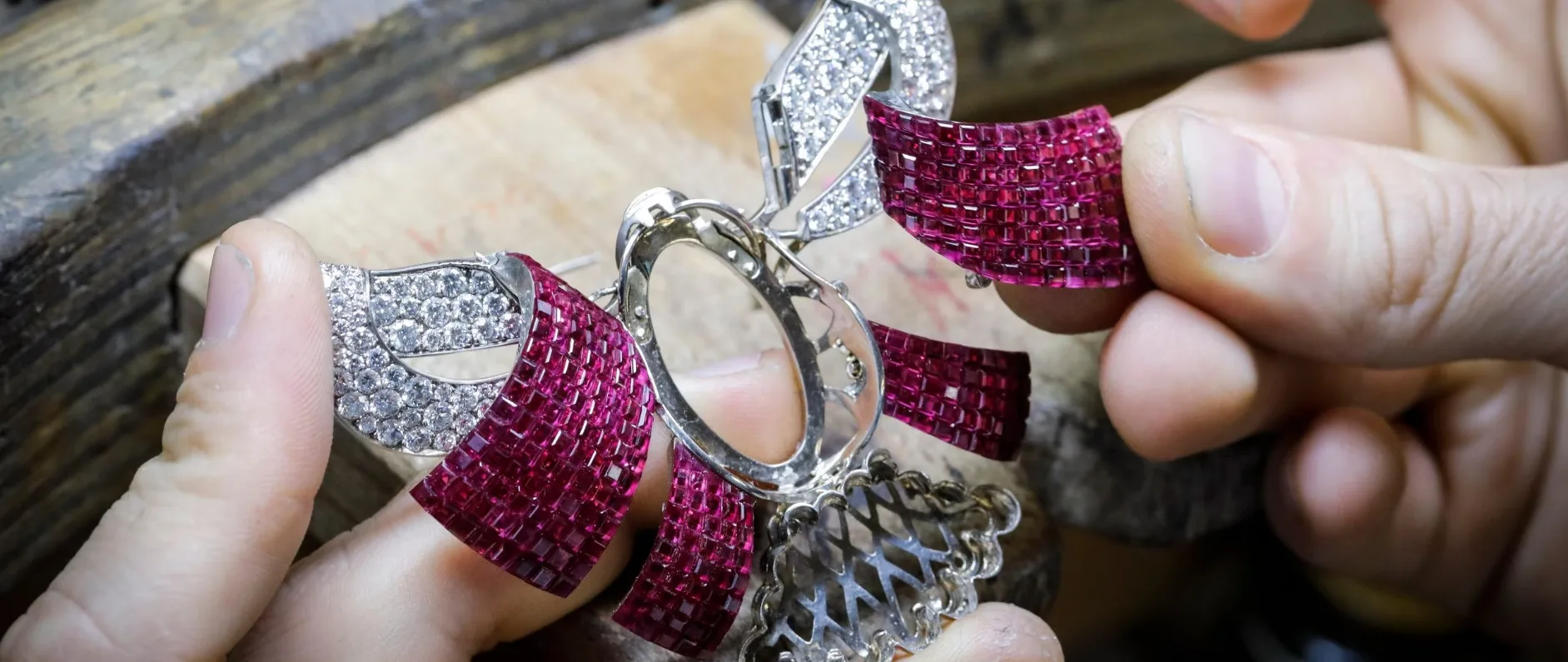
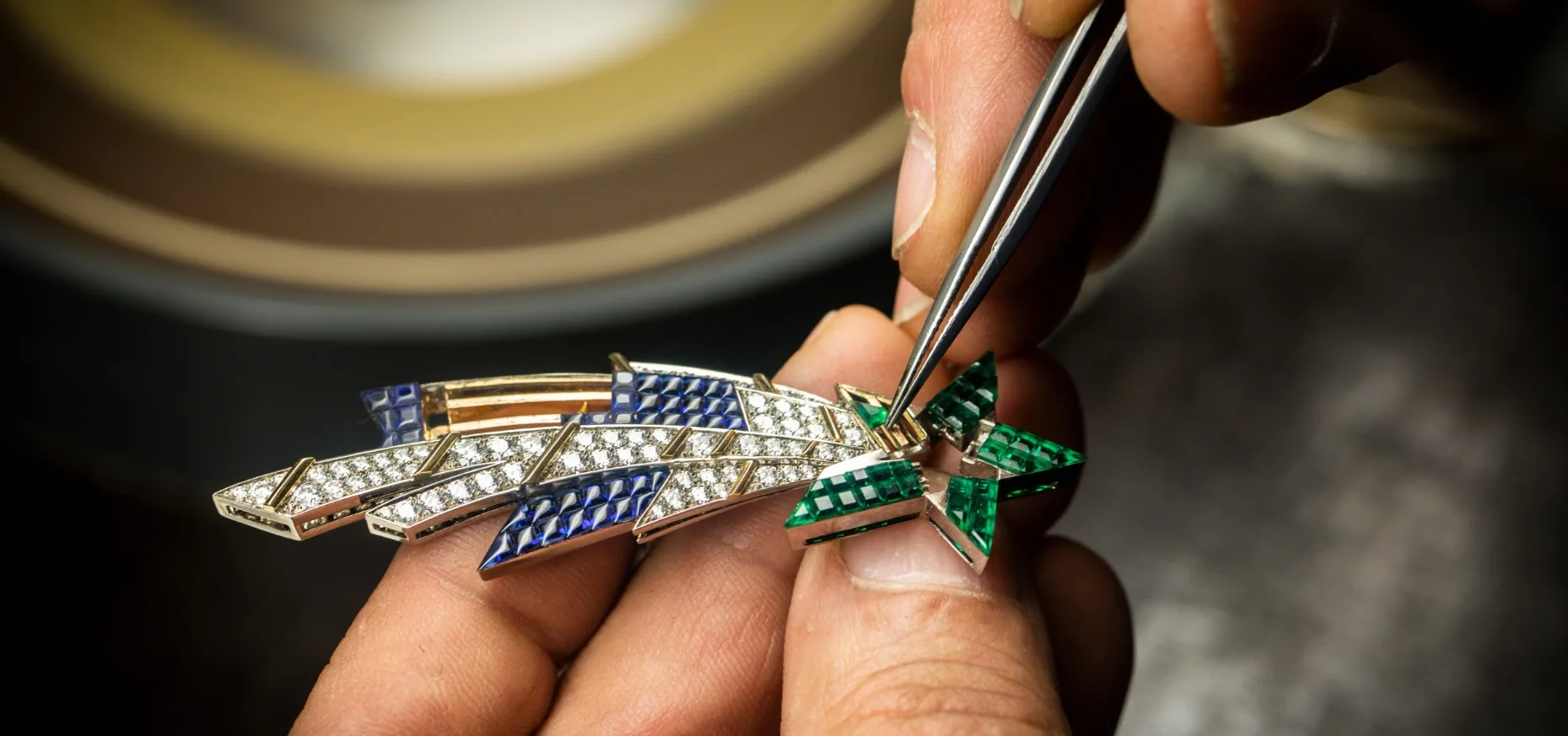
The science of diamond cutting, combined with the art of design, led to
the creation and patenting of a revolutionary new gemstone - setting
technique in 1933. Known as Serti Mystérieux, (Mysterious Setting), it
allowed precious stones to be secured without any visible metal framework. This
innovation elevated the House to a level of technical prestige never before
achieved in the world of jewellery -a distinction that continues to be admired
to this day.
From that moment onwards, Van Cleef & Arpels jewellery has been defined by an impeccably smooth surface, creating the illusion that the stones are floating or seamlessly joined together. Achieving this effect requires mathematical precision and perfected stone cutting, especially since the House’s jewels are crafted by hand.
The 1940s may have affected Van Cleef & Arpels’ sales due to the outbreak of the Second World War, but has not diminished the House’s prestige. Even during this difficult period, the brand continued to create pieces of exceptional quality, upholding its aristocratic standards.
The Alhambra Collection: The Path to Symbolism and the Four-Leaf Clover
In the years following the Second World War, Van Cleef & Arpels began creating pieces that were more accessible in style, while preserving the House’s exceptional quality and luxurious character. Unlike other luxury maisons that remained focused exclusively on opulence, Van Cleef & Arpels began shaping its identity around the notions of luck and happiness, turning towards symbolism.
The House’s jewels began to be presented - and subsequently perceived by connoisseurs of niche luxury jewellery - not merely as luxury accessories, but as a form of personal talisman. Thus, in 1968, the Alhambra collection came into being: the most iconic and recognisable line in the history of Van Cleef & Arpels.
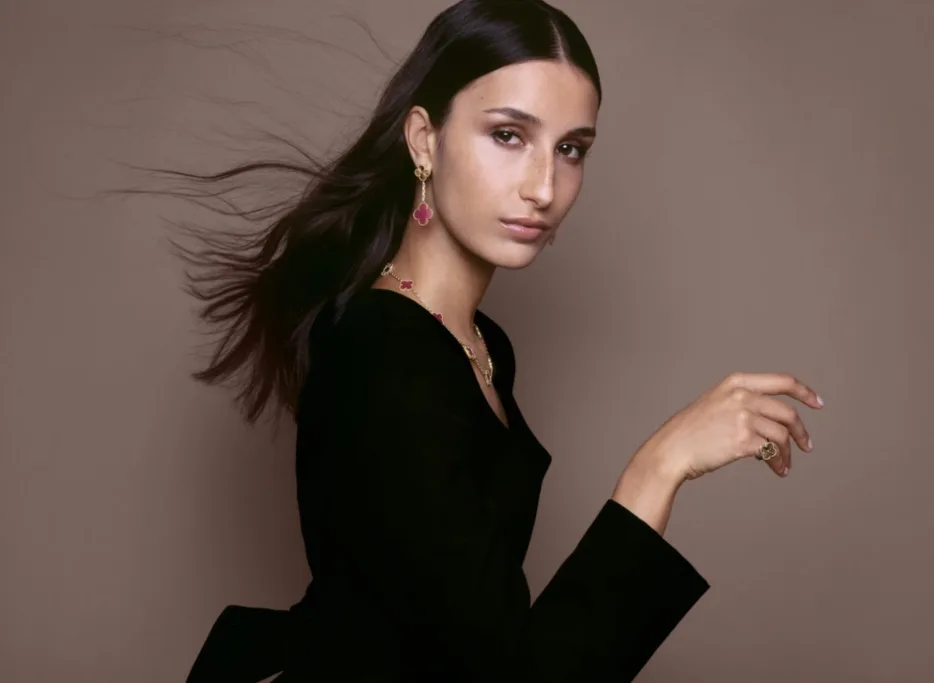
Inspired by the four-leaf clover, a universal symbol of good fortune, the collection was developed around this emblem and the House’s fascination with the celebrated Moorish palace of the same name in Granada, Spain. The four-leaf clover itself became the brand’s visual signature, and luxury jewellery collectors embraced the collection immediately.
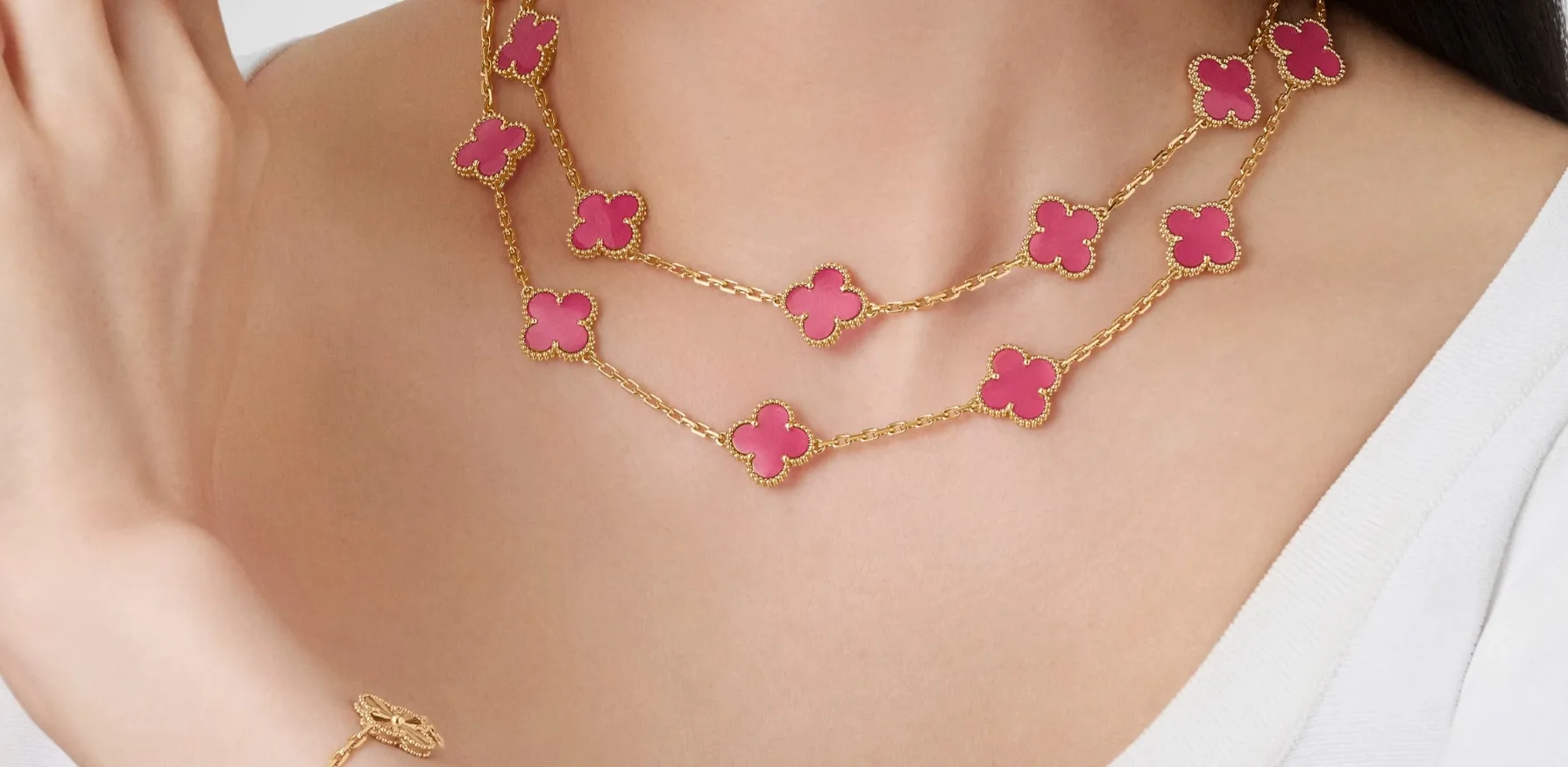
With its signature clover-shaped motif framed by a delicate border of golden “pearls”-small gold beads that outline the piece - the Alhambra collection is available in a variety of materials: mother-of-pearl, its most popular version, onyx, ideal for formal attire, green malachite, evoking nature and vitality, carnelian, a vibrant red symbolising passion and energy, diamonds, the most radiant and valuable iterations.
With Alhambra, the brand began exploring new materials and created collections that combined precious gemstones with more unconventional materials. The Alhambra collection includes necklaces, bracelets, pendants, rings, stud earrings, and several distinct lines: Vintage Alhambra, Magic Alhambra, and Sweet Alhambra.
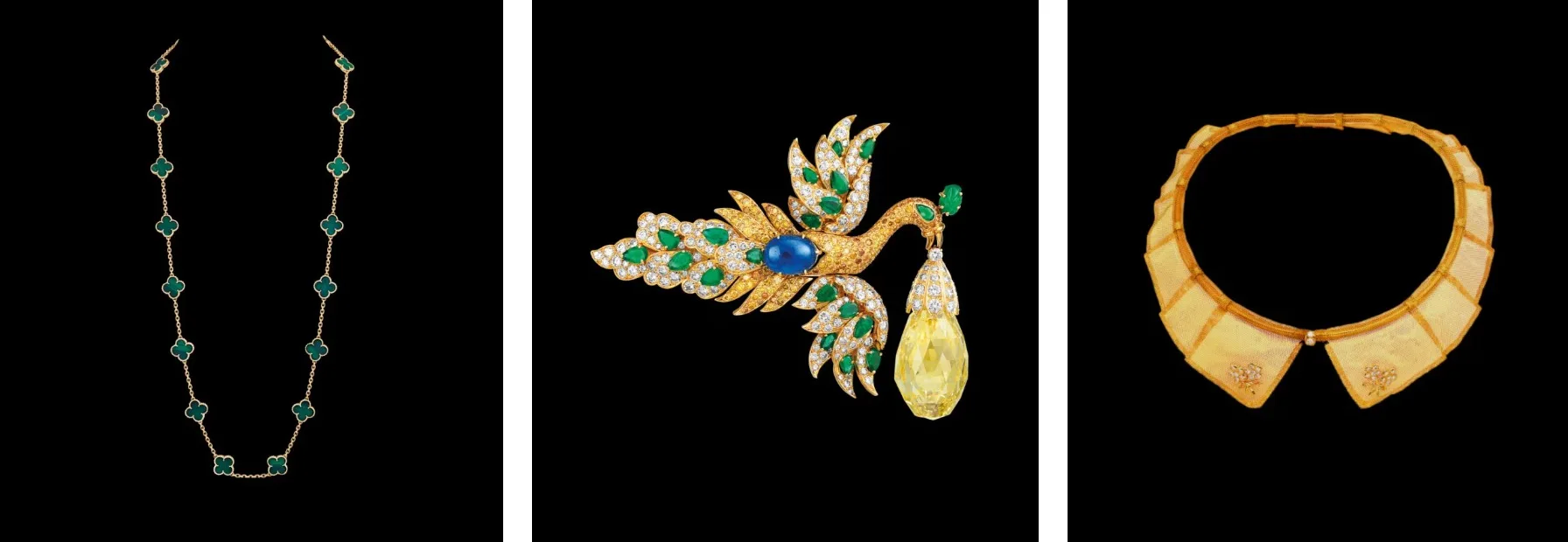
Vintage Alhambra is the classic line, featuring medium-sized clover motifs. Among its most popular pieces are necklaces composed of five, ten, or twenty four-leaf clover motifs, along with matching bracelets
Magic Alhambra is the more contemporary interpretation, featuring smaller motifs often paired with tiny diamonds, creating a more delicate and luminous effect. Sweet Alhambra consists of smaller, more delicate pieces crafted in yellow or rose gold and combined with white mother-of-pearl, carnelian, onyx, or malachite, each featuring a single clover motif
Versatile yet valuable, Alhambra jewellery can be worn with anything from a simple T-shirt to an evening gown. Ever since the collection was launched, it has captivated women of all ages, thus becoming a true must-have. The world embraced the clover motif as a personal talisman - a symbol of good fortune and new beginnings
The Perlée Collection: Discreet and Refined, or the Journey Towards the Modern Woman
In 2000, Van Cleef & Arpels took a step into the new millennium with the launch of the Perlée jewellery collection - a declaration that the House was not anchored in the past and could offer the modern woman delicate, modular jewels designed for everyday wear, rather than merely imposing luxury pieces.
Van Cleef & Arpels: One-of-a-Kind Art, “Old World” Elegance
versus “Modern Luxury”
What has defined - and continues to define - the Van Cleef & Arpels jewellery house is the enduring blend of romance, extraordinarily precise craftsmanship, and an almost reverential fascination with nature and symbolism, preserved with near-religious devotion throughout its 120 years in the luxury jewellery market.
Its devotion to tradition, precision, and quality makes Van Cleef & Arpels a distinctive luxury maison - one that does not launch new collections at the rapid pace of fast-fashion brands. Although widely recognisable, the House maintains an aura of discretion and “old-world” elegance.
Rather than relying on bold logos, it is recognised through its iconic forms - most notably the four-leaf clover. This appeals to a clientele that favours refined luxury over ostentation.
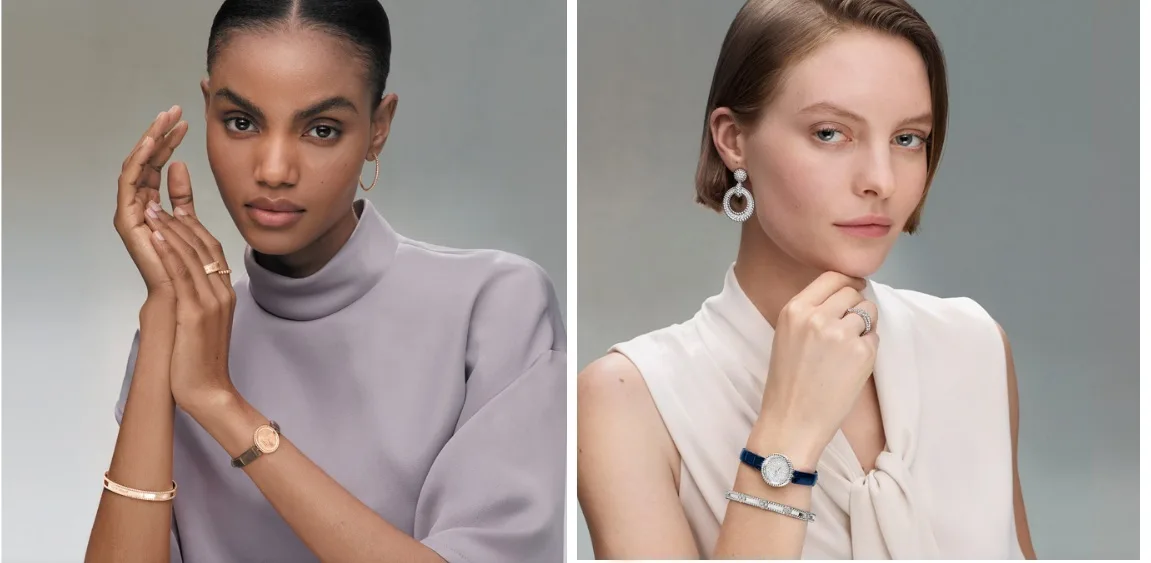
Crafted in yellow, white, or rose gold, and sometimes incorporating small diamonds set within tiny gold beads, the collection is defined by a sequence of golden spheres framing each piece. This distinctive design creates a relief effect and a tactile texture. The Perlée collection does not proclaim its brand identity loudly; instead, it suggests luxury through texture and finish.
This means that the House’s contemporary jewellers either continue to develop and refine its existing collections or create Haute Joaillerie pieces that are, in essence, one-of-a-kind works of art. As a result, jewellery from the Alhambra collection continues to captivate women today. The House’s jewellers have introduced rare gemstones and unexpected colour combinations designed to sustain the collection’s appeal.
The pieces feature clean, pure lines that conceal an immense degree of technical complexity, signalling the House’s move towards sculptural minimalism. The latest developments in Van Cleef & Arpels jewellery also point towards greater modularity: a necklace, for instance, can be transformed into a bracelet and worn as such, or lengthened and shortened according to preference. Perlée diamond, sapphire, and emerald rings, together with its bracelets, necklaces, and pendants, have become the preferred choice for those seeking an understated yet highly sophisticated style. This is the choice for the ones who consider jewellery as a form of personal expression.
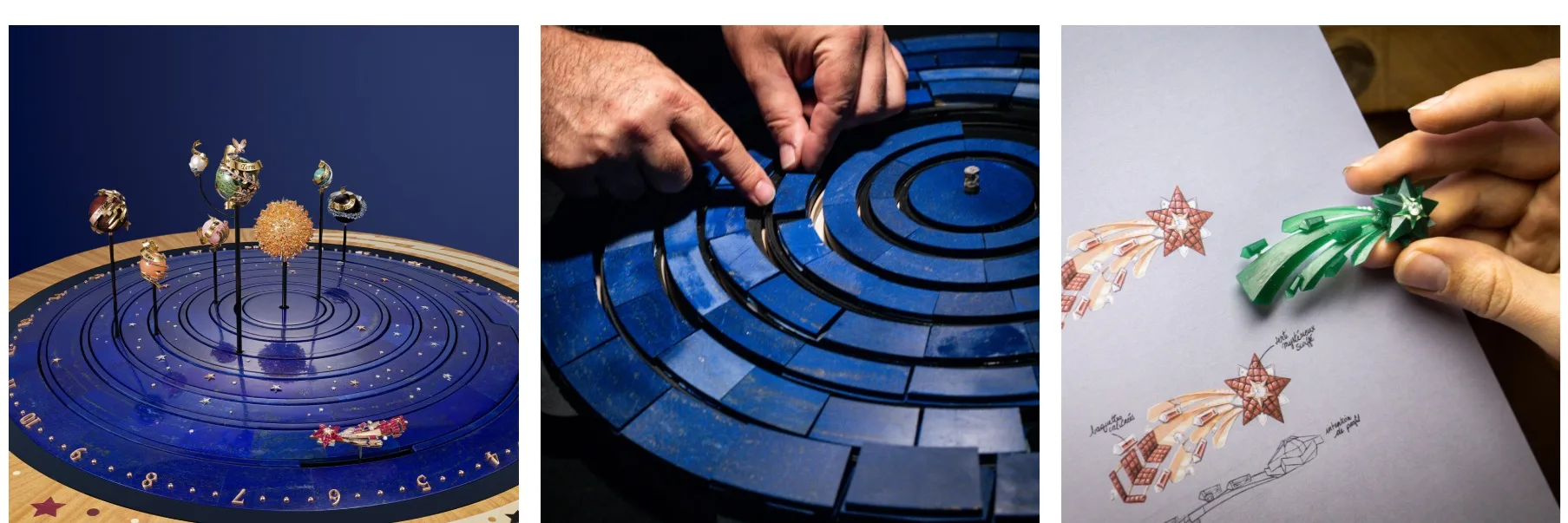
When it comes to the House’s passion for Haute Joaillerie, this is
where we find the latest expressions of the brand’s creativity. Its Haute
Joaillerie jewellers create one-of-a-kind pieces that depict exotic
animals, rare plants, and natural phenomena with hyperrealistic precision,
using invisible-setting techniques. Astral themes are also a recurring source of inspiration. Van Cleef &
Arpels has created jewels inspired by stars, moons, and constellations,
recreating the night sky through blue diamonds and sapphires.
In recent years, the brand has also turned its attention towards sustainability. The House’s most significant new development is the strict implementation of Saury, its traceability standard. Every new piece launched today comes with a guarantee of the ethical sourcing of its diamonds and gemstones - something now regarded as the “new norm” of modern luxury.