by Monica Crânganu
The obvious differences between the particularities of each religious group can be seen particularly in the architectural expression that varies depending on the area and the moment in time when they were built, and certainly on the historical context. Through times, Christianity was marked by schisms and theological disputes that lead to the rise of some distinct churches and cults. Of these, the most important are the ones represented by the Orthodox Church and the Roman-Catholic Church, followed by the Protestant cults.
The event that has finally marked the history of Christianity and of the civilized world goes back to the year 313 when, the Emperor Constantine the Great issued the Edict of Milan and thus proclaimed the freedom of Christians to choose their desired religion. At the end of his life Constantine himself converted to Christianity. This was the moment that has determined a long and complex history of ecclesial architecture; at first the entire process was carried out according to rigorous norms, but after a while it unleashed and resulted in more and more surprising forms.
Without judging or giving out verdicts regarding the fairness to respect the church building norms, we present hereby the main elements that a worship house was supposed to display. The first Western churches took over the plan surfaces of the roman basilicas, composed out of a wooden roof ship, underneath which the believers would gather; one or two lateral ships would outflank the central ship, being separated by a row of columns. On the westward side there was the narthex or the entrance intended for the penitents and the unbaptised, and on the eastward side there was a semicircular or a rectangle apse for clerics only. Later on, a transept was added to the basilica (sometimes even two of these), placed perpendicularly on the ship, thus displaying the form of the Latin cross.
In the case of Orthodox churches, the dominant element was the Greek cross and the arched roof, with tall vaults. Many of the more recent researches showed the fact that regardless of the style used to build the churches (roman, gothic, classic or modern), the most important criteria was preserving and inspiring substance, church spirit and symbolic elements. The reference point and the most relevant information on the planimetry and the way in which a church should look like can be found right in the Holy Scripture (Noah`s arch, Solomon`s temple or the city of Jerusalem).
The modernization of the rituals within the Roman-catholic Church and the innovating spirit of the Protestant cults have led to the rise of new architectural forms that derived from the variations of traditional design, or are completely detached from these.
Santa Monica Church, Madrid, arch. Vicens & Ramos
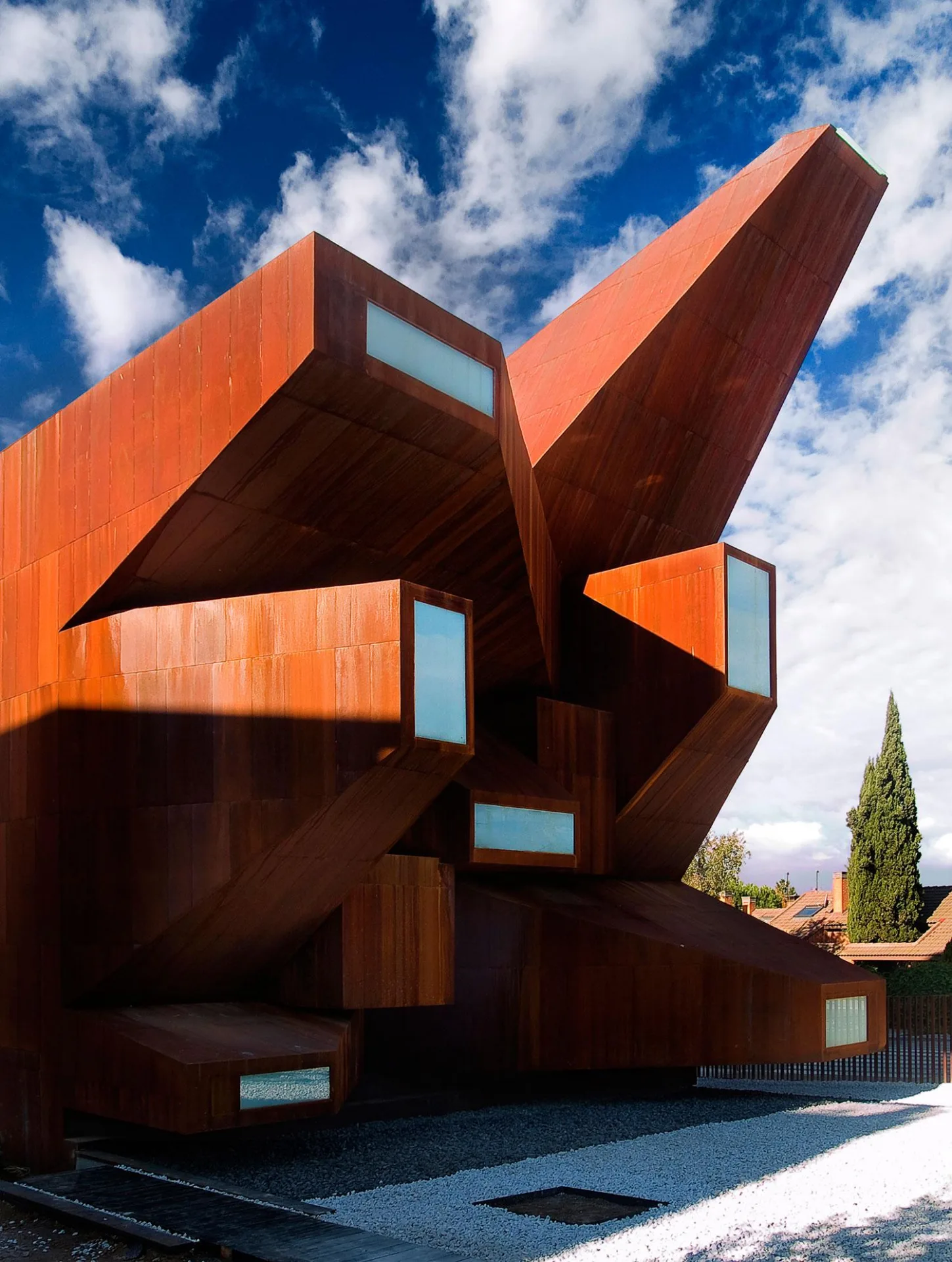
This is a vanguard construction covered in steel and with a rusty look
(Corten). This church integrates all the functions into a unique volume: the
worship house, the administrative offices, the class room and the priests`
living area. The form combining straight lines and curved lines together
provides an ultra-modern look, emphasized by the strong volumetric play between
void and fullness, and puts forward the light, dosed in a theater-like manner.
The interior is decorated with sculptures created by contemporary artists. The
intention to unify everything had priority when conceiving the building and the
architect himself called it “an explosion”.
LEGO Chruch, Olanda, arh. LOOS.FM
The large scale Lego constructions were always attractive and impressive thanks to their posture and complexity. Such a temporarily and unusual building due to its destination was erected in the city of Enschede, for the Festival of Grensverk. The church is 20 m tall and was built out of overlaid cement blocks, inspired by the colored plastic Lego pieces. Just like the pieces, this uncommon church also displays powerful and vivid colors.
The „Green” Cathedral, Bergamo, author Giuliano Mauri
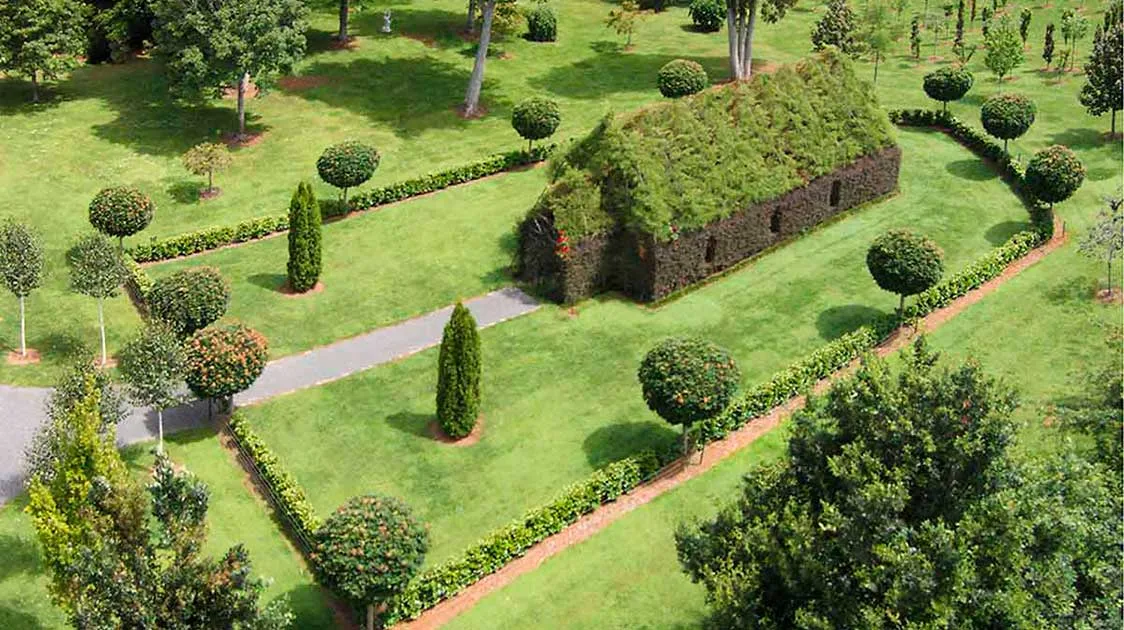
The trends of ecological architecture were transposed into this unprecedented project bythe artist Giuliano Mauri who, in 2001, inspired by his love for nature, designed a cathedral out of trees. Unfortunately, the artist died unexpectedly in 2009 and, as homage paid to him, the project was continued, expressing the passing from a man made structure to the fullness of nature.
The Church of Light, Japan, arch. Tadao Ando
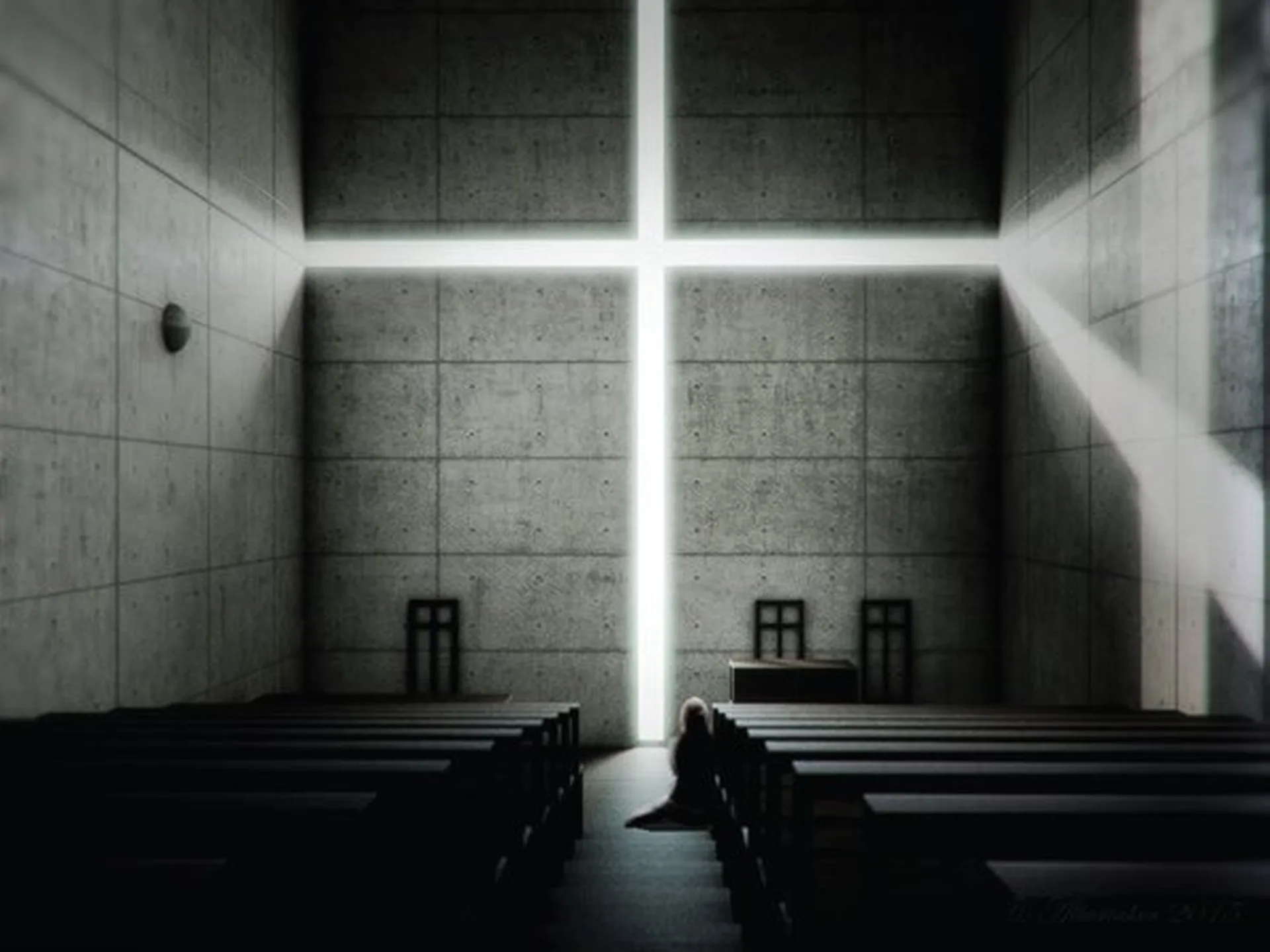
25 km from Osaka, architect Tadao Ando designed a church that expresses his philosophic approach - the connection between nature and architecture. This is done by the way in which the light can create new perceptions of space, together with the concrete structure. The entire building is a metaphor of the human existence duality – complete/void, darkness/light, tough/calm. The concrete structure removes any trace of Christian and esthetic traditional motives and everything is simplified to the symbol of the cross, displayed through the cut placed on the eastern façade. The weight of the concrete emphasizes the darkness of the church by suggesting a humble and meditative space. As a proof of the minimalist architecture, the void that transverses the wall towards the east is the only religious symbol of the church.
Sarang Church, South Korea, architects Dong gyu Choi, Yoo cheol Choi
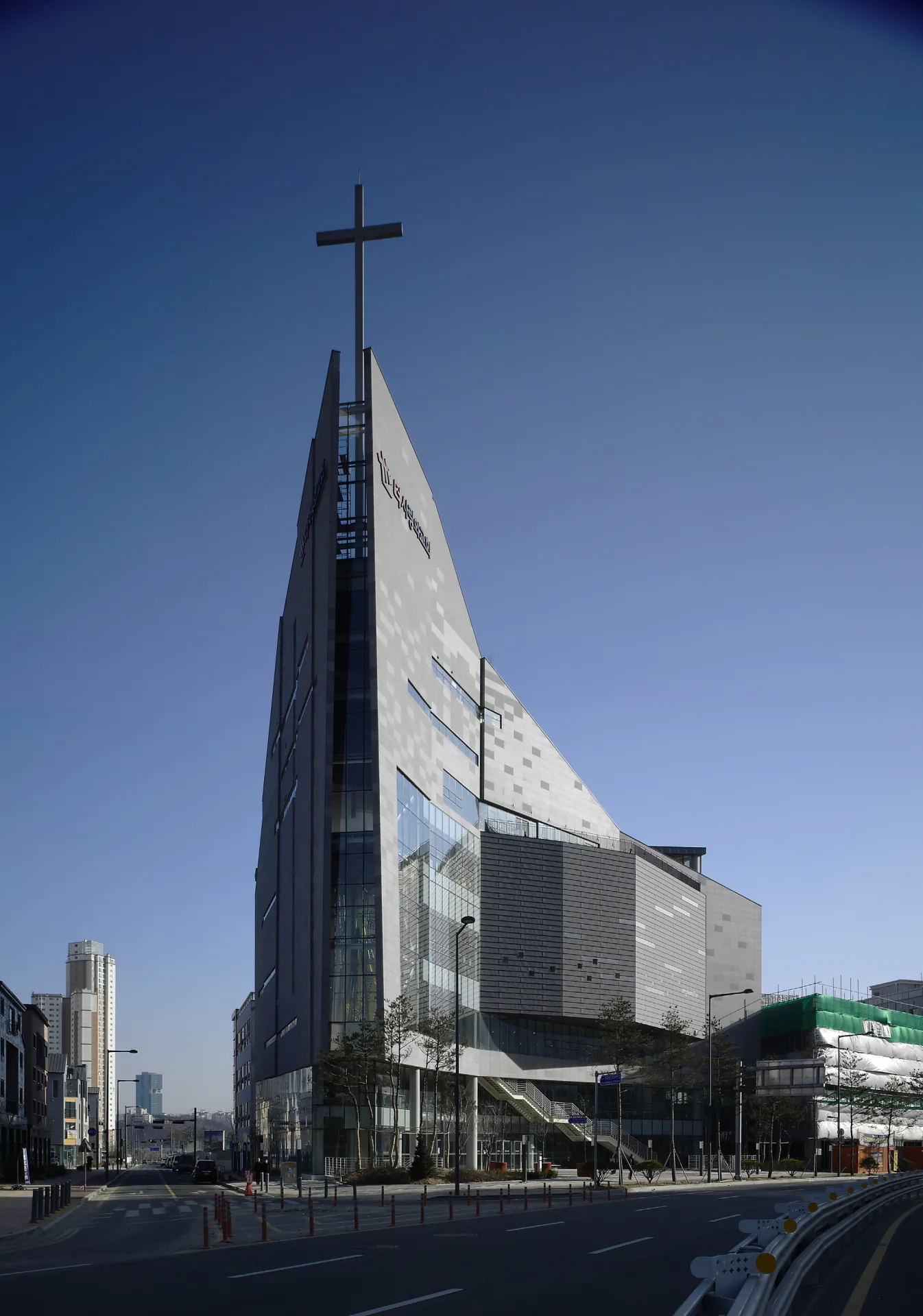
The uncommon rectangular form of the site where the Sarang church was built gracefully combines some traditional elements, despite its ultra-modern look: the concept of a faith fortress, the ark (Noah`s ark that saved the world) and the pigeon (the symbol of peace and of the Holy Spirit). All elements were reunited in a space that can welcome up to 2.000 people.
Church of Knarvik, Norway, arch. Reiulf Ramstad
This beautiful monument integrated in a mountain area is a volume of sharp edged wood, inspired by the mediaeval architecture. This contemporary chapel is covered in light-colored pine wood, vibrated by rectangular glass fascicules that create an interior full of light.
Church of Wilnsdorf, Germany, arch. Schneider& Schumacher
This is a different church, placed in the middle of A5 AutoRoute, it has a sharp, angular shape that reveals a surprising interior. The countryside traditional church got a tridimensional look, while the interior reveals a vivid space thanks to the sophisticated wooden dome. It is made out of 650 components that are interdependent and allow the natural light to come in gradually.
Kizhi Pogost Church, Russia
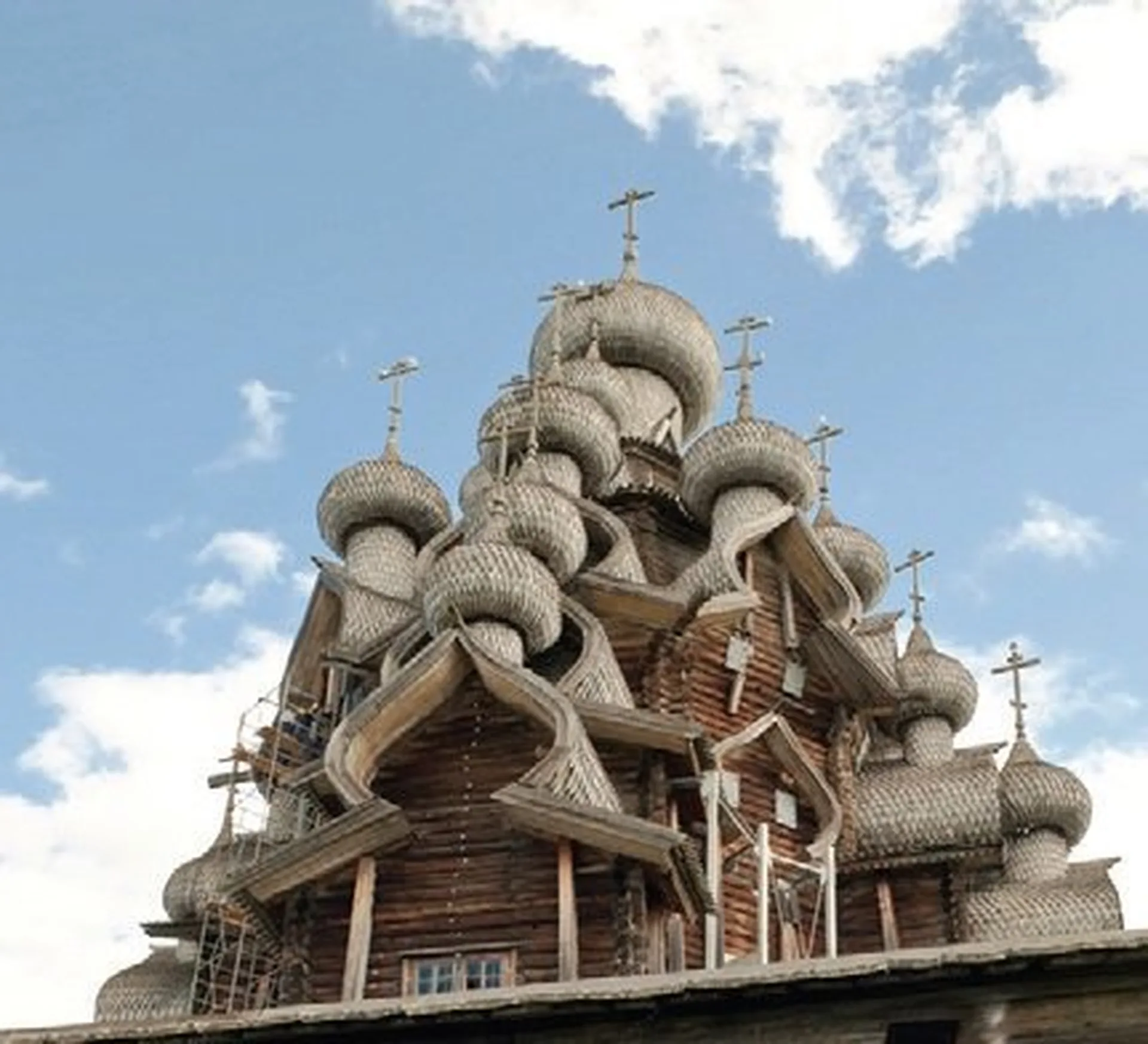
This is a superb Russian site included in the UNESCO World Heritage that contains a trio of buildings ornamented in a spectacular manner. It is an old 17th church, entirely built of wood, without using any nails. Even today, this monument with 22 towers is one of the highest in the world. Each dome is composed of hundreds of stratified wooden layers made from pine, spruce and poplar, shaped as a rhombus and very resilient to the extreme weather conditions and the long centuries that passed by.
Martin Luther Church, Hainburg, Austria, arh. Coop-Himmelblau
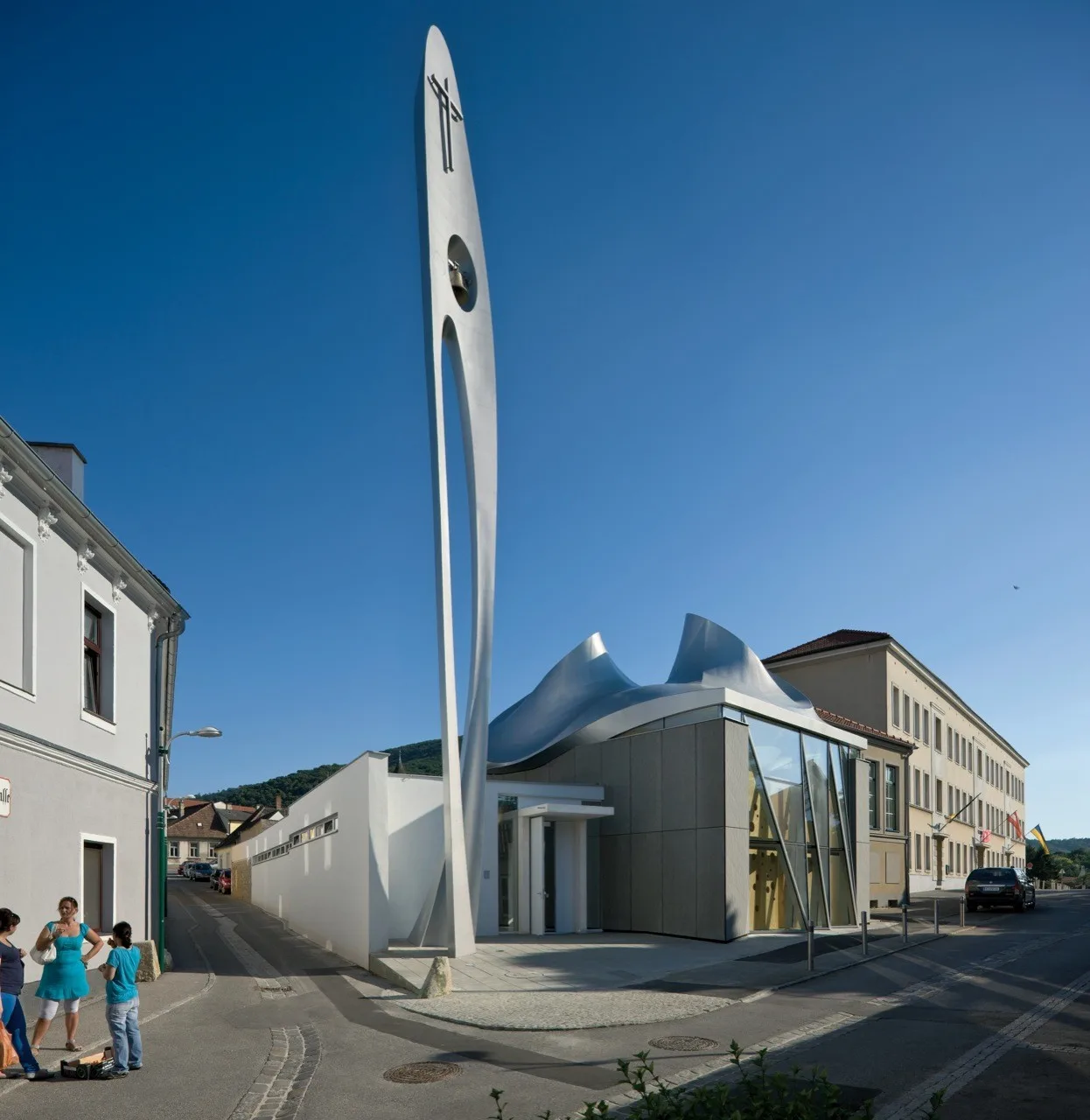
Martin Luther Church in Hainburg is located in the historical center of the city, within the site of a 17th century worship house and has almost 300 square meters. The modern form of the building derives from an immense table; the roof is placed on the “feet” of the table – for steel columns. The metal roof was erected by using naval building techniques and afterwards it was transported to the place where it was drawn together. Another key element is the ceiling of the prayer room, a place where the design was inspired by the curved floor form of a nearby roman ossuary. The game of lights and transparencies has a special place in this project. The light comes in from the upper side through three large openings, thus reminding of the Holy Trinity symbol.
The Church transformed into a library, Quebec, Canada, arch. Dan Hanganu
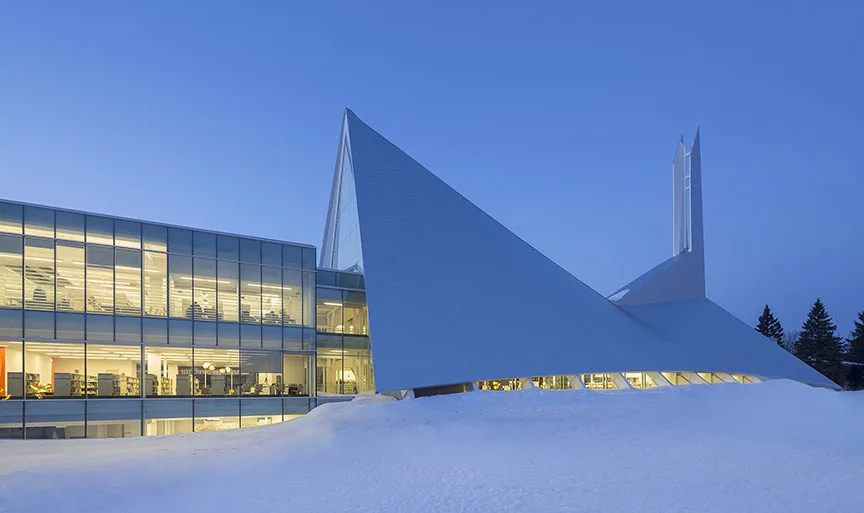
Romania can also be proud of a remarkable work signed by the famous Romanian architect Dan Hanganu – the transformation of a formed worship house into a library. The church was built in 1964 and has a dramatic tower with lines that extend up to the roof. The open and aired structure was amplified by some capsulated glass elements, thus creating an elegant church. Originally designed by Jean-Marie Roy, the Sf. Denys-du-Plateau Church is a strong, quivering structure with an angular roof that seems to be touching the ground. The massive church was renovated to host a public library and a community center, on two floors and at the basement. The structure was completed at each of its ends with two enameled prolongations, thus expanding the space and providing harmony with the existing structure.