by Ileana Pascu
Your recent works are represented by light installations placed in natural environments. How did you arrive at this artistic expression?
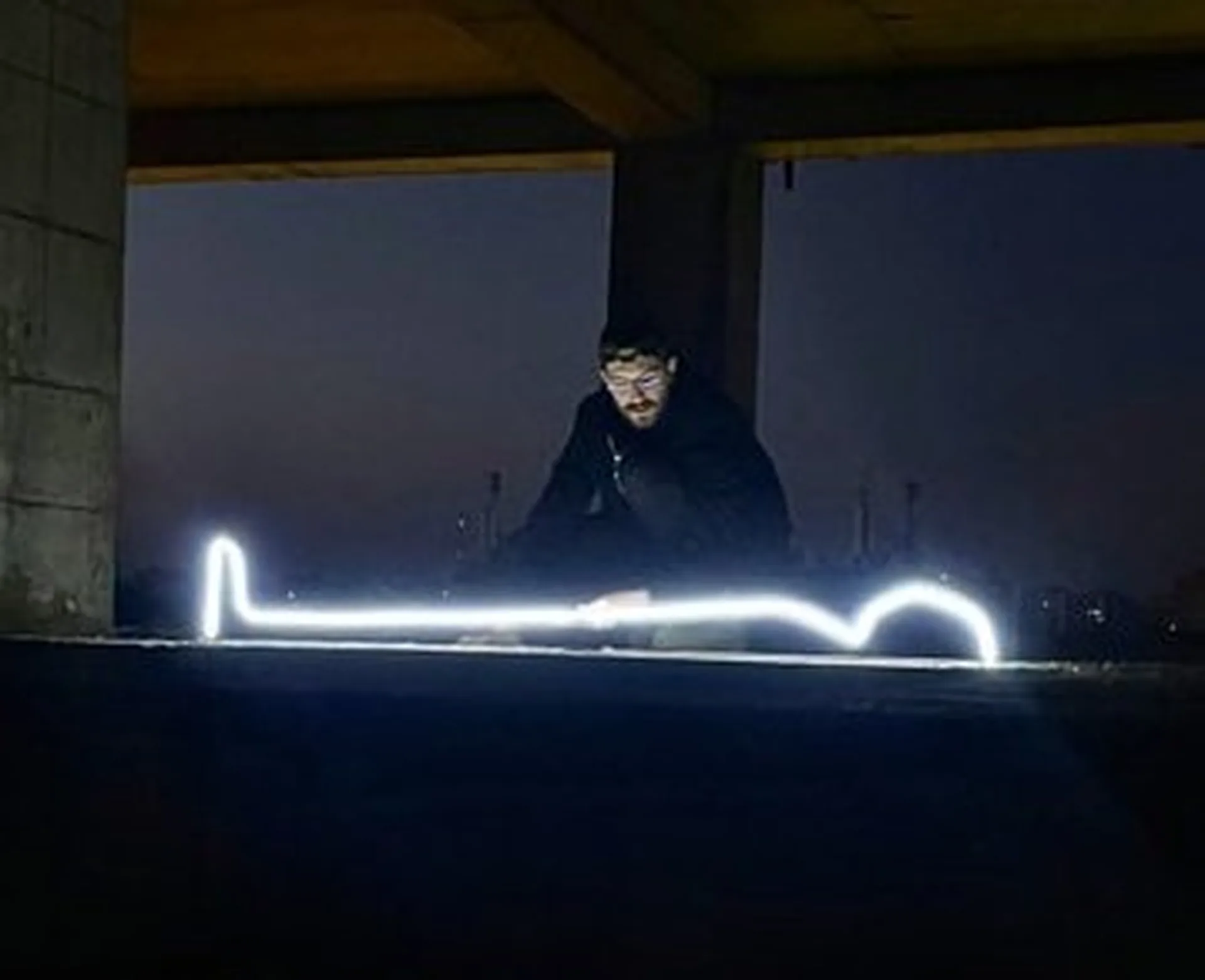
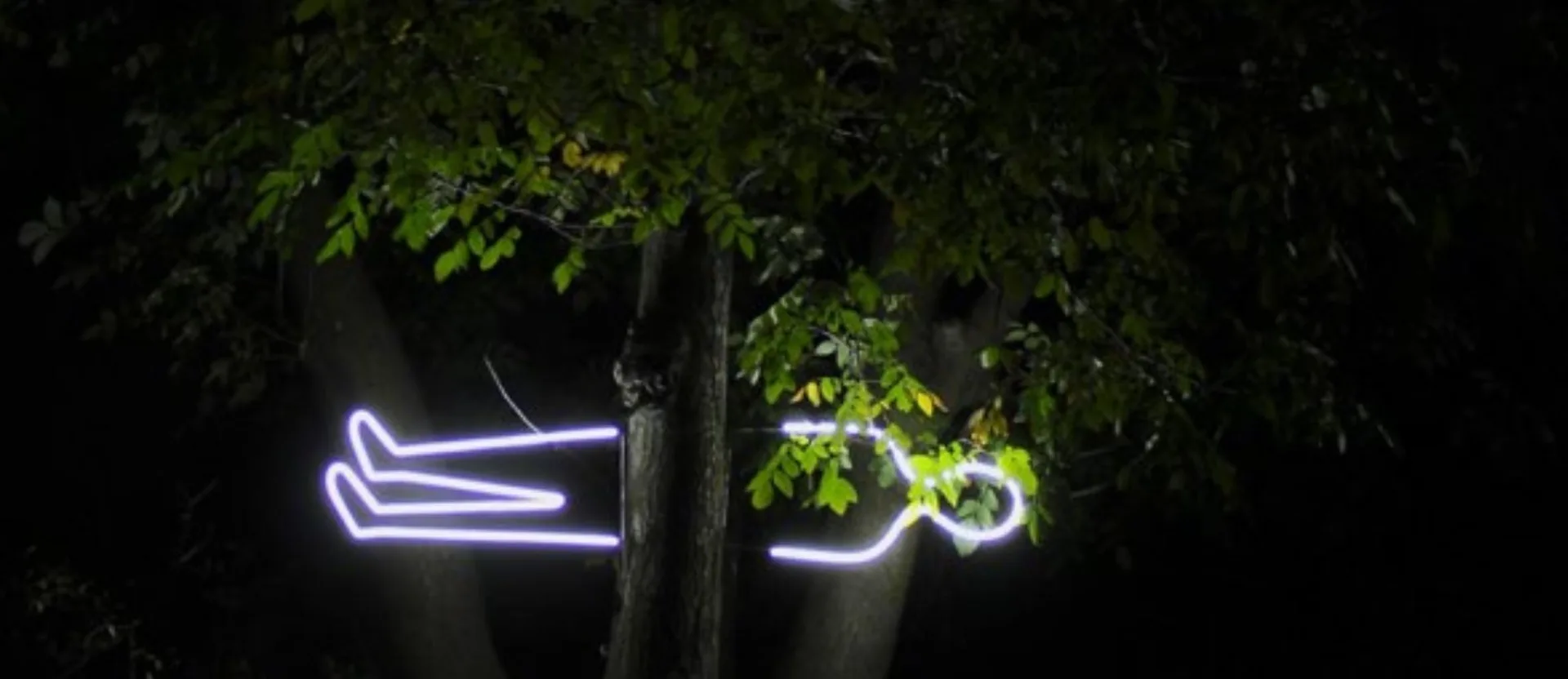
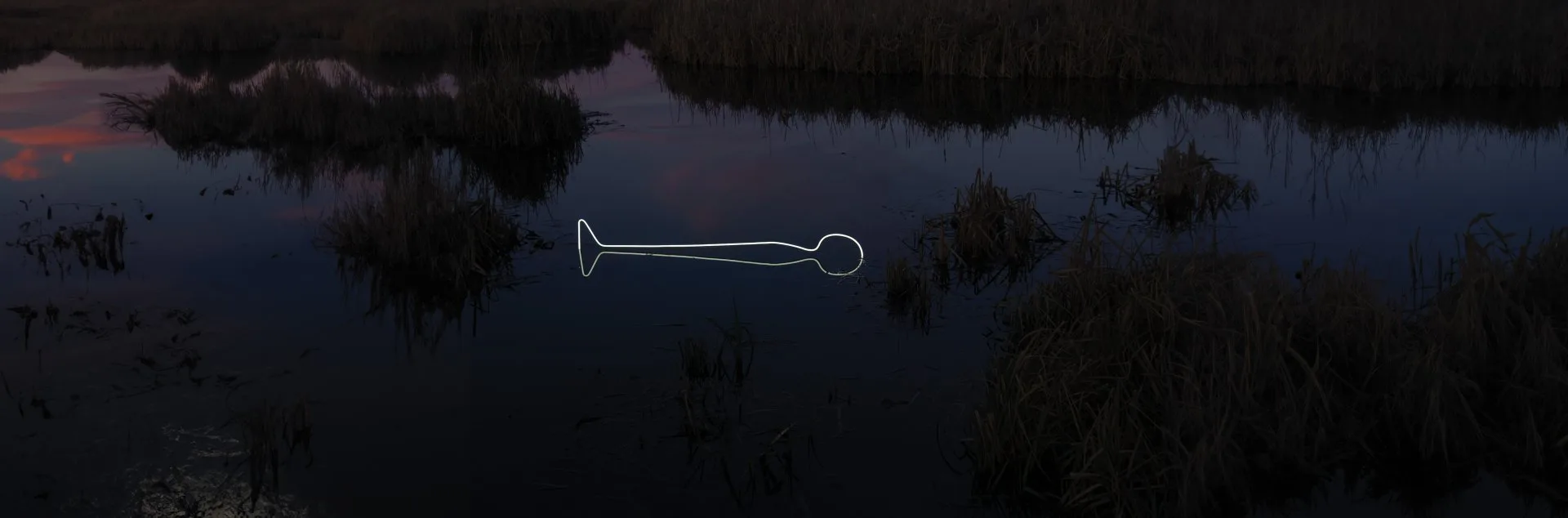
Part of my practice consists of juxtaposing natural elements with artificial materials. The LED installations that I place in natural or urban landscapes emerged as a direct response to my investigations of such spaces. I made the first intervention of this kind about four years ago, in a flat meadow covered with grass. I was surprised to see how the work, an obviously artificial object, entered into an unexpected dialogue with the environment. The difference between the two generated a visual and emotional tension that appeared very strong to me.
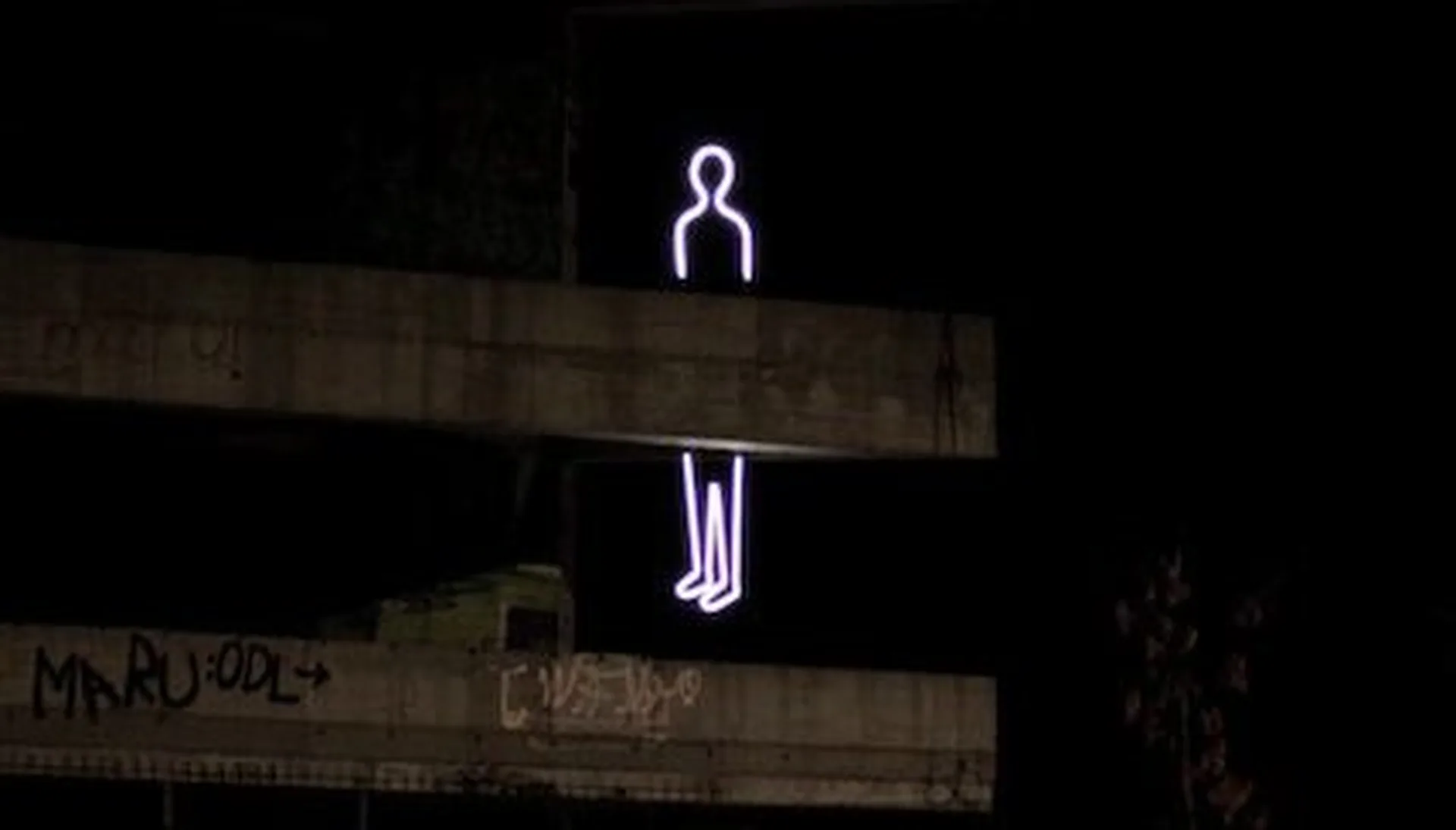
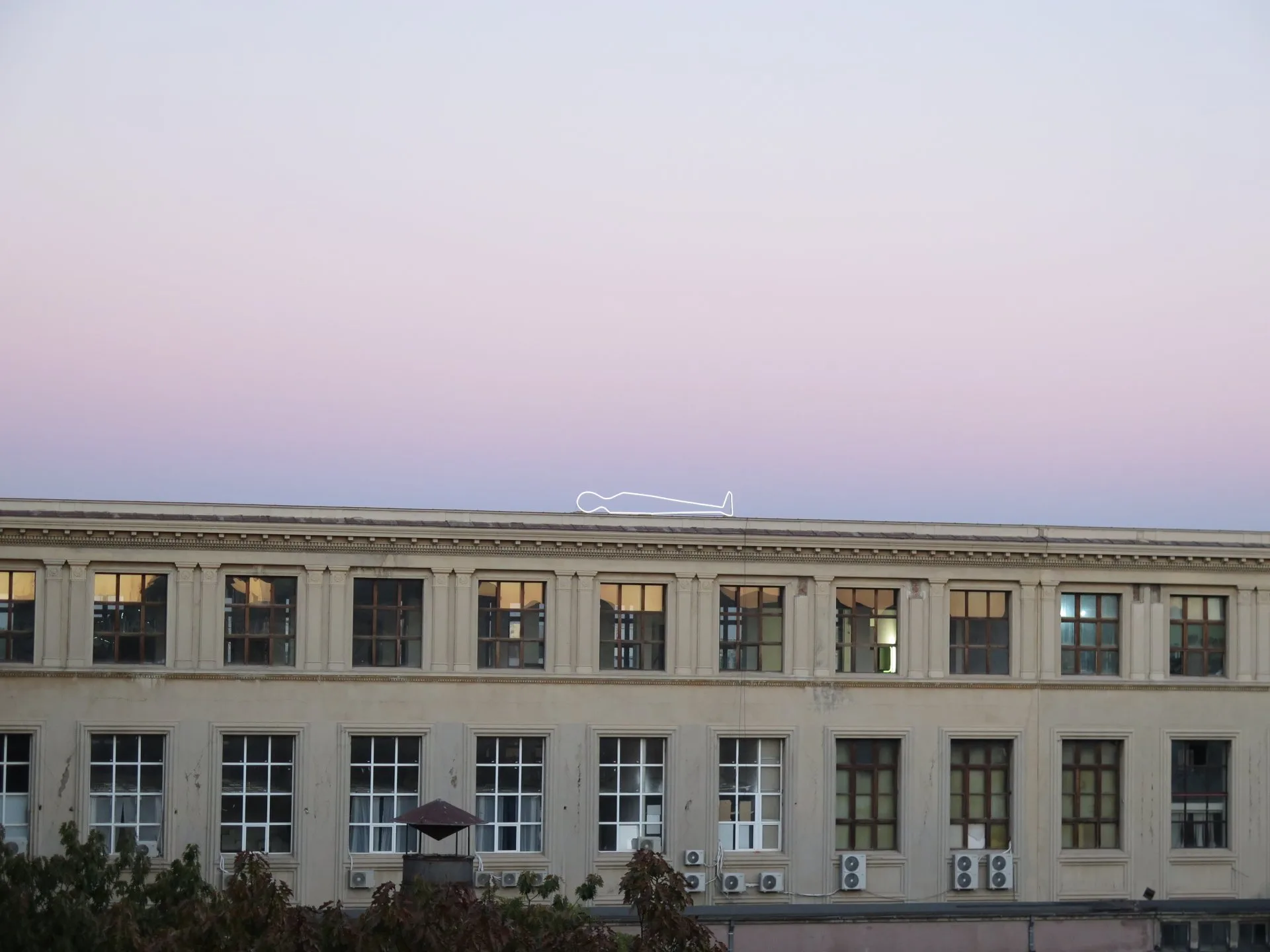
Later, while alternating between urban life and that spent in nature, I began to see these forms as presences that can be inserted into various contexts. I often chose a location, either an abandoned architectural project, a bridge outside the city, or an isolated clearing between two trees; I examine them carefully, then installed the forms, photographed them, and finally dismantled everything without leaving a trace. It was a temporary, ephemeral gesture, but with an intense charge.
Post-industrial sites, in particular, have a special resonance in my practice. I approach them as living archives, places that preserve the traces of a past purpose and the silence of interrupted futures. I am attracted to their suspended temporality and the fragile tension between presence and absence. My works activate these spaces through light-based installations and, sometimes, through recorded performances, often stepping into architectural voids or unfinished structures.
These ephemeral creations are later recontextualised through video and sound, as can be seen in the Liminal Spaces or Workerz series, in which the human presence haunts and reclaims these once functional landscapes. It is a practice based on observation, temporary gestures and a dialogue with the location, a way of listening to spaces and activating them.
”I am attracted to their suspended
temporality and the fragile tension between presence and absence.”
What were the stages of your evolution as an artist and the techniques you used?
My drive came during my childhood, when I started experimenting with painting, drawing and writing. Later, I realised that I was more attracted to three-dimensionality, an area in which I then began to develop an artistic vocabulary and outlined my own language.
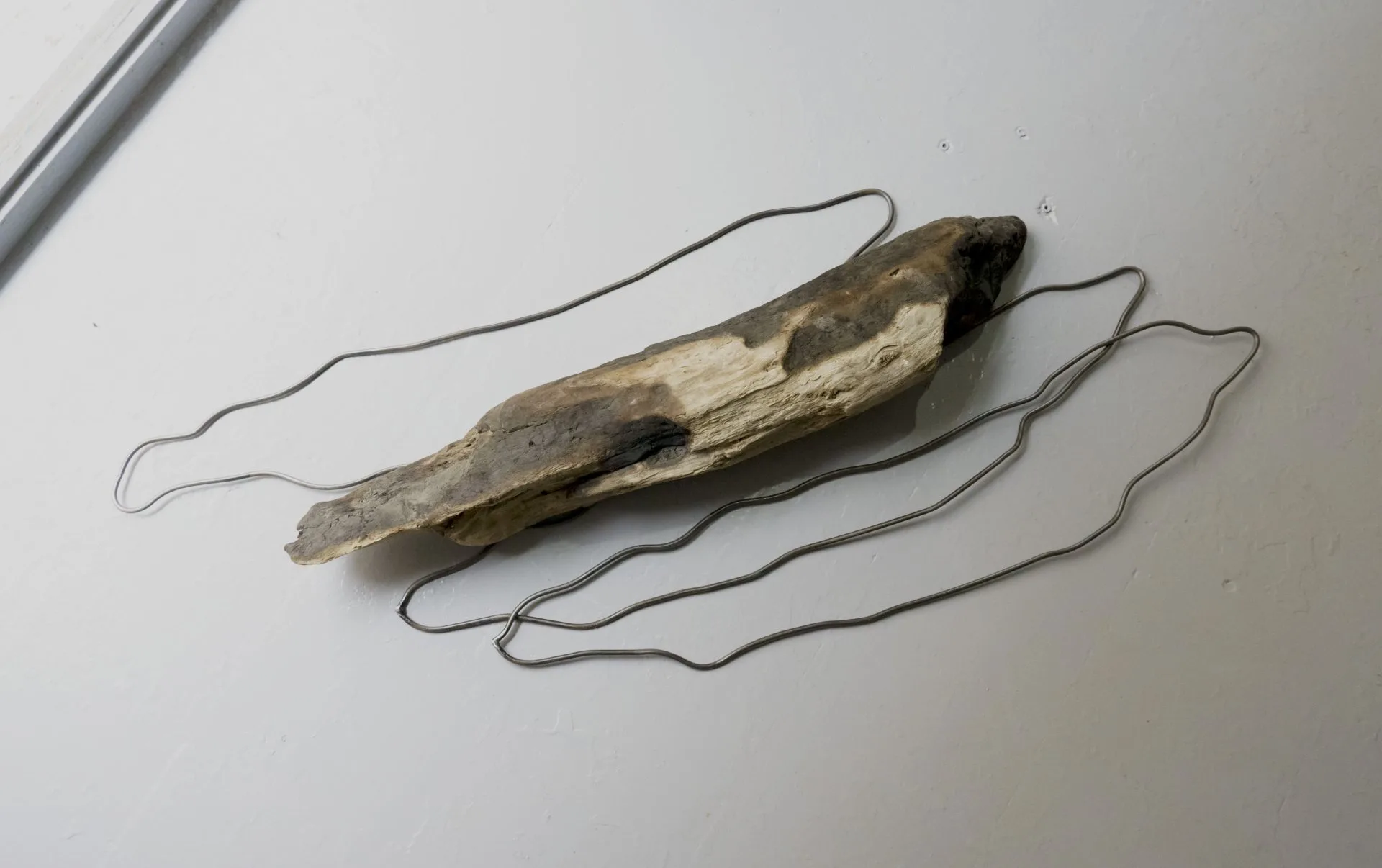
An important step in that direction was when I started working with metal. I chose this material because even though it is rigid, I found it easy to manipulate it. I could assemble something in a relatively short amount of time and build stable forms, with a strong presence and resistance over time. At the same time, I was also experimenting with video projection and I started to combine them. Metal became a solid support for light beams, but the effect was only visible under certain conditions. That’s how I ended up working with LEDs.
The LED has the ability to remain visible in almost any condition — day, night, rain or shine — and has become an essential element in my practice.
Today I am interested in several media, but I try to stay focused on a few directions: video, sculpture, installation, drawing and photography. My artistic language is still in formation, and what I want most is to reach an increasingly strong conceptual clarity.
What are the themes or messages that you explore in your art?
In my practice, I explore themes such as transition, crossing points and moments suspended between past and future, between nature and the artificial, between human and object, between present and memory.
My installations are temporary, but leave behind photo and video documentation, which function as witnesses to the ephemeral interventions. I use photography as a response to these orchestrated moments, and video, often shot in slow motion, as a means of forcing the viewer to notice subtle emotional details and expressions that normally escape us. In this way, I try to activate a form of deep attention and empathy towards spaces and presences that we would otherwise ignore.
When did you know for certain that you wanted to pursue an artistic career?
I don’t think I ever consciously knew that this was the path I was supposed to take. It was more of a process of repeated attempts, mistakes and stubbornness. I kept working, experimenting, and at some point I realised that I had invested too much time, effort, and creative confusion to go back. Basically, I got here out of a combination of passion and the lack of a clear plan B.
Moments that defined your artistic career?
The transitional period after graduating, when I had the freedom (and the uncertainty) to experiment without a clear direction.
The first solo exhibition, in 2018 at 418GALLERY, a moment of validation and public exposure.
The first workshop - the place where I began to give form to my ideas.
The present - a journey of continuous clarification, in which each project adds a new piece to the construction of a coherent practice.
Challenges as an artist?
Finding the time and space for an experiment. One of the biggest challenges is to create the necessary conditions for real exploration, those moments that come without any pressure or an immediate goal - those that enable me to test, make mistakes and observe.
How do you define success in art?
For me, success in art has several stages.
You are successful when you take your first work out of the studio and have the courage to exhibit it.
You are successful when you sell your first piece and realise that what you do has value beyond your personal space.
You are successful when you start to support yourself from art, sometimes completely, sometimes through a balance between creation and other adjacent activities. But most importantly, I believe you are successful when you manage to sincerely enjoy the process, to transmit something through the work you do and, at the same time, to live from it without losing your voice.
Who is Albert Kaan beyond art?
Beyond art, I am an observer of space and the rhythms of life. The time spent between the city and nature has taught me to look more closely at the details that, often, go unnoticed: an abandoned building, a silent landscape, a human presence that can no longer find its place. I bring with me a constant curiosity for how places and people transform and what stories remain behind these changes.