by Monica Crânganu
We should begin by saying that first and foremost you are a graduated economic studies. How was your passion for art born? A passion that you later on transformed into a job.
I was in love with antique art since I was a teenager. I found it extremely mysterious and fascinating to imagine the things that took place back then and how life was in those ancient Greek and Roman cities. As a consequence, I enrolled for studying Art History, wishing to get a deeper knowledge and research into the field art. Yet, I had an optional class of contemporary art taught by professor Adrian Guță, so I ended up loving this particular field and I wanted to open a contemporary art gallery.
Anaid Art Gallery was the first contemporary art gallery opened in Bucharest; it was conceived and set up especially for this purpose. After 12 years of experience, what is – in your view - the picture which best describes the situation of Romanian contemporary art in 2016?
During Anaid Art Gallery’s 12 years activity, Romanian contemporary art scene has changed and grown a great deal. There are manymore private galleries out there that promote contemporary art; in 2004 when we started, there were only three private galleries. There is a series of run spaces; there is a National Contemporary Art Museum, an art fair and even a small, but active number of people who desire to open contemporary art private museums. Practically, we may say that right now the artistic scene is benefiting from a coherent structure that forms an artistic market and system, meaning: artist – gallery – art fair – museum. We are still missing out on a close connection between the main players and the desire to transform all the institutions and the entire public system into professional entities. There are still some latencies and a lack of maturity, however, when we analyze Romanian art as a whole we must not forget the communist inheritance and the fact that this is a young, emergent and newly shaped system. Then, the public at large has almost no artistic education; this is a something that requires a lot of work and the results shall be seen after a generation or two.
What were the intention and the objectives of Anaid Art Gallery when it opened? What was missing from the contemporary art market at that time?
Anaid Art Gallery was formed according to the principles and the standards of a contemporary art gallery from Western Europe and America. It is a gallery that has a portfolio of artiststhat it represents and supports at national and international level, both within exhibitions and art fairs. In a way, I believe that Anaid Art Gallery represented the base of this artistic climate through the manner it conceived and created exhibitions and artistic actions. In 2004, therewas practically no artistic system and the galleries established during 2003-2006 were the ones that actually set it up.
What can you tell us about your years of experience working as gallerist?
It was an extremely wide experience, with many moments of happiness, but also many difficult ones. I could say that setting up an art gallery in Eastern Europe is an extremely complex experience. It is exciting because this sort of activity carried out in the former communist countries offers the feeling of actually building and shaping the system and providing it consistency. However, this is exactly what wears down most of the existence of a gallery in this geographical space; the lack of a context makes this activity become extremely fragile and difficult to support on long term.
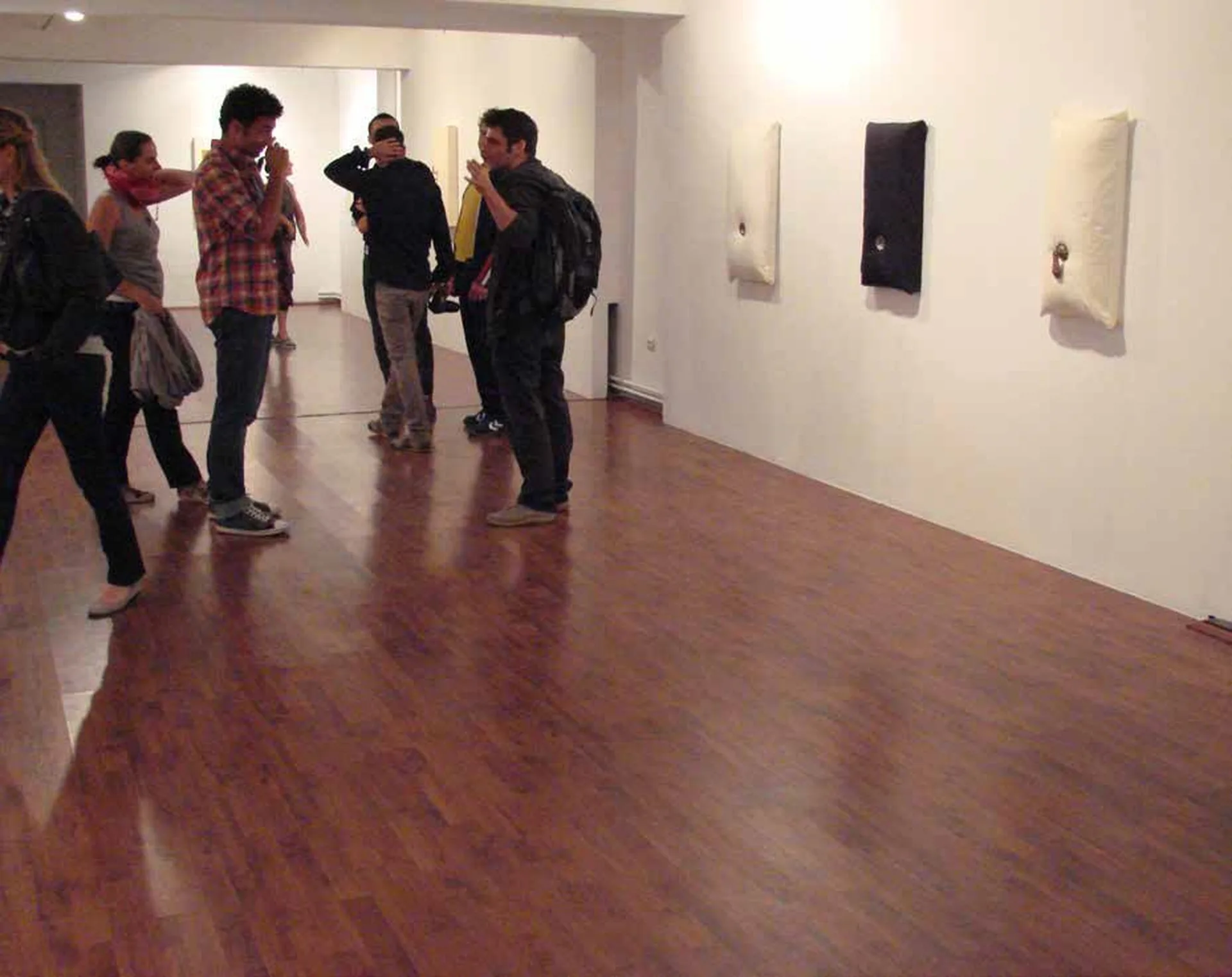
”I believe that Anaid Art Gallery represented the base of this artistic climate through the manner it conceived and created exhibitions and artistic actions.”
How did you move Anaid Art
Gallery in Berlin, one of the most important and prolific international cultural
centers?
I realized I wanted to be part of a system, that I don’t longer wish to build it myself; that I want to discuss with other gallerists that are doing the same thing as I do with passion and professionalism, who respect each other and follow the rules of an organization, artists that understand what a gallery means and the efforts it takes to support them, art fair directors who understand the commercial dimension of the undertake without reducing the quality of art, museum directors who consider gallerists as dialogue partners and who are aware of the work that the artist and the gallerist are doing. I missed all these things in Romania and I believe they will lack from the Romanian artistic context for a long time. Therefore, Berlin was a natural choice for me. First of all I have participated with the gallery at several international fairs in Germany and Austria and second, the German artistic system is mature, settled; there, if we follow certain paths there is a big chance of growing and succeeding. Berlin is a city that has more than 300 contemporary art galleries, where there are collectors displaying for the public and where contemporary art is in a way at home, without any of the market pressure there is in London or in New York.
Therefore, starting with last year Anaid Art Gallery is present in Berlin, in the area with the most galleries. How is contemporary art seen in Berlin? I believe that the step you recently made and the effort you are putting to promote Romanian artists abroad – and not anywhere, but right in the main center of contemporary art – proves a lot of courage and greatness.
Romanian contemporary art has a saying at the international level. Yet, the efforts are immense, considering the fact that, at a macro level, Romania doesn’t have any large exhibitions in German museums. However, Anaid Art Gallery was conceived to promote more than Romanian art, we shall present a mixed program of exhibitions in order to integrate our country in the international artistic circuit. Nowadays, no gallery in the world displays only German or Romanian or American art – national art in fact. This trend of national displays is more popular in the Eastern European galleries, where this concept is still quite significant.
What are the artists that your gallery is supporting?
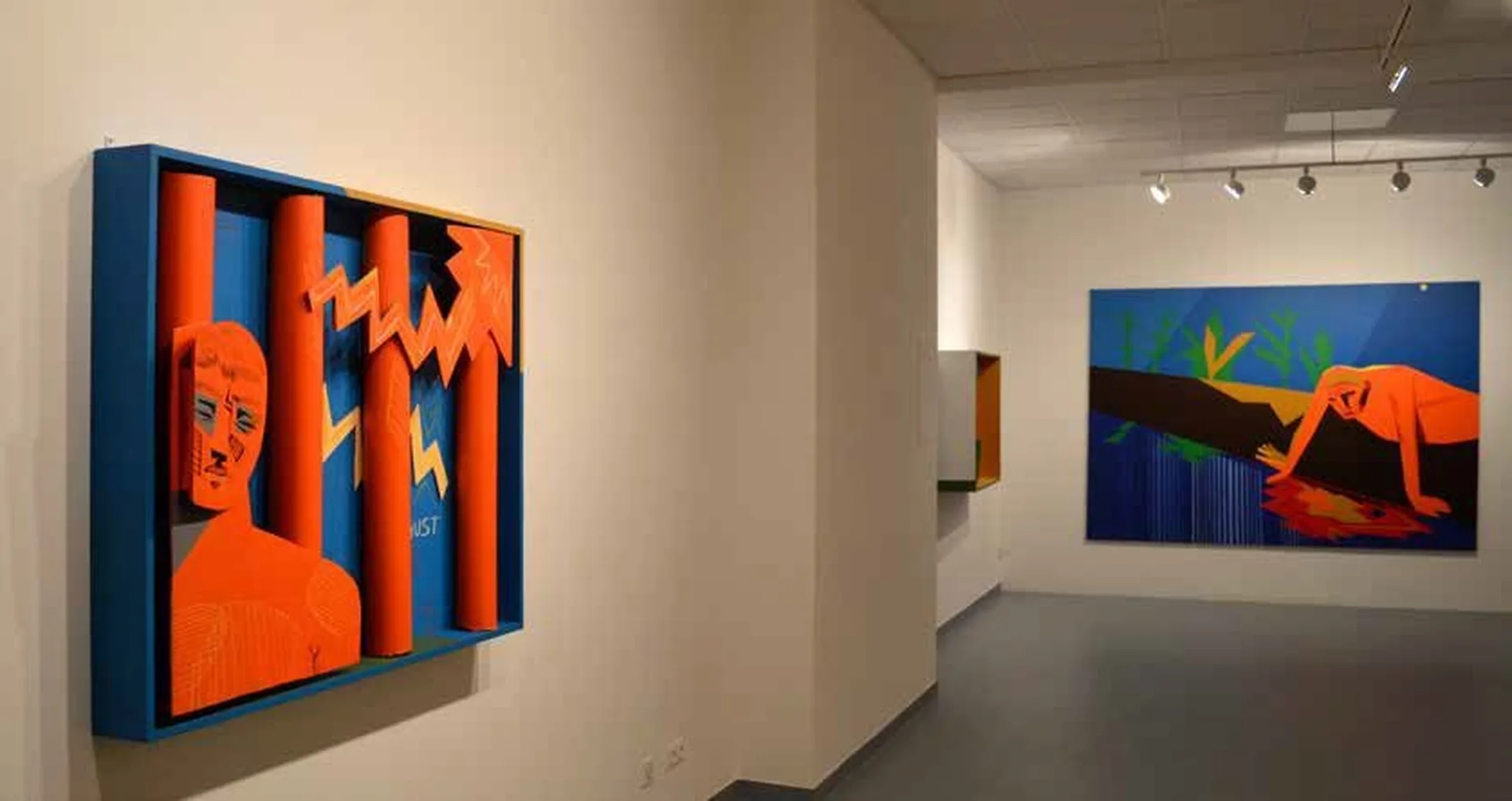
We are working since the very beginning with Alexandru Rădvan and from the first years with Zsolt Berszán. The gallery is representing also Matei Arnăutu, Raluca Arnăutu, Mihai Florea, we collaborate also with Aurel Vlad and with the Spanish artist Samuel Salcedo.
In the artistic field, Romania is still a developing country and is going through a full process of get-together. The number of contemporary artists who are appreciated abroad is still very small. In this context, how are the Romanian contemporary artists placing themselves within the international art market?
I believe that the step was made by Romanian artists and gallerists on the international market, a door was opened and now it is important that they keep this position and are able to be a true breach in the international artistic system. But this remains to be seen. The perception of most people is that art in general and contemporary art in particular is only for the connaisseurs, it is meant for an elitist public that has a certain capacity of understanding its meaning. Of course, we shouldn’t hide the fact that this is a reality – art is not for everybody, however, how can we stimulate the taste of a larger public? Is this something that depends on its hidden instruments or only on the cultural level and opening of the art consumer? It depends on education first of all. The Romanian education system completely ignores the artistic culture, there are no art history classes, and therefore it is very difficult to produce a public who loves contemporary art without having minimum concepts of art history. On the other hand, the countries that have strong artistic structures, such as Germany, France, Great Britain and USA are teaching these concepts in primary school. Likewise, the museums are full with children, teenagers and adults. Someone said at one point that in the Western world they have replaced the church with the museum and people are going regularly to visit museums in their free time.
From your experience, what is the profile of the collector of Romanian contemporary art?
It is difficult to define the portrait of such collector, but a universal portrait of the art lover is like this: a person who loves art in itself, who gets information on art and most of all a person who is visiting art museums and artist galleries and workshops. He is a passionate person who has contemporary art in his life and in his everyday life.
Are there foreign collectors who have a significant portfolio made up of Romanian works? What draws them towards Romanian art?
Yes, there are and they are some of the most refined and informed people in the field of contemporary art. I believe they are drawn by the fact that Romanian artists are coming from Eastern Europe, a former communist country, where things are not yet in place and where Romanian artistic education is still focusing on the profound knowledge of anatomy and drawing to the detriment of other means.
In your opinion, how important is the role of an art consultant before making a purchase? Are those who purchase contemporary art thinking exclusively about the investment or do they also get emotionally involved in their choices?
I believe there are two categories of people who purchase art: those who invest in art – they are very rational and they buy only what they are advised to buy in order to have an investment which grows in time – and the art collectors who buy on impulse, they feel they must own a certain work and are less interested in the investment part. Collectors are in general very informed at the moment of their purchase.
How important is it to participate at fairs and big international contemporary art events?
Taking part in international art fairs is of major importance, because these events are the true engines of the primary art market. They represent the meeting place of all artistic players – artists, gallerists, museum directors, curators, critics, collectors. The sales at an art fair represent around 60-70 % of a gallery’s total annual sales.
What plans do you have for the following years?
Our goal is, first of all, to consolidate our position on Berlin’s art market and to start, little by little, to grow. It’s been an year since we have opened the gallery in Berlin and this means that we are just at the beginning, but we have a great deal of hope for the future.
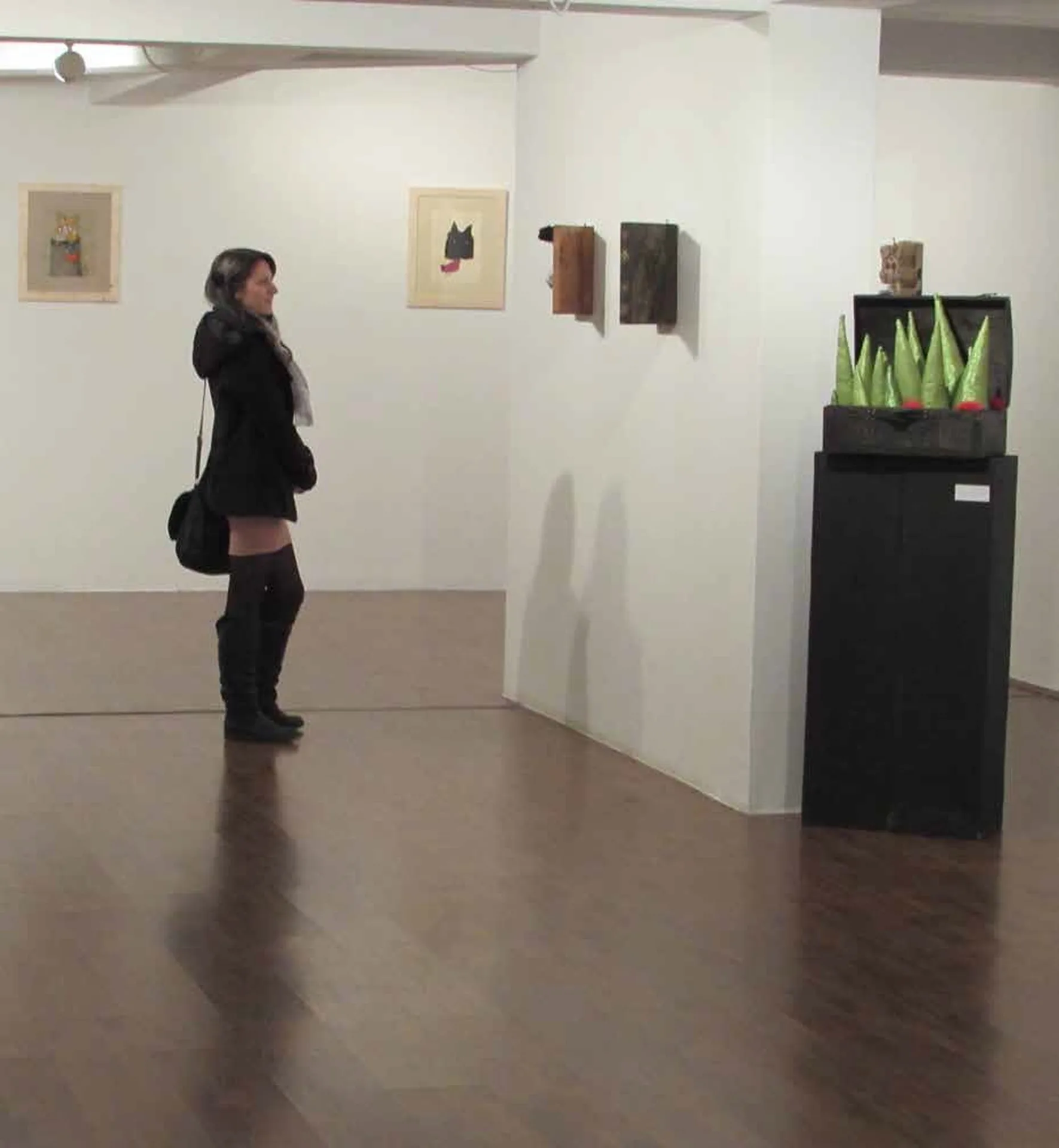
„A universal portrait of the art lover is like this: a person who loves art in itself, who gets information on art and most of all a person who is visiting art museums and artist galleries and workshops. He is a passionate person who has contemporary art in his life and in his everyday life.“