by Alice-Claudia Gherman, photo archive Christie’s Auction House
At Christie’s auction house, people bid not only for art, jewellery or rare objects, but for the privilege of owning them, for their aura and for the stories that brought them there. For more than two and a half centuries, the famous London auction house has turned every sale into a spectacle of taste, prestige and great ambitions. Because that is how it is in the world of Christie’s, a simple ivory gavel can bring an auction to an end and open a new chapter in the biography of an object.
It all began in Pall Mall with the „King of Epithets”
Just as every work of art has a story and an author behind it, so too does Christie’s Auction House. It began in 1766, when the Scotsman James Christie opened his own auction house in Pall Mall, one of London's elegant and affluent districts. The first auction took place on the 5th of December of the same year, and the catalogue of the newly established auction house included both ordinary household items such as furniture, bed sheets, pillowcases, as well as books, manuscripts and even four Indian works of art on glass.
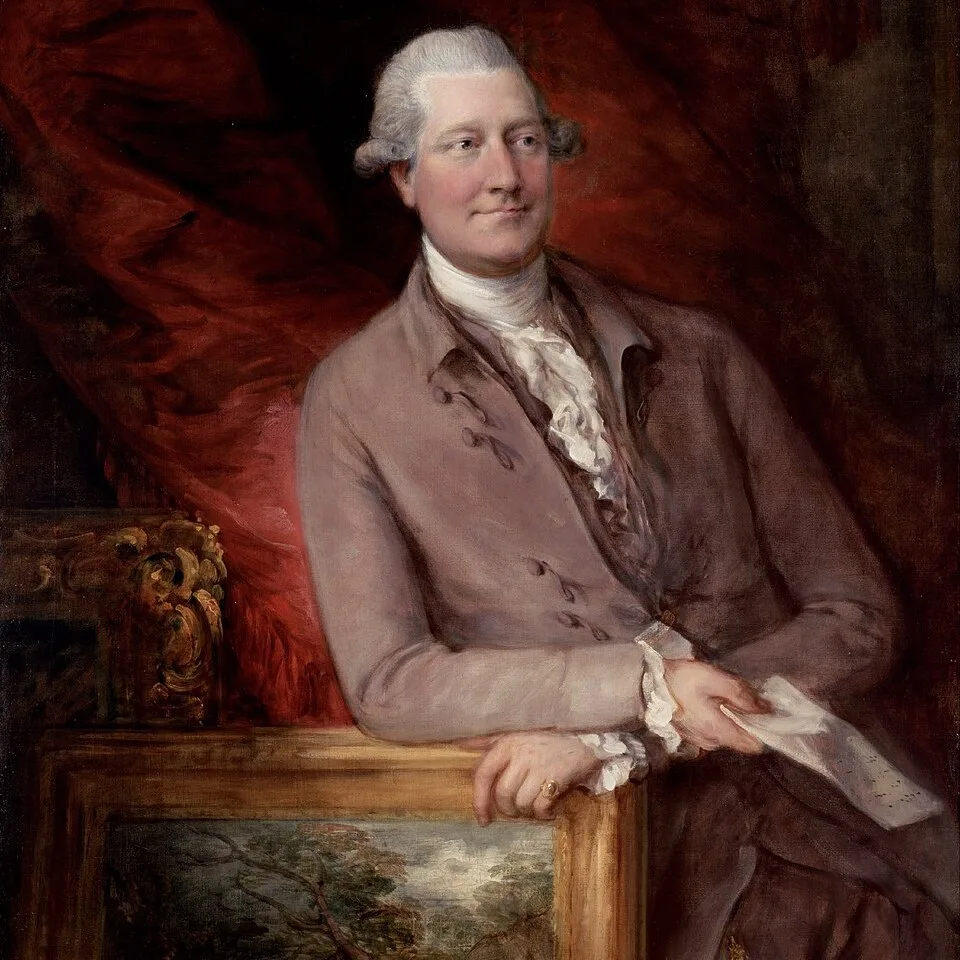
Portrait of James Christie by Thomas Gainsborough, 1778
James Christie was renowned not only for his commercial prowess but also for his eloquence, which transformed a simple auction into a true theatrical spectacle. Under James Christie’s direction, an ordinary auction became a social gathering at which collectors, artists and aristocrats followed not only the objects on offer but also the subtle interplay of bids.
From the very beginning, James Christie understood that the appeal of an auction lay not merely in the objects being offered, but also in the manner in which they were presented. Caricatures from that era portrayed him as a lively and witty character, and the image of the eloquent auctioneer has remained part of the auction house’s tradition.
James Christie was a man capable of reading the room, controlling the pace and turning hesitation into a bid. Ultimately, the tension of an auction lies not solely in the estimated value of an object, but also in the moment when someone decides that the item they desire is worth more than anyone else is willing to pay. A satirical caricature from 1789 dubbed James Christie “Eloquence, or the King of Epithets” - a nickname that suggests just how important the founder’s personality was to this public spectacle.
The Theatre of Spectacle and the Art of Pure Artistry
Just two years after his auction house’s inaugural sale, Christie recognised the potential of the art market of that time and shifted the focus of his auctions away from household goods towards the first sale devoted exclusively to paintings, on the 20th of March 1767. The theatrical spectacle of the auctions continued in the familiar style with which James Christie had already accustomed his clientele, but a new character had now taken centre stage: art itself.
The house’s international reputation establishment in the art market took place in 1778, when Christie appraised and brokered the sale of the celebrated painting collection belonging to former British Prime Minister Sir Robert Walpole to Empress Catherine the Great of Russia, for the astonishing sum by the standards of the time, of more than £40,000.
Did You Know? Auctioneers at Christie’s London headquarters use an ivory auctioneer’s gavel carved around 1766 by the house’s founder himself, James Christie.
Christie’s: A British Legacy Draped in French Elegance
Over the years, Christie’s has expanded far beyond the borders of London, establishing a presence in the world’s leading centres of the international art market. Today, its name encompasses a vast range of auction categories, from paintings and jewellery to furniture, wines, classic cars and design objects.
Christie’s has thus evolved from a room filled with chairs and a rostrum, where an auctioneer holding a gavel calls “sold”, into a global network of specialists, experts and collectors, where every lot can travel symbolically - and sometimes literally - from one continent to another.
Ultimately, such a journey comes at a price, often a very substantial one, but the satisfaction and pride experienced by those who finally secure their desired acquisitions reach extraordinary heights.
Following James Christie’s passing in 1803, the business was taken over by his son, James Christie the Younger, who ran it until 1831. The auction house subsequently remained in family hands, managed by several generations of sons and grandsons, until towards the end of the nineteenth century. In 1889, the last family representative, James Christie IV, entrusted its management to two partners from outside the family, William Manson and Thomas Woods.
For a period of time, Christie’s was also listed on the London Stock Exchange (1973–1999). Since 1998, the auction house has been part of the portfolio of Groupe Artémis, the investment company owned by French billionaire François Pinault, a development that has given it an identity that is both British and French.
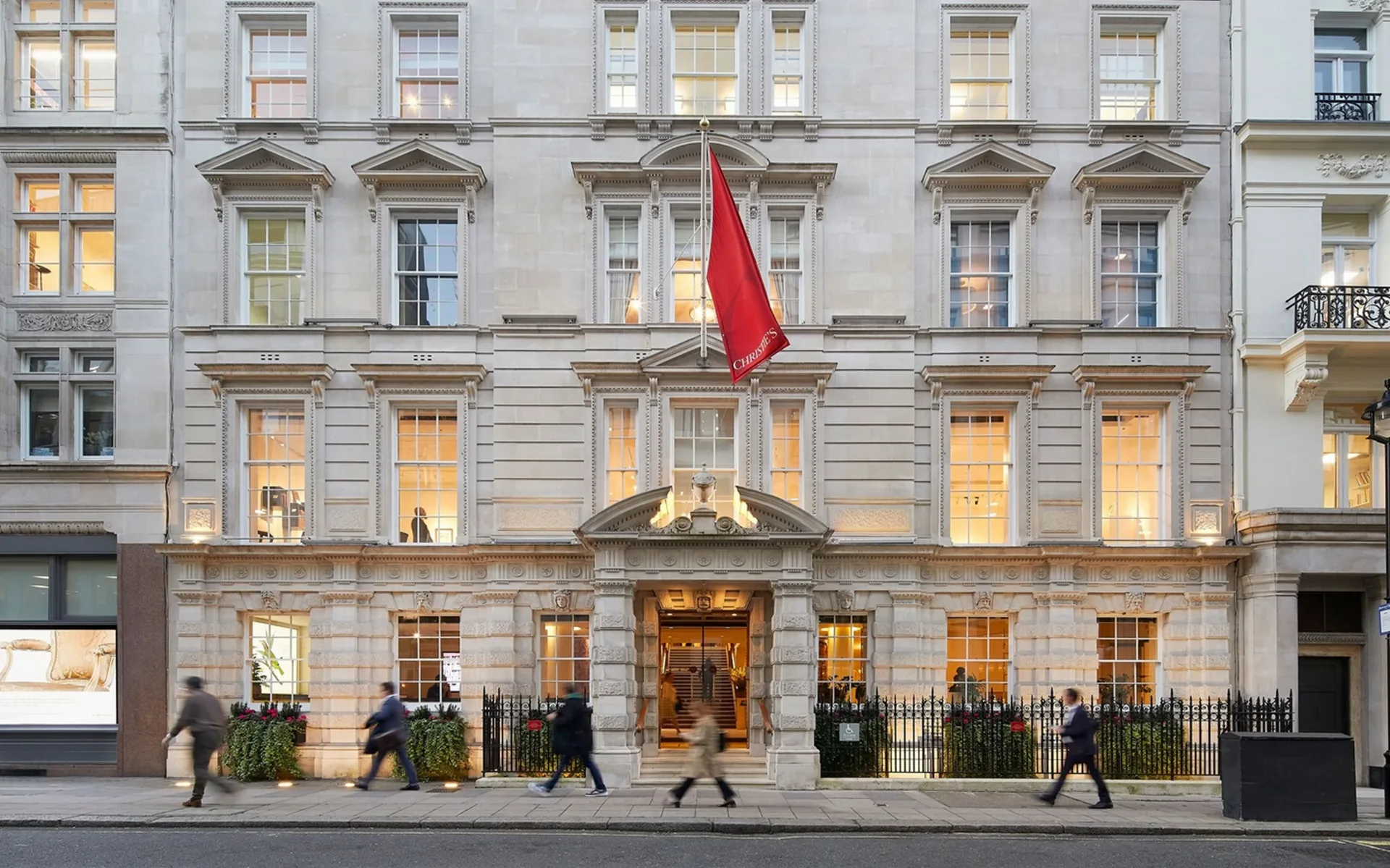
Today, Christie’s operates auction rooms in all the world’s major cities, from London to New York, and from Hong Kong to Geneva, alongside a network of local offices in Amsterdam, Tokyo, São Paulo, Mexico City and many more. Its most iconic location, however, remains in London, at 8 King Street, St James’s district, where the auction house established its home as early as 1823.
Auctions That Made History
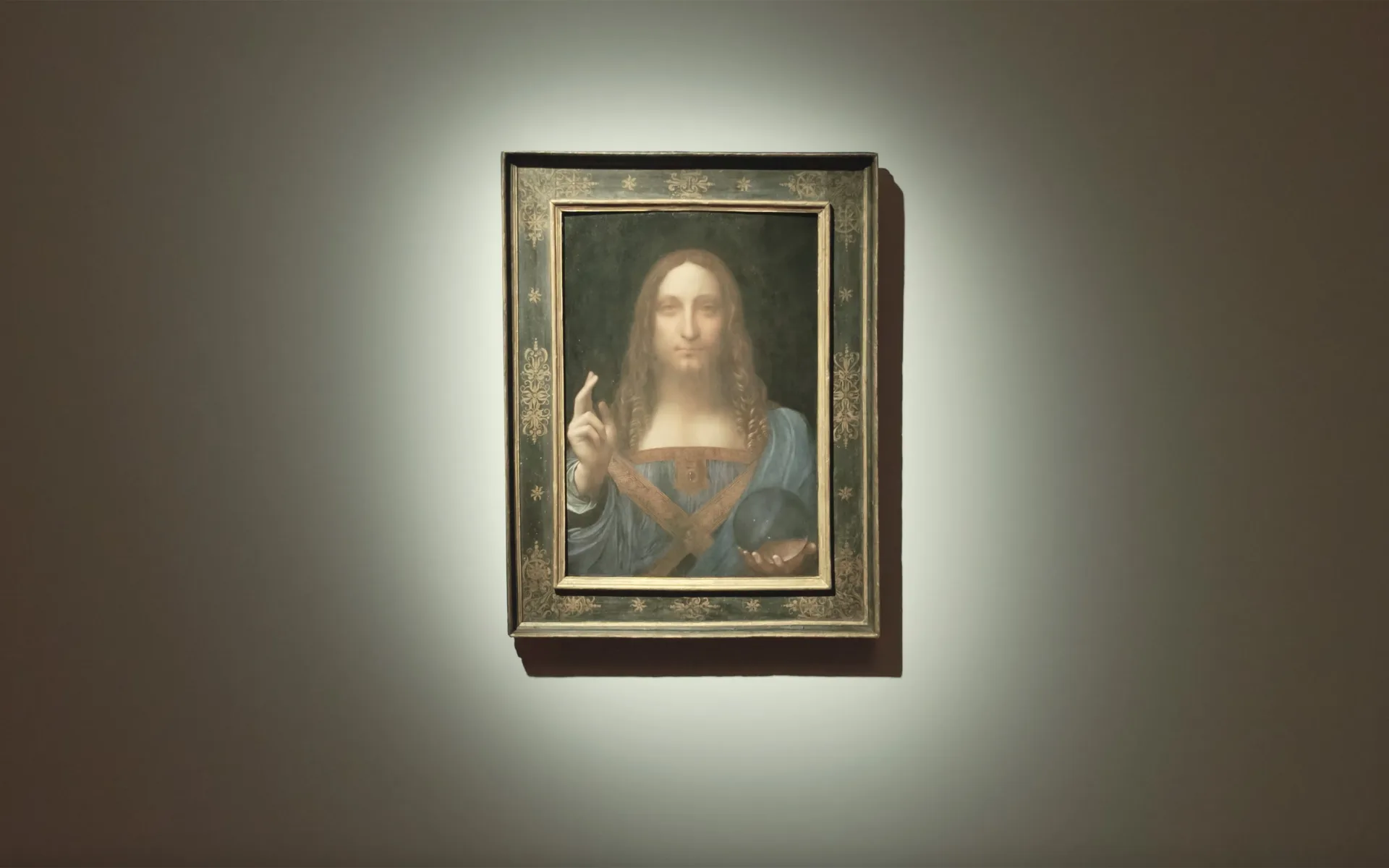
Beyond the connections between successive generations of the Christie family and the business figures of both past and present, some of the auction house’s most memorable moments have been defined by the staggering sums achieved by individual works of art. In 2017, Salvator Mundi, attributed to Leonardo da Vinci, was sold at Christie’s New York for $450.3 million, becoming the most expensive painting ever sold at auction. The work was surrounded by an extraordinary fascination: it was not merely its price, but also the debate surrounding its attribution and history that turned it into one of the most controversial subjects in the art market.
This was largely because Salvator Mundi had been rediscovered after centuries of obscurity and purchased at an auction in Louisiana in 2005. It subsequently underwent extensive restoration before being presented at the National Gallery in 2011 as an original work by Leonardo da Vinci. Six years later, it became the most expensive work of art ever sold at auction, purchased by Saudi Crown Prince Mohammed bin Salman at Christie’s in New York.
Yet the dazzling record did little to dispel the mystery surrounding the painting. Its authenticity remains disputed among specialists, with Leonardo’s own contribution to the work still considered to have been only partial. Moreover, since its sale, the painting has not been exhibited publicly, leaving the press to speculate about its whereabouts, whether it is in a secure vault in Geneva or aboard the Saudi prince’s yacht.
Another landmark moment in the history of Christie’s auctions came in 2018, when the collection of Peggy and David Rockefeller was auctioned. The sale totalled $832.6 million - a record for a private collection at the time - and brought together approximately 1,500 objects. Among the highlights were works by Picasso and Monet. The sheer scale of the event demonstrated how a personal collection can, for a few days, become the focal point of the international art market.
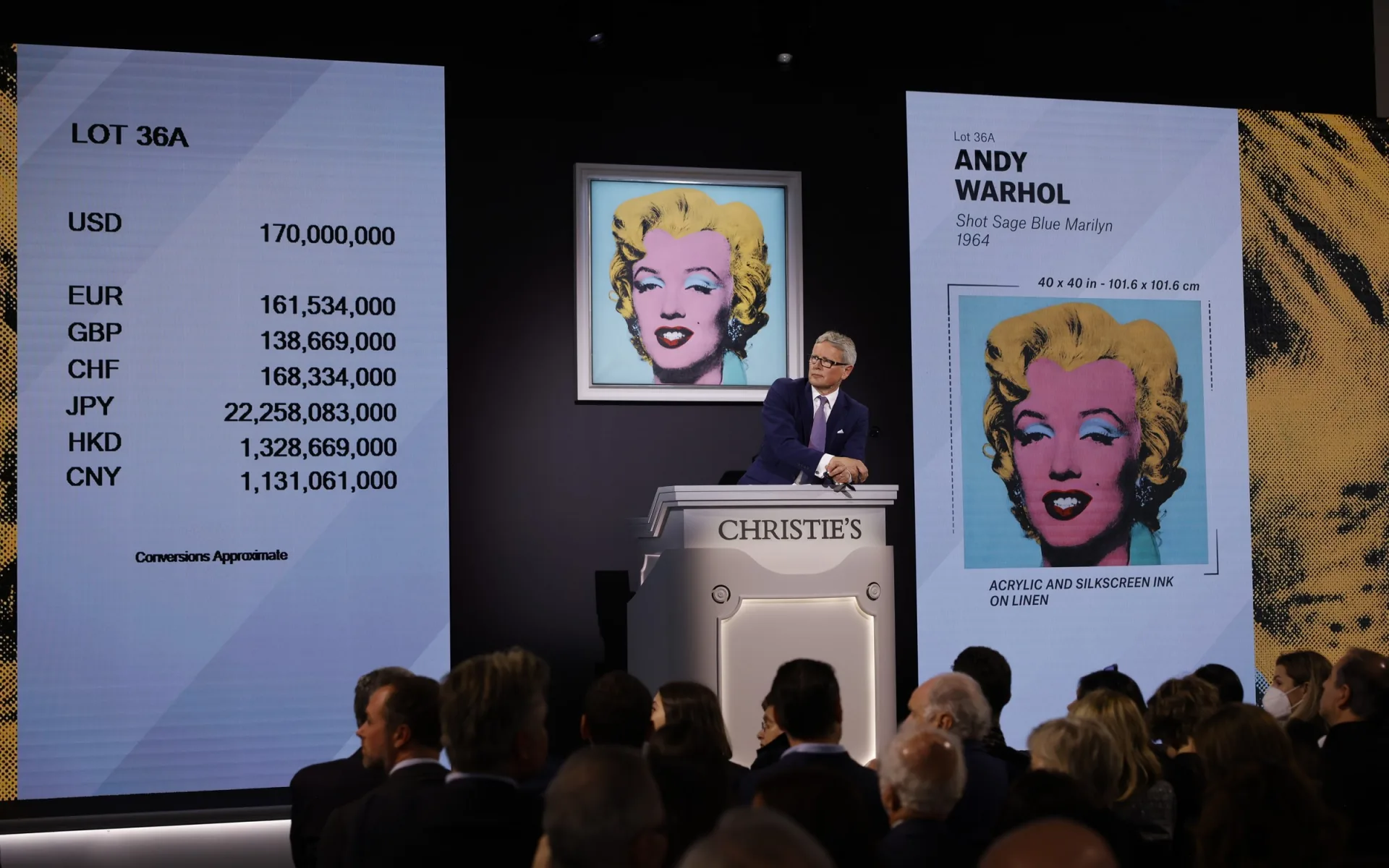
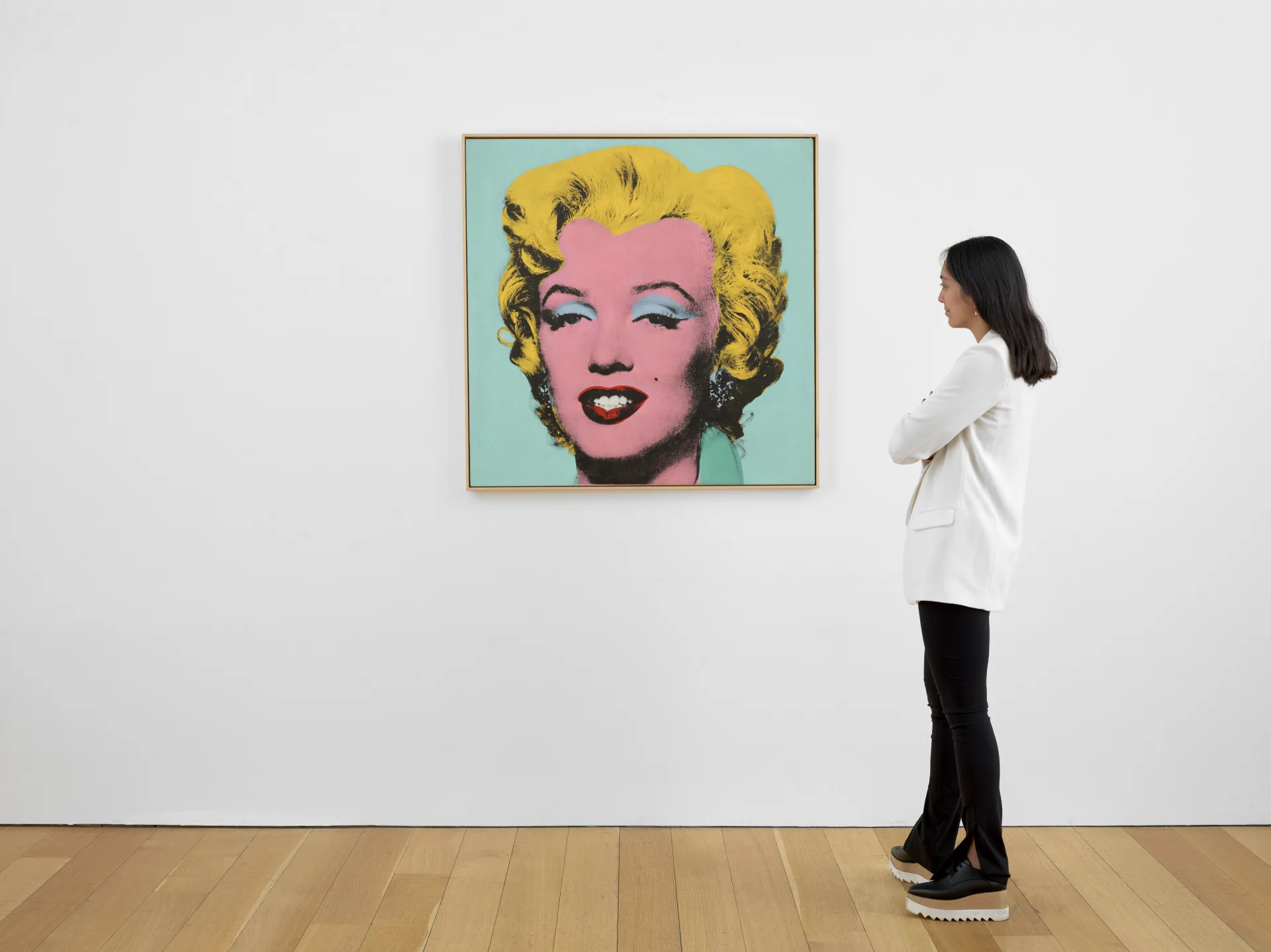
Shot Sage Blue Marilyn, by Andy Warhol, became in 2022, the most expensive work of American art ever sold at auction, while also setting a new price record for a twentieth-century work of art. The price was $195 million. The story behind the painting is every bit as fascinating as its value. In 1964, the artist Dorothy Podber visited Warhol’s studio, famously known as The Factory, and asked him whether she could ‘shoot’ his paintings. Warhol understood that she meant taking photographs of them. Podber, however, pulled out a revolver and fired through a stack of four portraits of Marilyn Monroe. The incident gave the series its name, Shot Marilyns and became an indelible part of the history of these works.
Among the most illustrious sales in Christie’s history is that of the Codex Leicester, Leonardo da Vinci’s celebrated scientific manuscript. Put up for auction in New York, November 1994, the manuscript was acquired by Bill Gates for $30.8 million. The remarkable sum secured its place as the most expensive manuscript ever sold at auction.
The Codex retained its world record as the most expensive book ever sold at auction until 2021, when it was surpassed by a rare copy of the United States Constitution.
Christie’s has achieved equally remarkable milestones in the world of fine jewellery. Among the most notable are the Hutton-Mdivani jade necklace, sold for $27.4 million in 2014; the Winston Legacy, a magnificent colourless diamond, sold for $26.7 million in 2013 and the Marie-Thérèse pink diamond ring, once part of the collection of Queen Marie Antoinette, sold in 2025 for $13.98 million.
Christie’s: Tales of Fortune, Intrigue and Controversy
Beyond its reputation as a name synonymous with works of art fetching extraordinary sums, Christie’s has also borne witness to some of the more tragic episodes in the lives of Britain’s aristocratic families, whose fortunes and misfortunes have, on occasion, unfolded in full public view. In 1848, the financial difficulties of the 2nd Duke of Buckingham and Chandos led to the dispersal of the magnificent collections at Stowe House in a Christie’s sale that became the sensation of the season. Over the course of 40 days, the furnishings, paintings, porcelain and works of art from the grand country residence were put up for auction. Among the most notable pieces was the portrait of William Shakespeare known as the Chandos Portrait, which became the first work of art acquired by the National Portrait Gallery.
Thus, the decline and misfortune of an aristocratic dynasty were transformed into a public spectacle, as the treasures of a once-grand residence embarked, one by one, on entirely new chapters in their history.
An even more controversial episode in Christie’s recent history unfolded in May 2023, when the auction house achieved a record-breaking result of $202 million from the sale of Heidi Horten’s jewellery collection, in Geneva. Yet the brilliance of the jewels put up for auction was overshadowed by questions surrounding the origins of the Horten family fortune. Helmut Horten had built his business empire in Nazi Germany, acquiring Jewish-owned businesses that had been confiscated or sold under duress. Following considerable public criticism, Christie’s cancelled the second part of the auction.
Christie’s in the Digital Age
For Christie’s, time has never stood still. The auction house has continued to embrace modernity, keeping pace with technological advances and emerging trends, while extending its universe far beyond the confines of its traditional salerooms. Among its ventures into the digital world was a collaboration with the OpenSea platform for its first on-chain NFT auction, with transactions conducted via the Ethereum blockchain.
With the arrival of NFTs, Christie’s entered an entirely new realm: the virtual world. And with that transition, art once displayed in elegant galleries adorned with paintings and gilded frames found a new home in the fluid, ever-evolving landscape of code and blockchain technology.

Beeple’s Everydays: The First 5000 Days
In 2021, Christie’s marked a turning point in the history of the art market with the sale of Everydays: The First 5000 Days, a digital collage by artist Beeple, which fetched an astonishing $69 million. The work could neither be touched nor hung on a wall in the conventional sense. What the buyer actually acquired was a non-fungible token (NFT), certifying the provenance and ownership of the digital artwork.
This bold move by Christie’s brought back into focus some long-standing questions surrounding the auction market, one of which is fundamental: what is it, precisely, that gives an object its value? Is it rarity, the story behind it, the artist’s name, its provenance, or the collective desire of those competing to acquire it?
More Than Just the Fall of the Hammer
The prestige of Christie’s is built beyond the auction room as well. Behind every lot lies its provenance research, valuation, cataloguing and presentation to the public. In this world, a signature, an annotation in an old catalogue or an archival photograph can fundamentally alter the way an object is perceived and understood. Luxury is not simply a matter of an object’s brilliance or splendour, but also of access to the story behind it with all its gaps, twists and mysteries.
Perhaps this is why Christie’s continues to fascinate even those who have no intention of ever purchasing a painting that is worth millions. It is a stage upon which art, money, history and vanity converge. Christie’s is where the past enters the saleroom in the form of a lot, while its future is decided in a matter of seconds. And when the auctioneer’s hammer finally falls, it is not merely an auction that comes to an end. A story has found a new owner.