by Simona Vilău
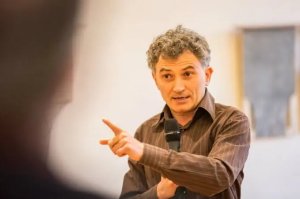
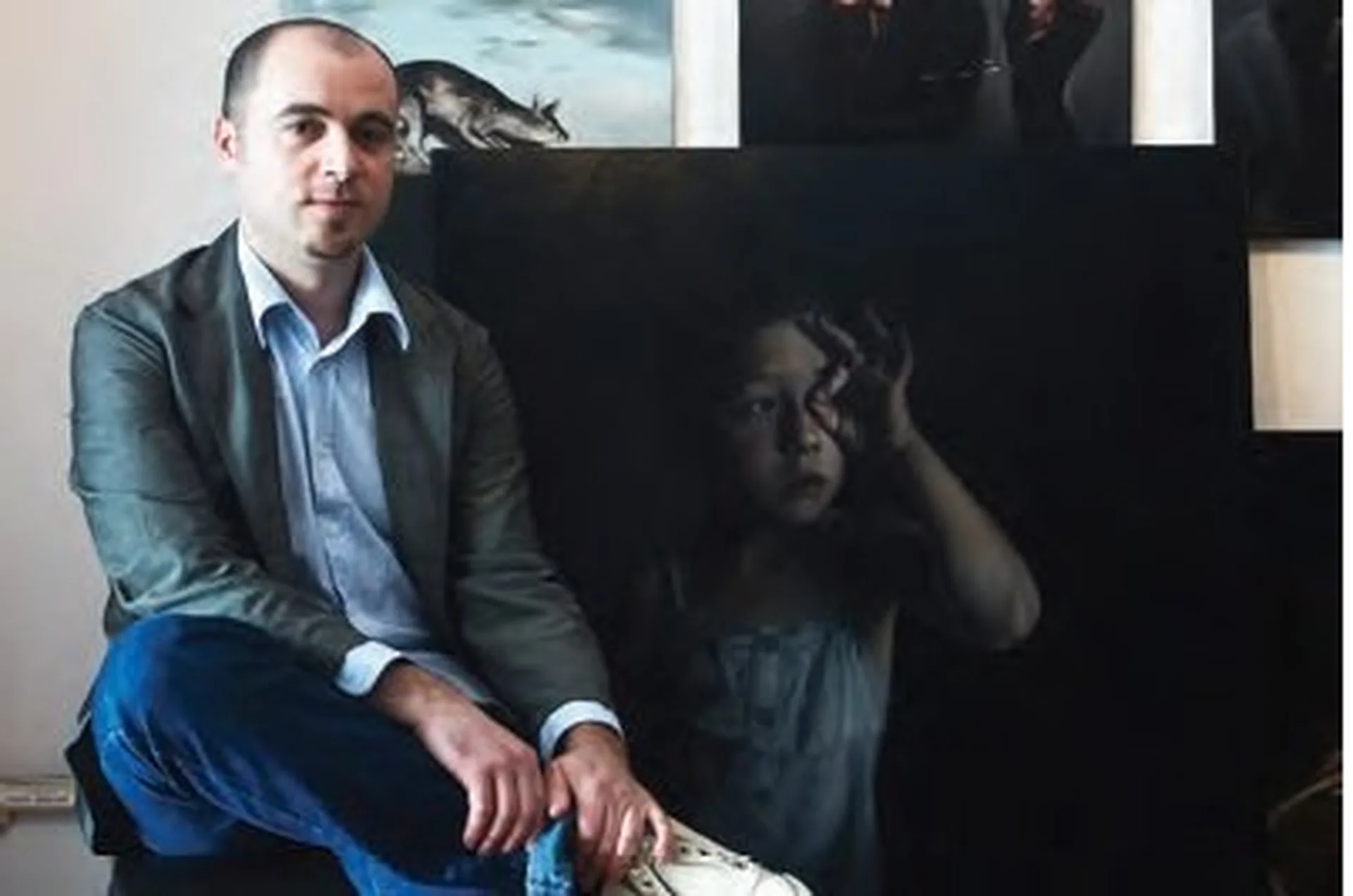
You are an art historian, artist, cultural manager, founder of the popular website of contemporary culture and gallerist. How do you reconcile all these roles?
I started curating exhibitions in 1999 , when I was still a student at the History and Theory of Art University in Bucharest and during this experience, I became aware of the disfunctionality and shortcomings of the Romanian art market and tried to fix them, in my way, or change them in structure as much as possible. For ten years I wrote reviews about art exhibitions in publications ranging from Romania Liberă to Observatorul Cultural and other international or Romanian periodicals. I realized later that my reviews did not bring considerable improvement of indicators: increasing number of visitors of the exhibition, increasing interest for the artwork and of course a better knowledge of contemporary art and artists. The creative village remained the same, and sadly, with the same little known and undocumented artists.
Only in 2009 did we changed the strategy, moving from art criticism to provide an area of information, promotion , documentation and archiving of the entire visual arts sector and related areas. With this new strategy Modernism.ro emerged in 2009 and since then we operate in the same formula: Cristi Farcas , Ciprian Voicu , Lucian Muntean , Oana Nasui and me. From the very beginning we did not consider it necessary to create another critic court which would have created hierarchies and values which could have choked the horizontal knowledge of the quantity of artistic production. We somehow started the other way around, democratizing public taste without imposing personal stylistic directions of cultural consumption, leaving the information about creativity free and diverse, whichever its forms and criteria of development - from kitsch to conceptual art.
One of the biggest responsibilities of a gallery owner is taking a small portfolio and constantly promoting it in the long-term. What were the factors that pushed you to choose your artists and what is their profile?
Each artist ‘s profile is individual and we treat it as such. Artists such as Bogdan Raţă exposed in a Collateral Event of the Venice Biennale this year and Radu Belcin, Flavia Pitiş found international collectors in Tel Aviv, Berlin, Copenhagen, Brussels , Toronto and they regularly follow the artists. They are the first of our artists to have managed this kind of international breakthrough. Next to them, the more novice Felix Deac and Alexandru Bunescu are preparing themselves for this stage. Francisc Chiuariu and Dragoş Burlacu are better addressed and welcomed by the local market. With 50 years dedicated to the study and artistic experimentation, without an urgency of integration in the art market, our artist Cristian Todie is not looking for formal solutions. Therefore his creative course is not one filled with exhibitions, but he experienced creative processes with theoretical results. And for us who work with him , it’s quite an extraordinary situation and a specific representation. Of course, the list of artists we work with regularly or punctually, is much broader and has its own dynamism linked both to our projects and to the response of collectors and the art market.

Where do you position yourself compared to other contemporary art galleries in Romania ?
We have not taken the local art market as a benchmark, but we still analyze it very carefully. Rather, we tried to use other routes, mechanisms, principles and professional ethics than the one used or unused here. I preferred the direction of Eastern Europe and, on our first curatorial project “Colouring the Grey “ we have exhibited seven Romanian artists in the section of the special projects at Moscow Biennale 2011. To get an accurate reporting of the value of our artists we first tried to promote artists in prestigious spaces and cultural centers and then to sell them through art fairs. And this is one of the principles of our business.
After Modernism.ro reached a maximum of online visibility, you turned suddenly towards a safer option, a private gallery , although without abandoning the website , which probably began working independently without the initial effort. What has made you turn from a curator into a gallerist?
Modernism.ro continues to grow, we are just about to pass the startup phase and are beginning preparations for future capitalization. I started Năsui Collection & Gallery with private investments and it became a sustainable business only after the first two years of intense activity. We are integrating the research and study of international contemporary art, trends, observations and information into courses and curatorial workshops of cultural management or investment in art .
Is value synonym with success?
Both success and value are relatively depending on criteria, hierarchy or context. The success and value provides a framework for understanding consumption, somehow through a vulgar limited perspective. There are of course many other criteria that may offer other perspectives on art, depends on what you are looking for or want to find out.
What is your point of view about the art market and the Romanian art scene?
At global level, the Romanian art market is a minor one, but I perceive it as dynamic and agitated at a regional level. It appears that the smaller the stage, the greater its poorly managed vanities. The market is not developing smoothly, but this comes with benefits: almost any event can become quickly visible in the small village, prices are close to the raw materials and the marketing of the artistic product is still incipient. As it is not structured and regulated, the market invites speculation and its evolution comes in leaps. Lower investment gives sometimes spectacular results, but there are dangers of loss everywhere. After the capital investment attracted especially modern art over the past four years through market expansion, auction houses and the art investment fund, a gradual contraction of the local market will follow. Now in Romania, the Romanian art is financially valued by volume rather than spectacular record of the artist. In terms of the attitude of artists, many contemporary Romanian artists are enrolled in left activist movements, as many other artists around the globe, criticizing capitalism and its values . It is a paradigm of forms without substance.
Your opinions and comments for the collectors who read The Art of Living?
I will talk about the practical observations adapted to the present and less linked to the symbolism or metaphysics.
Do not hurry when you buy or sell. Get information about the artist from all the sources: exhibitions, value and cost. Double any assessment and expertise with a reassessment and another expertise. The result would likely be somewhere in the middle, and the evaluation and expertise pays the difference anyway.
Share the risk with the gallery, dealer, agent as much as possible. Increase the value of the artists betting on them when they appear in auctions .
Try to exhibit your collection to make them known and to increase their potential. Work with various curators in this regard. Contribute to the creation of materials and publications around your collected artists and do not miss the opportunity to include some of your pieces.
Identify biased opinions from the critics and do not be influenced by them. Do not allow yourself to be influenced by contradicting criticism about a piece you liked; the local market is very uneven in the measurement , hierarchy and assessment of the artistic value. Attend courses in art investing. Diversify your portfolio. Collect as much as possible .
Respond cautious when someone presents you “the most important Romanian artist.” The speculators who rush often do this.
Buy local and sell international. You will promote the artist and you will also benefit.